

It’s fitting that Adrien Brody had the longest acceptance speech at this year’s Academy Awards.
His film, “The Brutalist,” was the year’s longest film, too, clocking in at nearly four hours.
While that may have been a bit too much for filmgoers, it should be more palatable now that the film’s on DVD. Complete with intermission (which could be your stopping point for a day), it’s like binging a miniseries.

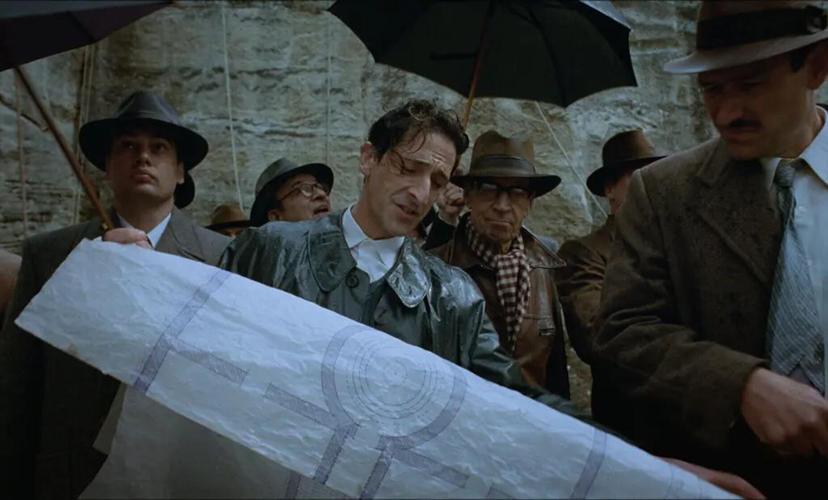
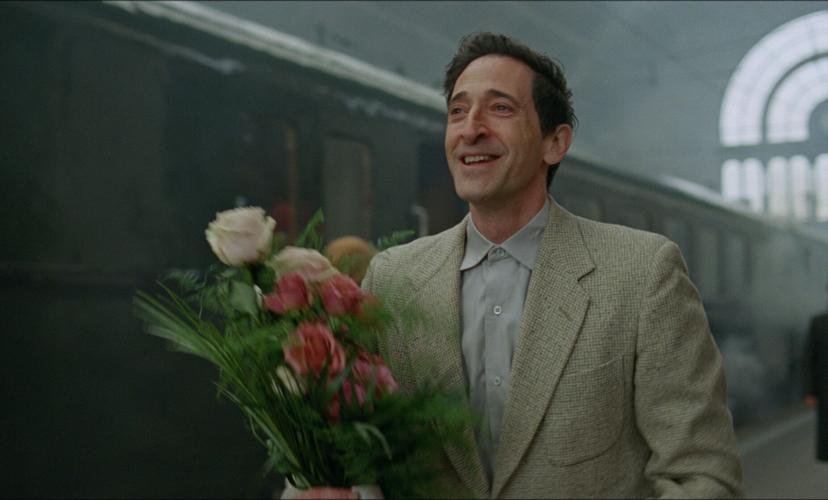
Adrien Brody plays an architect who reshapes his life when he moves to the United States in "The Brutalist."
Telling the story of architect Lazlo Toth (Brody) from his days in Europe to his new life in America, “The Brutalist” sends a touching message about working smarter, not harder.
Director Brady Corbet finds creative ways to capture the times, the people, the moments. He doesn’t just throw money at sets, costumes and special effects, he unearths unique ways to make the moments resonate.
While it’s one of the rare films today with an intermission, “The Brutalist” deserves it, giving us a moment to consider what we’ve seen. The story follows Toth as he reinvents his life, first as a refugee, then, as a laborer.
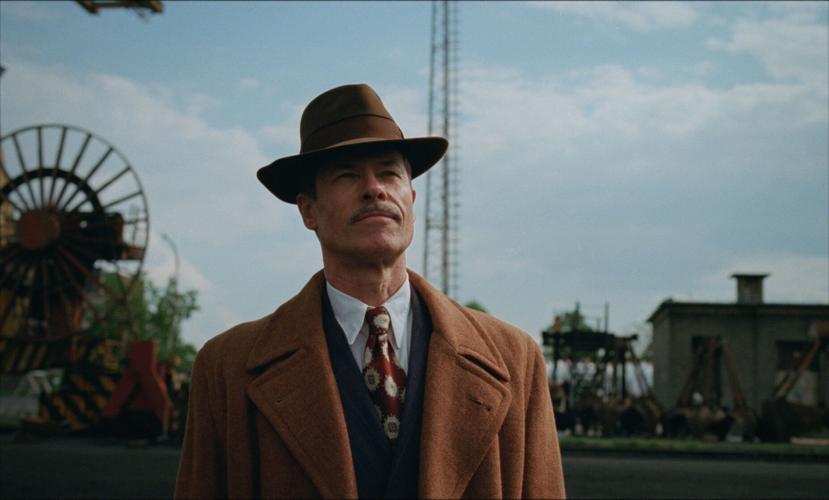
How he makes it in a tough new world is only part of the journey. Family teaches him how he needs to behave and, quickly, he’s able to channel his design sense through a cousin’s furniture store. He butts up against relatives and others, then meets an industrialist (Guy Pearce) who is as brusque as anyone in the new country. When Look magazine raves about Toth’s work, the benefactor changes course and hires the quiet man to build a community center that challenges the architect’s skills.
Pearce is wonderful as the man who commissions someone else to give him vision. Today, those “money” men think they’re the ones with the ideas; here, he openly cedes the reins and Toth delivers.

"The Brutalist" is a top contender for the best picture Oscar, and Adrien Brody is potentially unbeatable in the lead actor category.
As Corbet covers the building process, we see the change in Toth, particularly when it means he can bring his family to the United States. He throws himself into the work (not unlike a composer with a deadline looming) and, in the process, educates others on various schools of design.
When Pearce’s Harrison Lee Van Buren Sr. insists on a chapel, Toth doesn’t resist but gives him something no one could have imagined. The imagery, alone, says something about his talent.
Because they’re worried about their father’s infatuation with the project (and the money it’s sucking away) Van Buren’s son (Joe Alwyn) and daughter (Stacy Martin) offer resistance. The son worries what this might mean for him and looks for his own way of controlling the situation.
Corbet, however, doesn’t just chronicle the creation of a masterpiece. He shows the work and negotiation that goes into its completion. Like the Medicis in Italy, the Van Burens want more than control.
In the film’s second half, Toth’s family arrives and presents another wrinkle – one that isn’t necessarily handled with a T-square and a hammer.
Corbet manages to weave plenty of political, social and religious upheaval throughout “The Brutalist” (which refers to his architectural style) but never insists you buy into his theories. This is very much one man’s journey (not unlike Vito Corleone’s), influenced by the situations he encounters in life.

Guy Pearce plays an industrialist who funds Laszlo Toth's projects in "The Brutalist."
Brody is remarkable throughout the stages of Toth’s life. He conjures all the emotions and emerges with a full-bodied performance that makes you feel like you stood next to a man during the good and bad times.
Felicity Jones is affecting, too, as his wife but she has another agenda, one informed by the distance that separated them.
When the architect manages to produce what his benefactor wants – “something new,” as he puts it – we can feel the sense of accomplishment.
Like Toth, Corbet has created something monumental – a piece of cinema that didn’t need hundreds of millions to produce, just a little ingenuity.

