

Walt Disney had unrealistic expectations when it came to building Disneyland.

Walt Disney
He set a July 1955 deadline and, quite honestly, wasn’t ready just days before the theme park was dedicated.
Workers told them they couldn’t get restrooms and water fountains done in time. Visitors could drink Coke or Pepsi, Disney said. “They can’t pee in the street.”
The die was cast and, despite first-day glitches, the “happiest place on Earth” was ready to welcome guests.
In “Disneyland Handcrafted,” filmmaker Leslie Iwerks shows what those building months were like. She uses plenty of archival footage and interviews with Disneyland’s creators to tell the story. It’s a fascinating account — one that Disney addicts will scoop up like so much Dole Whip.

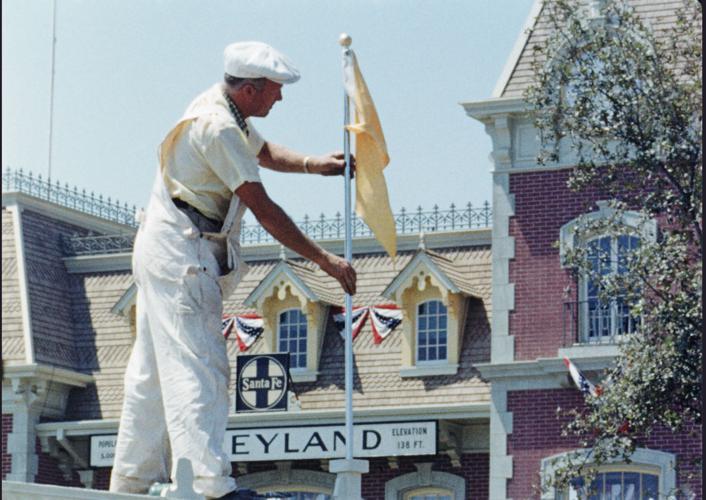
A worker plants a flag during the construction of Disneyland.
When the opening day arrives, Ronald Reagan and Art Linkletter are on site, creating a seamless introduction to the world Walt created.
Behind the scenes, Linkletter (the Ryan Seacrest of his day) admits it was hardly a walk in the park. Not all rides were operational, and the streets were clogged with visitors. The lack of water fountains was hardly a crisis.
Now celebrating its 70th year, Disneyland is considered the template for amusement parks, Disney and others. Its mix of “lands” and variety of offerings resulted from years of visiting lesser ones. Disney took his daughters to those other parks and started to dream. He didn’t just want arcade games and carnival rides and said so when he shared his plans with his brain trust.

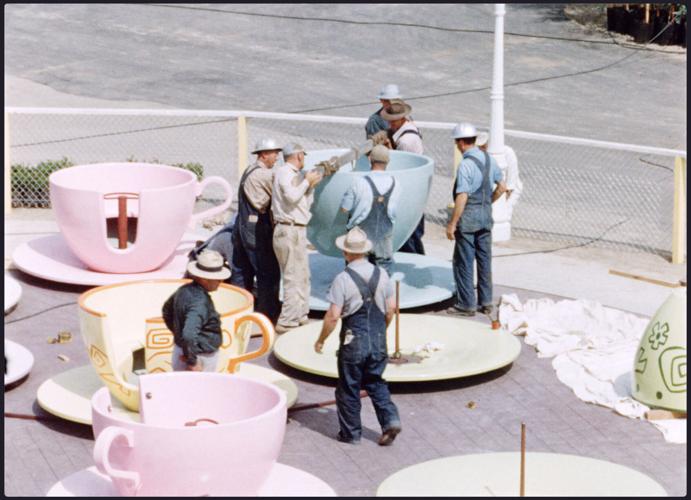
Workers construct the teacups for the Mad Tea Party attraction at Disneyland.
Manufacturers who made rides for other parks wanted to give him what they were used to. He wouldn’t hear of it, and as a result, overspent repeatedly. When confronted about the rising costs, Disney said, “I’ve been broke five times in my life. One more won’t hurt.”
The secret to his success was leadership. Disney trusted the men and women who helped him build his motion picture studio; he was determined to test their creative abilities on the park. Handcrafting ride vehicles, customer “experiences” and each of the lands, they were able to deliver on the dream.

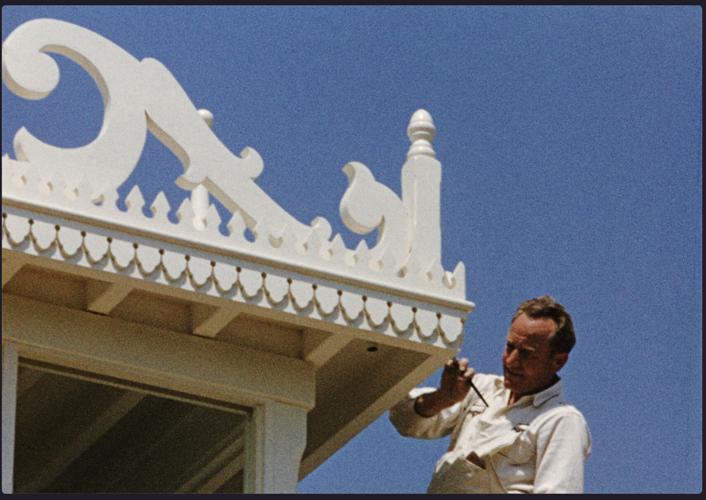
A worker applies paint to a facade at Disneyland.
Iwerks takes us from an orange grove to a park that attracts some of the biggest names in the world. She uses lots of those never-seen films and gives us a close-up on the testing procedures and the fine craftsmanship on building facades and carved ride vehicles. Two studio employees glide through the air on the Peter Pan’s Flight vehicle and appear amazed at its dips and turns.
Because the builders hadn’t made something like this before, they hit plenty of snags — like a waterway that sucked up water every time they filled it. To get a riverboat from a stage to the park, they built it in sections, then assembled it on site.

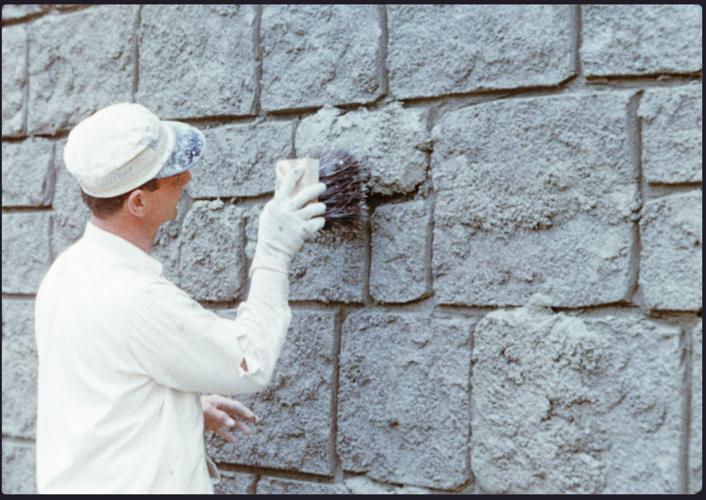
A worker paints a wall of the Sleeping Beauty Castle.
Hearing from Disney’s lieutenants is particularly telling. They don’t hesitate to detail those challenges, and Iwerks doesn’t hesitate to show what they were up against. When trucks transfer materials, you see the rival Knotts Berry Farm in the background.
The 160 acres of magic pop to life in the documentary, and Iwerks showcases the people who made the art of Disneyland possible.
In simple terms, “Disneyland Handcrafted” is the film you didn’t realize you needed. It tells plenty and makes you appreciate Disneyland even more.






