

Artificial intelligence raised concern over its tremendous consumption of water and power, but scientists are experimenting with ways AI can help people and businesses use energy more efficiently and pollute less.
Data centers needed to fuel AI accounted for about 1.5% of the world's electricity consumption last year, and that is predicted to more than double by 2030, according to the International Energy Agency. That increase could lead to burning more fossil fuels such as coal and gas, which release greenhouse gases that contribute to climate change, sea level rise and extreme weather.

Still, here are five ways experts say AI could help offset the vast amount of energy it consumes.
1. Building efficiency
AI can be used to make buildings more energy-efficient by automatically adjusting lighting, ventilation, heating and cooling based on weather data, electricity use and other factors, said Bob French of building automation company 75F. About one-third of U.S. greenhouse gas pollution comes from homes and buildings.
Letting AI schedule air conditioning and heating around workers' arrivals and departures can be more efficient than manually adjusting the thermostat. Automated thermostats can be particularly useful for smaller buildings where it's not cost-effective to overhaul the entire heating and cooling system.
For building ventilation, automation can balance the intake of outside air against how much heating or cooling is needed to maintain indoor temperatures. AI also can monitor the maintenance needs of HVAC systems and other equipment to predict and detect failures before they lead to costlier repairs.
Automations can reduce a building's energy consumption by between 10% and 30%, experts said.

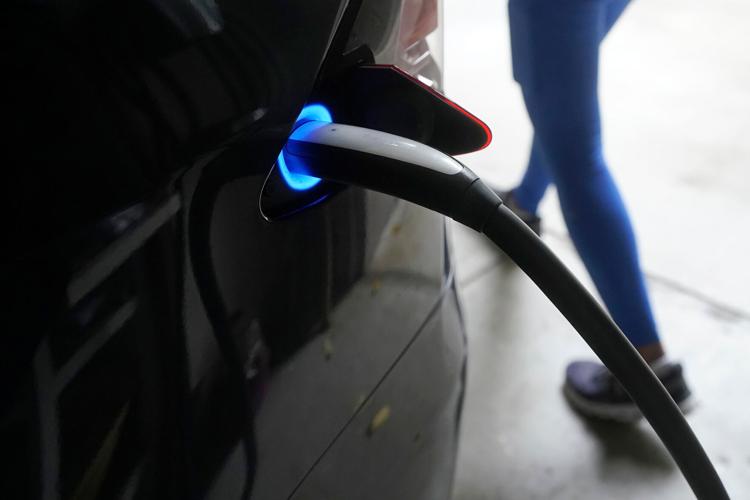
A Tesla car charges at a home in San Francisco, Aug. 25, 2022.
2. Scheduled charging
AI can schedule the most efficient charging of electric vehicles and other devices, like smartphones, for when it is best to draw power from the grid — such as overnight, when demand and rates are lower.
"Let's say it's a peak period when everybody's got their air conditioning on, and I walk in my house and I plug in my car and I have it set up such that my car doesn't start charging right away because it's peak period time," said Alexis Abramson, dean of the Columbia University Climate School.
In California, a pilot program shifted charging to times when more renewable energy was available, saving customers money.
AI also can help optimize how homeowners with solar panels store excess energy in batteries.
3. Methane operations
Boston-based Geminus AI uses deep learning and advanced reasoning to help oil and gas companies reduce methane flaring and venting when pressure in oil and gas pipes builds up, and reduce the amount of energy they use in extracting and refining.
Methane is a greenhouse gas responsible for about 30% of today's global warming.
CEO Greg Fallon said Geminus can monitor the network of wells and pipes and use AI-driven simulations to suggest changes to compressor and pump settings that eliminate the need for venting and flaring. Traditionally, this takes engineers about 36 hours to run simulations that make similar recommendations, he added; Geminus does it in seconds.

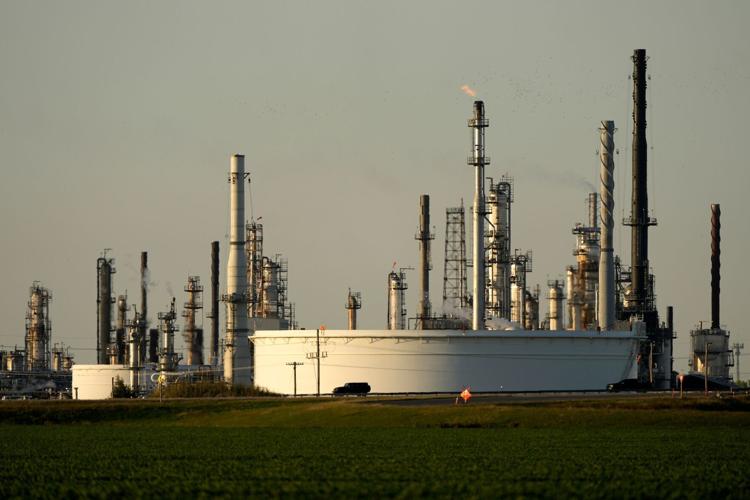
A motorist drives past the CHS oil refinery Sept. 28, 2024, in McPherson, Kan.
4. Finding hot spots
Salt Lake City-based energy startup Zanskar built AI models to find overlooked geothermal hot spots and target drilling.
Geothermal creates electricity cleanly by harnessing steam from the Earth's natural subsurface heat to spin a turbine. It's a renewable energy the Trump administration favors.
Zanskar co-founders Carl Hoiland and Joel Edwards say they simulate and assess a huge number of possible subsurface scenarios to estimate where there are pockets of very hot water, then pick optimal locations and drilling directions.
"AI is becoming the solution to its own energy problem," Hoiland said. "It's showing us a way to unlock resources that weren't possible without it."
5. Reducing emissions
Google uses artificial intelligence and Google Maps data to identify traffic light adjustments that can reduce stop-and-go traffic to lower pollution. Passenger cars and small trucks account for about 16% of U.S. greenhouse gas emissions, according to Environmental Protection Agency data.
Launched in 2023, Project Green Light is now in 20 cities on four continents. Each city gets AI-generated recommendations, and city engineers determine which to implement. Google says Project Green Light can reduce stop-and-go traffic by up to 30%, which cuts emissions by 10% and improves air quality.
"We're just scratching the surface of what AI can do," said Juliet Rothenberg, Google's product director of Earth and resilience AI.



