

TYLER, Texas — Celia Monreal worries every day about the cartilage loss in her husband's knees. Not just because it's hard for her to see him in pain but also because she knows soon their health care costs could skyrocket.
Monreal, 47, and her husband, Jorge, 57, rely on the Affordable Care Act marketplace for health coverage. If their tax credits expire at the end of the year, their fully subsidized plan will increase in cost, putting it out of reach. Without insurance, they won't be able to afford his expected knee replacement surgeries — which will force him to take time off his job filling concrete — and other issues, like her chronic high blood pressure and his high cholesterol.
On their already tight $45,000 joint annual income, budgeting for themselves and their five children will become that much harder.
"It worries me sometimes, because if you're not healthy, then you're not here for your kids," Monreal said. "It's a difficult decision, because, OK, do I spend $500 on a doctor's visit or do I buy groceries?"

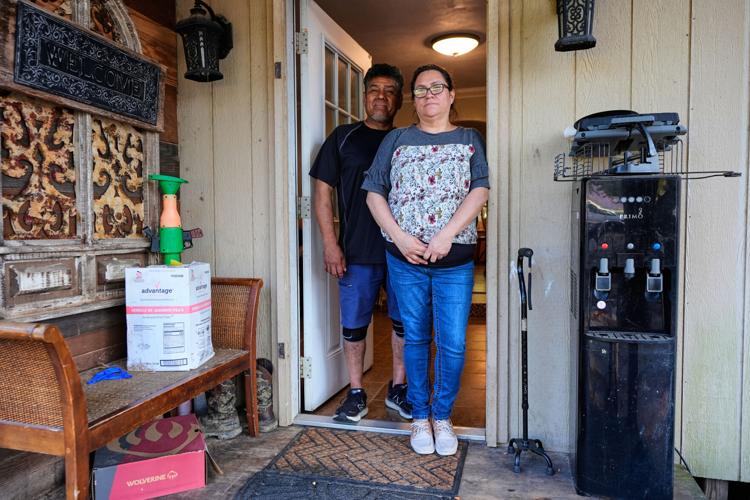
Jorge and Celia Monreal pose for a photo Oct. 8 in the entryway of their home in Tyler, Texas.
The enhanced premium tax credits that made coverage more affordable for low- and middle-income enrollees for the last four years will expire this year if Congress doesn't extend them. On average, that will more than double what subsidized enrollees currently pay for premiums next year, according to an analysis by health care research nonprofit KFF.
The tax credits are at the heart of the federal government shutdown that is in its third week. Democrats demand the subsidies be extended in a funding deal, while Republicans say they'll only negotiate on the issue once the government is funded.
With Congress deadlocked and the open enrollment period for ACA plans approaching on Nov. 1 in most states, Americans like Monreal are left to navigate the unknown.

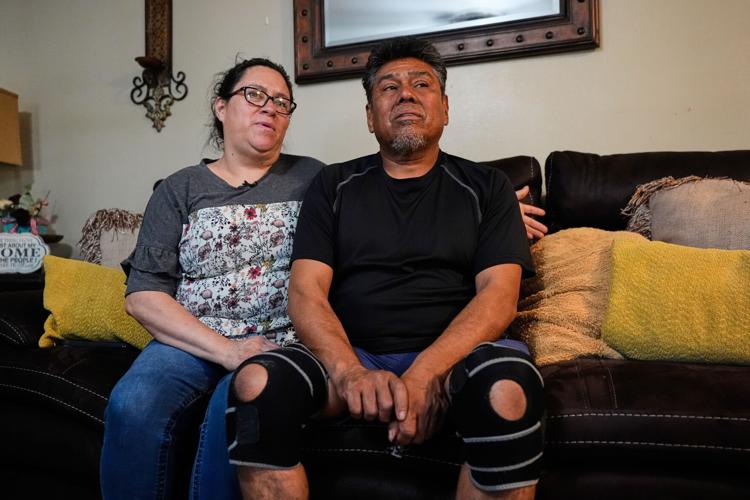
Celia Monreal and her husband, Jorge, said they rely on the Affordable Care Act marketplace for health coverage during an interview Oct. 8 at their home in Tyler, Texas.
No extension will mean higher premiums for millions
More than 24 million people have ACA health insurance, including farmers, ranchers, small business owners and other self-employed people who don't have other health insurance options through their work.
The enhanced premium tax credits allow some lower-income enrollees to get health care with no premiums and higher earners to pay no more than 8.5% of their income.
If the tax credits expire, annual out-of-pocket premiums are estimated to increase by 114% — an average of $1,016 — next year, according to the KFF analysis.
While some premium tax credits will remain, the level of support will decrease for most enrollees. Anyone earning more than 400% of the poverty level — or about $63,000 per year for a single person — won't be eligible for the remaining tax credits.
Especially hard-hit groups will include a small number of higher earners who will have to pay a lot more without the extra subsidies and a large number of lower earners who will have to pay a small amount more, said Cynthia Cox, a vice president and director of the ACA program at KFF.

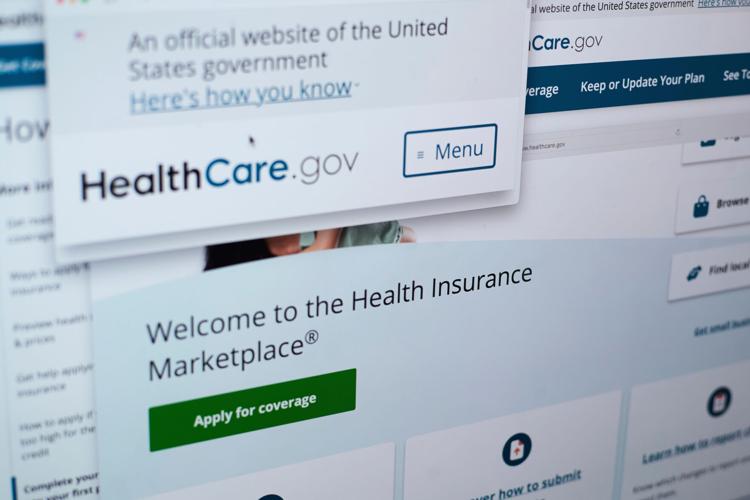
Pages from the U.S. Affordable Care Act health insurance website healthcare.gov are seen Aug. 19 on a computer screen in New York.
With higher premiums, some people will drop health insurance, Cox said. When many younger, healthier people inevitably forgo coverage, insurance companies will increase costs for members of the covered population to account for them being older and sicker.
The change also may strain hospitals, since more uninsured people will need emergency care they can't afford. That could lead to hospital closures or cost increases.
"If you have less subsidies for people getting health insurance, you're going to have less health coverage and less health care," said Jason Levitis, a senior fellow in the health policy division at the Urban Institute. "People are going to be sicker and die more."
Health policy analysts note that even if the subsidies are extended, insurance rate hikes for 2026 are already higher because insurers had to factor in their potential expiration when they set premium prices this year.
There are also concerns the delay will cause chaos, confusion and stress for Americans, some of whom already started receiving notices that their premiums will skyrocket next year.

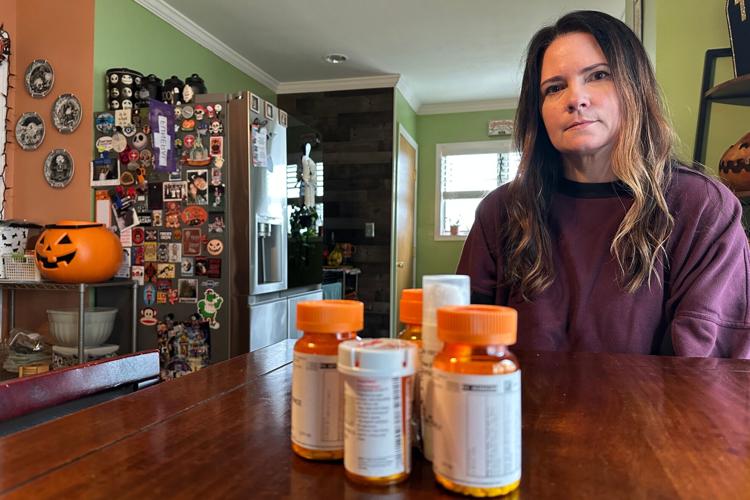
Hair stylist Christine Meehan sits in front of her medications Oct. 13 at her home in Upper Chichester, Pa., while talking about the possible increase in her health insurance costs.
Some brace for the worst. A filmmaker considers a new job
Chrissy Meehan, a hair stylist in Upper Chichester, Pennsylvania, has a neck condition that may require surgery. She says if ACA subsidies expire, she'll further delay the procedure.
She voted for Republican Donald Trump for president last year, something she said she's almost embarrassed about now that the Republican-led government hasn't renewed the subsidies that help her afford her coverage through the state marketplace.
"I work hard, and I'm trying to survive and do it the right way and pay my way," Meehan, 51, said. "I don't want free. I just want affordable for my income."

Erin Jackson-Hill has allergies, asthma and hip pain she's managing with prescribed medications until she can get a hip replacement. The 56-year-old in Anchorage, Alaska, doesn't think she can pay for health insurance next year if the ACA subsidies aren't extended.
The executive director of two nonprofits, who also cares for her 89-year-old father full time, pays nearly $500 a month for her premiums. If the subsidies disappear, she plans to forgo health insurance and pay for her asthma and allergy medications out of pocket.
Jackson-Hill said she worries about what will happen if her hip worsens and she can't make it up the stairs in her father's two-story home without treatment.
"I will have to go to the emergency room, or I'll have to go bankrupt in order to pay for it," she said.

Another ACA enrollee, Salt Lake City freelance filmmaker and adjunct professor Stan Clawson, said he'll find a way to pay for health insurance next year — even if it means he must buy cheaper groceries or get a new job that provides it.
Clawson, 49, has lived with paralysis below his abdomen since falling while rock climbing when he was 20. He's active and generally healthy, but his spinal cord injury resulted in tendonitis in his shoulders and frequent urinary tract infections.
He also has to buy catheters to use every time he urinates — a cost he said would add up to about $1,400 a month without insurance.
"I don't think a lot of people realize how expensive it is to have a disability," Clawson said, adding that trying to live without health insurance would be "financially devastating."
What photos show about the U.S. government shutdown

Stairs lead to the Capitol Visitors Center with just days to go before federal money runs out with the end of the fiscal year, in Washington, Wednesday, Sept. 24, 2025. (AP Photo/J. Scott Applewhite)

President Donald Trump walks from Marine One after arriving on the South Lawn of the White House, Tuesday, Sept. 30, 2025, in Washington. (AP Photo/Alex Brandon)

House Minority Leader Hakeem Jeffries, D-N.Y., center, flanked by Rep. Pete Aguilar, D-Calif., left, and Rep. Katherine Clark, D-Mass., arrives to speak on the steps of the Capitol to insist that Republicans include an extension of expiring health care benefits as part of a government funding compromise, in Washington, Tuesday, Sept. 30, 2025. (AP Photo/J. Scott Applewhite)

The sun sets behind the Capitol and Washington Monument, as a vote fails in the Senate which is expected to lead to a government shutdown, Tuesday, Sept. 30, 2025, as seen from inside the Capitol, in Washington. (AP Photo/Jacquelyn Martin)

Visitors tour the Capitol Rotunda as the government lurches toward a shutdown at midnight if the Senate does not pass a House measure that would extend federal funding for seven weeks, at the Capitol in Washington, Tuesday, Sept. 30, 2025. (AP Photo/J. Scott Applewhite)

Senate Majority Leader John Thune, R-S.D., speaks to reporters Tuesday, Sept. 30, 2025, at the U.S. Capitol in Washington, as the U.S. government is on the brink of the first federal government shutdown in almost seven years.. (AP Photo/Jacquelyn Martin)

Senate Minority Leader Chuck Schumer of N.Y., listens as he speaks to reporters Tuesday, Sept. 30, 2025, at the U.S. Capitol in Washington. (AP Photo/Jacquelyn Martin)

Kaitlin and Kurt Wilhelm, of Sandusky, Ohio, foreground, and others gather on the rocky coast to watch the sunrise, Wednesday, Oct. 1, 2025, in Acadia National Park, Maine. (AP Photo/Robert F. Bukaty)

A visitor walks at the Lincoln Memorial at sunrise on Wednesday, Oct. 1, 2025, in Washington. (AP Photo/Mark Schiefelbein)

American flags fly in front of the U.S. Capitol at sunrise, Wednesday, Oct. 1, 2025, in Washington. (AP Photo/Julia Demaree Nikhinson)

The U.S. Capitol is seen at sunrise as cars drive on Pennsylvania Ave. during rush hour traffic, Wednesday, Oct. 1, 2025, in Washington. (AP Photo/Julia Demaree Nikhinson)

Tourist view Independence Hall from outside a barricade in Philadelphia, Wednesday, Oct. 1, 2025. (AP Photo/Matt Rourke)

Rep. Alexandria Ocasio-Cortez, D-N.Y., gives a tour of the Capitol to a group of students from New York after their previously-scheduled tour was canceled due to the government shutdown on Wednesday, Oct. 1, 2025, in Washington. (AP Photo/Mark Schiefelbein)

Sen. John Barrasso, R-Wyo., the Senate GOP whip, left, and Speaker of the House Mike Johnson, R-La., right, arrive for a news conference with top Republicans on the government shutdown, at the Capitol in Washington, Wednesday, Oct. 1, 2025. (AP Photo/J. Scott Applewhite)

A sign alerting visitors that the Royal Palm Visitor Center is closed hangs in a display case reflecting the landscape, inside Florida's Everglades National Park, Wednesday, Oct. 1, 2025. (AP Photo/Rebecca Blackwell)

A sign announces that the U.S. Capitol Visitor Center is closed, on the first day of a partial government shutdown, Wednesday, Oct. 1, 2025, in Washington. (AP Photo/Julia Demaree Nikhinson)

People take photos with a sign announcing that the Library of Congress is closed, on the first day of a partial government shutdown, Wednesday, Oct. 1, 2025, in Washington. (AP Photo/Julia Demaree Nikhinson)

People look through fence to get a glance at the Statue of Liberty in New York, Wednesday, Oct. 1, 2025. (AP Photo/Seth Wenig)

A tourist stops to read the sign announcing that the Washington Monument is closed on the first day of a partial government shutdown, Wednesday, Oct. 1, 2025, inWashington.(AP Photo/Pablo Martinez Monsivais)

Christy Lock and Curt Rohrman, from Houston get a phone call informing them their tickets for a tram ride to the top of Gateway Arch are cancelled due to the federal government shutdown and that they will be receiving a refund on Wednesday, Oct. 1, 2025 in St. Louis. (David Carson/St. Louis Post-Dispatch via AP)

National Park Service law enforcement ranger Greg Freeman opens a locked gate closing vehicle access to the Shark Valley section of Florida's Everglades National Park, as he drives into the park, Wednesday, Oct. 1, 2025. (AP Photo/Rebecca Blackwell)

People look at the Golden Gate Bridge outside the Fort Point National Historic Site, which is closed due to a government shutdown, Wednesday, Oct. 1, 2025, in San Francisco. (AP Photo/Godofredo A. Vásquez)

House Minority Leader Hakeem Jeffries, of N.Y., walks to a press conference on Capitol Hill on Wednesday, Oct. 1, 2025, in Washington. (AP Photo/Mark Schiefelbein)

Layne Morrison, left, of Washington, and Courtney Creek, of Silver Spring, Md., who were let go from their jobs with the Education Department and a USAID funded grant respectively, hold signs about the looming government shutdown, Tuesday, Sept. 30, 2025, on Capitol Hill in Washington, during a rally with former federal employees. (AP Photo/Jacquelyn Martin)

