





Famed primatologist Jane Goodall, renowned for her groundbreaking work with chimpanzees, dedicated her life to helping all wild animals — a passion that lasted until her death this past week.
She spent decades promoting humanitarian causes and the need to protect the natural world, and tried to balance the grim realities of the climate crisis with hope for the future, admirers say.
Those messages of hope "mobilized a global movement to protect the planet," said former President Joe Biden, who awarded Goodall the Presidential Medal of Freedom before he left office.
Here are some things to know about Goodall's life and legacy:

Jane Goodall is photographed Nov. 20, 1970, next to a chimp enclosure in San Francisco.
Goodall didn't have a college degree when she started
Despite Goodall's enduring passion to observe wild animals in Africa, she didn't have a college degree when she arrived there in 1957, starting as an assistant secretary at a natural history museum in Nairobi.
Famed anthropologist and paleontologist Louis Leakey gave her the job and later invited her to search for fossils with him and his wife at the Olduvai Gorge. After seeing her grit and determination, Leakey asked if she would be interested in studying chimpanzees in what is now Tanzania.
She told The Associated Press in 1997 that he chose her "because he wanted an open mind."
It wasn't until 1966 that she earned a Ph.D. in ethology — becoming one of the few people admitted to University of Cambridge as a Ph.D. candidate without a college degree.
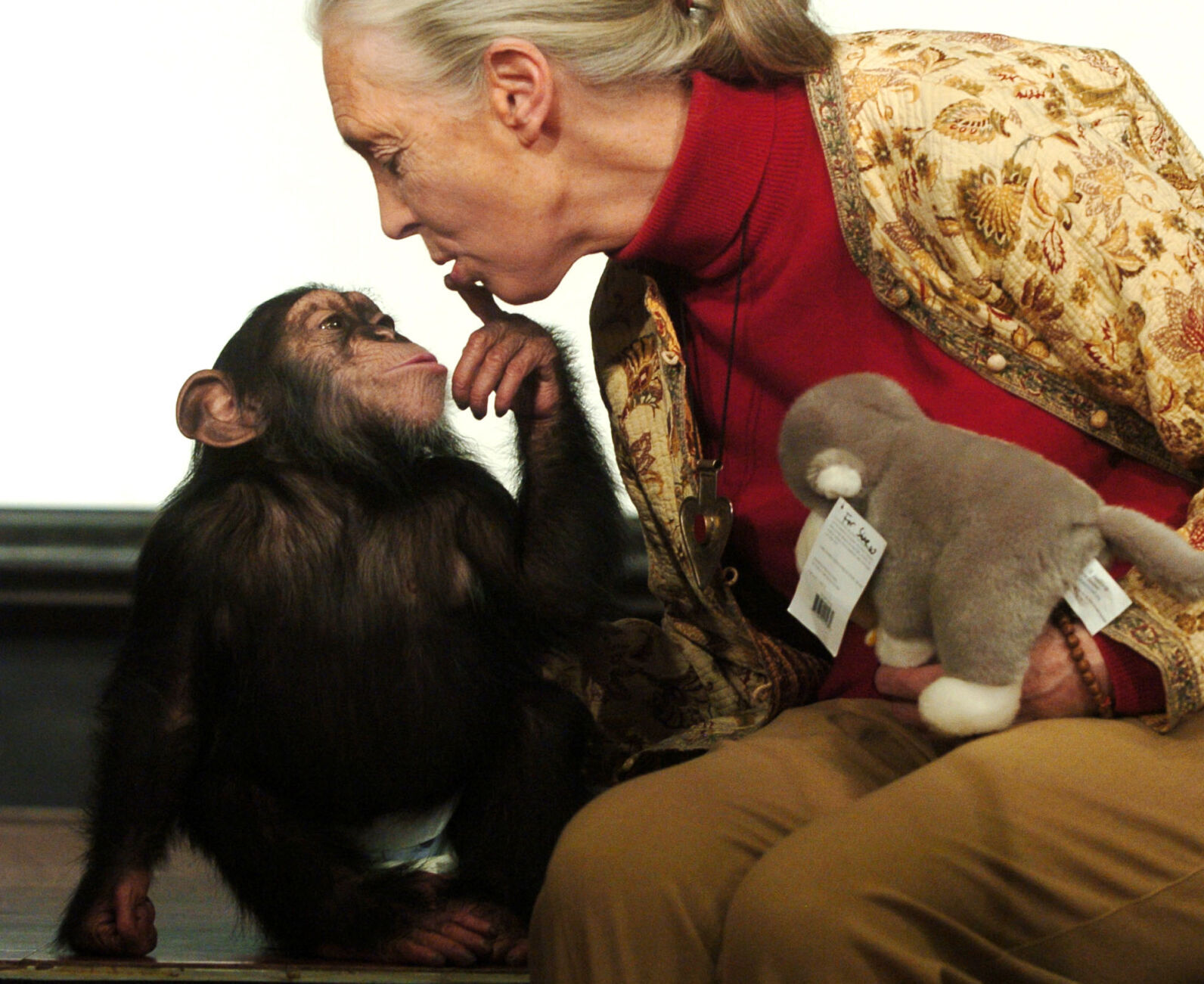
British ethologist Jane Goodall plays with Pola, a 14-month-old chimpanzee of the Budapest Zoo that she symbolically adopted, on Dec. 20, 2004, in Budapest, Hungary.
An unconventional approach in Africa
While first studying chimpanzees in Tanzania in the early 1960s, Goodall didn't spend her days simply observing the animals from afar and giving them numbers like other scientists.
She immersed herself in every aspect of their lives, feeding them and giving them names and forming what can only be described as personal relationships with them.
Some scientists, who saw it as an alarming lack of scientific detachment, criticized her approach.

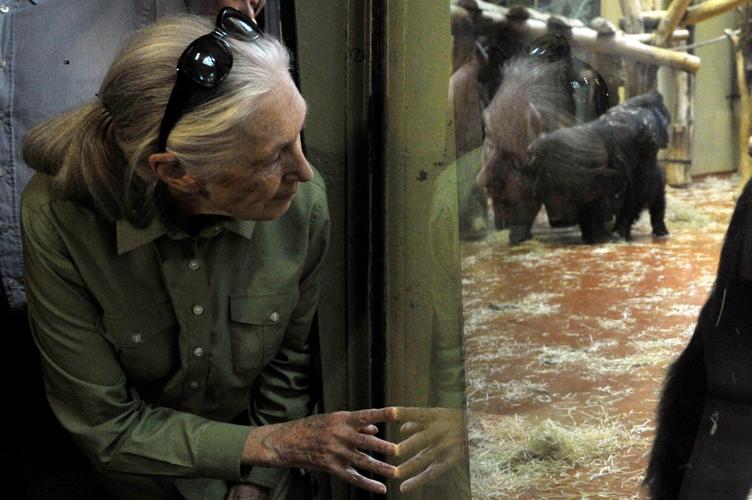
English primatologist, ethologist, anthropologist and U.N. Messenger of Peace Jane Goodall observes gorillas June 15, 2015, after she unveiled the plaque of late Hungarian primatologist Geza Teleki in the Ape's House of the Budapest Zoo in Budapest, Hungary.
She documented chimp warfare
Goodall documented chimpanzees in a wide array of activities widely believed at the time to be exclusive to humans, including showing their ruthlessly violent side during what she described as "warfare."
She described seeing a group systematically hunt down and kill members of a smaller group over the course of four years. The war ended only after every member of the smaller group was dead.
"It was a shock to find that they could show such brutal behavior," she said in 2003. "That made them seem even more like us then I thought before."
In another instance, she recalled a dominant chimpanzee brushing a younger chimp aside to get fruit. When the second chimp screamed, its big brother stepped in to rescue him. When those two chimps started screaming, a female two trees away stepped in.
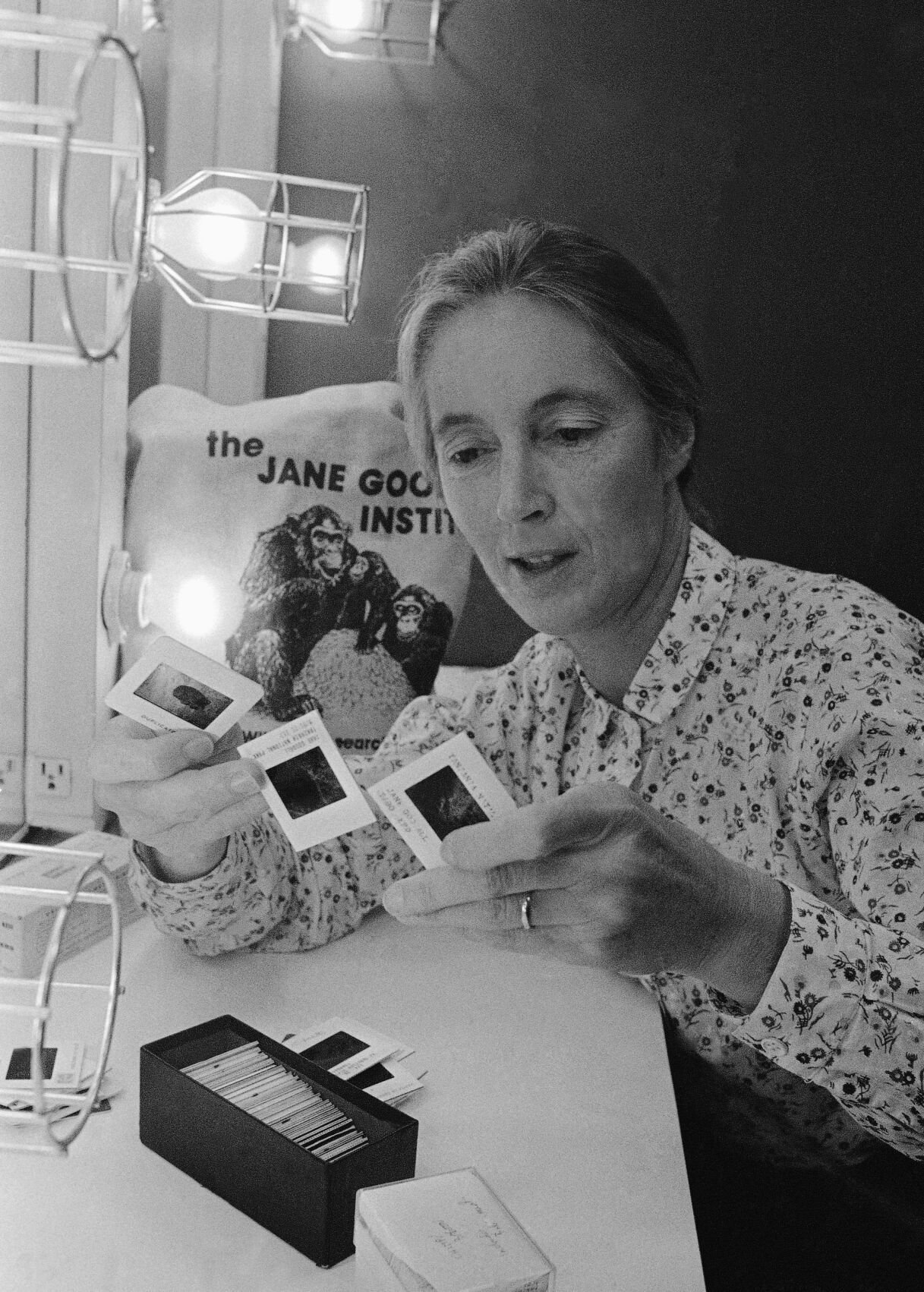
Anthropologist Jane Goodall goes through slides May 9, 1982, before making presentation in Chicago.
Goodall didn't plan to become a scientist
Since Goodall could crawl, she'd had a fascination with animals. When she bought her first book at the age of 10 — Edgar Rice Burroughs' "Tarzan of the Apes" — her vision for the future started to solidify. She planned to travel to Africa and live with the wild animals.
Her dreams did not involve becoming a scientist. She told The Associated Press in 2020 that she planned to be a naturalist and write books about animals. That vision shifted as she learned more.
"I always wanted to help animals all my life. And then naturally that led to 'If you want to save wild animals, you have to work with local people, find ways for them to live without harming the environment and then getting worried about children and what future they could have if we go on as business as usual,'" she said.

From left, then-French Foreign Minister Laurent Fabius, primatologist Jane Goodall, former U.S. Vice President Al Gore, New York Mayor Bill de Blasio and U.N. Secretary General Ban Ki-moon participate in the People's Climate March on Sept. 21, 2014, in New York.
Her advocacy lasted until her death
Goodall said watching a disturbing film in 1986 about experiments on laboratory animals pushed her into advocacy — a calling that lasted until her death.
"I knew I had to do something," she said later. "It was payback time."
She was still traveling almost 300 days a year giving lectures to packed audiences and was in the midst of a U.S. speaking tour when she died of natural causes in California, the Jane Goodall Institute said.

When she couldn't travel during the COVID-19 pandemic, she began podcasting from her childhood home in England. She spoke with guests including U.S. Sen. Cory Booker, author Margaret Atwood and marine biologist Ayana Elizabeth Johnson on dozens of episodes of the "Jane Goodall Hopecast."

Renowned primate researcher Jane Goodall, right, looks over Chicago area students' projects that they made for the Roots and Shoots festival Sept. 23, 2004, at the Lincoln Park Zoo in Chicago. Goodall founded the Roots and Shoots program to inspire youth of all ages to make a difference by becoming involved in their communities and to implement service learning programs that promote care and concern for animals, the environment and the human community.
She inspired others, especially girls and women
Admirers said Goodall inspired generations of young people, particularly women and girls.
Jeffrey Flocken, chief international officer of Humane World for Animals, recalled how Goodall once spent two hours telling his young daughter stories about "her adventures with animals and the challenges of being a young woman pioneering biological research in the field when conservation was still an emerging profession."
"Chimps, pangolins, elephants and more. Jane cared about all animals passionately. And she was able to use that passion to inspire others — children in particular," he said.
University of St. Andrews primatologist Catherine Hobaiter, who studies chimpanzee communication, said her view of science was transformed when she was a young researcher and first heard Goodall speak.
"It was the first time … that I got to hear that it was okay to to feel something," Hobaiter said.
Photos: Remembering Jane Goodall, 1934-2025

President Joe Biden, right, presents the Presidential Medal of Freedom, the Nation's highest civilian honor, to conservationist Jane Goodall in the East Room of the White House, Saturday, Jan. 4, 2025, in Washington. (AP Photo/Manuel Balce Ceneta)
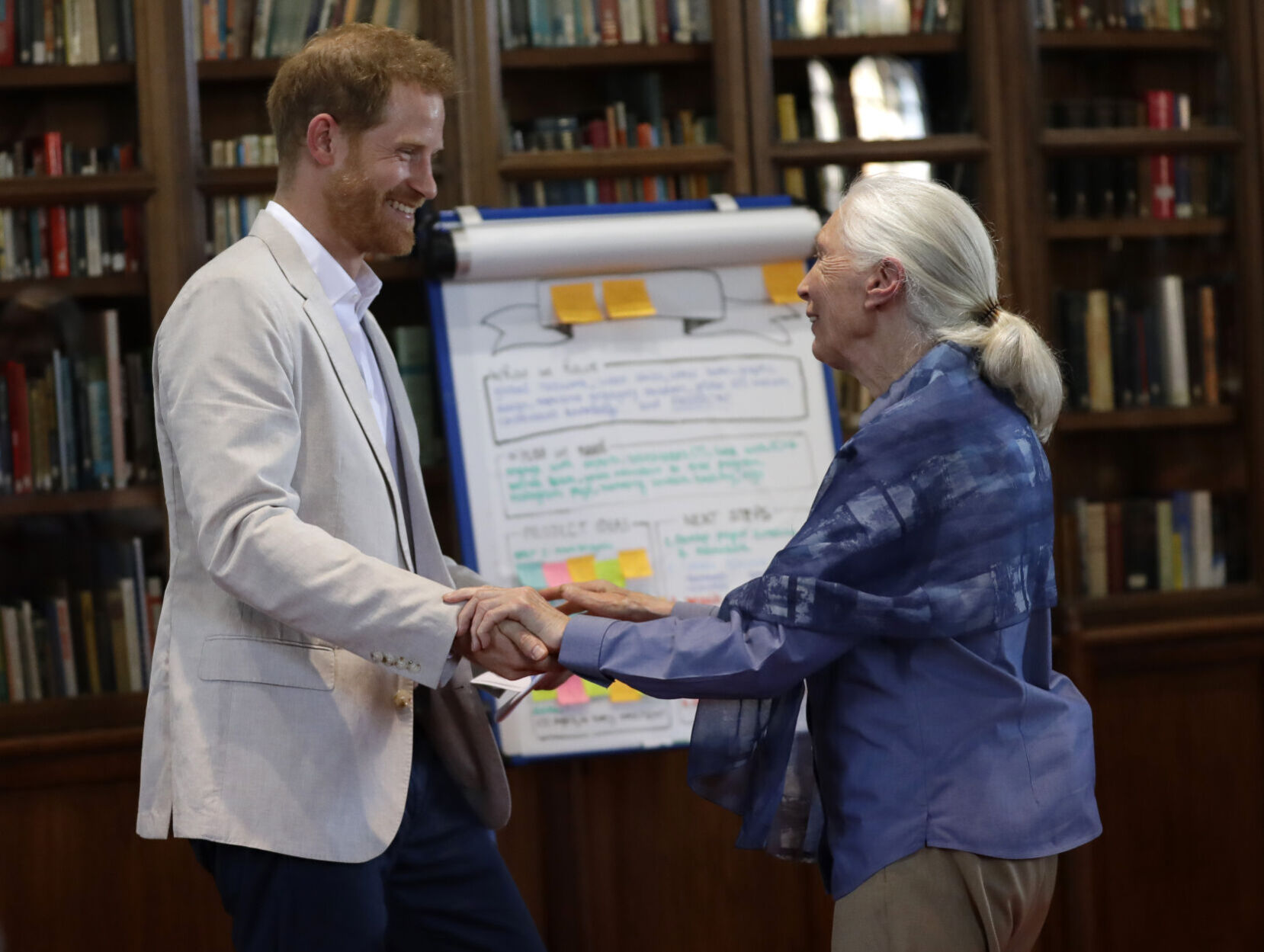
Britain's Prince Harry, the Duke of Sussex and Dr Jane Goodall hold hands as he attends Dr Jane Goodall's Roots & Shoots Global Leadership Meeting at St. George's House, Windsor Castle in England, Tuesday, July 23, 2019. Roots & Shoots is a global programme empowering young people of all ages, working to ignite and inspire the belief that every individual can take action to make the world a better place for people, animals and the environment. (AP Photo/Kirsty Wigglesworth, pool)

FILE - Jane Goodall plasy with Bahati, a 3 year-old female chimpanzee, at the Sweetwaters Chimpanzee Sanctuary, near Nanyuki 170 kms (110 miles) north of Nairobi Sunday Dec. 6, 1997. Goodall was named Thursday, May 20, 2021 as this year’s winner of the prestigious Templeton Prize, honoring individuals whose life’s work embodies a fusion of science and spirituality. (AP Photo/Jean-Marc Bouju, file)
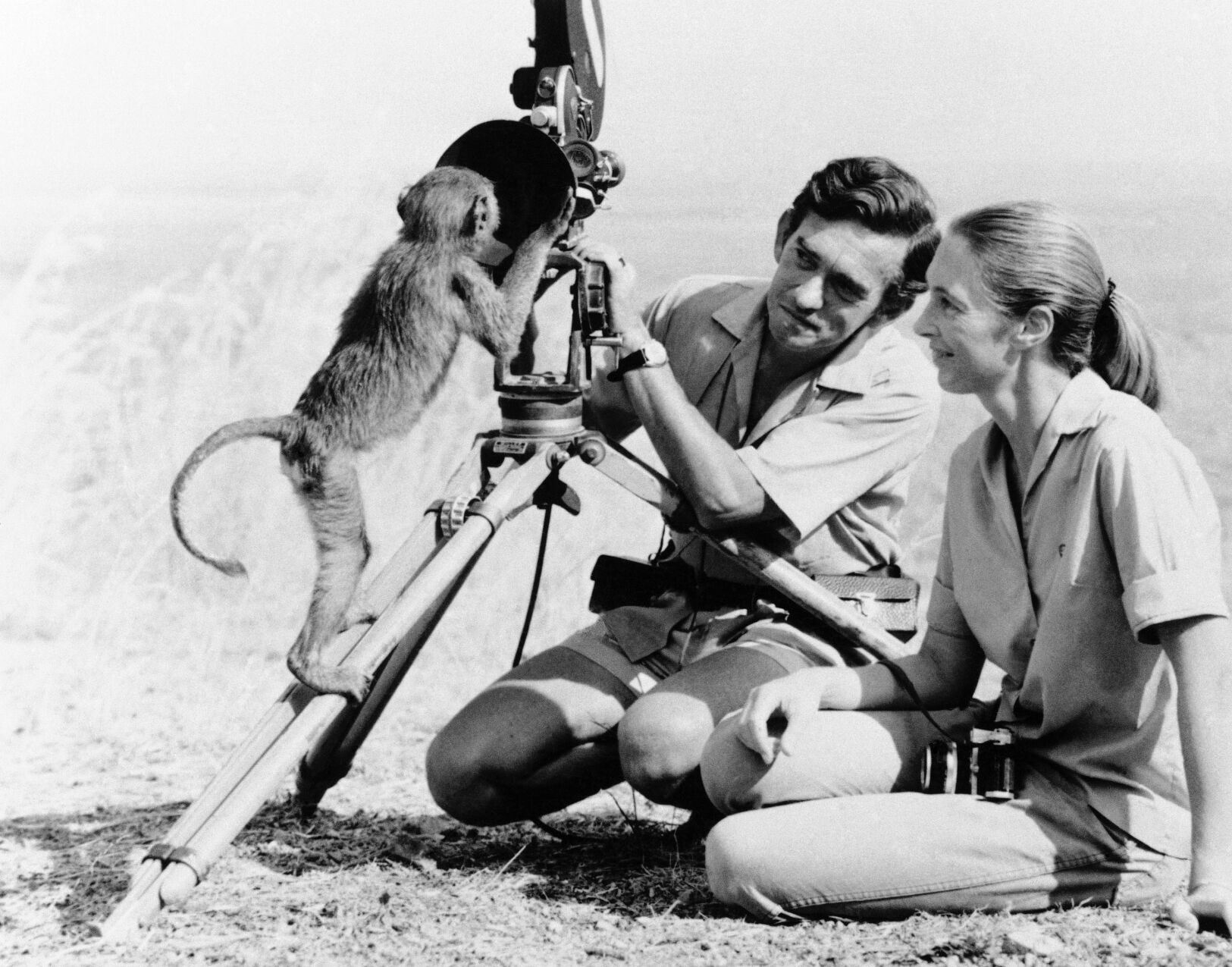
FILE - This Jan. 1974 file photo shows anthropologist Jane Goodall, right, with husband Hugo van lawick behind a camera. Goodall was named Thursday, May 20, 2021 as this year’s winner of the prestigious Templeton Prize, honoring individuals whose life’s work embodies a fusion of science and spirituality. (AP Photo)
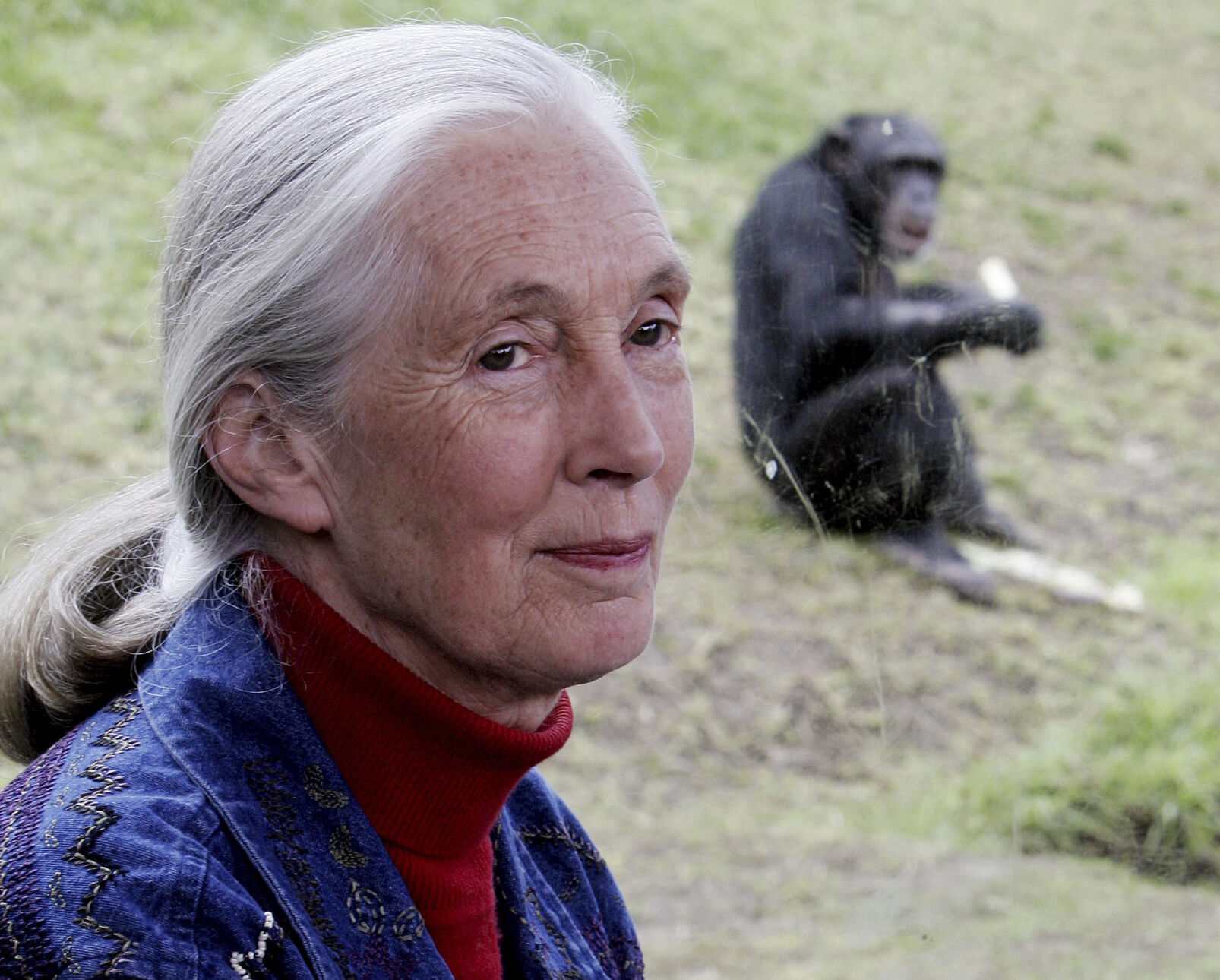
FILE - Primatologist Jane Goodall sits near a window where behind a chimpanzee eats in its enclosure at Sydney's Taronga Zoo Friday, July 14, 2006. Goodall was named Thursday, May 20, 2021 as this year’s winner of the prestigious Templeton Prize, honoring individuals whose life’s work embodies a fusion of science and spirituality. (AP Photo/Rick Rycroft)

Dr. Jane Goodall waves to the crowd gathered for the University of Montana President's Lecture Series on the UM campus in Missoula, Mont., on June 26, 2022. (Tommy Martino/Associated Press)

Jane Goodall appears on stage at 92NY, Sunday, Oct. 1, 2023, in New York. (Photo by Charles Sykes/Invision/AP)

English primatologist and anthropologist Jane Goodall speaks in the panel "Earth's Wisdom Keepers" on the last day of the forum's Annual Meeting in Davos, Switzerland, Friday, Jan. 19, 2024. (AP Photo/Markus Schreiber)

English primatologist and anthropologist, Jane Goodall, speaks during the Clinton Global Initiative, on Tuesday, Sept. 24, 2024, in New York. (AP Photo/Andres Kudacki)

President Joe Biden, center, prepares to present the Presidential Medal of Freedom, the Nation's highest civilian honor, to conservationist Jane Goodall in the East Room of the White House, Saturday, Jan. 4, 2025, in Washington. (AP Photo/Manuel Balce Ceneta)
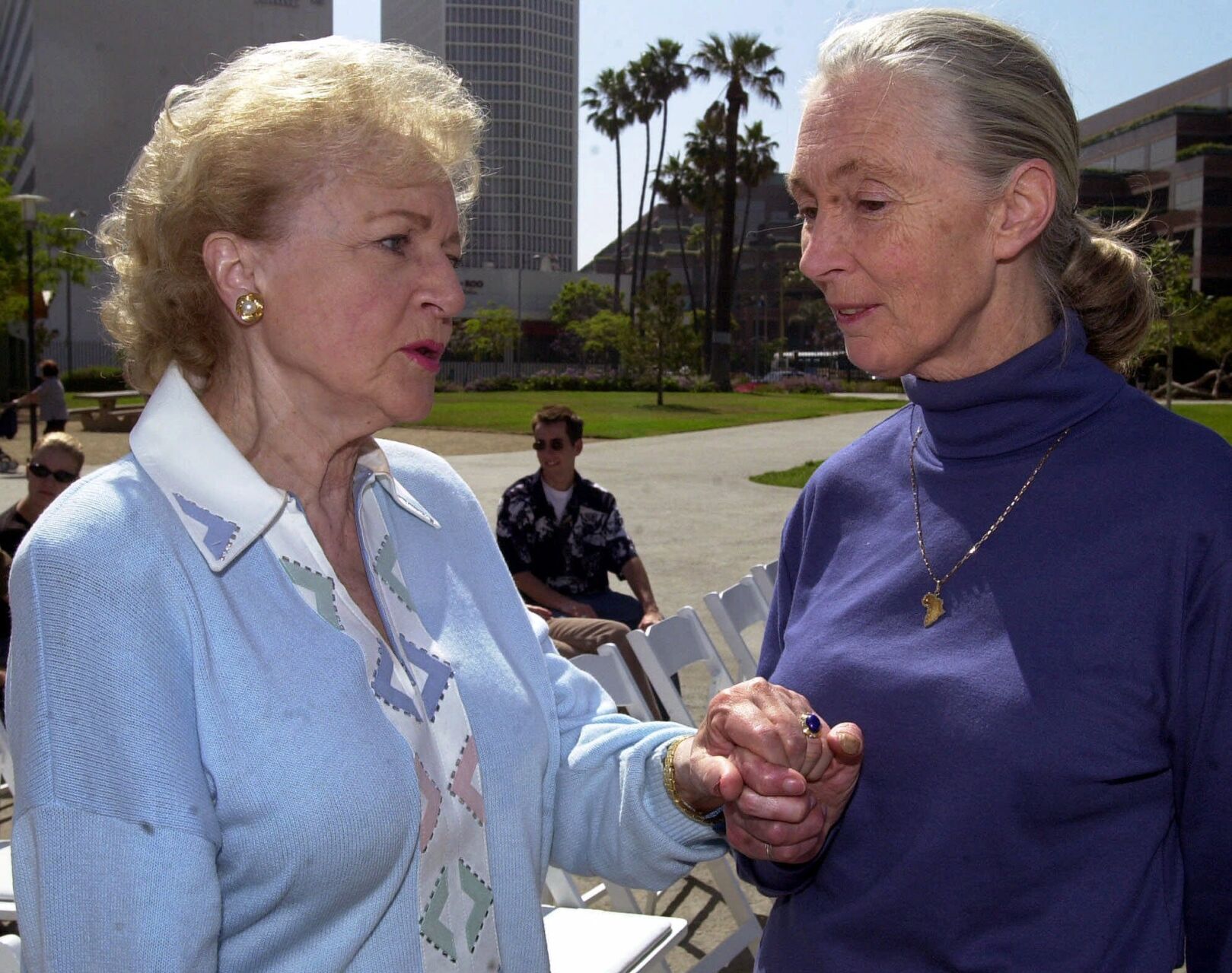
Anthropologist Jane Goodall, right, and actress Betty White meet together before a news conference Wednesday, May 30, 2001, at La Brea Tar Pits Museum in Los Angeles. Goodall joined religious leaders, conservationists and celebrities in calling for a halt to what they say is the Bush administration's plan to weaken endangered species protections. (AP Photo/Nick Ut)

Jane Goodall and her son Hugo, known as Grub, born in 1967, are seen on the shores of lake Tanganyika in Tanzania in this undated photo. The researcher, of London, England, is studying the chimpanzees of Gombe National Park in East Africa. (AP Photo)

Jane Goodall, British ethnologist and world famous expert for chimpanzees, looks at one the of gorillas of the Budapest Zoo in Budapest, Hungary, on Monday, Feb. 11, 2008. The scientist arrived to Budapest to observe the reconstruction of the city's zoo and to meet members of the worldwide nature protection foundation, Roots & Shoots to give lectures. (AP Photo/Bela Szandelszky)
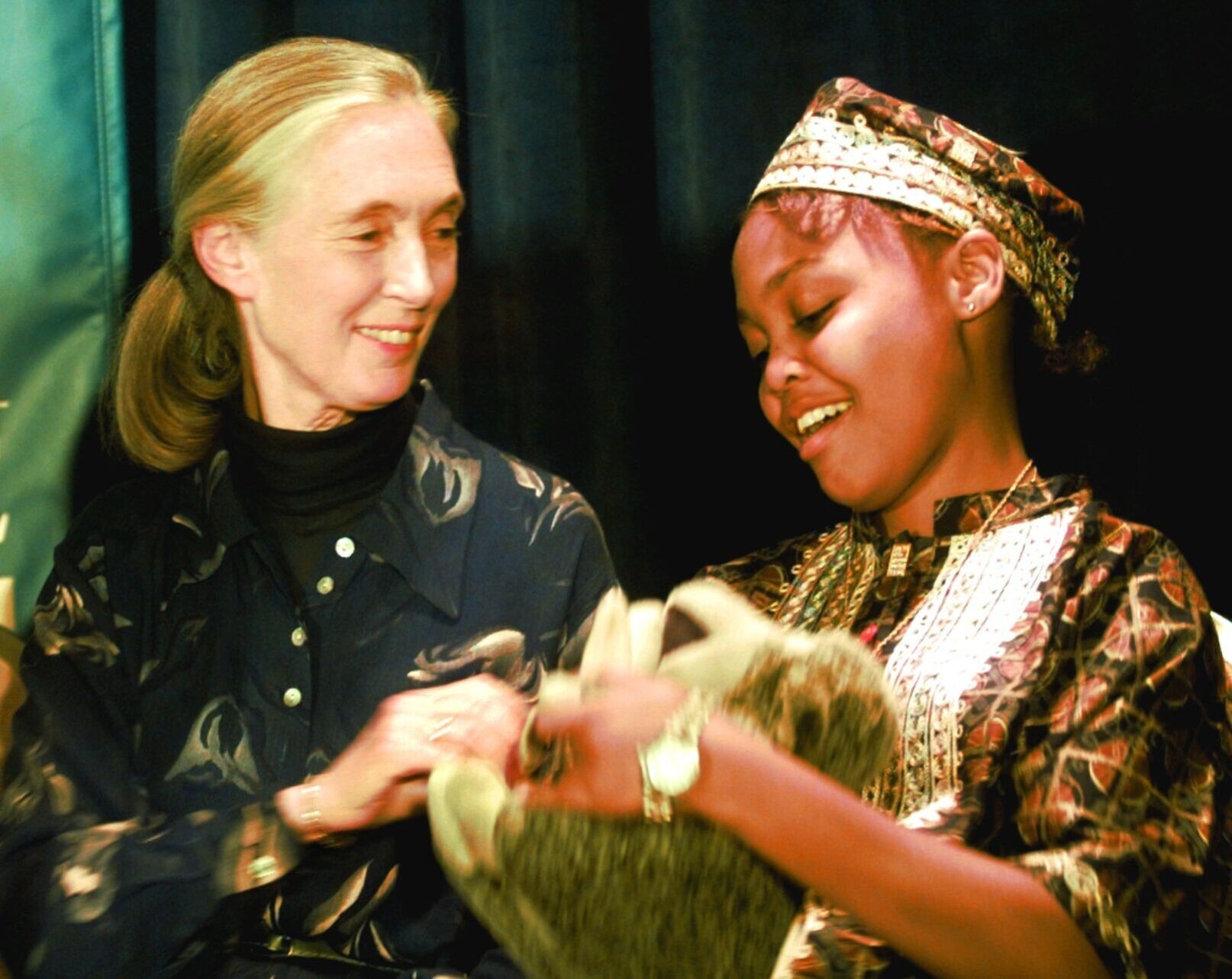
Famed naturalist Jane Goodall loans her mascot, a stuffed chimpanzee named "Mr. H," to Emma Kasiga, of Tanzania, at the State of the World Forum on Saturday, Oct. 5, 1996 in San Francisco. Goodall was the keynote speaker of the forum. (AP Photo/Susan Ragan)
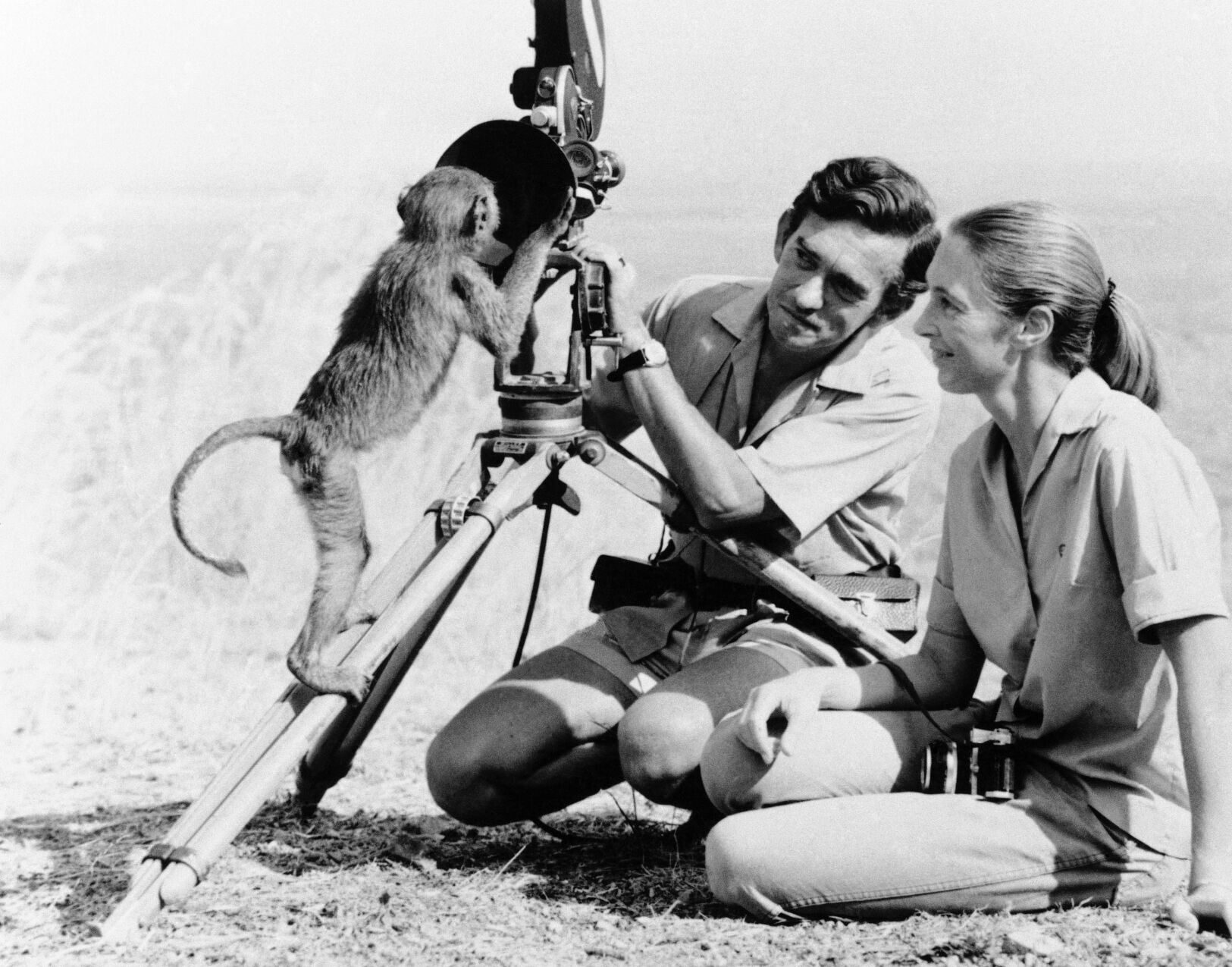
Anthropologist Jane Goodall, right with husband Hugo van Lawick behind camera, January 1974.

Renowned chimpanzee expert Jane Goodall stands outside the chimpanzee enclosure at Chicago's Lincoln Park Zoo on Saturday, March 24, 2007. Goodall was in Chicago to address leading primatologists at the "Mind of the Chimpanzee" conference, billed as the first scientific meeting on how chimpanzees think. (AP Photo/Nam Y. Huh)

Jane Goodall, left, gives Costa Rica's President Oscar Arias a present during a visit to Arias' home in San Jose, Thursday, Aug. 30, 2007. Goodall is in Costa Rica to promote her Roots and Shoots conservation program. (AP Photo/Kent Gilbert)
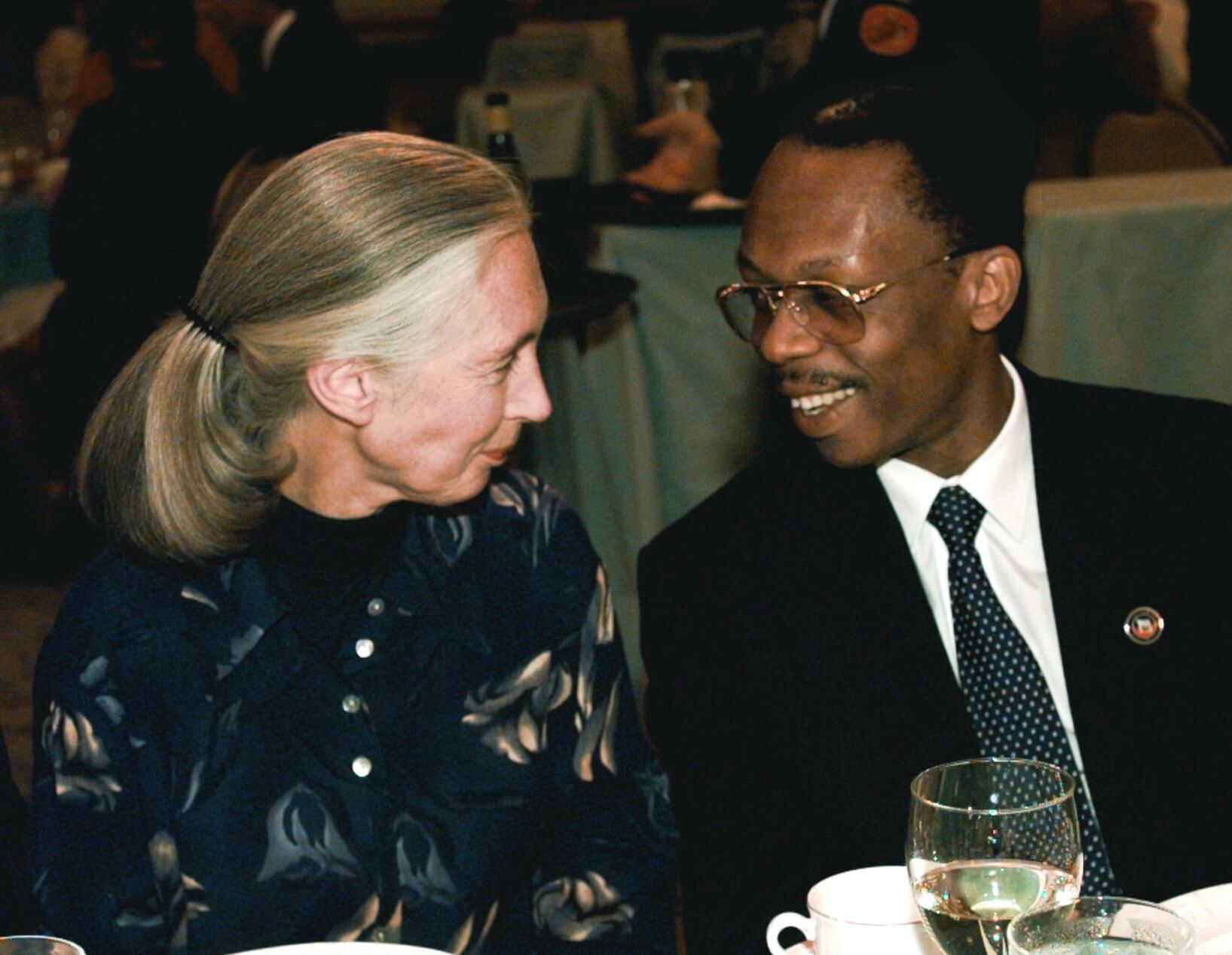
Famed naturalist Jane Goodall chats with former President of Haiti Jean Bertrand Aristide at the State of the World Forum luncheon on Saturday, Oct. 5, 1996 in San Francisco. Goodall was the keynote speaker at the forum. (AP Photo/Susan Ragan)
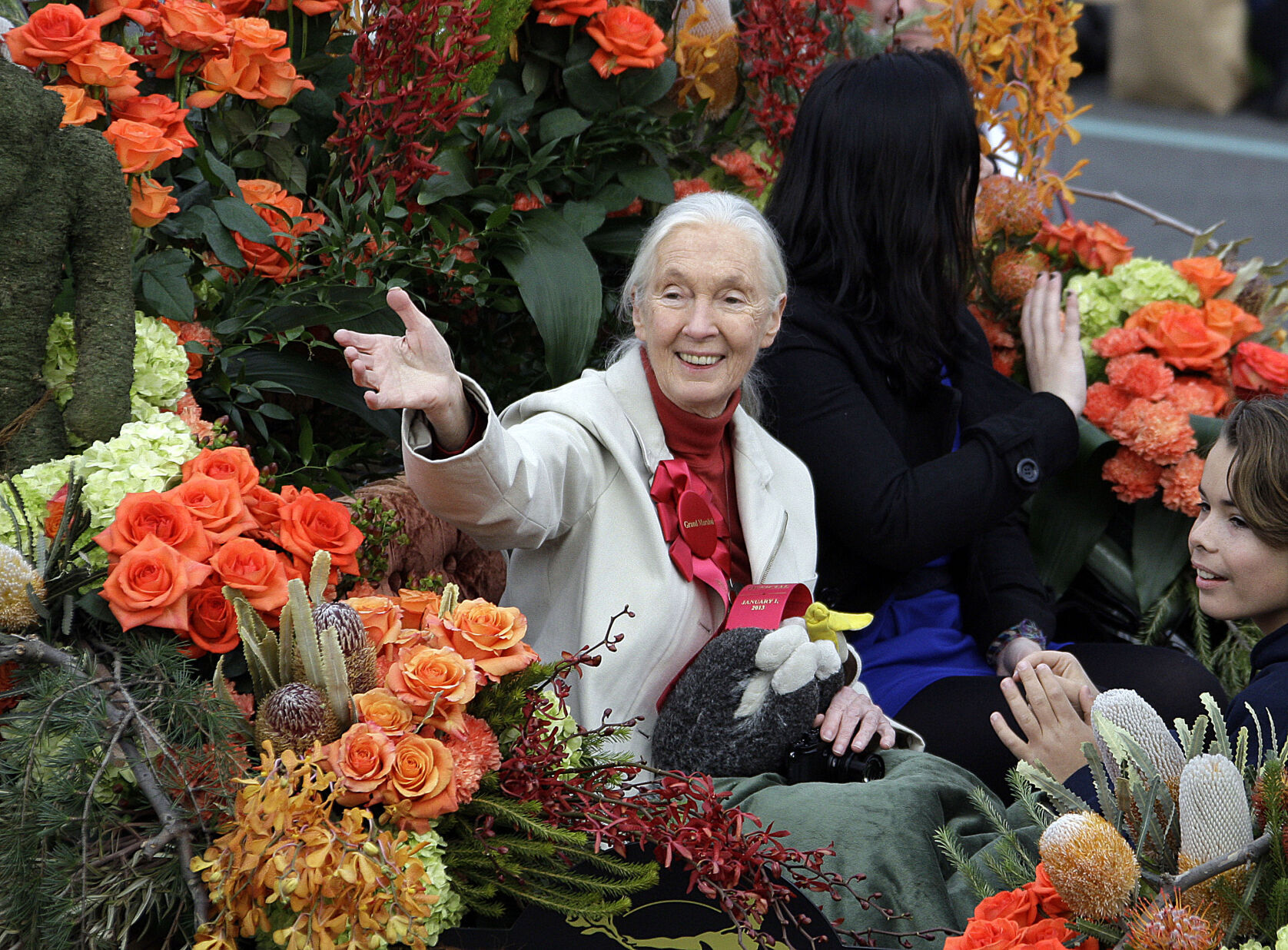
Jane Goodall, of England, famed for her work with chimpanzees in Africa and for her efforts on behalf of endangered species everywhere, is seen in the 124th Rose Parade in Pasadena, Calif., Tuesday, Jan. 1, 2013. (AP Photo/Reed Saxon)

Messengers of Peace and Goodwill Ambassadors Michael Douglas, left, Jane Goodall, center, and Herbie Hancock participate in a ceremony at United Nations headquarters, Monday, Sept. 21, 2015. Secretary-General Ban Ki-moon also participated in the event to mark the International Day of Peace. (AP Photo/Seth Wenig)
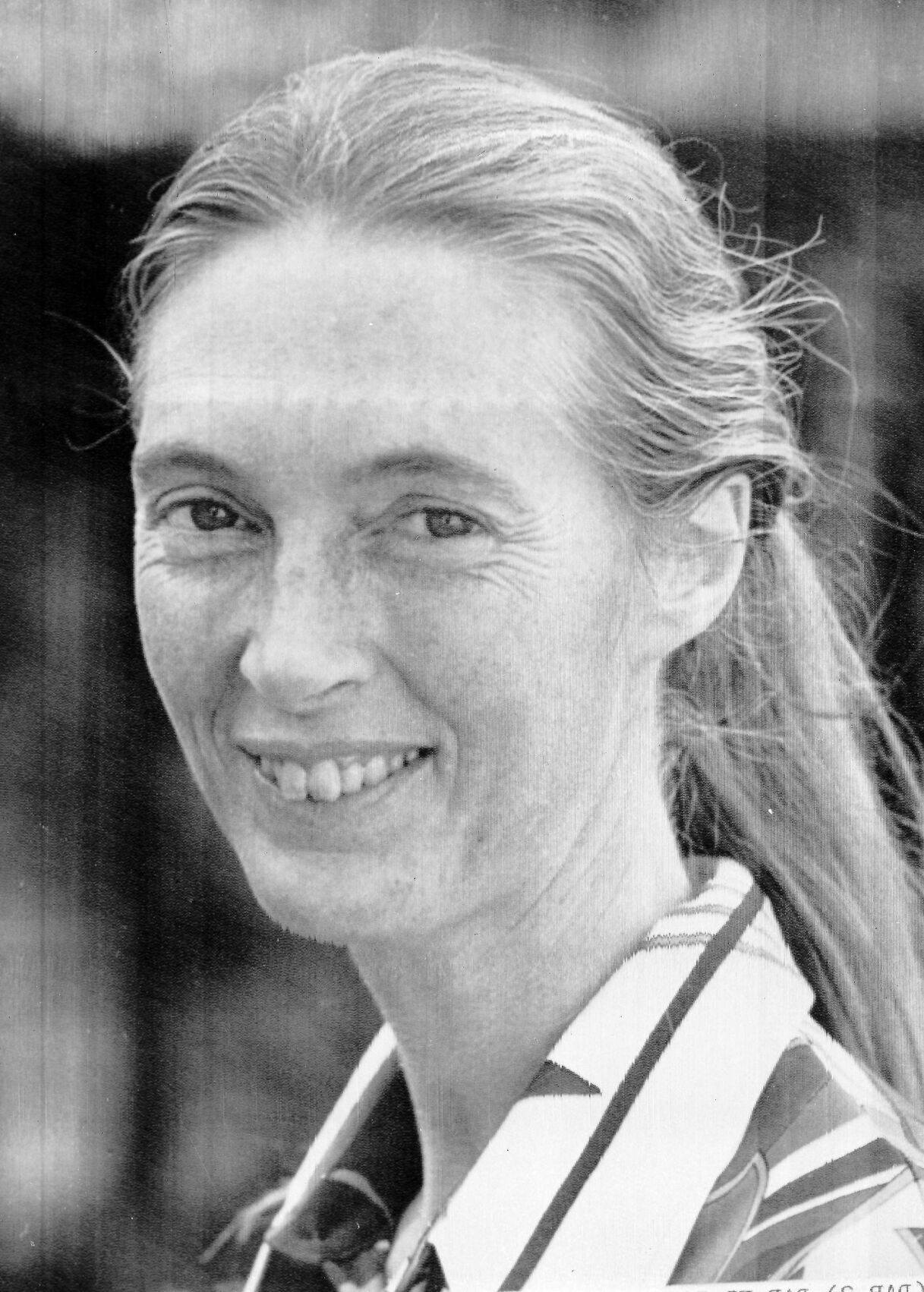
British anthropologist Jane Goodall is pictured in 1975, location unknown. (AP Photo)
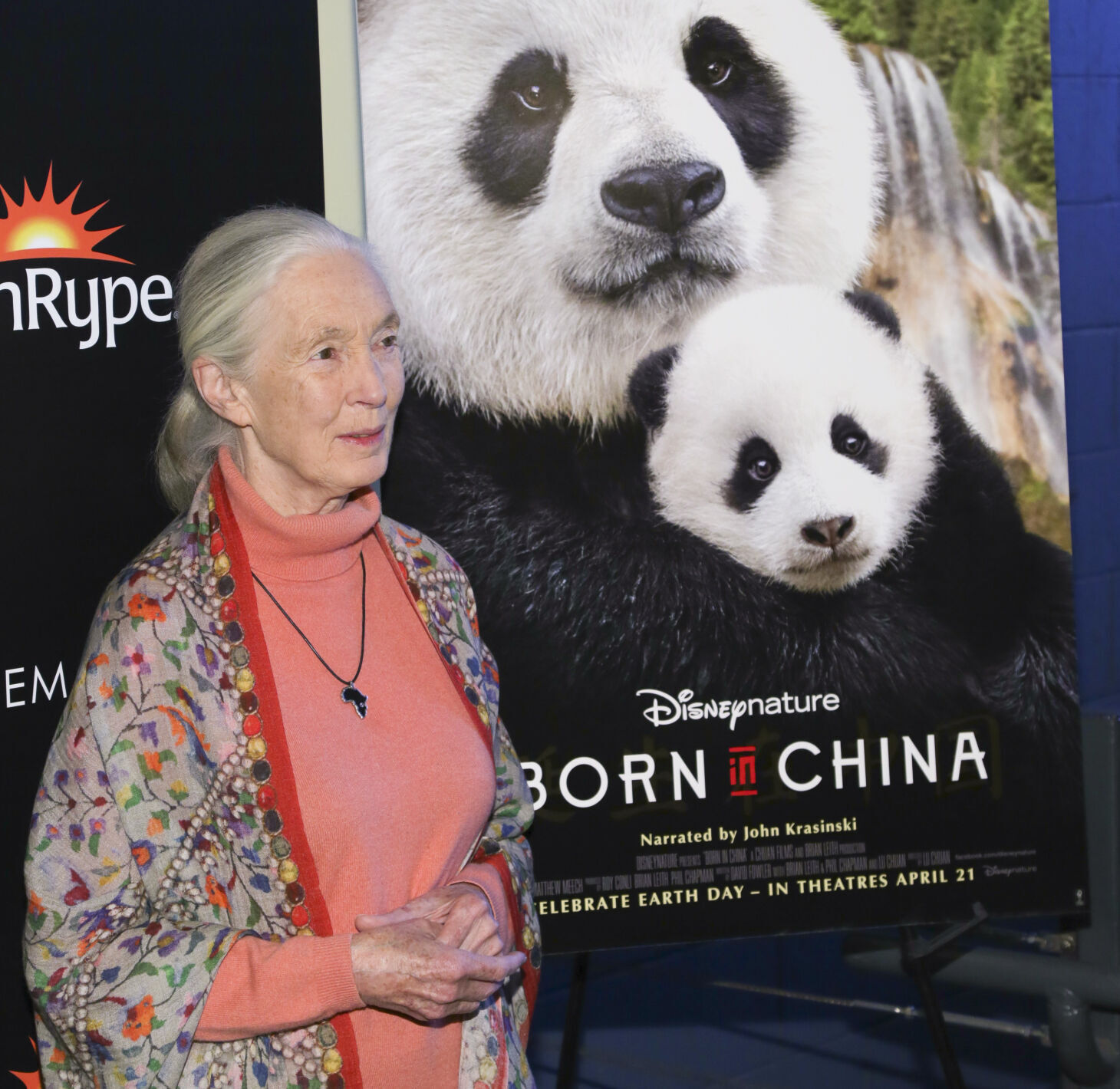
Dr. Jane Goodall attends the premiere for Disneynature's "Born in China" at the Landmark Sunshine Cinema on Saturday, April 8, 2017, in New York. (Photo by Brent Clarke/Invision/AP)

Jane Goodall arrives at the Los Angeles premiere of "Jane" at the Hollywood Bowl on Monday, Oct. 9, 2017, in Los Angeles. (Photo by Chris Pizzello/Invision/AP)

Composer Philip Glass, from left, Jane Goodall and songwriter Diane Warren arrive at the Los Angeles premiere of "Jane" at the Hollywood Bowl on Monday, Oct. 9, 2017, in Los Angeles. (Photo by Chris Pizzello/Invision/AP)

Primatologist Jane Goodall smiles after being honored for the lifetime achievements at a ceremony on her 85th birthday at City Hall in Los Angeles Wednesday, April 3, 2019.

