


What exactly is a dog show all about? Is it just a “beauty contest” for dogs? Is it a competition for the flashiest or best-groomed dog?
Though it’s always fun to just sit and marvel at all the different and amazing dogs on display (and their handlers), it might make it more interesting to understand more of what exactly is going on, and just what that judge is looking for as those dogs trot back and forth and run around in circles.
History
Dog shows developed in England in the 1800s as a means for evaluation and assessment of dogs that would be used as breeding stock. Breeds of dogs were developed to perform a purpose or function, whether used for hunting, retrieving, herding, guarding or just being companions. In other words, a dog breed is a type of dog that has been bred for generations to have a predictability to look, act and move to best perform that task for which that breed was meant to perform.
Dog show standards
Each breed has its own written blueprint or “standard." The standard for each breed describes the ideal specimen and how it should look, act and move. The standard for each breed is the guideline that is used to evaluate each specimen, whether by a breeder assessing their breeding stock trying to better the quality of their dogs or a judge evaluating a dog in the ring. It’s important to note that dogs aren’t really being judged against each other but are being judged according to how a judge thinks each dog adheres to its own breed standard. They evaluate dogs based on specific breed traits — which include physical appearance (conformation), structure and temperament — to determine how close they come to the embodiment of a written standard.
Key judging points
1. Conformation
This is the overall physical appearance and structure of the dog and how it “conforms” to that breed’s standard. Judges check for correct size and structure, proportions and balance for that breed. They also check head shape; eye color, shape and placement; ear size, shape and placement; coat; color and texture proper for that breed; bite or dentition (number of teeth and placement); tail set and carriage. Judges also examine the dog's bone structure, which includes aspects like neck length, shoulder placement, the spring of the rib cage, the strength of the back and the angulation of the hindquarters.
2. Temperament
A dog's disposition is a key factor. Judges look for a confident and steady temperament that is suitable and typical for the breed.
3. Movement
How a dog moves is a critical part of the evaluation, as it demonstrates the effectiveness of its structure.
4. Function
Judges consider the original purpose of the breed and evaluate whether the dog's physical traits enable it to perform that function. For example, a Scottish terrier's wiry coat, eyebrows and tail are all features related to its original job of hunting vermin.
5. Showmanship
Showmanship is the "X" factor that some dogs, just like some people, may be lucky to have. Charisma and personality all play into this enigmatic trait, but we must realize that due to a breed’s differences, the charisma of a poodle will be (and should be) different than the charisma of a bulldog.
Photos: The 2025 Westminster Dog Show

A dog competes during the junior showmanship competition at the 149th Westminster Kennel Club Dog show, Tuesday, Feb. 11, 2025, in New York. (AP Photo/Julia Demaree Nikhinson)

A Cocker Spaniel competes in the sporting group competition during the 149th Westminster Kennel Club Dog show, Tuesday, Feb. 11, 2025, in New York. (AP Photo/Julia Demaree Nikhinson)

A handlers shows a judge an Irish Red and White Setter's teeth in the sporting group competition during the 149th Westminster Kennel Club Dog show, Tuesday, Feb. 11, 2025, in New York. (AP Photo/Julia Demaree Nikhinson)

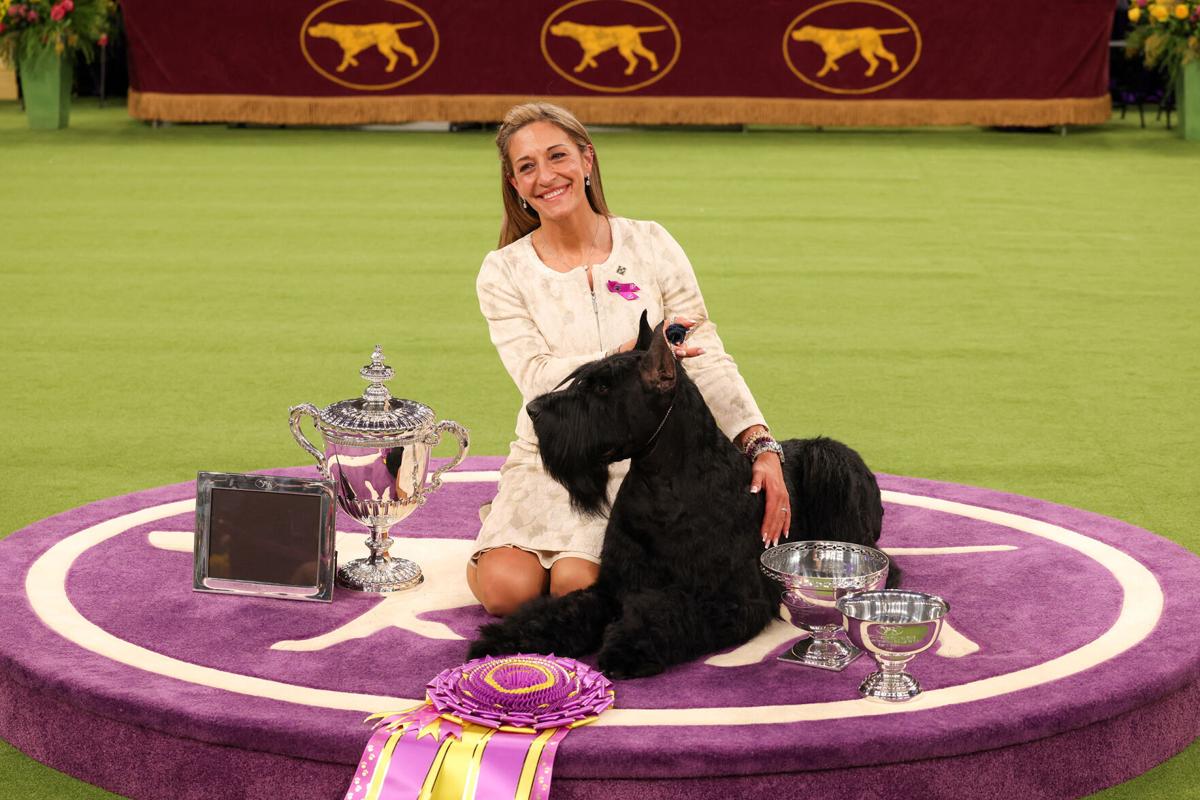
Katie Bernardin and Monty, a Giant Schnauzer, celebrate after winning best in show in the 149th Westminster Kennel Club Dog show, Tuesday, Feb. 11, 2025, in New York. (AP Photo/Julia Demaree Nikhinson)

Neal, a Bichon FrisË, and its handler compete in the best in show competition during the 149th Westminster Kennel Club Dog show, Tuesday, Feb. 11, 2025, in New York. (AP Photo/Julia Demaree Nikhinson)

A handler brushes Comet, a Shih Tzu, in the best in show competition during the 149th Westminster Kennel Club Dog show, Tuesday, Feb. 11, 2025, in New York. (AP Photo/Julia Demaree Nikhinson)

Katie Bernardin kisses Monty, a Giant Schnauzer, after winning best in show in the 149th Westminster Kennel Club Dog show, Tuesday, Feb. 11, 2025, in New York. (AP Photo/Julia Demaree Nikhinson)

Katie Bernardin, right, and Monty, a Giant Schnauzer, celebrate after winning best in show in the 149th Westminster Kennel Club Dog show, Tuesday, Feb. 11, 2025, in New York. (AP Photo/Julia Demaree Nikhinson)in the best in show competition during the 149th Westminster Kennel Club Dog show, Tuesday, Feb. 11, 2025, in New York. (AP Photo/Julia Demaree Nikhinson)

Katie Bernardin and Monty, a Giant Schnauzer, celebrate after winning best in show in the 149th Westminster Kennel Club Dog show, Tuesday, Feb. 11, 2025, in New York. (AP Photo/Julia Demaree Nikhinson)

Monty, a Giant Schnauzer, receives a treat after winning best in show in the 149th Westminster Kennel Club Dog show, Tuesday, Feb. 11, 2025, in New York. (AP Photo/Julia Demaree Nikhinson)

Mercedes, a German Shepard, and its handler arrive for the best in show competition during the 149th Westminster Kennel Club Dog show, Tuesday, Feb. 11, 2025, in New York. (AP Photo/Julia Demaree Nikhinson)

Archer, a Skye Terrier, competes in the terrier competition during the 149th Westminster Kennel Club Dog show, Tuesday, Feb. 11, 2025, in New York. (AP Photo/Julia Demaree Nikhinson)

Comet, a Shih Tzu, competes in the best in show competition during the 149th Westminster Kennel Club Dog show, Tuesday, Feb. 11, 2025, in New York. (AP Photo/Julia Demaree Nikhinson)

Katie Bernardin and Monty, a Giant Schnauzer, compete in the best in show competition during the 149th Westminster Kennel Club Dog show, Tuesday, Feb. 11, 2025, in New York. (AP Photo/Julia Demaree Nikhinson)

Katie Bernardin, center, reacts after winning best in show with Monty, a Giant Schnauzer, during the 149th Westminster Kennel Club Dog show, Tuesday, Feb. 11, 2025, in New York. (AP Photo/Julia Demaree Nikhinson)

Katie Bernardin and Monty, a Giant Schnauzer, compete in the best in show competition during the 149th Westminster Kennel Club Dog show, Tuesday, Feb. 11, 2025, in New York. (AP Photo/Julia Demaree Nikhinson)

Katie Bernardin, center, and Monty, a Giant Schnauzer, win best in show in the 149th Westminster Kennel Club Dog show, Tuesday, Feb. 11, 2025, in New York. (AP Photo/Julia Demaree Nikhinson)

Robin Novack, left, and Freddie, an English Springer Spaniel, compete in the sporting group competition during the 149th Westminster Kennel Club Dog show, Tuesday, Feb. 11, 2025, in New York. (AP Photo/Julia Demaree Nikhinson)

A Komondor, Ranger, competes in the working group competition during the 149th Westminster Kennel Club Dog show, Tuesday, Feb. 11, 2025, in New York. (AP Photo/Julia Demaree Nikhinson)

Dogs sit with their handlers during the working group competition of the 149th Westminster Kennel Club Dog show, Tuesday, Feb. 11, 2025, in New York. (AP Photo/Julia Demaree Nikhinson)

