

Zoe Kent hopes people get a little joy out of her talking about farming on the Internet. In one of her latest videos, she compares pesticide application to dry shampoo. "Farming is for the girls," she quips.
On Instagram and TikTok, under the handle farmwithzoe, Kent films herself putting on boots to load corn into a massive truck bed, posts memes about the price of grain and documents just about everything else about farm life — from getting rocks stuck in her equipment to eating lunch on long days out in a combine.

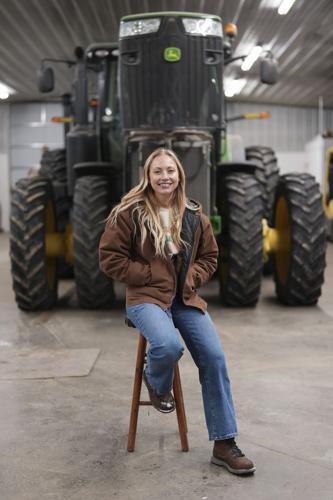
Zoe Kent poses for a portrait Jan. 20 at her farm in Bucyrus, Ohio.
Now, the future of TikTok — and "Farmtok," as some creators call the ecosystem of farm-related influencers online — has become more uncertain, thanks to a ban the U.S. government briefly implemented on TikTok this month.
That was followed by the new Trump administration rescinding that ban, at least for now, but farmers are all too aware that things could change and, with them, the ways they share farm life with the rest of the world.
"It's building your business on rented land, if you will," Kent said. "It's not guaranteed to be there."

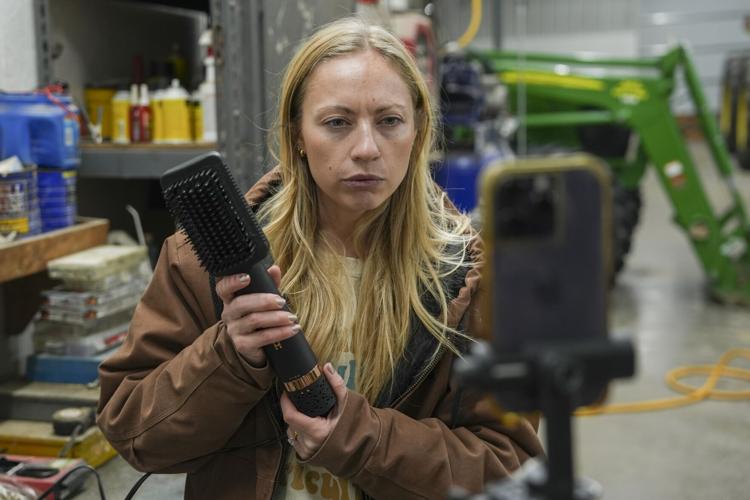
Zoe Kent uses a hair brush as a prop Jan. 20 while filming a social media video at her farm in Bucyrus, Ohio.
Changing landscape
Some producers make extra money by building a following on TikTok or Instagram. Others use social media to advertise to local customers like restaurants or farmers' markets. Perhaps most importantly, they want to continue to build community with other farmers in the face of industry challenges like economic pressures, climate change and the profession's toll on mental health.
Even before the uncertain threat to TikTok's future, farm creators had to contend with social media's evolution. As algorithms changed, these creators faced greater challenges communicating with a public that many see as increasingly disconnected from agriculture.
Multiple farmers said that disconnection grew over the years.
"I know for a fact our social media reach is greatly diminished now," said Beth Satterwhite, who has posted about her small organic vegetable farm in McMinnville, Oregon, on Instagram for more than a decade now. "On the ground stories of people working in agriculture are a little less interesting to the consumer — I don't know if it's actually less interesting or just less visible," she said.
Neil Denton, who farms corn, soybeans, wheat and rye in Barlow, Kentucky, shared a similar sentiment. He thinks many of his more than 80,000 followers on Instagram and 33,000 followers on TikTok are fellow producers, not members of the public. He calls that "disappointing" and worries about how little people know about the food that ends up on their plates.
Still, Denton thinks there's a silver lining: "Farming is a lonely occupation because you're not with a lot of co-workers," he said. "I think some farmers use social media as an outlet … to be able to express yourself and to be able to feel like you're not lonely."
Most say they'll keep adapting to whatever the platforms throw their way.

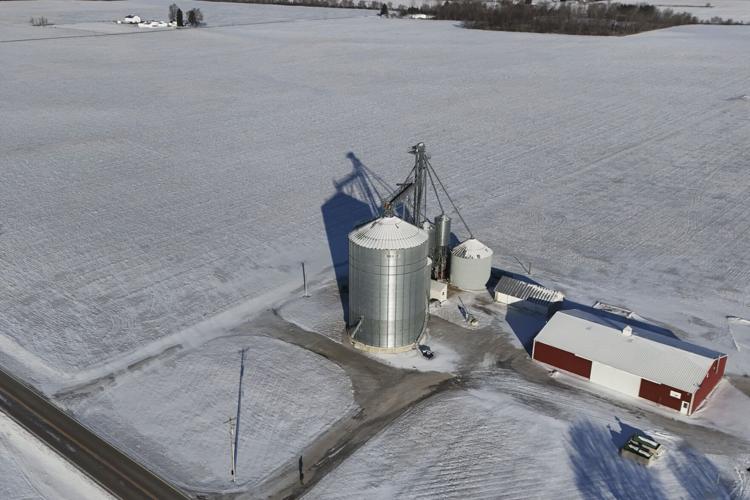
Snow blankets fields Jan. 20 at Zoe Kent's farm in Bucyrus, Ohio.
Lessons from the field
Within the farming community, it also can be useful to learn from other farmers, many producers said.
Megan Dwyer, who grows corn and soybeans and raises beef cattle in northwest Illinois, uses social media — especially X (formerly Twitter) and Facebook — to gauge what matters to other farmers.
"It's a great source for information, especially rapid information," she said.
However, all that rapid information has a price.
Satterwhite described a "language soup" around agriculture, saying it could be hard for an outsider to tell what farming practices are legitimately better for the climate or environment.
"I see a lot of greenwashing," Satterwhite said, referring to the practice of falsely portraying a product or practice as eco-friendly to market it to an environmentally conscious audience.

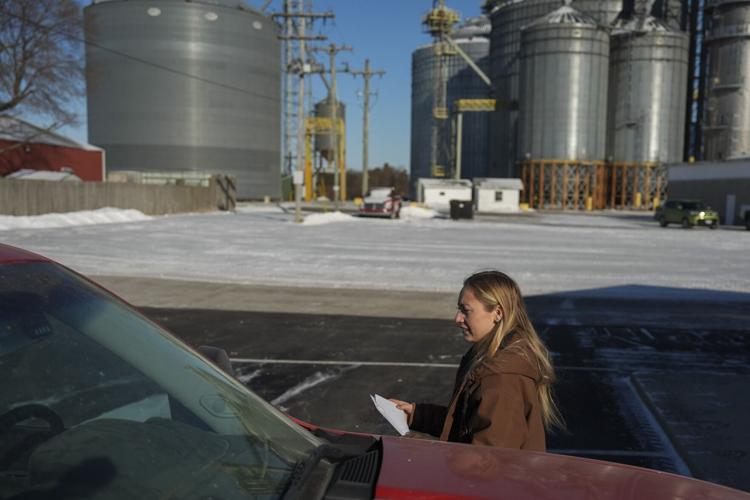
Zoe Kent walks back to her truck Jan. 20 after running an errand at a grain elevator in Upper Sandusky, Ohio.
"There's definitely a lot of misinformation out there," Kent said. "I try to sift out who has genuine questions versus who just already has a stance and they're not willing to hear me out."
That's something many farming influencers agree on: they still want a place to have the conversation.
As Dwyer put it: "You never know who you're influencing there or what may happen."



