

Pregnancy centers in the U.S. that discourage women from getting abortions added more medical services — and could be poised to expand further.
The expansion — ranging from testing and treatment for sexually transmitted infections to even providing primary medical care — unfolded for years. It gained steam after the Supreme Court overturned Roe v. Wade in 2022, clearing the way for states to ban abortion.
The push could get more momentum with Planned Parenthood closing some clinics and considering shuttering others following changes to Medicaid. Planned Parenthood is not just the nation’s largest abortion provider, but also offers cancer screenings, STI testing and treatment and other reproductive health services.
“We ultimately want to replace Planned Parenthood with the services we offer,” said Heather Lawless, founder and director of Reliance Center in Lewiston, Idaho. She said about 40% of patients at the anti-abortion center are there for reasons unrelated to pregnancy, including some who use the nurse practitioner as a primary caregiver.
The changes frustrate abortion-rights groups, who, in addition to opposing the centers’ anti-abortion messaging, say they lack accountability, refuse to provide birth control and most offer only limited ultrasounds that cannot be used for diagnosing fetal anomalies because the people conducting them don’t have that training. A growing number also offer unproven abortion-pill reversal treatments.
Because most of the centers don’t accept insurance, the federal law restricting release of medical information doesn’t apply to them, though some say they follow it anyway. They also don’t have to follow standards required by Medicaid or private insurers, though those offering certain services generally must have medical directors who comply with state licensing requirements.
“There are really bedrock questions,” said Jennifer McKenna, a senior adviser for Reproductive Health and Freedom Watch, a project funded by liberal policy organizations that researches the pregnancy centers, “about whether this industry has the clinical infrastructure to provide the medical services it’s currently advertising.”
Thomas Glessner, founder and president of the National Institute of Family and Life Advocates, a network of 1,800 centers, said the centers have government oversight through their medical directors. “Their criticism,” he said, “comes from a political agenda.”
Perhaps best known as “crisis pregnancy centers,” these mostly privately funded and religiously affiliated centers expanded services such as diaper banks ahead of the Supreme Court’s 2022 Dobbs v. Jackson Women’s Health Organization ruling.
As abortion bans kicked in, the centers expanded medical, educational and other programs, said Moira Gaul, a scholar at the Charlotte Lozier Institute, the research arm of SBA Pro-Life America. “They are prepared to serve their communities for the long-term,” she said.

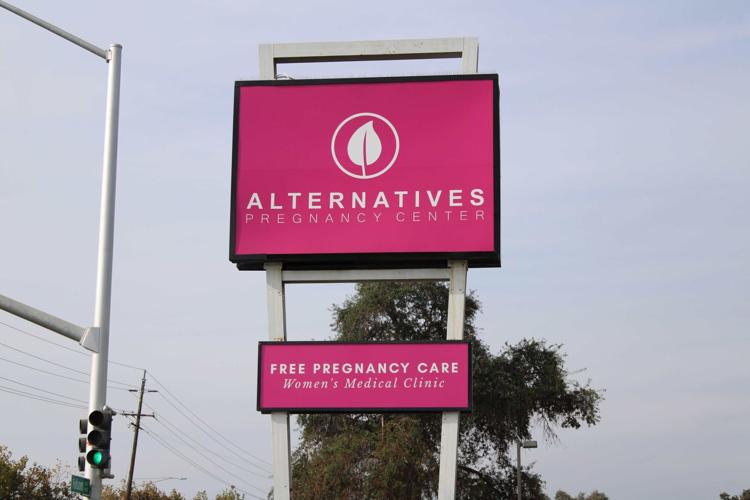
A sign for the Alternatives Pregnancy Center is seen Friday in Sacramento, Calif.
In Sacramento, California, for instance, Alternatives Pregnancy Center in the last two years added family practice doctors, a radiologist and a specialist in high-risk pregnancies, along with nurses and medical assistants. Alternatives — an affiliate of Heartbeat International, one of the largest associations of pregnancy centers in the U.S — is some patients’ only health provider.
When The Associated Press asked to interview a patient who received only nonpregnancy services, the clinic provided Jessica Rose, 31, a woman who took the rare step of detransitioning after spending seven years living as a man, during which she received hormone therapy and a double mastectomy.
For the last two years, she’s received all medical care at Alternatives, which has an OB-GYN who specializes in hormone therapy. “APC provided me a space that aligned with my beliefs as well as seeing me as a woman,” Rose said. She said other clinics tried “to make me think that detransitioning wasn’t what I wanted to do.”
Few, if any, pregnancy centers advertise that they provide help with detransitioning. Alternatives treated four similar patients over the past year, though that’s not its main mission, director Heidi Matzke said.

As of 2024, more than 2,600 anti-abortion pregnancy centers operated in the U.S., up 87 from 2023, according to the Crisis Pregnancy Center Map, a project led by University of Georgia public health researchers who are concerned about aspects of the centers. According to the Guttmacher Institute, 765 clinics offered abortions last year, down more than 40 from 2023.
Over the years, pregnancy centers received a boost in taxpayer funds. Nearly 20 states, largely Republican-led, funnel millions of public dollars to these organizations. Texas alone sent $70 million to pregnancy centers this fiscal year, while Florida dedicated more than $29 million for its “Pregnancy Support Services Program”
This boost in resources is unfolding as Republicans barred Planned Parenthood from receiving Medicaid funds under the tax cuts and spending law President Donald Trump signed in July. While federal law already blocked the use of taxpayer funds for most abortions, Medicaid reimbursements for other health services were a big part of Planned Parenthood’s revenue.
Planned Parenthood said its affiliates could be forced to close up to 200 clinics. Some already closed or reorganized. They cut abortion in Wisconsin and eliminated Medicaid services in Arizona. An independent group of clinics in Maine stopped primary care for the same reason.

The uncertainty is compounded by pending Medicaid changes expected to result in more uninsured Americans.
Some abortion-rights advocates worry that will mean more health care deserts where the pregnancy centers are the only option for more women.
Five Democratic state attorneys general issued warnings that the centers, which advertise to people seeking abortions, don’t provide them and don’t refer patients to clinics that do. The Supreme Court agreed to consider whether a state investigation of an organization that runs centers in New Jersey stifles its free speech.

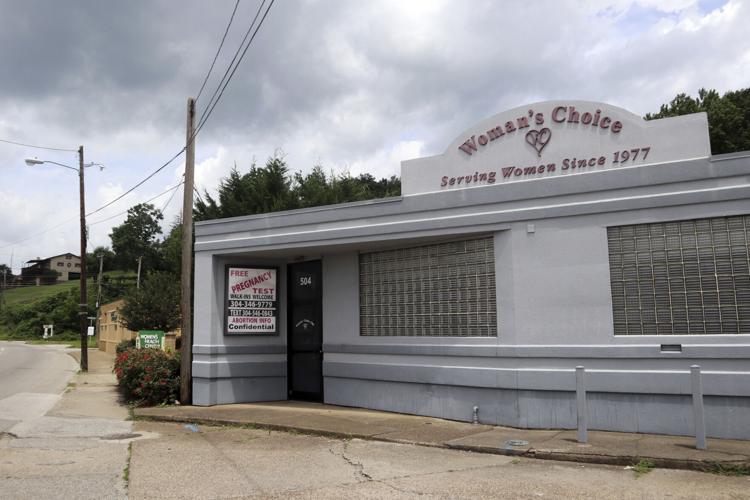
A sign advertises free pregnancy tests and abortion information outside the Woman’s Choice Pregnancy Resource Center on June 17, 2022, in Charleston, W.Va.

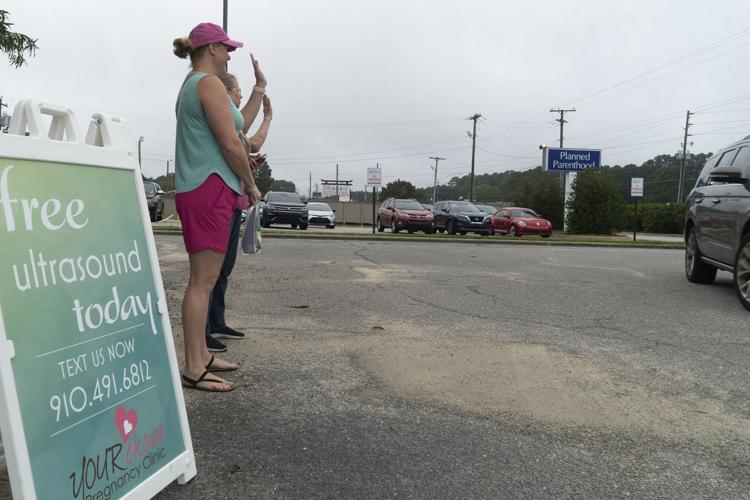
Air Force veteran and mother of two Laura Browne waves to a passing vehicle outside a Planned Parenthood clinic on Oct. 1, 2024, in Fayetteville, N.C. Browne does sidewalk ministry for a pregnancy center just up the road.
Q&A: Abortion medication explained
Medication abortion explained
Updated
How the chemical combination of mifepristone and misoprostal acts to end a pregnancy. (AP Graphic)
How does medication abortion work?
UpdatedMedication abortions became the preferred method for ending pregnancy in the U.S. even before the Supreme Court overturned Roe v. Wade. These involve taking two prescription medicines days apart — at home or in a clinic.
Abortion procedures are an invasive medical technique that empties the womb. They are sometimes called surgical abortions, although they don’t involve surgery.
Abortion by pills involves the drugs mifepristone and misoprostol. As more states seek abortion limits, demand for the pills is expected to grow.
Two pills work in combination
UpdatedMifepristone is taken first, swallowed by mouth. The drug dilates the cervix and blocks the effects of the hormone progesterone, which is needed to sustain a pregnancy.
Misoprostol, a drug also used to treat stomach ulcers, is taken 24 to 48 hours later. The pill is designed to dissolve when placed between the gums and teeth or in the vagina. It causes the uterus to cramp and contract, causing bleeding and expelling pregnancy tissue.
How late in pregnancy can the drugs be used?
UpdatedAbortion medication is approved for use up to the 10th week of pregnancy.
The pills may be taken in a doctor’s office or clinic, where patients sometimes have an ultrasound or lab tests beforehand. Some providers also offer the pills through telehealth visits and then send patients the medication by mail.
Use of the pills has been increasing in recent years. As of 2020, they accounted for 54% of all U.S. abortions, according to preliminary data from the Guttmacher Institute. The group’s final estimate is due later this year.
Are the drugs safe? What are the risks?
UpdatedStudies and real-use evidence show that when taken together, the pills are safe and up to 99% effective. Side effects may include nausea, vomiting and diarrhea.
Bleeding is normal. Very heavy bleeding — soaking more than two pads an hour for more than two hours — is uncommon but requires medical attention.
Dr. Stephanie Rand, a New York ob-gyn and abortion specialist with the advocacy group Physicians for Reproductive Health, says pregnancy tests should not be used right away to determine if a medication abortion was successful because the pregnancy hormone may linger in the body for several weeks. Bleeding, with blood clots that include lighter colored tissue, are signs of success, she said.
Serious complications are very rare. The Food and Drug Administration says more than 3.7 million U.S. women have used mifepristone since it was approved more than 20 years ago. The agency has received 26 reports of deaths in women using the medication, including two involving ectopic pregnancies, which grow outside the womb.
The medications are not recommended for certain patients, including those with suspected ectopic pregnancies or with implanted IUD birth control devices.
What are the costs and rules for use?
UpdatedCosts vary by location but are similar to abortion procedures and may total more than $500. Health insurance coverage varies, with some plans making the pills free or low cost and others not covering them at all.
Mifepristone is sold under the brand name Mifeprex and misoprostol under the brand name Cytotec, but both pills are available as generics.
The FDA approved mifepristone to terminate pregnancy in 2000, when used with misoprostol. At the time, it imposed several limits on how the drug could be prescribed and dispensed.
In December, the agency dropped the biggest restriction: a requirement that patients pick up the medication in person. The FDA said a scientific review of the drug’s use — including during the COVID-19 pandemic — showed that women could safely receive the pills through the mail after an online consultation, without any increase in side effects or complications.
The decision allowed mail delivery of the pills nationwide, a change long-sought by medical professional groups and abortion-rights supporters.
Still, millions of women will have trouble accessing the pills due to a patchwork of state laws targeting abortion broadly and the pills specifically. About half of U.S. states are expected to ban or greatly restrict abortion.
Will the pills be covered by state abortion bans?
UpdatedLegal experts foresee years of court battles over access to the pills, as abortion-rights proponents bring test cases to challenge state restrictions.
There are strong arguments and precedents on both sides, experts note, though little certainty about which side might prevail.
The Biden administration’s Justice Department has already signaled plans to challenge state restrictions on medication abortion. And federal lawyers are likely to be joined by outside parties, including abortion rights groups like Planned Parenthood and even the companies that make the pills.
The chief argument against pill restrictions is likely to be the longstanding principle that federal laws, including FDA decisions, preempts state laws. Indeed, few states have ever tried to fully ban an FDA-approved drug because of past rulings in the agency’s favor.
Still, states with blanket abortion bans are likely to interpret them as barring abortion pills. Many of the laws don't distinguish between abortion procedures and medication abortion.
“In the short term, those states that ban abortion are going to assume that their bans also include medication abortion and that will be prohibited,” said Greer Donley, a professor specializing in reproductive health care at the University of Pittsburgh Law School.
What is the current situation in the states?
UpdatedEven if blanket bans are successfully challenged, more than 30 states have laws specifically restricting access to abortion pills. For example, 19 states require that clinicians be physically present when the drug is administered.
Those laws could withstand court challenges. States have long had authority over how physicians, pharmacists and other providers practice medicine.
States also set the rules for telemedicine consultations used to prescribe medications. Generally that means health providers in states with restrictions on abortion pills could face penalties, such as fines or license suspension, for trying to send pills through the mail.
Women have already been traveling across state lines to places where abortion pill access is easier. That trend is expected to increase.
Meanwhile, some women will still get the medication via online pharmacies in Canada and overseas, often with telehealth consultations from foreign doctors. The practice is technically illegal but essentially unenforced, and advocates believe women will increasingly choose this method as more states move to ban abortions.
“Anti-abortion states are going to do everything they can to restrict medication abortion, but practically speaking people have been and will continue to access it through the mail from international pharmacies,” Donley said.
Donley expects lawsuits based on various legal theories to play out for a few years before any clear decisions emerge.
One key question is how the nation’s top court might rule if and when it takes up those court cases. While the Supreme Court has rejected a constitutional right to abortion, conservative justices have also generally deferred to FDA's primacy over drug decisions.

