

Catherine O'Hara died from a pulmonary embolism, according to the actress's death certificate, which was obtained by USA TODAY on Feb. 9. TMZ was first to report the news.
A pulmonary embolism is a blood clot that blocks blood flow to an artery in the lung, according to the Mayo Clinic.
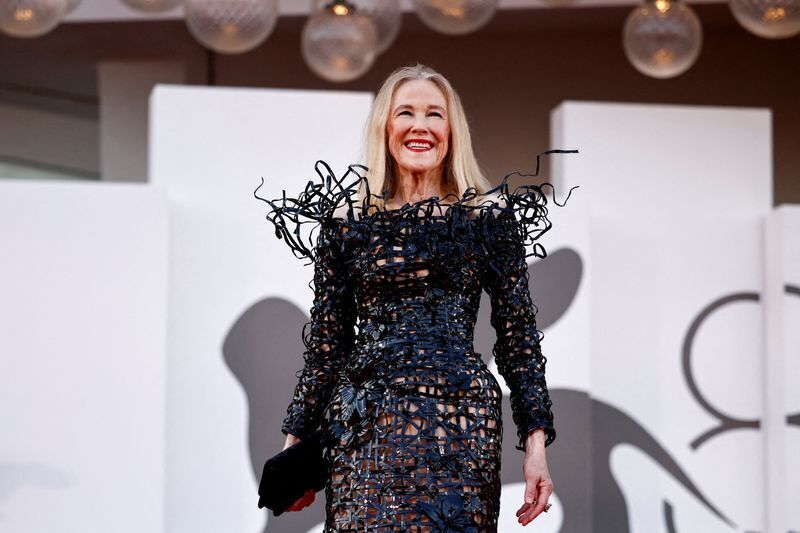
Cast member Catherine O'Hara poses on the red carpet during arrivals for the screening of the film "Beetlejuice Beetlejuice" out of competition, during the 81st Venice Film Festival, Venice, Italy, Aug. 28, 2024.
This is considered a medical emergency as it causes issues with blood flow and oxygen levels in your lungs, the Cleveland Clinic adds.
According to reports, O'Hara, 71, died within hours of the onset of symptoms, the document reads. She was also diagnosed with rectal cancer, according to the death certificate.

Here's what to know about the health complication.
Pulmonary embolism symptoms
A pulmonary embolism is one of the most common heart and blood vessel conditions in the world, according to the Cleveland Clinic, with about 900,000 people a year in the United States experiencing one.
Though symptoms can vary based on clot size and underlying conditions, the Mayo Clinic says common signs include shortness of breath, chest pain and fainting.
Other symptoms may include:
- Cough with bloody mucus
- Rapid or irregular heartbeat
- Lightheadedness or dizziness
- Excessive sweating
- Fever
- Leg pain or swelling, or both, usually in the back of the lower leg
- Clammy or discolored skin
What causes a pulmonary embolism?
A pulmonary embolism occurs when "a clump of material, most often a blood clot, gets stuck in an artery in the lungs, blocking the flow of blood," according to the Mayo Clinic. And in many cases, multiple clots are involved.
Blood clots most commonly come from the deep veins of your legs, a condition known as deep vein thrombosis, the clinic notes.
Sometimes blockages in the blood vessels are caused by other substances such as fat from broken bones, part of a tumor or air bubbles, the clinic added.
"Without quick treatment, a pulmonary embolism can cause heart or lung damage and even death," the Cleveland Clinic notes. "About 33% of people with a pulmonary embolism die before they get a diagnosis and treatment."
Who is at risk for a pulmonary embolism?
Anyone can develop clots that lead to a pulmonary embolism, the Mayo Clinic says, but certain factors can increase your risk.
Those factors include a history of blood clots; medical conditions like heart disease, certain cancers, surgery, clotting disorders and COVID-19. Extended periods of inactivity, including bed rest and long trips, can also increase your risk.
Other factors are smoking, being overweight, supplemental estrogen and pregnancy.
Pulmonary embolism prevention and treatment
To help prevent a blood clot from forming, people should be physically active, use compression devices or leg elevation when needed. Those at risk of clots should take blood thinners.
Medical professionals use blood tests and other scans to diagnose a pulmonary embolism, the clinic adds, and can treat them in a number of ways depending on the severity, including said blood thinners or other therapies and procedures.
Photos: Notable deaths in 2026
Diane Crump
Updated
Diane Crump, who in 1969 became the first woman to ride professionally in a horse race and a year later became the first female jockey in the Kentucky Derby, died Jan. 1. She was 77.
Ahn Sung-ki
Updated
Ahn Sung-ki, one of South Korean cinema’s biggest stars whose prolific 60-year career and positive, gentle public image earned him the nickname “The Nation’s Actor,” died Jan. 5. He was 74.
Eva Schloss
Updated
Auschwitz survivor Eva Schloss, the stepsister of teenage diarist Anne Frank and a tireless educator about the horrors of the Holocaust, died Jan. 3. She was 96.
Glenn Hall
Updated
Glenn Hall, a Hockey Hall of Famer whose ironman streak of 502 starts as a goaltender remains an NHL record, died Jan. 7. He was 94.
Bob Weir
Updated
Bob Weir, the guitarist and singer who, as an essential member of the Grateful Dead, helped found the sound of the San Francisco counterculture of the 1960s and kept it alive through decades of endless tours and marathon jams, died Jan. 10. He was 78.
Scott Adams
Updated
Scott Adams, whose popular comic strip “Dilbert” captured the frustration of beleaguered, white-collar cubicle workers and satirized the ridiculousness of modern office culture until he was abruptly dropped from syndication in 2023 for racist remarks, died Jan. 13. He was 68.
Sly Dunbar
Updated
Two-time Grammy Award-winning reggae drummer Sly Dunbar, who fueled countless tracks from Bob Marley to Bob Dylan and was one-half of the influential reggae rhythm section Sly & Robbie, died Jan. 26. He was 73.
John Brodie
Updated
John Brodie, who won an MVP award and was one of the NFL's most prolific passers during a 17-year career with the San Francisco 49ers, died Jan. 23. He was 90.
Claudette Colvin
Updated
Claudette Colvin, whose 1955 arrest for refusing to give up her seat on a segregated Montgomery bus helped spark the modern civil rights movement, died Jan. 13. She was 86.
Valentino Garavani
Updated
Valentino Garavani, the jet-set Italian designer whose high-glamour gowns — often in his trademark shade of “Valentino red” — were fashion show staples for nearly half a century, died Jan. 19. He was 93.
Catherine O'Hara
Updated
Catherine O'Hara, the Emmy-winning actor known for comedic roles across the decades — from Kevin's beleaguered mom in “Home Alone” to the iconic Moira Rose in “Schitt's Creek” — died Jan. 30. She was 71.
Demond Wilson
Updated
Demond Wilson, who found fame in the 1970s playing Lamont on “Sanford and Son” and went on to become a minister, died Jan. 30. He was 79.
LaMonte McLemore
Updated
Singer LaMonte McLemore, a founding member of vocal group The 5th Dimension, whose smooth pop and soul sounds with a touch of psychedelia brought them big hits in the 1960s and ’70s, died Feb. 3. He was 90.
Sonny Jurgensen
Updated
Sonny Jurgensen, the Hall of Fame quarterback whose strong arm, keen wit and affable personality made him one of the most beloved figures in Washington football history, died Feb. 6. He was 91.
James Van Der Beek
Updated
James Van Der Beek, a heartthrob who starred in coming-of-age dramas at the dawn of the new millennium, shooting to fame playing the titular character in “Dawson’s Creek” and in later years mocking his own hunky persona, died Feb. 11. He was 48. Van Der Beek revealed in 2024 that he was being treated for colorectal cancer.
Robert Duval
Updated
Robert Duvall, the Academy Award-winning actor known for his roles in Hollywood classics such as "The Godfather" and "Apocalypse Now," died Feb. 15. He was 95.
Frederick Wiseman

Frederick Wiseman, the celebrated director of “Titicut Follies” and dozens of other documentaries whose in-depth, unadorned movies comprised a unique and revelatory history of American institutions, died Feb. 16. He was 96.
Jesse Jackson

The Rev. Jesse L. Jackson, a protege of the Rev. Martin Luther King Jr. and two-time presidential candidate who led the Civil Rights Movement for decades after the revered leader's assassination, died Feb. 17. He was 84.
Eric Dane

Eric Dane, the celebrated actor best known for his roles on “Grey’s Anatomy” and “Euphoria” and who later in life became an advocate for ALS awareness, died Feb. 19. He was 53.

