





For 25 years, Stan Klyver was a freelance crossword puzzle creator. Well, kind of. His puzzles put a twist to the classic crossword puzzle.
Before Klyver dabbled with crossword puzzles, he was an artist — and still is. He went to art school in Los Angeles, where he met equally artistic Dorothy, who is now his wife of 66 years. They moved to Tucson 15 years ago.
In the ’80s, Klyver decided to design a crossword puzzle and send it to Dell magazine, a popular platform for puzzles. Six months passed and Klyver called Dell’s editor to follow up. It turns out the editor no longer worked for the magazine but had filed Klyver’s puzzle away before departing.
After a Dell staff member dug through the mile-high pile of paperwork, Klyver’s puzzle was found. The new crew at Dell loved his work and wanted more. In 1988, Klyver saw his first puzzle published.

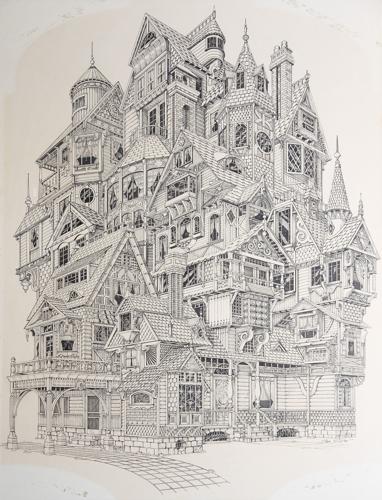
“They Don’t Build ’Em Like They Used To.”
“The first time I submitted to Dell, I just wanted to see if I could do it. It was experimental,” Klyver says.
The eye-popping thing about Klyver’s puzzles is the artwork behind them. They aren’t your standard crossword puzzles with trivia-like questions or clues at the bottom and squares to fill in at the top. All of Klyver’s puzzles incorporated his artistic talent.
For example, in one puzzle, the theme was “where do they sleep?” In one of the hints, Klyver drew a picture of a vampire. The answer for the crossword? Coffin. Another puzzle was based around noises that animals make. He’d draw a picture of a cat and, of course, the answer to write in was “meow.”
Some of his puzzles were much more complicated than that. One brain teaser showcased a handful of doodles in the middle of the page, with the crossword portion perfectly squared around the perimeter. If one of the doodles was a pair of glasses, you’d have to figure out the right spot to write in “glasses.”

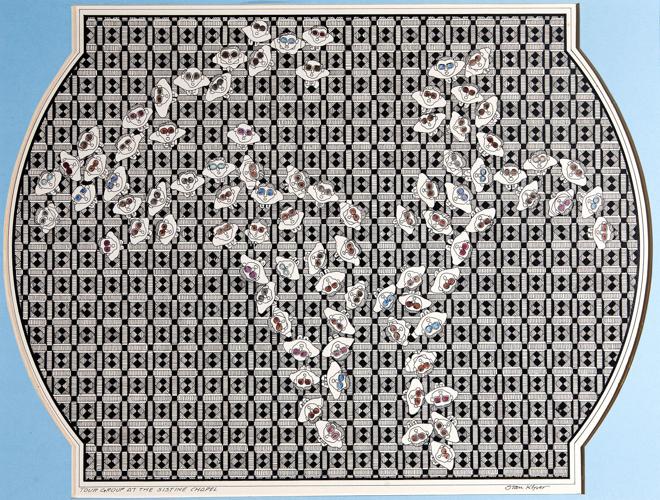
“Tour Group at the Sistine Chapel,” pen and watercolor, by Stan Klyver. The artists says he stopped making making puzzles around five years ago but still enjoys making line drawings.
Some puzzles had the vibe of connect the dots. Some were matching games. Others were riddles. But trust me, all of them could stump anyone’s brain.
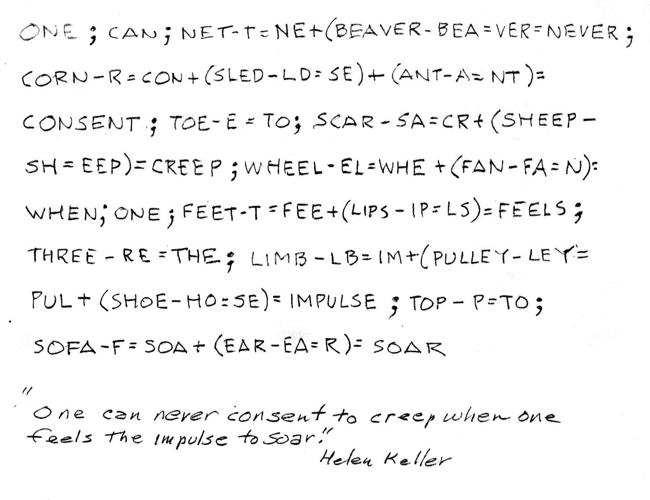
Klyver says his favorite puzzles to create were rebus puzzles, in which words are represented by combinations of pictures and letters.
“It was satisfying, and fun, to see them published,” Klyver says. “It was fun to see if you could do it. It was challenging.”
Some of the puzzles took Klyver less than a day to make. Others, especially ones with complicated illustrations, could take up to a week. Depending on the puzzle, Klyver usually started with the crossword portion on a sheet of graph paper. The drawings and fun parts would come next.
“The ideas would just come to me,” he says. “But some of them didn’t have themes. Some of them are just puzzles.”
Beyond puzzle-making, Klyver and his wife owned a publishing company where they created greeting cards and prints featuring both of their artwork. Klyver also did technical and commercial art for an aircraft company. Puzzles were just a side job.
“Puzzles were things I did for fun,” he says.
Klyver stopped making puzzles around five years ago, but he still creates art as a hobby. Line drawings are his favorite.
“Art is like fishing,” he says. “You just get lost in it.”

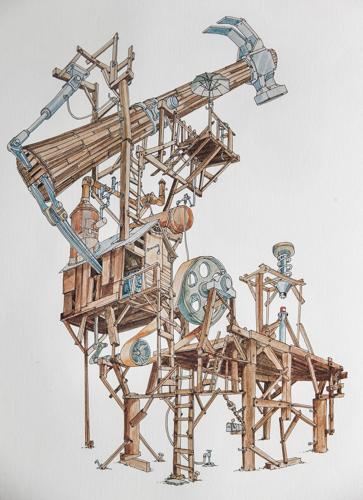
“Condensed Milk Can Opener.”

Dorothy Klyver, Stan’s wife of more than 66 years, painted this watercolor called “Three Girls Dancing.” Stan and Dorothy met at art school in Los Angeles.

An illustrated crossword puzzle by Stan Klyver
When making puzzles, artist Stan Klyver of
Tucson usually started with the crossword
portion on a sheet of graph paper. The
drawings and fun parts would come next.

