

Southern Living magazine once described “y’all” as “the quintessential Southern pronoun.” It’s as iconically Southern as sweet tea and grits.
While “y’all” is considered slang, it’s a useful word nonetheless. The English language doesn’t have a good second person plural pronoun; “you” can be both singular and plural, but it’s sometimes awkward to use as a plural. It’s almost like there’s a pronoun missing. “Y’all” fills that second person plural slot – as does “you guys,” “youse,” “you-uns” and a few others.
I’m interested in “y’all” because I was born in North Carolina and grew up saying it. I still do, probably a couple dozen times a day, usually without intention or even awareness. As a historian who has researched the early history of the word, I’m also interested in how the word’s use has changed over the years.
 A sign encourages people to vote in Charlotte, N.C., ahead of the 2022 U.S. midterm elections. Sean Rayford/Getty Images
Like something a ‘hillbilly redneck’ would say
“Y’all” might serve an important function, but it has acquired negative connotations.
Back in 1886, The New York Times ran a piece titled “Odd Southernisms” that described “y’all” as “one of the most ridiculous of all the Southernisms.”
That perception has persisted. Like the Southern dialect in general, the use of “y’all” has often been seen as vulgar, low-class, uncultured and uneducated. As someone noted in Urban Dictionary, “Whoever uses [y’all] sounds like a hillbilly redneck.”
In a more recent New York Times essay, writer Maud Newton said that she associated the word with her father, who “defended slavery, demanded the subservience of women and adhered to ‘spare the rod and spoil the child.’” He also demanded that his children say “y’all” rather than “you guys.” She grew up hating the word.
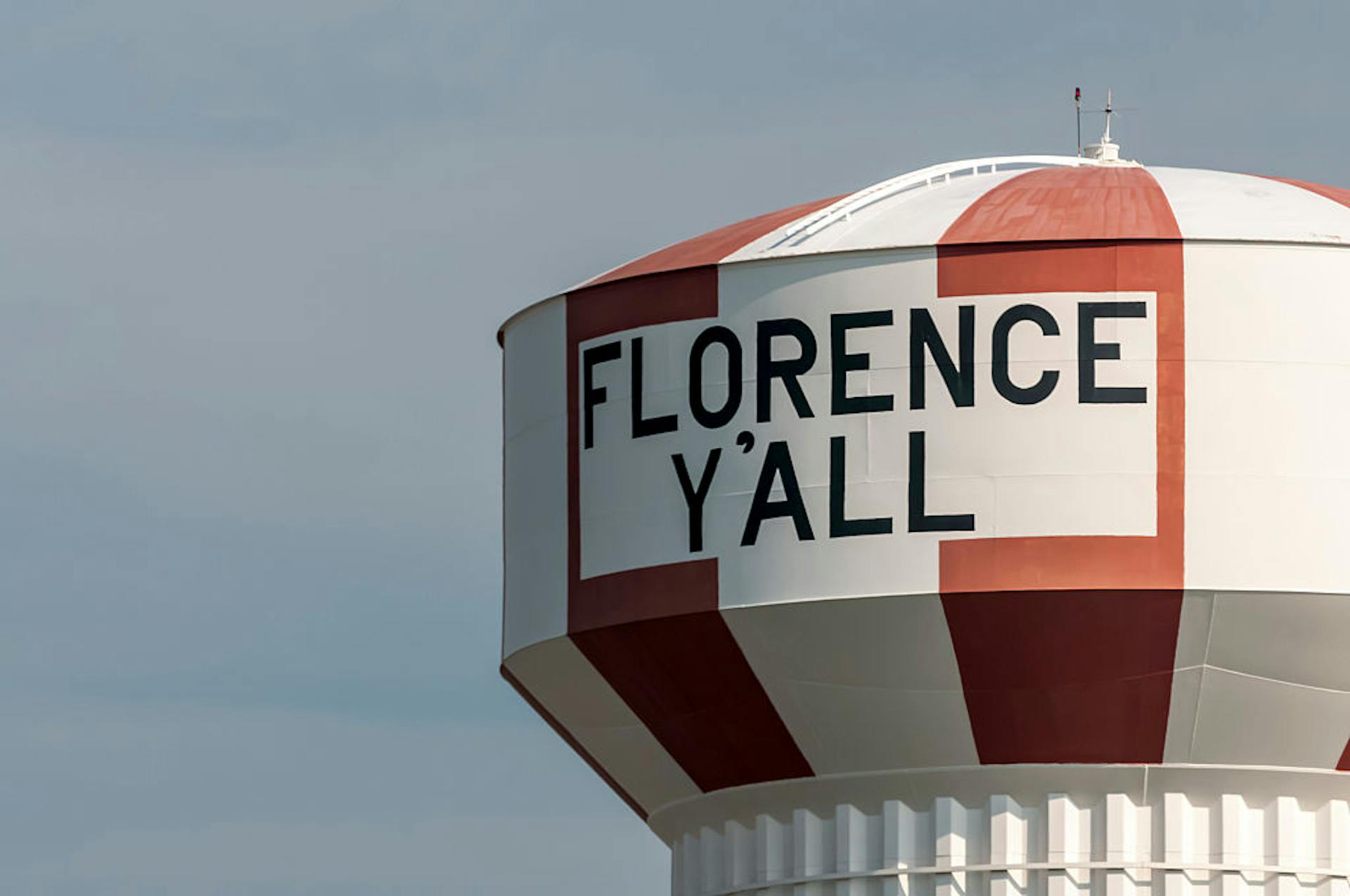 A water tower in Florence, Ky., proudly displays the collective form of address long associated with the U.S. South. Education Images/Universal Images Group via Getty Images
At a time when many Americans are calling for the removal of Confederate monuments and opposing the Lost Cause mythology, “y’all,” with its Southern overtones, might make some people uncomfortable – a misguided reaction, perhaps, but one that has been felt by both those who hear it and those who say it.
Imagine ‘y’all’ with a British accent
The word has not always had such negative connotations.
The etymology of “y’all” is murky. Some linguists trace it back to the Scots-Irish phrase “ye aw”; others suggest an African American origin, perhaps from the Igbo word for “you” brought over by Nigerian-born slaves. According to the “Oxford English Dictionary,” the word first appeared in print in 1856, and all of its examples are sources connected to the American South. Michael Montgomery, a noted linguist, said that early use of the word “is unknown in the British Isles.”
But recently I used some of the new digital literary databases to search for older uses of the word, and I found over a dozen examples. They were all in dramatic or poetic works dating back to the 17th century and published in London. The earliest “y’all” that I uncovered was in William Lisle’s “The Faire Æthiopian,” published in 1631 – “and this y'all know is true.”
My examples push “y’all” back 225 years before the citation in the “Oxford English Dictionary,” and they show that the word appeared first in England rather than the United States.
I think it’s important to point out that it originated in a more formal context than what’s commonly assumed. There are none of the class or cultural connotations of the later American examples.
I should also note that there is almost a centurylong gap between the last known usage of this British version of “y’all” and the first known usage of the American version. Scholars may well decide that these versions of “y’all” are essentially two different words.
Still, there it is, in an English poem written in 1631.
‘Y'all means all’
Ironically, at the same time that some people have shied away from using “y’all,” the word seems to have grown in popularity. An article on exactly this topic, published in the Journal of English Linguistics in 2000, was titled “The Nationalization of a Southernism”; based on scientific polling, the authors suggested that “y’all” will soon be seen as an American, rather than Southern, word.
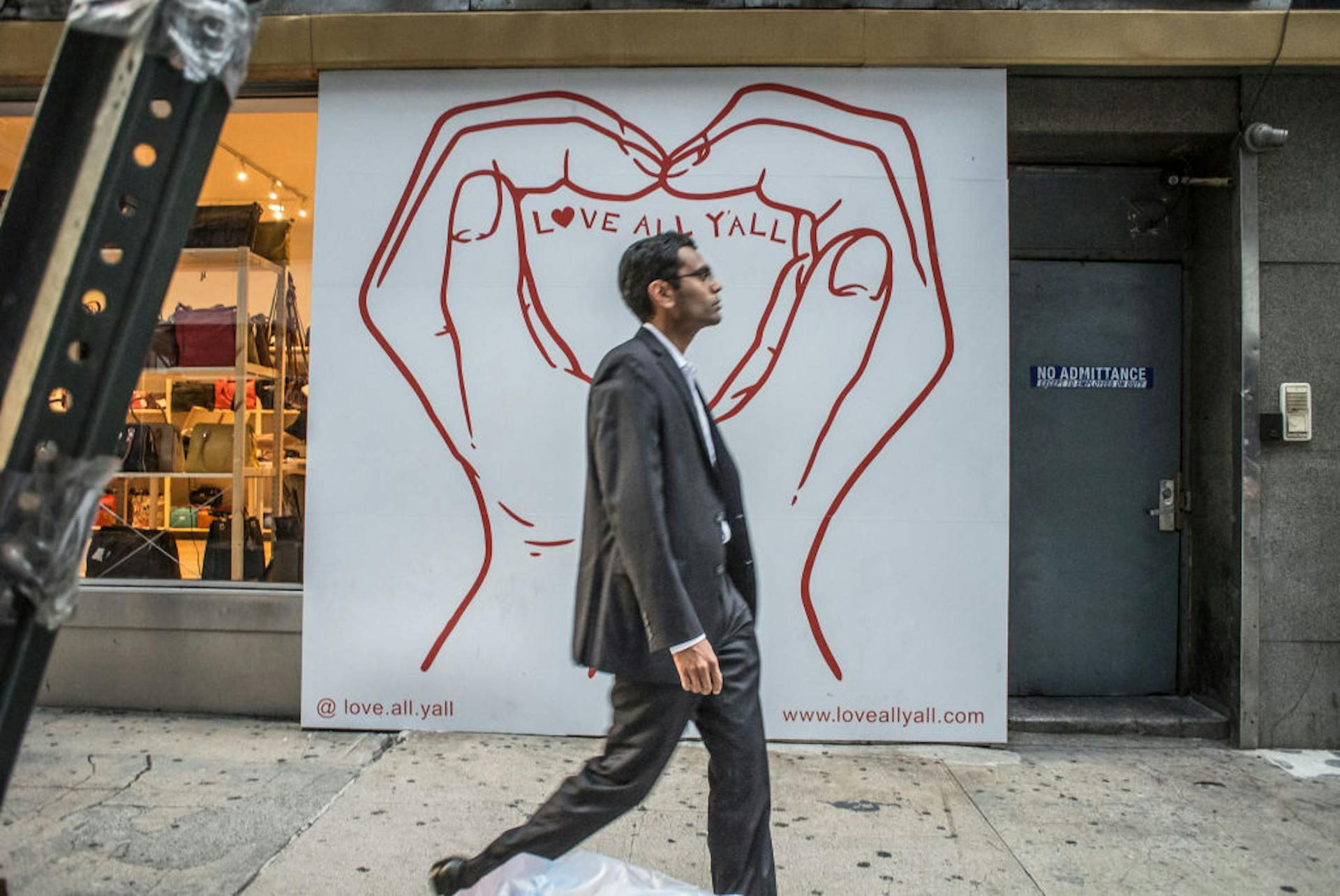 There’s an inclusivity inherent to ‘y'all.’ Bill Tompkins/Getty Images
There might be several reasons for this. One is that African American use of the word in music and other forms of popular culture has made it more familiar – and, therefore, acceptable – to those who didn’t grow up with it.
Second, “you guys,” another common alternative for the second-person plural pronoun, is losing support because of its sexist connotations. Are females included in you guys? How about those who identify as nonbinary?
Maud Newton eventually came to embrace “y’all.” When she moved to Tallahassee, Florida, after law school, she found that “in grocery stores and coffee shops, on the street and in the library, everyone – Black and white, queer and straight, working-class and wealthy – used y’all, and soon I did, too.”
“Y’all means all” – that’s a wonderful phrase that seems to be popping up everywhere, from T-shirts and book titles to memes and music. A song written by Miranda Lambert for Netflix’s “Queer Eye” beautifully captures the spirit of the phrase:
  You can be born in Tyler, Texas,
  Raised with the Bible Belt;
  If you’re torn between the Y’s and X’s,
  You ain’t gotta play with the hand you’re dealt ...
  Honey, y’all means all.
___
David B. Parker does not work for, consult, own shares in or receive funding from any company or organization that would benefit from this article, and has disclosed no relevant affiliations beyond their academic appointment.
___

24 phrases millennials use all the time but no one else gets
Woke
Updated
This incorrect tense of "awake" is used in the phrase "stay woke" as well as to describe whether someone is paying attention to political and social events or aware of certain truths. For example, a man conscious of the glass ceiling and gender pay gap for women is "woke." "Get woke" can be used as an admonishment for someone who is ignorant and needs to educate himself properly about a topic.
Respek
Updated
First introduced into the lexicon in 2016 by rapper Birdman during rap radio show "The Breakfast Club," "respek" is a slang spelling of the word "respect." It can be used alone or as part of Birdman's original usage in the phrase "put some respek on my name," meaning to show someone respect.
Adulting
Updated
This verb means that a millennial is engaging in an activity or behavior that involves responsibility or decision-making that is usually taken care of by fully developed adults. Paying your rent, getting your oil changed, going to the dentist and other such accomplishments fall under the parameter of "adulting."
Canceled
Updated
Predominantly used in the past tense, "canceled" is used to describe someone or something that you've rejected, deleted or cut out of your life. For example, your friend could ask you if you are still dating someone, to which you could reply, "No, they're canceled."
Low-key
Updated
"Low-key" is used as an adjective to describe something you're doing on the down-low, understatedly or secretly. You might confess to low-key loving Justin Bieber's new song or low-key using Tinder. It can also have a vaguer meaning of "sort of" or "kind of," such as being low-key sad that you're out of ice cream. The opposite of low-key is "high-key," meaning to be unabashedly vocal about something.
Snatched
Updated
Like many popular millennial terms, "snatched" was borrowed from the LGBT and drag communities. As an adjective, snatched is used to mean "perfect" or "on point," usually to describe hair, makeup, someone's body. Snatched can also be used as a verb that means "to slay someone so hard, their weave flies off into the distance," per Urban Dictionary. So a millennial might say "Beyonce snatched me with her Coachella set," meaning it blew them away so much that if they had been wearing a wig, it would have gone flying.
Shook
Updated
A past tense form of "shake," "shook" is used like "shaken," meaning rocked, dislodged or trembled, but refers to an emotional rather than physical state. To be shook is to be surprised, shocked or scared.
Keep it 100
Updated
"Keep it 100," with the number often being replaced by the 100 emoji, is synonymous with "keep it real." Keep it 100 can also refer to staying true to yourself and your values, respecting others and acting with integrity, keeping things above board if you will.
Draking
Updated
Draking is the verb form of the name of popular rapper Drake, whose lyrics are known for being emotional, revealing his anxieties and insecurities. Behavior such as calling or texting an ex late at night or being sad or nostalgic about past relationships would be examples of draking. Someone who is constantly draking and caught up in feelings is known as a "sad boi."
Aesthetic
Updated
While used by the general public to describe the principles or ideas about beauty and style of a particular period, place or person, to millenials, "aesthetic" is used much more simply as a synonym for "vibe," "artistic" or "beautiful." A picture, person, song or video can be "aesthetic," usually accompanied by the modifier "af," which means "as (bleep)."
Thirst trap
Updated
"Thirst" or "being thirsty" is a way to describe lusting after someone, usually desperately. This slang birthed another phrase, "thirst trap," used to describe photos a person posts on social media. A thirst trap is a photo that people post with either the obvious or subtle intention of getting others to lust after them and post comments that boost their ego.
Blessed
Updated
"Blessed" can still be genuinely used by millennials to mean "divinely or supremely favored," but it's often meant tongue-in-cheek or ironically on social media to dramatically denote anything good or positive that happens. One can be #blessed, verbalized as "hashtag blessed," by a good hair day or an aesthetic piece of avocado toast or sarcastically blessed by a broken zipper or forgetting your lunch.
Feels
Updated
Short for "feelings," "feels" are generally intense emotions that are overpowering, so something that "gives you all the feels" is overwhelming you with emotions, both good and bad. To get "hit right in the feels" means to be incapacitated by the emotions something makes you feel.
Glow up
Updated
When you "grow up" but have an unbelievable, Ugly Duckling-like transformation, you "glow up." "Glow up" can refer to both the bodily changes of puberty as well as someone's drastic style evolution. Celebrities who have "glowed up" include Matthew Lewis from the "Harry Potter" films, Jonah Hill and Kylie Jenner.
It me
Updated
"It me" is a short, fast way of saying, "This represents exactly how I feel." This can even be shortened to just "me." For example, a millennial can point to a lazy cat and say "it me," or send a gif of a clumsy penguin with the caption "me."
Gucci
Updated
While Gucci is the trademarked name of a luxury Italian fashion company, among millennials the word isn't used to refer to handbags. Instead "gucci" in slang is a synonym for cool, good, fine or OK, so if something is "all gucci," it's "all good."
GOAT
Updated
Whether or not it's written in all caps, millenials know GOAT is is actually an acronym for "Greatest of All Time." The term originated in the sports world, where it was used as early as the 1900s, initially as a shortened form of "scapegoat." According to Grammarphobia, the first usage meaning "greatest" was in 1992 in reference to Muhammad Ali. The music world soon caught on, with LL Cool J leading the charge in 2000. The term then trickled down from rappers and hip-hop artists to teens.
The letter V
Updated
Used in texting or on social media, "v" is simply a shortened form of "very." Millennials can be "v excited" about a "v cute" photo you took. V's cousin is "p," which is used as shorthand for "pretty," as in "p excited" or "p cute."
On fleek
Updated
Meaning "very good" or "on point," "on fleek" was coined on Instagram specifically to describe someone's snatched, well-groomed eyebrows. Nowadays, one's outfit, car or report card could all be described as "on fleek."
Swol
Updated
Shorten for swollen, "swol" is both an adjective and a noun referring to getting buff and muscular at the gym. One can be swol or get swol.
Do it for the views
Updated
"Do it for the views" is an expression used to explain or encourage doing something rash for entertainment purposes. The phrase originated with "do it for the Vine," but after the video app shuttered, the phrase has evolved to refer to YouTube or Instagram with the variation, "do it for the 'gram," which justifies taking absurd pictures, visiting extreme locations or dropping money on luxury items or experiences for the purposes of bragging through a photo on social media.
I can't even
Updated
This phrase, now used as a complete sentence, is used when you're overwhelmed by your reaction to something, so much so that you can no longer think, breathe, articulate your emotions, etc. It can be used positively, such as in reaction to a cute dog, or negatively, as a reaction to something offensive or disgusting.
Sus
Updated
"Sus," short for suspect or suspicious, is used when someone is acting unusual, fishy or shady.
Literally
Updated
To millennials, the word "literally" is used to mean the complete opposite of its standard definition. While literally usually means actually rather than figuratively, millennials purposefully misuse this word in phrases such as "literally dying" or "literally the worst" for dramatic effect.


