



When Bob Bailey picked out the historic mud adobe house he made his home in 1977, he had to imagine what it could be.
It hardly resembled the three-room Spanish colonial that railroad engineer Harry C. Oliver built in 1893 in Armory Park across the street from what is now Safford Middle School. Over the years, the home and its two original barns had been converted to a rooming house with nine separate rooms walled off from each other.
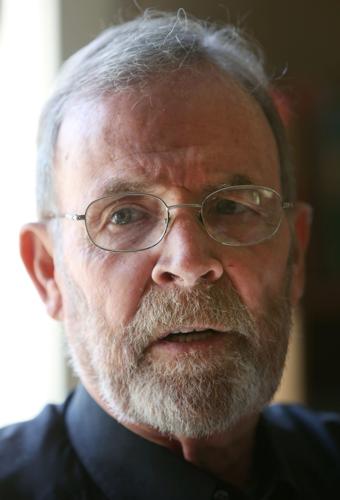
“I loved the primitiveness of it. It was a little like living in a ruins,” Bailey said of his first days in the house. “I took one room and fixed it up so it was totally habitable.”
Bailey said he knew it would take time, patience and money to restore the house to its former self. One of the first tasks was to reconnect all the rooms and re-install the doors that once existed.
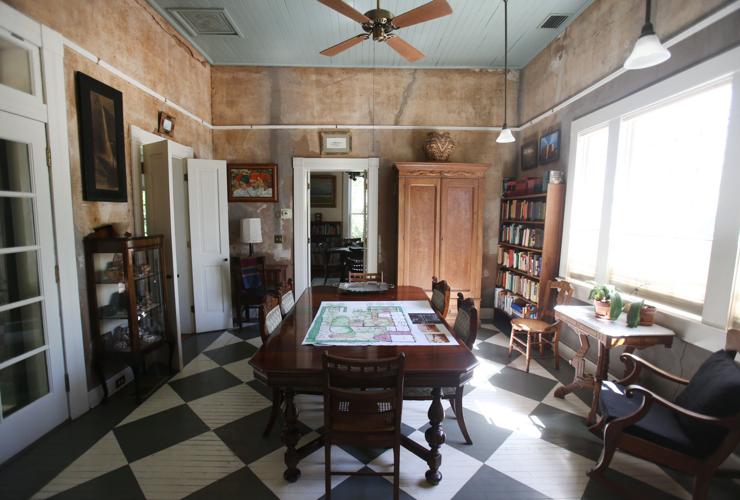
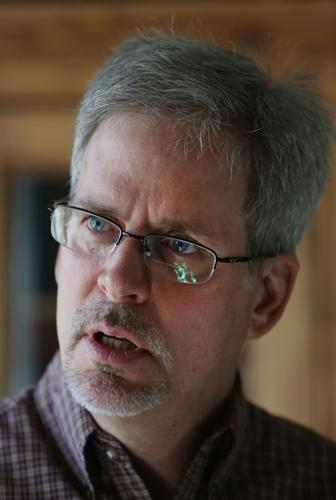
“Every door between every room they had taken the doors and filled in with adobe,” Bailey said. “But I could always see it. In my mind, it looked like this,” he said where today he can stand in a front room that now serves as an office for himself and fellow architect Steve Grede.
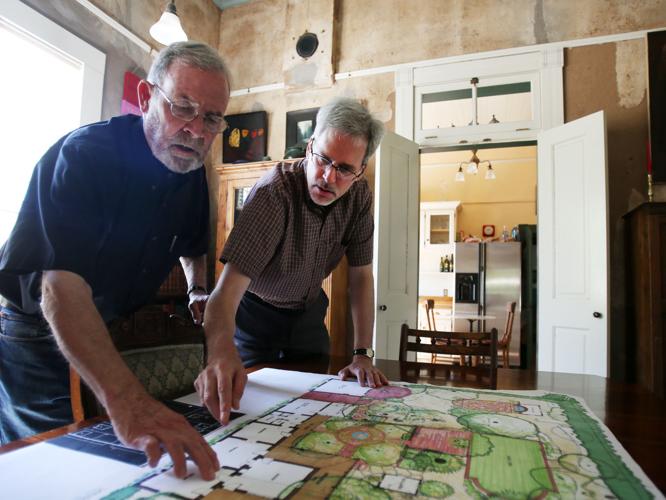
The married couple has toiled together since 1988 when Grede moved in to bring the home to the point where it will be featured on the upcoming Home Tour of The Grand Adobes of the Tucson Basin, organized by the Tucson Historic Preservation Foundation. The tour on April 23 will feature eight adobe homes in the Tucson area.
“These are some of the best examples of late 19th century and early 20th century adobe in our community,” said Demion Clinco, CEO of the Tucson Historic Preservation Foundation. “Together they really articulate the architectural development that occurred not just in Tucson but in the Southwest during this transformation period, before and after the arrival of the railroad.”
In particular, the adobe houses that dot the Tucson area are a constant reminder of the history and the know-how that traveled from the other side of the world to this community, Clinco said.
“These were based on a Spanish and even earlier Moorish architectural tradition that was brought from the Middle East to Spain then to Mexico and into the Southwest,” Clinco said. “So you really see this centuries-old building tradition that articulates itself in this distinctive way.
“Adobe happened here because it existed here. Tucson is an adobe city because you could walk down to the Santa Cruz River and you could get water and you could get clay and you could get sand and you could mix them together and make an adobe block.”
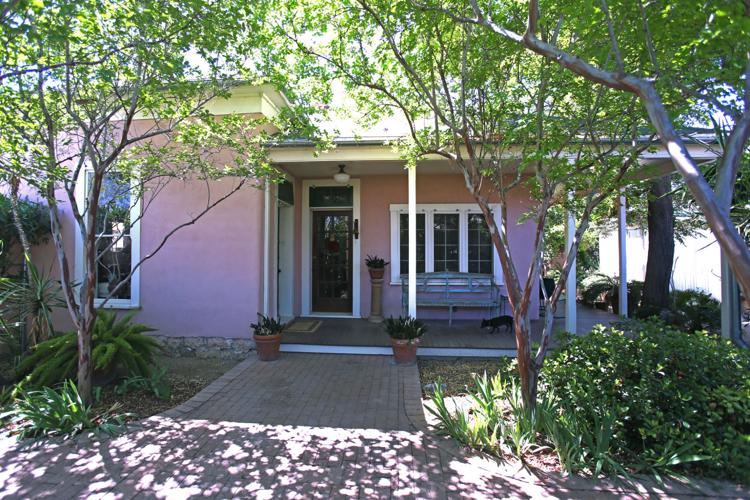
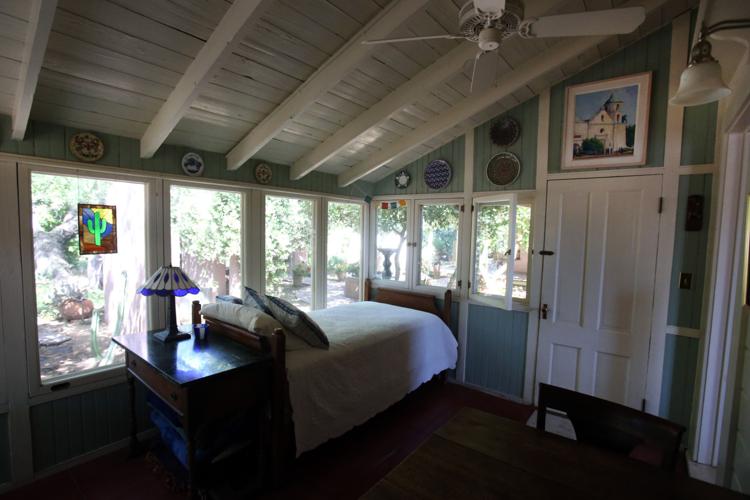
With the benefit of the expertise of two architects living in it, the Bailey/Grede home has become a walk through Tucson history. What is now the office, the dining room and the living room, was the original 750-square foot home Oliver built after he bought the entire block for $1,000, Grede said. Two separate barns were built on the property just south of the house. Around the turn of the last century, the main house was connected to one of the barns making for a longer structure along the neighborhood street. About the same time, a porch attached to the barn was enclosed as a sleeping porch.
Throughout the years, there were other changes made to the house. To replace the outhouse, a bathroom was built on what is now the side porch. A kitchen also was built on the porch next to the bathroom.
Bailey and Grede began the major restoration work in 1989.
“We could see the beautiful bones of the house,” Grede said.
In 1989 and 1990, the heating and cooling, plumbing, electrical wiring, gas lines and sewer lines all were replaced – “starting from scratch,” Grede said.
To make way for the new systems, wood floors were removed revealing dirt underneath. The few wood walls in the home are where new plumbing was installed as needed. Window swamp coolers were replaced and the home now has central air conditioning and a furnace.
Some cuts were made into the adobe walls for wiring and the adobe was patched, but it wasn’t always easy making the needed comfort changes with the adobe structure.
“We have a wall-mounted sink in the bathroom,” Grede said. “We had to drill through and put steel plates on both sides of the wall to hang that. You can’t just drill or hang on adobe. Those kinds of things you really have to think about and structure appropriately.”
While some of the adobe walls had absorbed the paint that covered them, there are still some areas of the home where the natural adobe is exposed and the history is on display.
As much as possible, Grede and Bailey saved original building materials and reused them. Much of the woodwork in the house – primarily floors, ceilings and door frames – is the original redwood, which Grede said was the wood of choice at the time because of its availability and cost.
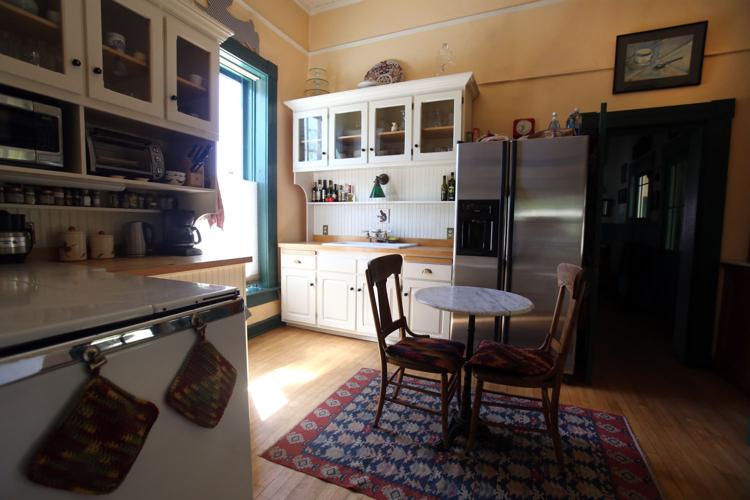
A big comfort move was building a new kitchen and bathroom in the main structure, which allowed them to remove the kitchen and bath that had been built on the porch. The main house is now 1,650 square feet.
“That was a lifestyle change. Now we have comfort,” Grede said. “We have heating and cooling. We have electricity.”
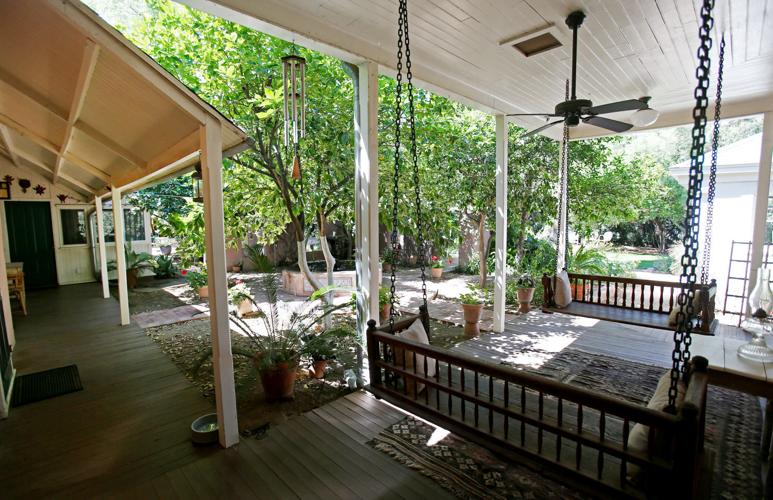
That move allowed the eventual restoration of the wrap-around porch that starts at the front entry way on the north end of the home and stretches around the west side to the sleeping porch at the south end. That began in 2000, about 10 years after the completion of the kitchen and bath remodel. The 10-year gap allowed Grede and Bailey to enjoy what they had done, regroup and plan ahead for more restoration.
“If you’re going to live in a house during restoration, you really have to be prepared to do that,” Grede said. “It’s very tough to be in the midst of all this dust all the time. It takes a while to say, ‘I’m really comfortable. Now we’re going to go outside of our comfort and live in a construction zone again.’ ”
When the work began again, Grede and Bailey restored the wraparound porch, remodeled the second barn into a bed & breakfast that they rent and sometime use as a guest house. They also remodeled the sleeping porch and restored a water well house that was on the property.
In the style of many adobe houses – in particular barrio houses – of the era, the entire home, including the guest house, sits flush to the street on the east side. That means there is a lot of yard to the west on the one-third acre lot. Grede and Bailey built what they call a “grotto” to serve as a storage room on the southwest section of the lot using some of the existing building materials. They also built an L-shaped wall just off the wraparound porch to give them a courtyard feel with a fountain.
With the exception of a small detail in the kitchen, Grede and Bailey consider their work on the house done. And they now enjoy the comfort and ambience they’ve built in a house that is well over a century old.
“Not everybody saw what we saw,” Grede said. “Some people thought we were living in a slum, but we always saw the beauty of the spaces. When we started restoring it, everybody could see what it would look like.
“We consider it mostly finished. We put a lot of thought into it all the way along. And we’re comfortable.”

