


King David once asked, “Is there anyone still left of the house of Saul to whom I can show God’s kindness for Jonathan’s sake?” — 2 Samuel 9:1, 3. Decades earlier, David had sworn to his friend Jonathan (then Israel’s prince) that he would never cut off his kindness from Jonathan’s family. — 1 Samuel 20:15. Since that promise, Jonathan had died, and David had established himself as king. Decades later, David recalled his nearly forgotten promise and looked for a chance to show God’s kindness for Jonathan’s sake.
We, too, have an outstanding debt to show God’s kindness to others. The Apostle Paul writes, “Let no debt remain outstanding, except the continuing debt to love one another, for whoever loves others has fulfilled the law” — Romans 13:8.
We have an ongoing debt to love others because God forgives us. Jesus declared: “Whoever has been forgiven little loves little” — Luke 7:47. The converse is also true; whoever has been forgiven much loves much.
As spiritual rebels, we deserve to spend eternity separated from God. But through Jesus, we’ve been forgiven — Romans 6:23. God counts nothing against us. As a result, we have an outstanding debt we cannot repay. So, God tells us to pay it forward by loving others.
To whom should we show God’s kindness? First, we offer God’s kindness to people who’ve been good to us. Churches currently experience infighting as members debate whether to reopen. Some charge their fellow members with insensitivity to those with preexisting conditions. Others claim their fellow parishioners are caving to fear and lack faith.
Neither group is demonstrating love.
**Explicit language can be heard in this video** Late Friday police officers in riot gear formed a line near the Tucson Convention Center, facing off with hundreds of protesters.
Second, we offer God’s kindness to people who’ve done nothing for us. The directors of our church recently considered whether to send a check to the woman who cleans the school where we meet.
This woman works for the local school district, which still pays her salary.
But she’s missing out on the extra income she received when she opened the school for us.
So we decided to pay her the full amount she would have received, before taxes, for the eight weeks she didn’t work for us. It’s not our fault the school closed its doors to us. It’s not her fault, either. We owe her nothing, but we have an outstanding debt to love others.
Finally, we offer God’s kindness to those who hate us. Social media provides a beautiful opportunity to demonstrate God’s kindness to those with whom we disagree. What if, instead of engaging in debate, we simply said to those who think we’re endangering people’s health or ruining the economy: “I appreciate your perspective, friend. You’ve given me much to think about. You may be right.” Who does that? The one who has an ongoing debt to love others.
If God’s forgiven us, we owe him our lives. The least we can do is love those around us, those who love us, those who don’t care, and those who hate us. That’s how we repay our outstanding debt to God.
Photos: Peaceful protests and violent clashes in downtown Tucson
Floyd protests
Updated
A person throws an object towards the Tucson Police Department line near 6th Avenue and 7th Street during the second night of protests in Tucson, on May 30, 2020. The protest in Tucson was similar to those in numerous cities across the United States following the police killing of George Floyd in Minneapolis.
Floyd protests
Updated
A protestor in a wheelchair tries to get away from tear gas near 6th Avenue and 7th Street during the second night of protests in Tucson, on May 30, 2020. The protest in Tucson was similar to those in numerous cities across the United States following the police killing of George Floyd in Minneapolis.
Protests in downtown Tucson
Updated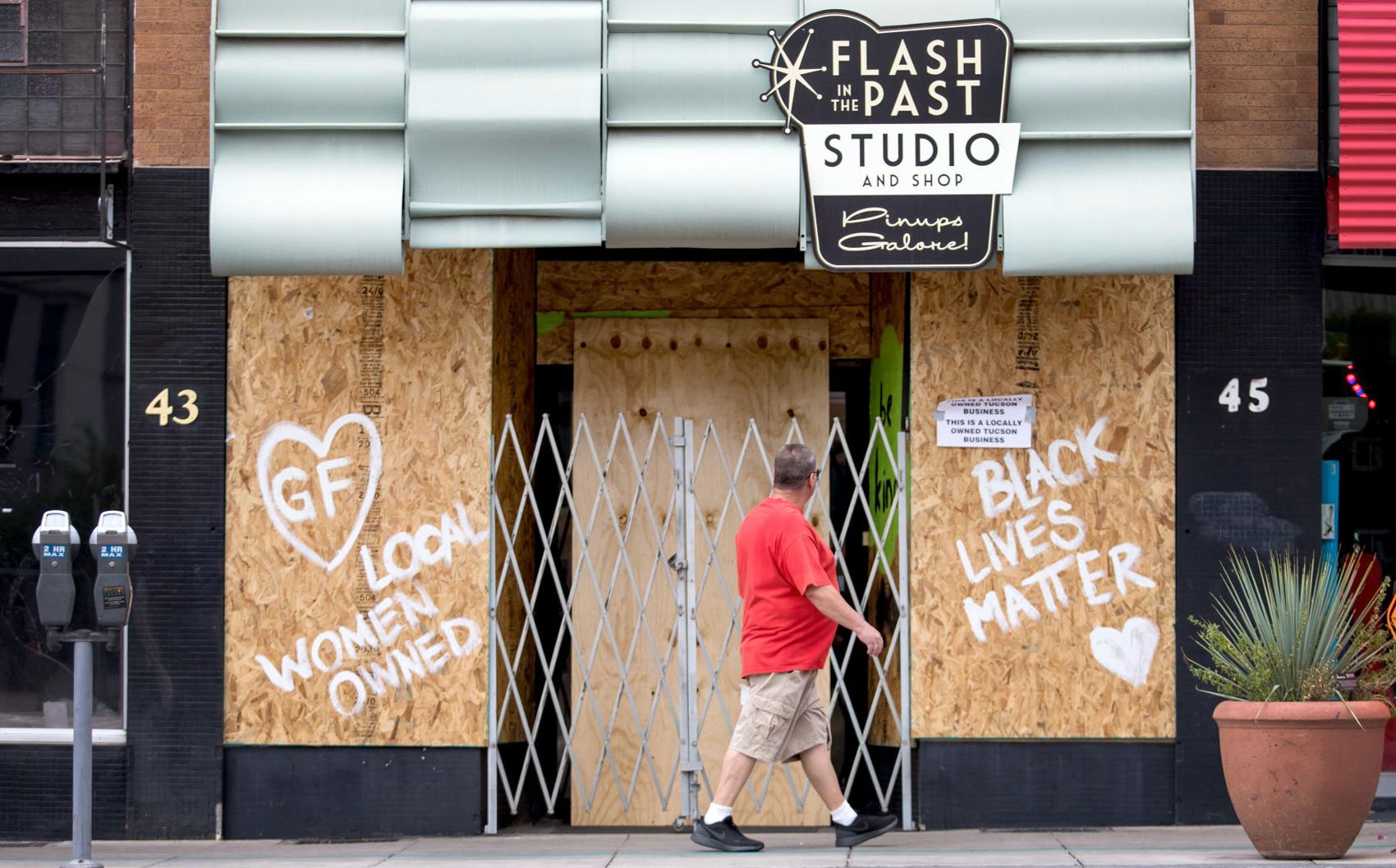
A pedestrian walks past closed and covered locally owned business Flash in the Past Studio and Shop, 43 S. 6th. Ave., in Tucson, Ariz. on May 31, 2020. Tucson businesses and buildings in downtown were vandalized after the second day of protests in Tucson. In response, businesses placed signs on doors informing the public that businesses were locally owned.
Protests in downtown Tucson
Updated
Pieces of wood, decorated with Ben's Bells be kind symbol, cover up windows at Cartel Coffee Lab, 210 E. Broadway Blvd., in Tucson, Ariz. on May 31, 2020. Tucson businesses and buildings in downtown were vandalized after the second day of protests in Tucson. In response, businesses placed signs on doors informing the public that businesses were locally owned.
Day two Floyd protests
Updated
A person reacts after getting hit with pepper bullets fired on a crowd confronting Tucson Police on 7th Street near 6th Avenue after a peaceful demonstration turned violent on the second night of protests in Tucson, Ariz., May 31, 2020.
Day two Floyd protests
Updated
A person dares Tucson Police to hit him with pepper bullets as a few hundred confront law enforcement along 7th Street between 5th and 6th Avenues as things turn violent on the second night of protests in Tucson, Ariz., May 31, 2020.
Day two Floyd protests
Updated
A protestor grabs a selfie with a line of Tucson Police officers in riot gear holding a line against a several dozen protestors at the underpass on 4th Avenue on the second night of protests in Tucson, Ariz., May 30, 2020.
Day two Floyd protests
Updated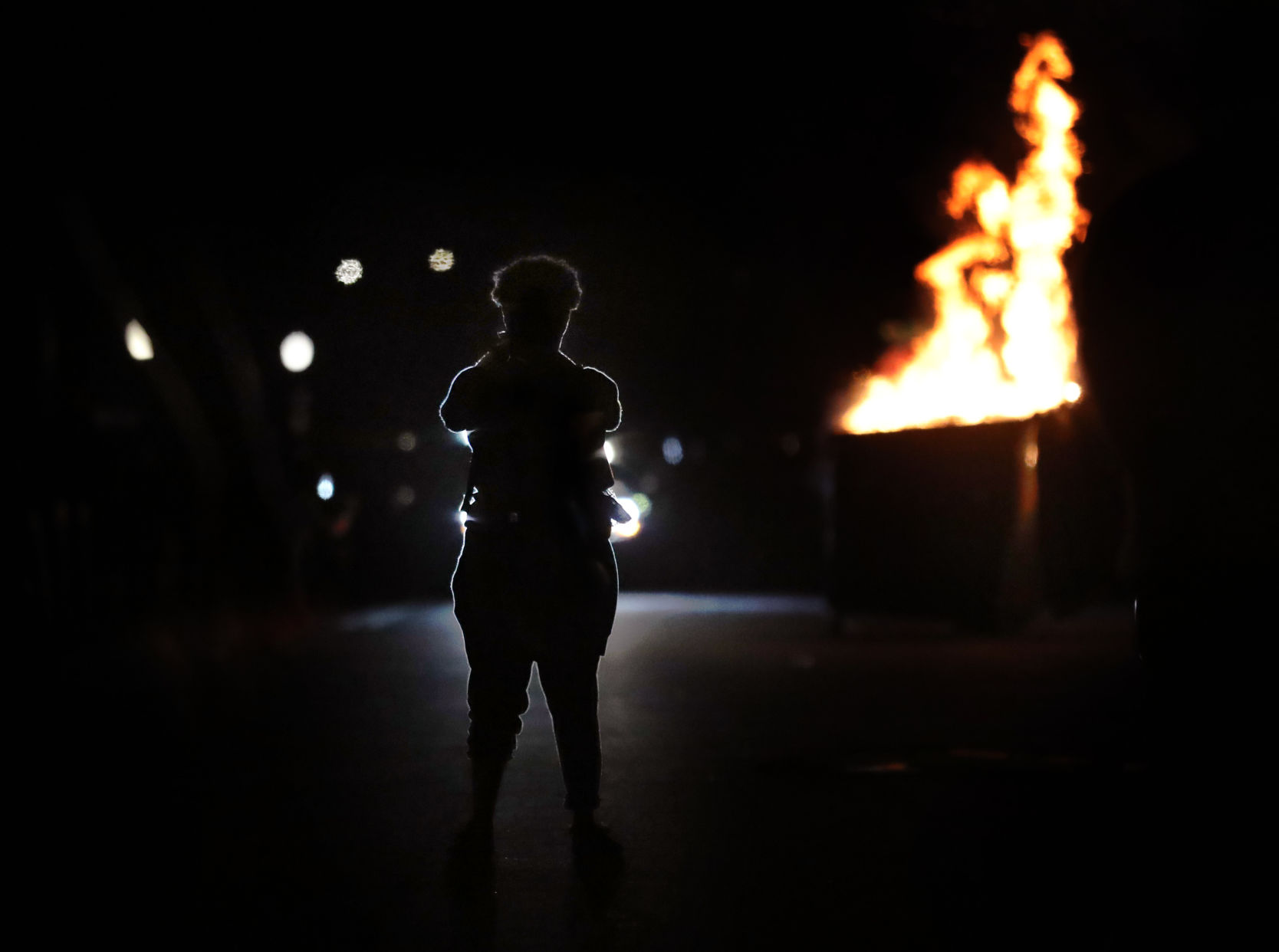
A woman stands in the spotlights from Tucson Police holding a line against a hundred or so protestors along 7th Street as the night's demonstration turned violent on the second night of protests in Tucson, Ariz., May 31, 2020.
Day two Floyd protests
Updated
A man sprays an accelerant onto a fire in trash container dragged onto 6th Street by dozens of protestors moving through the streets on the second night of protests in Tucson, Ariz., May 31, 2020.
Day two Floyd protests
Updated
A man gets water poured onto his face after Tucson Police fired tear gas onto a line of protestors shielding behind several vehicles on 7th Street and 5th Avenue on the second night of protests in Tucson, Ariz., May 31, 2020.
Day two Floyd protests
Updated
Several protestors advance through the haze of expended pepper bullets on the line of Tucson Police holding them at bay on 7th Street near 6th Avenue on the second night of protests in Tucson, Ariz., May 31, 2020.
Day two Floyd protests
Updated
A dumpster burns along 7th Street besides Miller's Surplus after protestors set in on fire and wheeled it toward a line of Tucson Police on the second night of protests in Tucson, Ariz., May 31, 2020.
Day two Floyd protests
Updated
Two men advancing on a line of Tucson Police try to shelter behind a paper sign as they are pelted with dozens of pepper bullets on the second night of protests in Tucson, Ariz., May 30, 2020.
Day two Floyd protests
Updated
Protestors hurl construction signage and barriers onto 6th Street as they retreat from Tucson Police on the second night of protests in Tucson, Ariz., May 31, 2020.
Floyd protests
Updated
Tucson Police Department officers approach a dumpster lit on fire by people near 6th Avenue and 7th Street during the second night of protests in Tucson, on May 30, 2020. The protest in Tucson was similar to those in numerous cities across the United States following the police killing of George Floyd in Minneapolis.
Floyd protests
Updated
A man tries to set fire to a small branch near 6th Avenue and 7th Street during the second night of protests in Tucson, on May 30, 2020. The protest in Tucson was similar to those in numerous cities across the United States following the police killing of George Floyd in Minneapolis.
Floyd protests
Updated
A dumpster set on fire by people scene next to Miller's Surplus near 6th Avenue and 7th Street during the second night of protests in Tucson, on May 30, 2020. The protest in Tucson was similar to those in numerous cities across the United States following the police killing of George Floyd in Minneapolis.
Floyd protests
Updated
People move a segment of fencing to a make shift barricade near 6th Avenue and 7th Street during the second night of protests in Tucson, on May 30, 2020. The protest in Tucson was similar to those in numerous cities across the United States following the police killing of George Floyd in Minneapolis.
Floyd protests
Updated
A police officer uncuffs a person following during a traffic stop following the second night of protests in Tucson, on May 30, 2020. The protest in Tucson was similar to those in numerous cities across the United States following the police killing of George Floyd in Minneapolis.
Floyd protests
Updated
An officer talks with a cuffed person following the second night of protests in Tucson, on May 30, 2020. The protest in Tucson was similar to those in numerous cities across the United States following the police killing of George Floyd in Minneapolis.
Floyd protests
Updated
A person is put in cuffs by a police officer following the second night of protests in Tucson, on May 30, 2020. The protest in Tucson was similar to those in numerous cities across the United States following the police killing of George Floyd in Minneapolis.
Floyd protests
Updated
People ride on the back of a car as they leave 6th Avenue and 7th Street during the second night of protests in Tucson, on May 30, 2020. The protest in Tucson was similar to those in numerous cities across the United States following the police killing of George Floyd in Minneapolis.
Floyd protests
Updated
A man steps away from tear gas fumes set off near 6th Avenue and 7th Street during the second night of protests in Tucson, on May 30, 2020. The protest in Tucson was similar to those in numerous cities across the United States following the police killing of George Floyd in Minneapolis.
Floyd protests
Updated
Two men hold street signs to block projectiles shot by police officers near 6th Avenue and 7th Street during the second night of protests in Tucson, on May 30, 2020. The protest in Tucson was similar to those in numerous cities across the United States following the police killing of George Floyd in Minneapolis.
Floyd protests
Updated
Tucson Police Department officers clear an alley of people near 6th Avenue and 7th Street during the second night of protests in Tucson, on May 30, 2020. The protest in Tucson was similar to those in numerous cities across the United States following the police killing of George Floyd in Minneapolis.
Floyd protests
Updated
A man reacts after trying to light a branch on fire multiple times while protesting near 6th Avenue and 7th Street during the second night of protests in Tucson, on May 30, 2020. The protest in Tucson was similar to those in numerous cities across the United States following the police killing of George Floyd in Minneapolis.
Floyd protests
Updated
About 500 gather outside along Stone Avenue at the Tucson Police headquarters on the second night of protests in Tucson, Ariz., May 30, 2020.
Floyd protests
Updated
A motorist stuck on 5th Avenue by the 500 or so protestors streaming east on Broadway gets cell phone video of the crowd flowing by on the second night of protests in Tucson, Ariz., May 30, 2020.
Floyd protests
Updated
Approximately 500 protestors head north on Stone Avenue after gathering briefly in front of the Tucson Police headquarters on the second night of protests in Tucson, Ariz., May 30, 2020.
Floyd protests
Updated
Protestors sit in the middle of 6th Avenue at 14th Street, briefly blocking traffic on the second night of protests in Tucson, Ariz., May 30, 2020.
Floyd protests
Updated
A handful of protestors sit on the curb outside the Tucson Police Department headquarters early on the second night of protests in Tucson, Ariz., May 30, 2020.
Floyd protests
Updated
Danitza Hernandez paints Be Kind in Spanish on the window of Scented Lear on East Congress Saturday, preparing on the second night of protests in Tucson, Ariz., May 30, 2020. A loose group of local neighbors and residents were painting the symbols on the windows of downtown buildings hoping it would help to keep roving bands of protestors from smashing the glass.
Floyd protests
Updated
LeCaire Whitfield, left, Patrick Swartz and John Krikawa board the windows on their Krikawa Master Jewelers preparing for the worst on the second night of protests in Tucson, Ariz., May 30, 2020.
Floyd protests
Updated
A woman walks down the line of riot gear clad officers guarding the Tucson Police headquarters as about 500 protestors gather briefly in the street on the second night of protests in Tucson, Ariz., May 30, 2020.
Floyd protests
Updated
A woman passively confronts a row of Tucson, Ariz., Police as they advance their line a few yards at the corner of Cushing and Church, May 28, 2020, during a protest in the wake of nationwide anger following the death earlier in the week of George Floyd in Minneapolis.
Floyd protests
Updated
A man attempts to talk to the line of Tucson, Ariz., Police at the corner of Cushing and Church, May 28, 2020, during a large protest of the death earlier in the week of George Floyd in Minneapolis.
Floyd protests
Updated
A dozen protestors take seats in front of a line Tucson, Ariz., Police at the corner of Cushing and Church, May 28, 2020, during a large scale protest in the wake of the death of George Floyd in Minneapolis.
Floyd protests
Updated
A protestor uses a construction barrel he dragged in as an easy chair to face off with Tucson, Ariz., Police at the corner of Cushing and Church, May 28, 2020, in the wake of nationwide anger following the death of George Floyd in Minneapolis.
Floyd protests
Updated
A man attempts to talk with Tucson, Ariz., Police at the corner of Cushing and Church, May 28, 2020, during a large scale protest in the wake of the death of George Floyd in Minneapolis.
Floyd protests
Updated
A woman sits in front of one of two lines of Tucson, Ariz., Police at the corner of Cushing and Church, May 28, 2020, in the wake of nationwide anger following the death of George Floyd in Minneapolis.
Floyd protests
Updated
A woman raises her hands as she approaches a line of Tucson, Ariz., Police, at the corner of Cushing and Church, May 28, 2020, during a protest in the wake of nationwide anger following the death earlier in the week of George Floyd in Minneapolis.
Floyd protests
Updated
A couple of people sit in the windows of homes sprayed with protest graffiti as a few hundred protestors face off with Tucson, Ariz., Police at the corner of Cushing and Church, May 28, 2020.
Floyd protests
Updated
A man pours water at the feet of Tucson, Ariz., Police as a few hundred protestors at the corner of Cushing and Church, May 28, 2020, show their anger following the death of George Floyd in Minneapolis.
Floyd protests
Updated
A woman asks for a hug from the line of Tucson, Ariz., Police confronting protestors at the corner of Cushing and Church, May 28, 2020, during a demonstration in the wake of the death of George Floyd in Minneapolis.
Protest
Updated
A protester vents at a line of Tucson Police Officers in riot gear at Cushing Street and Church Ave. on May 29, 2020. The protest in Tucson was similar to those in numerous cities across the United States following the police killing of George Floyd in Minneapolis earlier this week.
Protest
Updated
A protester holds a sign up in remembrance of George Floyd during a demonstration at Cushing Street and Church Ave. on May 29, 2020. The protest in Tucson was similar to those in numerous cities across the United States following the police killing of George Floyd in Minneapolis earlier this week.
Protest
Updated
A protester raises hands in the air while turning away from a line of officers from the Tucson Police Department at Cushing Street and Church Ave. on May 29, 2020. The protest in Tucson was similar to those in numerous cities across the United States following the police killing of George Floyd in Minneapolis earlier this week.
Protest
Updated
A line of Tucson Police Officers in riot gear at Cushing Street and Church Ave. on May 29, 2020. The protest in Tucson was similar to those in numerous cities across the United States following the police killing of George Floyd in Minneapolis earlier this week.
Protest
Updated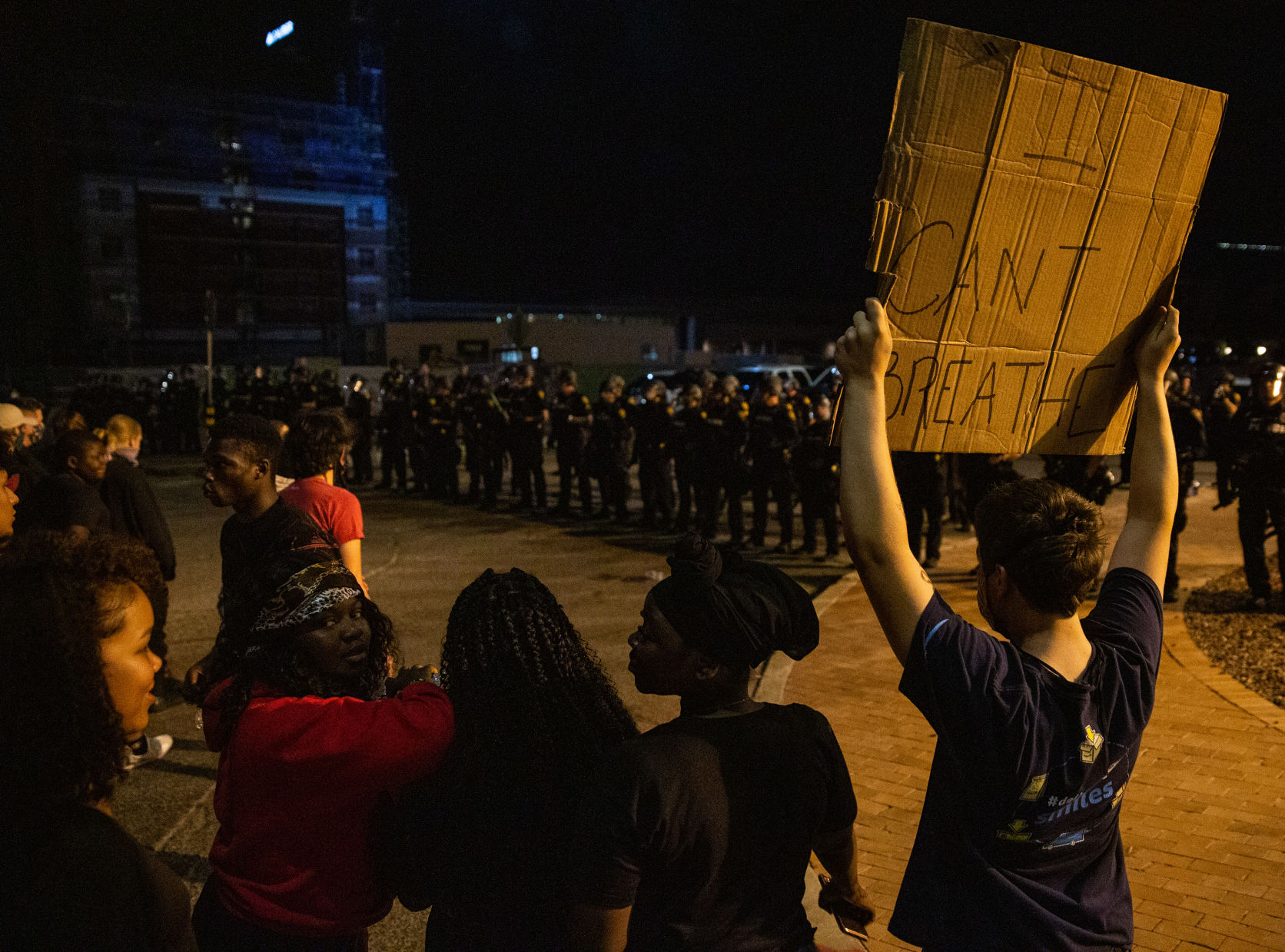
Protesters stand off against a line of officers from the Tucson Police Department at Cushing Street and Church Ave. on May 29, 2020. The protest in Tucson was similar to those in numerous cities across the United States following the police killing of George Floyd in Minneapolis earlier this week.
Protest
Updated
Tucson Police Officers in riot gear stand at Cushing Street and Church Ave. while facing off against a group of about 300 protesters, on May 29, 2020. The protest in Tucson was similar to those in numerous cities across the United States following the police killing of George Floyd in Minneapolis earlier this week.
Protest
Updated
Officers from the Tucson Police Department dressed in riot gear stand at Cushing Street and Church Ave. as the face off against a group of about 300 protesters, on May 29, 2020. The protest in Tucson was similar to those in numerous cities across the United States following the police killing of George Floyd in Minneapolis earlier this week.
Protest
Updated
Protestors stand off against a line of officers from the Tucson Police Department at Cushing Street and Church Ave. on May 29, 2020. The protest in Tucson was similar to those in numerous cities across the United States following the police killing of George Floyd in Minneapolis earlier this week.
Protest
Updated
Two officers from the Tucson Police Department whisper to one another while a group of roughly 300 protestors stands in front of them at Cushing Street and Church Ave. on May 29, 2020. The protest in Tucson was similar to those in numerous cities across the United States following the police killing of George Floyd in Minneapolis earlier this week.
Protest
Updated
Protesters stand off against a line of officers from the Tucson Police Department at Cushing Street and Church Ave. on May 29, 2020. The protest in Tucson was similar to those in numerous cities across the United States following the police killing of George Floyd in Minneapolis earlier this week.
Protest
Updated
A protester tries to talk with an officer from the Tucson Police Department while demonstrating at Cushing Street and Church Ave. on May 29, 2020. The protest in Tucson was similar to those in numerous cities across the United States following the police killing of George Floyd in Minneapolis earlier this week.
Protest
Updated
A protester tears up while facing off against police officers at Cushing Street and Church Ave. on May 29, 2020. The protest in Tucson was similar to those in numerous cities across the United States following the police killing of George Floyd in Minneapolis earlier this week.
Protest
Updated
Shattered windows on the TEP building in downtown Tucson from a protest that took place on May 29, 2020. The protest in Tucson was similar to those in numerous cities across the United States following the police killing of George Floyd in Minneapolis earlier this week.
Protest
Updated
People photograph dumpsters set ablaze on Broadway during a protest in downtown Tucson, on May 29, 2020. The protest in Tucson was similar to those in numerous cities across the United States following the police killing of George Floyd in Minneapolis earlier this week.
Protest
Updated
A man looks out a broken window of Charro Steak after the several windows were broken during a demonstration in downtown Tucson, on May 29, 2020. The protest in Tucson was similar to those in numerous cities across the United States following the police killing of George Floyd in Minneapolis earlier this week.
Protest
Updated
Hotel staff sweep up broken glass after several windows of the AC Hotel were damaged during a protest in downtown Tucson, on May 29, 2020. The protest in Tucson was similar to those in numerous cities across the United States following the police killing of George Floyd in Minneapolis earlier this week.
Protest
Updated
People board up Charro Steak's windows after they were broken during a demonstration, on May 29, 2020. The protest in Tucson was similar to those in numerous cities across the United States following the police killing of George Floyd in Minneapolis earlier this week.
Protest
Updated
Protesters stand off against a line of officers from the Tucson Police Department at Cushing Street and Church Ave. on May 29, 2020. The protest in Tucson was similar to those in numerous cities across the United States following the police killing of George Floyd in Minneapolis earlier this week.
Protest
Updated
Protesters stand off against a line of officers from the Tucson Police Department at Cushing Street and Church Ave. on May 29, 2020. The protest in Tucson was similar to those in numerous cities across the United States following the police killing of George Floyd in Minneapolis earlier this week.
Protest
Updated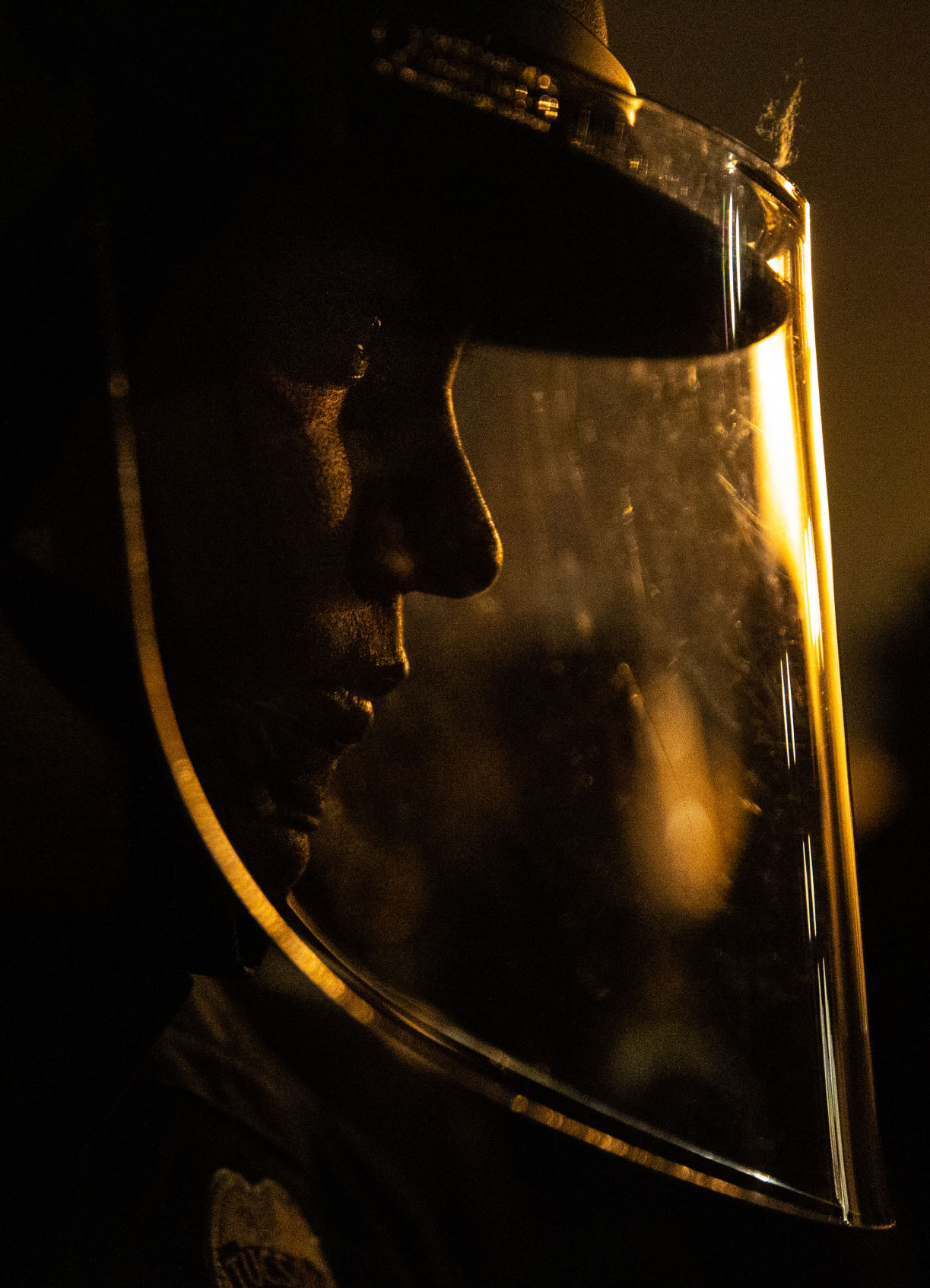
Officers from the Tucson Police Department dressed in riot gear stand at Cushing Street and Church Ave. as the face off against a group of about 300 protesters, on May 29, 2020. The protest in Tucson was similar to those in numerous cities across the United States following the police killing of George Floyd in Minneapolis earlier this week.
Protest
Updated
A protester vents at a line of Tucson Police Officers in riot gear at Cushing Street and Church Ave. on May 29, 2020. The protest in Tucson was similar to those in numerous cities across the United States following the police killing of George Floyd in Minneapolis earlier this week.
Protest
Updated
Officers from the Tucson Police Department dressed in riot gear stand at Cushing Street and Church Ave. as the face off against a group of about 300 protesters, on May 29, 2020. The protest in Tucson was similar to those in numerous cities across the United States following the police killing of George Floyd in Minneapolis earlier this week.
Protest
Updated
Officers from the Tucson Police Department dressed in riot gear stand at Cushing Street and Church Ave. as the face off against a group of about 300 protesters, on May 29, 2020. The protest in Tucson was similar to those in numerous cities across the United States following the police killing of George Floyd in Minneapolis earlier this week.
Protest
Updated
A protester tries to talk with an officer from the Tucson Police Department while demonstrating at Cushing Street and Church Ave. on May 29, 2020. The protest in Tucson was similar to those in numerous cities across the United States following the police killing of George Floyd in Minneapolis earlier this week.
Protest
Updated
A protester tries to talk with an officer from the Tucson Police Department while demonstrating at Cushing Street and Church Ave. on May 29, 2020. The protest in Tucson was similar to those in numerous cities across the United States following the police killing of George Floyd in Minneapolis earlier this week.
Protest
Updated
Officers from the Tucson Police Department dressed in riot gear stand at Cushing Street and Church Ave. as the face off against a group of about 300 protesters, on May 29, 2020. The protest in Tucson was similar to those in numerous cities across the United States following the police killing of George Floyd in Minneapolis earlier this week.
George Floyd Protest
Updated
A protester yells at officers from the Tucson Police Department at Cushing Street and Church Ave. on May 29, 2020. The protest in Tucson was similar to those in numerous cities across the United States following the police killing of George Floyd in Minneapolis earlier this week.
George Floyd Protest
Updated
A protester keeps her hands raised in a peaceful manner in front of officers from the Tucson Police Department at Cushing Street and Church Ave. on May 29, 2020. Close to 300 people took part in a protest that was similar to those in numerous cities across the United States following the police killing of George Floyd in Minneapolis earlier this week.
George Floyd Protest
Updated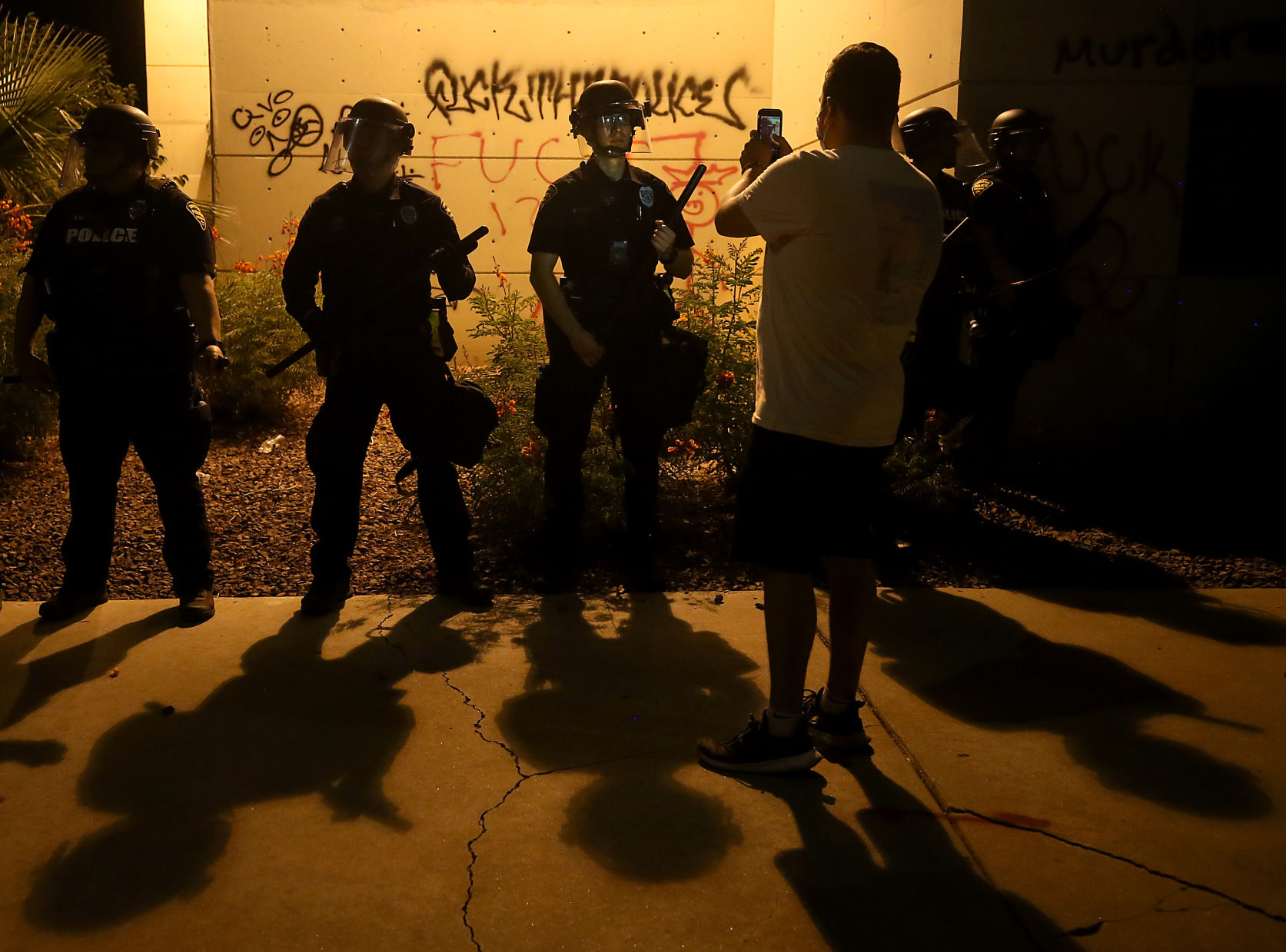
A protester takes a photo of an officer from the Tucson Police Department at Cushing Street and Church Ave. on May 29, 2020. Close to 300 people took part in a protest that was similar to those in numerous cities across the United States following the police killing of George Floyd in Minneapolis earlier this week.
George Floyd Protest
Updated
Protesters stand in silence with their arms raised in front of officers from the Tucson Police Department at Cushing Street and Church Ave. on May 29, 2020. The protest in Tucson was similar to those in numerous cities across the United States following the police killing of George Floyd in Minneapolis earlier this week.
George Floyd Protest
Updated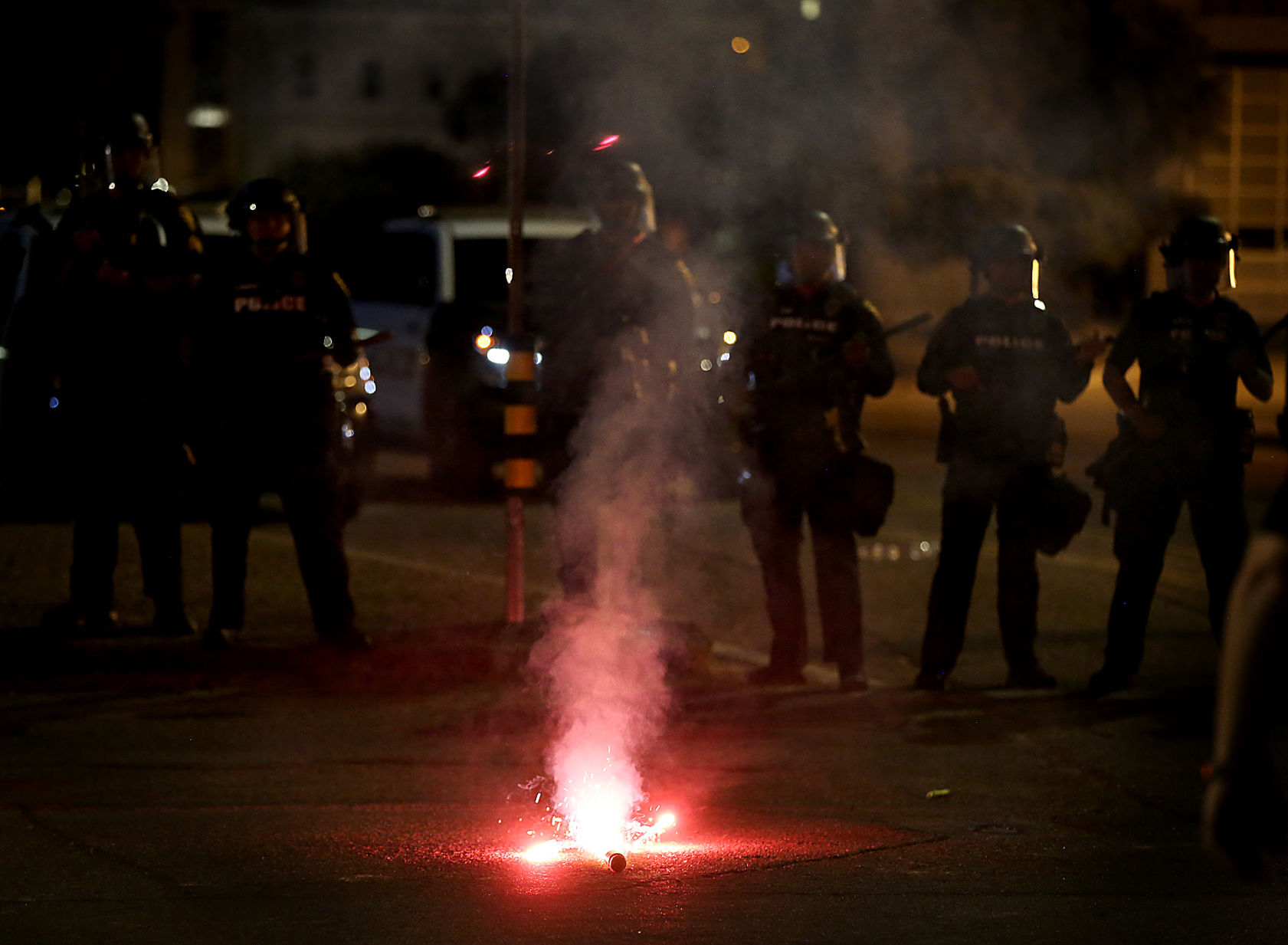
A protester lit and threw a firecracker in front of officers from the Tucson Police Department at Cushing Street and Church Ave. on May 29, 2020. Close to 300 people took part in a protest that was similar to those in numerous cities across the United States following the police killing of George Floyd in Minneapolis earlier this week.
George Floyd Protest
Updated
A protester holds up her sign in front of officers from the Tucson Police Department at Cushing Street and Church Ave. on May 29, 2020. Close to 300 people took part in a protest that was similar to those in numerous cities across the United States following the police killing of George Floyd in Minneapolis earlier this week.
George Floyd Protest
Updated
A protester yells at officers from the Tucson Police Department at Cushing Street and Church Ave. on May 29, 2020. The protest in Tucson was similar to those in numerous cities across the United States following the police killing of George Floyd in Minneapolis earlier this week.
George Floyd Protest
Updated
A protester lights a bundle of sage during a protest near the Tucson Police Department at Cushing Street and Church Ave. on May 29, 2020. Close to 300 people took part in a protest that was similar to those in numerous cities across the United States following the police killing of George Floyd in Minneapolis earlier this week.
George Floyd Protest
Updated
Officers from the Tucson Police Department stand shoulder to shoulder to form a line and face off with about 300 protesters near the depatment's headquarters at 270 S Stone Ave. on May 29, 2020. The protest in Tucson was similar to those in numerous cities across the United States following the police killing of George Floyd in Minneapolis earlier this week.
George Floyd Protest
Updated
The Tucson Police Department headquarters at 270 S Stone Ave. was tagged during a protest on May 29, 2020, in Tucson, Ariz. The protest in Tucson was similar to those in numerous cities across the United States following the police killing of George Floyd in Minneapolis earlier this week.
Protests in downtown Tucson
Updated
A pedestrian walks their bike past the Fox Theater, 17 W. Congress St., in Tucson, Ariz. on May 31, 2020. Tucson businesses and buildings in downtown were vandalized after the second day of protests in Tucson. In response, businesses placed signs on doors informing the public that businesses were locally owned.
Protests in downtown Tucson
Updated
Broken glass remains in front of a broken window at One West Broadway, 1 W. Broadway Blvd., in Tucson, Ariz. on May 31, 2020. Tucson businesses and buildings in downtown were vandalized after the second day of protests in Tucson.
Protests in downtown Tucson
Updated
The refection of a Tucson Police Department vehicle shows in the decorated doors of The Rialto Theater, 318 E. Congress St., in Tucson, Ariz. on May 31, 2020. Tucson businesses and buildings in downtown were vandalized after the second day of protests in Tucson. In response, businesses placed signs on doors informing the public that businesses were locally owned.
Protests in downtown Tucson
Updated
Pedestrians walk past covered windows of Charro Steak, 188 E. Broadway Blvd., in Tucson, Ariz. on May 31, 2020. Tucson businesses and buildings in downtown were vandalized after the second day of protests in Tucson. In response, businesses placed signs on doors informing the public that businesses were locally owned.
Protests in downtown Tucson
Updated
A pedestrians walks past covered and decorated windows of Charro Steak, 188 E. Broadway Blvd., in Tucson, Ariz. on May 31, 2020. Tucson businesses and buildings in downtown were vandalized after the second day of protests in Tucson. In response, businesses placed signs on doors informing the public that businesses were locally owned.
Protests in downtown Tucson
Updated
A sign informing the public about Club Congress is taped on a door at Hotel Congress, 311 Congress St., in Tucson, Ariz. on May 31, 2020. Tucson businesses and buildings in downtown were vandalized after the second day of protests in Tucson. In response, businesses placed signs on doors informing the public that businesses were locally owned.

