

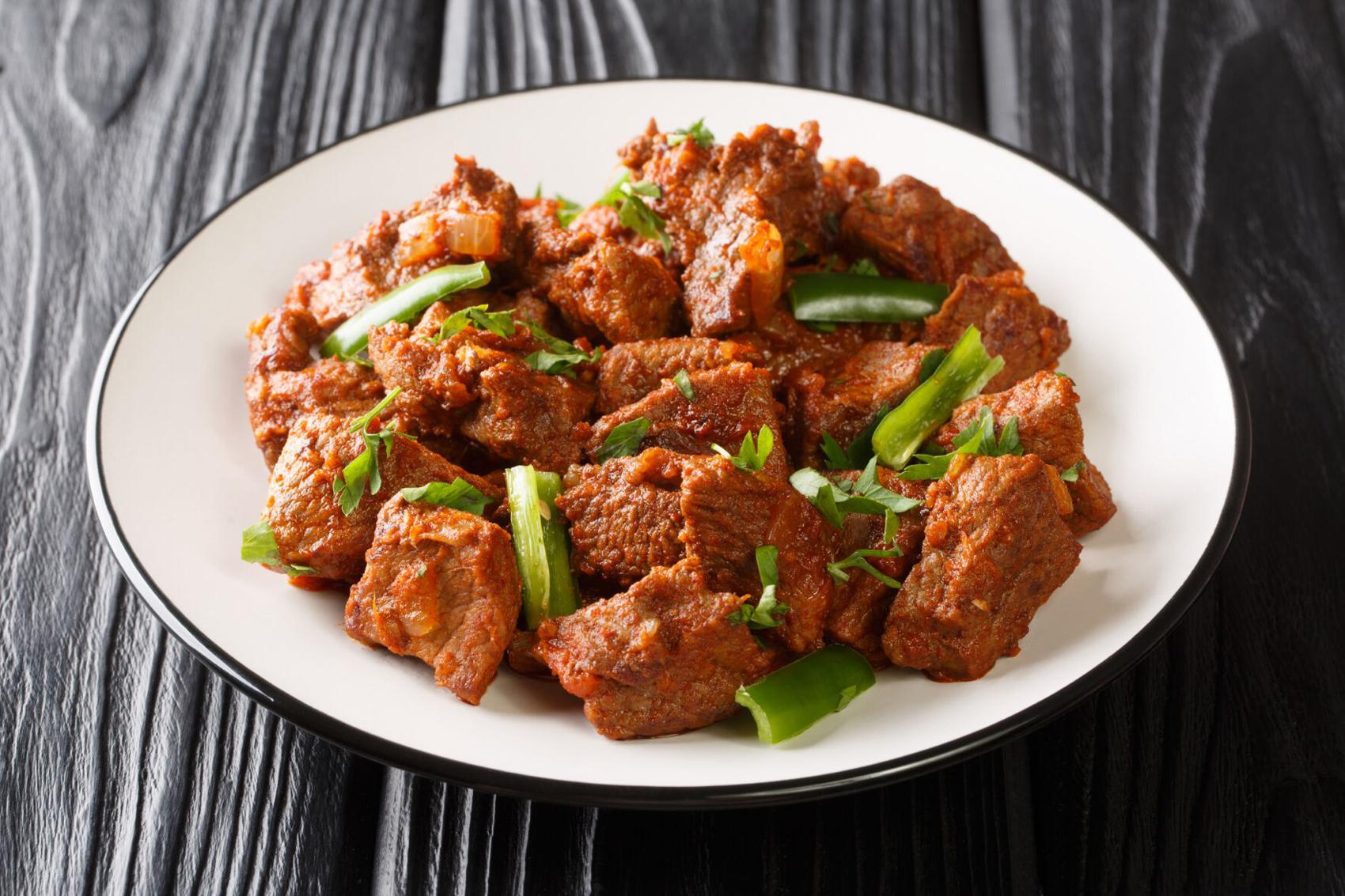

While I was out and about running errands the other day, I popped into Nur Market on Speedway west of Alvernon Way. Because a foodie friend sent me some berbere, the Ethiopian curry/chili powder, I was casting about for some ways to use it.
I love shopping at small international grocers. The meat selections are intriguing, and the butchers often offer locally-raised and butchered meat. They don’t bat an eye when I say that I need a pound of leg of lamb or shoulder, whereas the meat counters at my chain markets rarely offer such small quantities.
As I wandered the aisles, I remembered tibs, the stewy Ethiopian dish I’d first encountered when I lived in Detroit. My first visit to the legendary Blue Nile restaurant had been eye-opening — I’d never tasted injera, the spongy flatbread made from fermented teff flour, and I’d certainly never been exposed to such fragrant, flavorful food.
Tibs, I thought, would make a nice change from my more usual Southwestern-inspired suppers.
It’s easy enough to make. Like many Ethiopian dishes, it begins with a slow braise of vegetables — in this case, onions — with seasonings, including the fiery berbere. Then the meat — beef, lamb, or chicken, most commonly, although I’ve also seen a tibs-like dish made with firm white fish — is browned and added to the sauce.
Back at the house, I wished I’d also picked up a jar of niter kibbeh, which is clarified butter in which a variety of spices are simmered until the butter is fragrant and flavorful. But my tibs would have to start with plain old regular butter because I’d forgotten the niter kibbeh.
Tibs is incredibly easy to make, although it’s not super-speedy. It takes a while for those onions to caramelize and cook down into an aromatic paste. But the cooking isn’t difficult; just a little time-consuming.
Once the base is done, the rest of the dish comes together quickly. Sear the meat and return it to the intensely flavorful base to simmer briefly, and you’re done.
I didn’t have injera to eat with my lamb tibs, so I made a basic polenta to serve it over. You could also serve this over rice. I confess that I have sometimes eaten tibs as a bowl of stew, with no accompaniments whatsoever.
After dinner, as I was cleaning up the kitchen, I kept getting a whiff of a lovely scent. Finally, I realized that the berbere had perfumed my kitchen in a marvelous way — and the aroma lingered for a day or two. So I would say that tibs is good in many ways: First, in the eating, and second in the pleasure of remembering.
Tibs
Makes 2 to 3 servings
Berbere is the Ethiopian version of curry or chili powder. It’s usually fiercely hot, but some versions are milder. Fragrant with fenugreek, black cardamom, and clove, berbere’s fabulous scent will linger in your kitchen. I like lamb in tibs, but beef and chicken are also traditional. Serve this over rice or polenta if you don’t happen to have injera, the teff-based spongy flat bread, on hand to serve with it.
Ingredients
5 tablespoons unsalted butter
2 medium onions, chopped medium (about 2 cups)
3-inch knob ginger, peeled and minced, about 2 tablespoons
6 medium cloves garlic, minced
2 tablespoons berbere
Coarse salt, to taste
1 pound leg or shoulder of lamb, cut into 1-inch cubes
1 teaspoon vegetable oil
Juice of ½ lemon, to taste
Coarsely chopped parsley, for garnish
Slivered bell pepper, for garnish
Preparation
In a medium-sized heavy saucepan over medium heat, melt the butter and then add onions, ginger, garlic, and berbere. Reduce heat to medium-low and cook, stirring occasionally, until onions are reddish-gold, about 30 minutes. Onions should sizzle a little during cooking.
Transfer to food processor and blend until it is a lumpy purée. Return it to the saucepan, season to taste with salt, and keep warm.
Season lamb on all sides generously with kosher salt. Heat oil in a 12-inch cast iron or stainless steel skillet over high heat high until lightly smoking. Add lamb in a single layer, leaving plenty of open space in the pan (brown in batches if you don’t have a large enough skillet). Cook without moving until well-seared on one side, about 3 minutes.
Flip lamb cubes with tongs and cook on second side until well seared. Continue to cook, stirring and flipping occasionally, until desired level of doneness is reached. For rare meat, transfer to saucepan immediately. For medium, cook an additional one to two minutes before transferring to saucepan.
Toss lamb with warm sauce, stir in lemon juice, and divide among plates. Garnish each serving with chopped parsley and pepper slivers. Serve immediately.

