

May is National Arthritis Awareness Month, and supporters of the University of Arizona Arthritis Center (UAAC) are intent on promoting awareness — and increasing funding — for all things arthritis, including research, education and training of future rheumatologists.
The Centers for Disease Control estimate that about one in three Arizonans live with one of more than 100 diseases that fall under the umbrella of “arthritis,” the blanket term for conditions and diseases affecting the joints, tissues around the joints and other connective tissues.
In 2015 (the latest statistics available), the American College of Rheumatologists found that, on average, there is one rheumatologist for every 40,000 patients with arthritis in the United States.
“If you live in the northeastern U.S., there is one rheumatologist for every 20,000 patients, but if you live in Arizona, there is one rheumatologist for every 128,000 adults. I speak to colleagues nationwide, and it is very difficult for patients to get in to see a rheumatologist. There is great need for rheumatologists across the country and in all parts of Arizona,” said C. Kent Kwoh, MD, Director of the UAAC, which was the first — and remains the largest — training program in the state.
Over the past two years, the center has increased rheumatology fellowship training positions for resident physicians from four to five, and Kwoh hopes to add another within the next five years.
“To expand the training and meet the need for Arizonans, we need more funding,” said Kwoh.
Outreach can translate into funding, and programs such as the “Introduction to Clinical Medicine Physical Exam Experience in Rheumatic Disease” are key to generating awareness.
Started by the late Dr. Eric P. Gall, co-founder with Dr. Robert G. Volz of the UAAC, the educational program allows first-year medical students to interact with patients from the community who have rheumatic and musculoskeletal diseases. This model for the program has been disseminated to medical schools nationwide and globally.
“The class is very popular with medical students. They hear patients’ stories about how difficult it was to be diagnosed in terms of lack of access to rheumatologists, along with the need to visit multiple doctors to try to find the right treatments. The students also see the different types of arthritis and how it can impact people’s lives in so many ways. They comment about how much they learn from these patients: It is very impactful and memorable for them,” said Kwoh.
He emphasized that the program also hinges on support from faculty and patients who volunteer to participate.
“We are so fortunate to have patients and faculty willing to give their time to help teach these medical students. We are grateful for all of the support of members of the Arthritis Center family. We have funding from the National Institutes of Health (NIH) and many foundations, but continued philanthropic support is very heartening and it is critical to the operation of the research and programs that fulfill our mission in the community,” said Kwoh, who has received two grants from the NIH in the past few years to research biomarkers of osteoarthritis.
He has attained more than $10 million in NIH funding for the UAAC since he joined the center 10 years ago and has been awarded more than $75 million since he began his career in 1989.
Kwoh says he is gratified that his work over the past two decades is coming to fruition and providing increased understanding about how different parts of the joint contribute to pain and disability in arthritis.
“We know now that osteoarthritis is a heterogenous disease. By understanding which parts of the joint contribute to disease in different individuals, we will be able to target treatments to focus on the specific joint damage for that individual. This aligns with the concept of precision medicine: The right treatment for the right individual at the right time,” said Kwoh.
Patients like Jim Livengood, who served as the athletic director at UA from 1994 to 2009, are reaping the benefits of research and programs at UAAC.
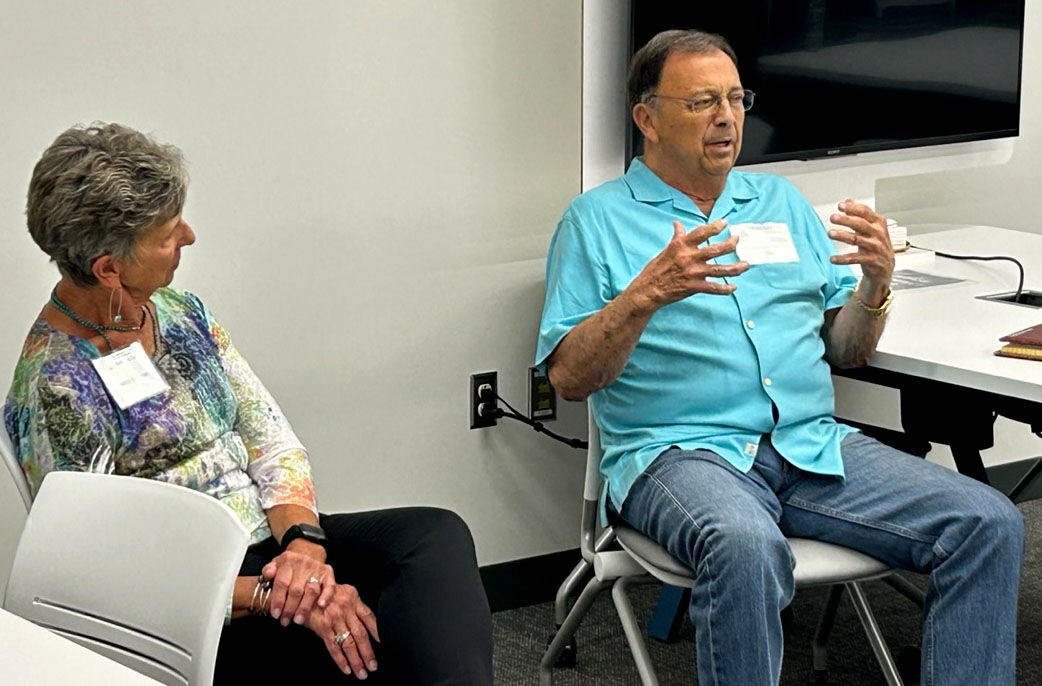
Livengood, 78, is living with osteoarthritis, gout, and polymyalgia rheumatica. He volunteered recently to participate in the “Introduction to Clinical Medicine Physical Exam Experience in Rheumatic Disease.”
“It was a wonderful experience and I loved every part of it. These students were so impressive: They were energetic and thorough and asked great questions. They talked about simple things that can affect arthritis. These are future doctors and it gives you great hope for our future,” said Livengood, a long-time supporter of the UAAC.
He said the center does an excellent job of educating the public about the fact that while there is often no quick fix or “magic bullet” for arthritis, it is possible to alter your lifestyle and to “live healthy” with the disease.
“Whether you have osteoarthritis, rheumatoid arthritis, or another form of arthritis, as debilitating as it can be, they try to make sure that people work beyond that to the best of their abilities and do things that improve quality of life,” said Livengood.
Ultimately, he believes that the UAAC is an invaluable resource to the city, state and region.
“I can’t say enough great things about the doctors, the staff and all the people connected with the Arthritis Center. Their delivery is terrific and they are a wonderful resource for every stage and form of arthritis. It really is a blessing,” said Livengood.
Get your morning recap of today's local news and read the full stories here: http://tucne.ws/morning

