

 For some skin conditions, keeping hydrated is key. Yuliya Shevtsova/EyeEm via Getty Images
In many parts of the U.S., the winter months bring frigid temperatures and drier conditions that can wreak havoc on the skin.
The primary role of the skin, as the largest organ in the body, is to act as a physical barrier to the external environment. When your skin is healthy, it helps protect you from allergens and infections. But in winter, when the outside temperature and humidity drop, skin can become especially irritated.
We are a dermatologist and a medical student who study a broad range of common skin conditions and the effects of the environment on skin health.
Heading into the winter months, a handful of common dermatological conditions can develop or worsen in response to the cold. These include eczema, chilblains, Raynaud’s phenomenon, cold urticaria and cold panniculitis. All are conditions that can be irritating and uncomfortable, and some are harder to treat than others. So it’s helpful to know when to manage these conditions on your own and when to see a dermatologist.
Although eczema often affects infants, one form affects people 60 and older.
Eczema
Eczema is an inflammatory skin condition that causes dry and itchy skin and may be triggered by soaps and detergents, environmental or food allergens, hormonal changes and skin infections. There are numerous types of eczema, which often have overlapping symptoms.
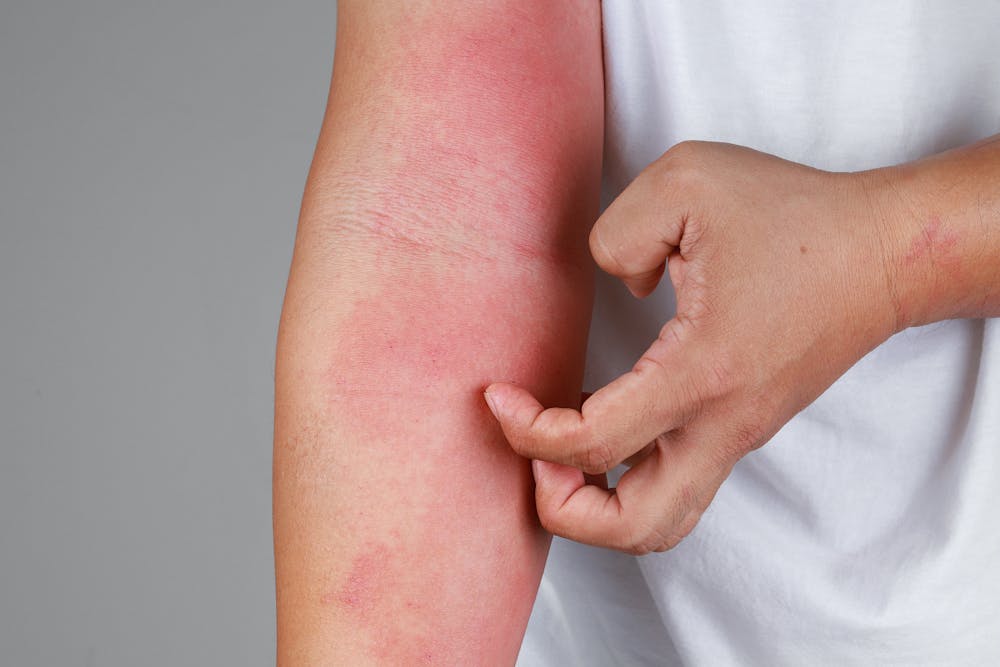 According to the Cleveland Clinic, eczema affects more then 30 million Americans. tylim/iStock via Getty Images Plus
Asteatotic eczema, also known as winter itch, is common in older adults. During the winter months, skin can become drier and, in some instances, cracked, fissured and inflamed.
Severe dryness may lead to itchiness and scratching. In turn, this can create open wounds that may allow allergens and bacteria to penetrate the skin and cause a rash or an infection.
This type of eczema typically occurs on the lower legs, but eruptions can occur anywhere on the skin, such as the trunk, arms and hands.
Keeping the skin hydrated is the primary treatment. Water-based lotions may worsen skin drying, so applying moisturizers with a high oil content – like petroleum jelly, mineral oil or Vaseline – on wet or damp skin is recommended. Hypoallergenic and anti-itch moisturizers designed specifically for eczema are also available.
Other tips include replacing long hot baths with quick warm showers, switching to a milder soap, and using a room humidifier if the climate is dry. If itchiness and dryness persist, seek care from a dermatologist, who may prescribe a topical steroid.
Hand eczema may also worsen in the winter as your hands are frequently exposed to cold, dry air. Scaling, fissuring and bleeding on the hands is common. Minimizing exposure to hard or antibacterial soaps, along with using gentle cleansing products followed by applying a petroleum-based unscented moisturizer can improve symptoms.
Chilblains
Chilblains, also known as pernio, are small, itchy patches that can occur when the skin is exposed to cold and damp weather, resulting in swollen and painful bumps that affect the fingers, toes, ears and face. Poor circulation, blood vessel constriction, a history of autoimmune disease and being underweight may predispose people to chilblains.
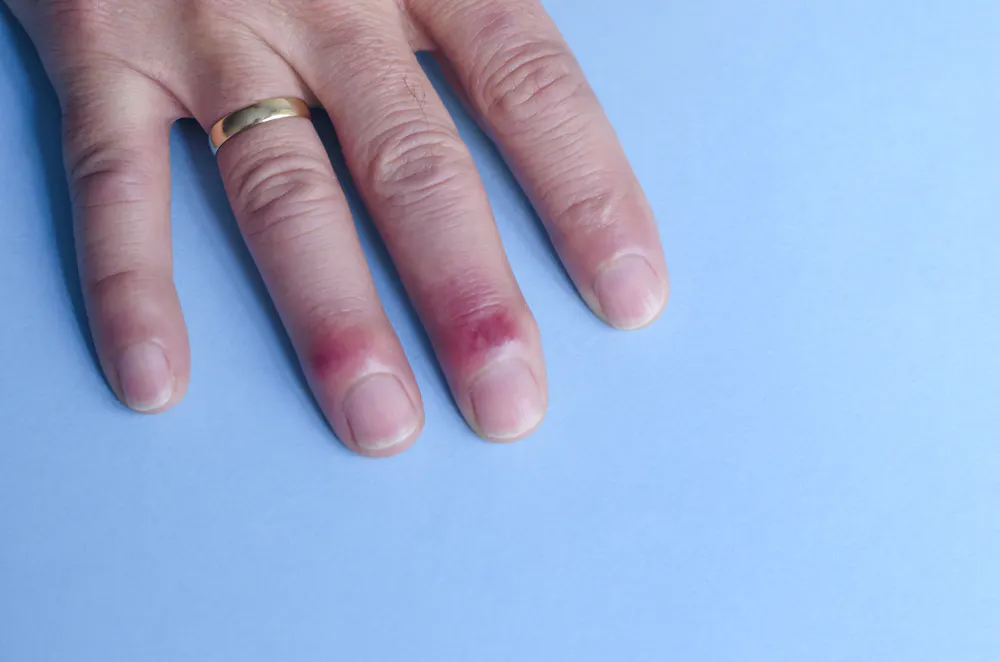 Although they usually heal if protected from cold, chilblains can be painful. Elizabeth Fernandez/Moment via Getty Images
Afflicted areas are painful, itchy, swollen and usually have a blueish to purple hue. In severe cases, blisters and ulcers may occur. But for most people, the condition tends to spontaneously resolve within one to three weeks.
Until that happens, it’s important to keep affected areas protected from the cold. If the sensitive area starts to blister, or if fevers, muscle aches and chills develop, it’s best to see a dermatologist or physician.
Pseudo-chilblains, also known as “COVID toes,” can be caused by COVID-19 infection. Chilblains associated with COVID-19 resemble the rash in chilblains – painful red to blue-colored nodules on the toes – but it is not specific to winter.
Dry, cracked skin can lead to infections.
Raynaud’s phenomenon
Like chilblains, Raynaud’s phenomenon is a skin condition characterized by an significant constriction of blood vessels in the fingers and toes in response to cold exposure. The digits may turn red or blue, but they quickly flush red upon rewarming. Afflicted areas may also be numb or painful, and when severe, may develop ulcers.
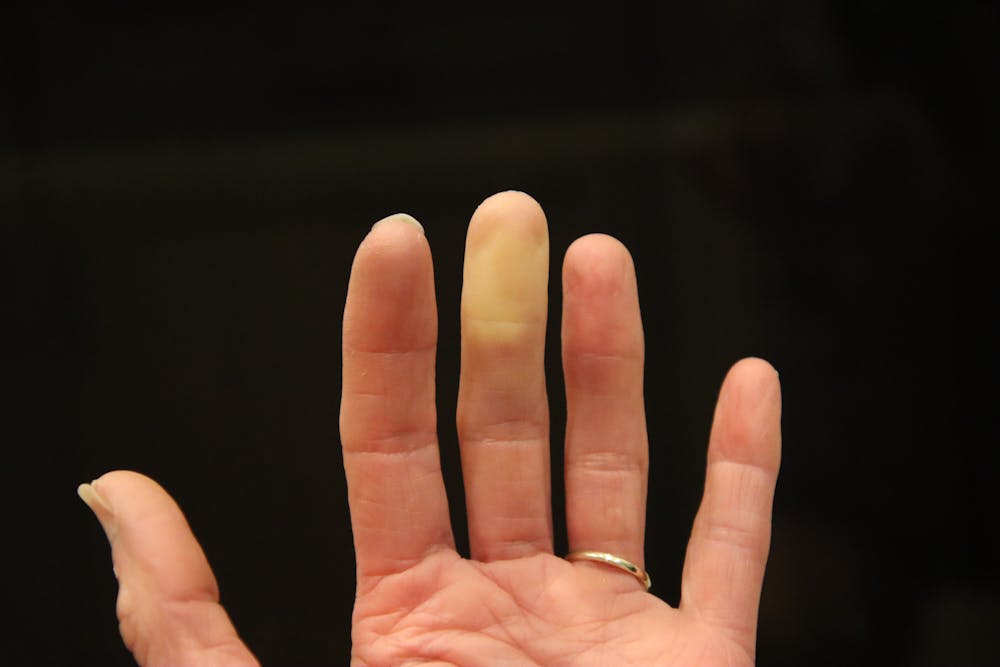 Although Raynaud’s phenomenon typically affects fingers and toes, it can also affect the nose, ears and lips. Barb Elkin/iStock via Getty Images Plus
To treat Raynaud’s phenomenon, it’s necessary to avoid cold-weather exposure. Ideally patients with Raynaud’s should dress for the cold in layers. At a minimum, make sure to wear gloves and insulated footwear. Avoid tobacco, caffeine and decongestants; they may cause blood vessels to constrict more. If symptoms don’t improve quickly – Raynaud’s due to cold typically gets better after only a few minutes – see a dermatologist or your physician, as Raynaud’s phenomenon can also be a manifestation of a more serious systemic disease, including cancer, infections and/or trauma.
Cold urticaria
Cold urticaria is a skin rash believed to be triggered by an autoimmune response, which leads to the release of inflammatory molecules, including histamine.
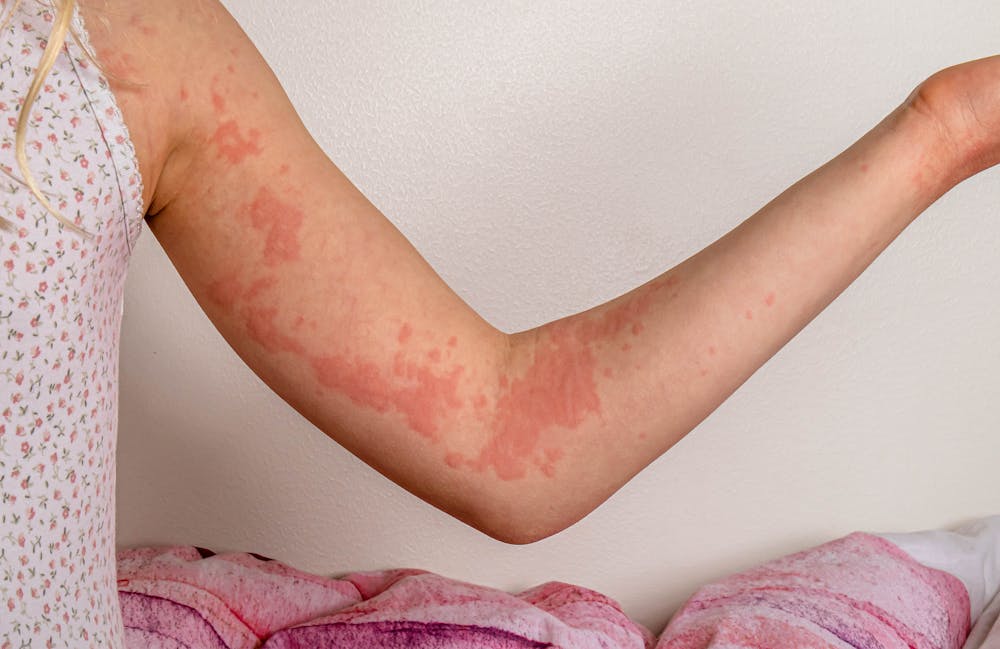 Cold urticaria is more commonly known as hives. Elk Scott/i Stock via Getty Images
Soon after the skin is exposed to sudden drops in temperature, wheals – also known as hives – may develop. These are reddish, itchy and swollen areas of skin. Such episodes can last for approximately two hours. Occasionally, other symptoms accompany the outbreak, including headache, chills, shortness of breath, abdominal pain and diarrhea.
People can test for cold urticaria using the ice cube test. This is done simply by placing an ice cube on an area of skin for five minutes; if you have cold urticaria, the skin will raise and itch within five to 15 minutes. Treatment involves avoiding cold exposure and using over-the-counter antihistamines.
For those who have experienced cold urticaria, swimming in cold water can be dangerous, as it can lead to loss of consciousness and drowning.
Cold panniculitis
Cold panniculitis – which appears as enlarged, red and painful nodules on the skin – develops 12 to 72 hours after cold exposure.
Cases of cold panniculitis have been documented in children eating Popsicles and in adults undergoing whole-body cryotherapy, which is often used as treatment for chronic inflammatory conditions such as rheumatoid arthritis, or for improving post-exercise recovery.
Cold panniculitis is more common during childhood and usually resolves on its own by avoiding cold exposure and direct contact with frozen products.
Symptoms from winter skin conditions are often self-limiting and resolve on their own with adequate protection from the cold. But if symptoms do not resolve, you should see a licensed dermatologist, as cold-induced rashes may be a sign of a more concerning underlying health condition.
If visiting your dermatologist in person proves difficult, you may consider seeing a dermatologist virtually, as many academic medical centers and private practices now offer telehealth dermatology.
___
Sonal Choudhary is a speaker for Regenron Pharmaceuticals and Sanofi, a pharmaceutical and health care company. Their atopic dermatitis drug Dupixent could potentially benefit from an article which mentions worsening of eczema in winters. There is no direct mention of the drug in the article.
Jeffrey Chen does not work for, consult, own shares in or receive funding from any company or organization that would benefit from this article, and has disclosed no relevant affiliations beyond their academic appointment.
___
How to take a break from social media
Be easy on yourself and ask for help about social media use
Updated
"If you're reading this article, kudos to you for thinking about reevaluating social media," Agarwal said Trying to meet your goals is all about celebrating the small wins.
At the least, set small benchmarks for yourself like spending 10 minutes less on social media than the day before. The right amount of social media time is different for everyone since some people actually use these apps to brand and help market themselves. Find your own social media sweet spot, and remember, even if you scroll too much on social media one day, you can try and meet your goal tomorrow.
Another way to keep you on track is to share your goal with someone you trust. A friend or loved one who can kindly nudge you when they notice you've been on social media for awhile.
Helpful exercise to remind you what you're missing by scrolling
Updated
Scrolling through social media while hanging out with friends isn't uncommon nowadays, but when you think about how unengaged you are in those moments, it can put social media use into perspective.
Agarwal suggests the next time you're in a room with others at a family or friends gathering and you see yourself scrolling through social media instead of engaging with others, take a minute to physically remove yourself from the room and isolate in another room. Listen and feel how much you may be missing out on.
"What that does is it gives your brain a signal. If you force yourself to leave the room, you realize how much you're using that app and missing out on other people," Agarwal said. "It's a good physical reminder of being present in the moment and not on your on your phone and scrolling through social media."
Use your phone's screen-time tracking feature and limit social media use
Updated
Most smart phones nowadays track your screen-time and usage already. It's a good idea to figure out your average screen time per day so you have a benchmark that you can work on.
On iPhone, you can go into your "Screen Time" settings, which displays the amount of time you spend on each app and allows you to put timers on specific apps to limit how long you're on them. Android phones have similar features in the "Digital Wellbeing" settings. Additionally, Facebook, Instagram and TikTok offer the same features within the app settings themselves.
Physically distance yourself from your phone and apps
Updated
When you're at home and have free time, put your phone in a drawer or somewhere you can't see it. Oftentimes limiting the ability to quickly and easily pick up your phone is enough to keep you off of social media, said Agarwal. If your phone is what keeps your hands from fidgeting, try to have some objects around the house that relieve stress, like a stress ball, fidget toy or yarn and crochet hooks.
Hide your social media apps on your phone by placing the app on the second or third page of your home screen or bury the app inside an "app folder" with a bunch of others. When you're waiting in line or have a free five minutes, instead of grabbing your phone — take in the view, practice some breathing exercises or read a book.
Benefits of taking a social media break
Updated
Ever hear of "text neck?" It's the result of looking down at our phones when scrolling or texting, straining the neck muscles over a long period of time. Taking a break from social media helps relieve neck pain and gives your eyes a break from bright screens.
People may also be more connected than ever through social media, but a 2018 University of Pennsylvania study found that people who limit their time on social media experience less depression and feelings of loneliness.
Taking a break from social media will give you better sleep, too. Research suggests that nighttime use of social media is driven by FOMO (fear of missing out), and keeps people scrolling longer at night instead of going to sleep.
Reevaluate what you want out of social media
Updated
What is the reason that brought you onto social media? This is the question Agarwal said to ask yourself when trying to figure out if it's time to take a social media break. If you're not getting the same satisfaction from the reason you use social media, it may be time to look for alternatives.
If you joined social media to...
1. Find community: Look for clubs and groups in your neighborhood where you can meet and interact with others IRL (in real life).
2. Be inspired: Consume other forms of media like magazines, books, podcasts, movies or live events.
3. Buy and sell things: Try using other apps, like OfferUp or NextDoor, or visiting local events and marketplaces in person.
Two and a half hours.
Updated
Two and a half hours — that's the average amount of time people spend on social media each day.
It may not sound like a lot, but that time can really add up — and at what cost? Social media has proven negative effects on mental health (especially for teens), self-image and for some is a huge time-waster.
University of Penn's Anish Agarwal, an emergency physician, researcher, and deputy director for the Center for Digital Health, said it's important to constantly be reevaluating the role social media plays in daily life.
The bottom line: taking a break from social media is healthy for you. Read on for guidance and tools to help you limit screen time on these apps.

