

 Salty french fries may taste good, but they just contribute to dehydration and obesity. William Voon/EyeEm via Getty Images
Scientific studies and media coverage are rife with warnings on how sugar, carbohydrates, saturated fat and lack of exercise contribute to obesity. And tens of millions of Americans are still overweight or obese in large part because of the classic Western diet and lifestyle.
As an educator, researcher and professor of medicine, I have spent more than 20 years investigating the causes of obesity, as well as related conditions such as diabetes, high blood pressure and chronic kidney disease.
Throughout my many years of studying obesity and related health conditions, I’ve observed that relatively little is said about two significant pieces of this very complex puzzle: lack of hydration and excessive salt intake. Both are known to contribute to obesity.
Lessons learned from a desert sand rat
Nature provides a clue to the role these factors play with the desert sand rat Psammomys obesus, a half-pound rodent with a high-pitched squeak that lives in the salty marshes and deserts of Northern Africa. It survives, barely, by eating the stems of Salicornia – the glasswort – a plant that looks a bit like asparagus.
Although low in nutrients, the glasswort’s fleshy, succulent sap is filled with water that’s rich in salt, at concentrations as high as what’s found in seawater.
Recent studies have provided new insights into why the desert sand rat might crave the salty sap of glasswort. Although this has not yet been proven specifically in the sand rat, it is likely that a high-salt diet helps the sand rat convert the relatively low amount of carbohydrates it’s ingesting into fructose, a type of sugar that occurs naturally in fruits, honey and some vegetables.
This helps the animal survive when food and fresh water are sparse. This is because fructose activates a “survival switch” that stimulates foraging, food intake and the storage of fat and carbohydrates that protect the animal from starvation.
However, when the rat is brought into captivity and given the common rodent diet of about 50% carbohydrates, it rapidly develops obesity and diabetes. But if given fresh vegetables low in starchy carbohydrates, the rodent remains lean.
 The desert sand rat, also known as the fat sand rat, is actually a gerbil. It’s found in Asia as well as Africa. Kristian Bell/Moment via Getty Images
My research, and the research of many other scientists over the decades, shows that many Americans unwittingly behave much like a captive desert sand rat, although few are in settings where food and water are limited. They are constantly activating the survival switch.
Fructose and our diets
As mentioned, fructose, a simple sugar, appears to have a key role in activating this survival switch that leads to fat production.
Small amounts of fructose, like that found in an individual fruit, are not the problem – rather it is excessive amounts of fructose that are problematic for human health. Most of us get our fructose from table sugar and high-fructose corn syrup. Intake of these two sugars totals approximately 15% of calories in the average American diet.
These sugars encourage people to eat more, which can lead to weight gain, fat accumulation and prediabetes.
Our bodies also make fructose on their own – and experimental studies suggest it may be enough to trigger the development of obesity.
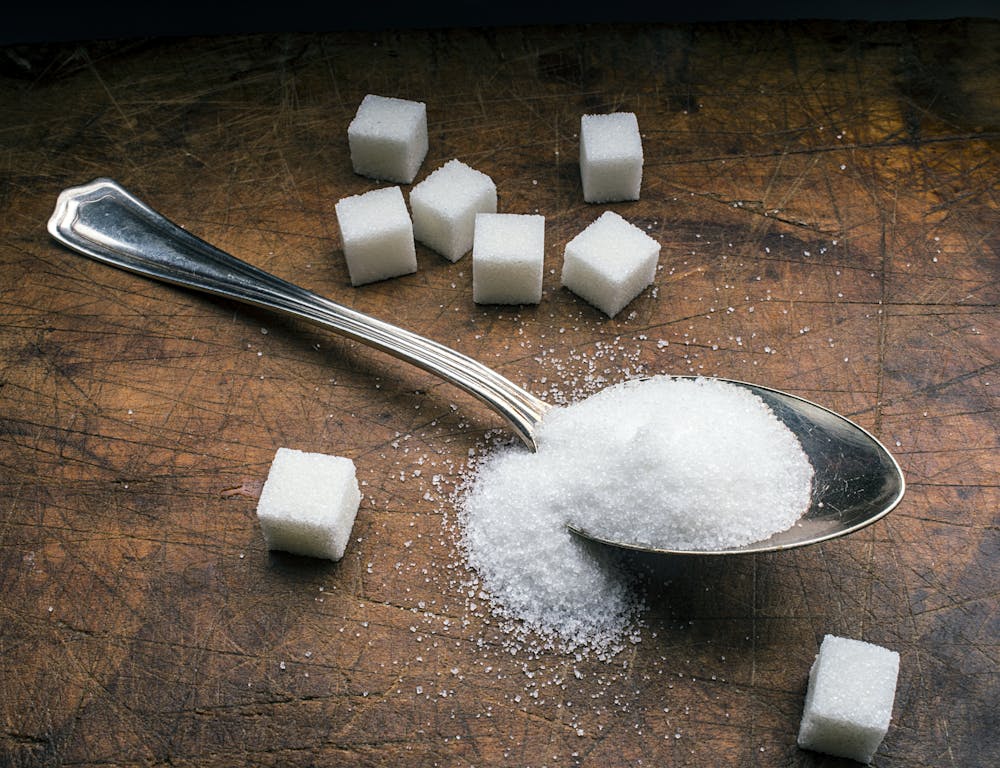 Table sugar and high-fructose corn syrup are two of the culprits that can cause weight gain and obesity. ATU Images/The Image Bank via Getty Images
Since fructose is made from glucose, production of fructose increases when blood glucose levels are high. This process happens when we eat a lot of rice, cereal, potatoes and white bread; those are carbs that rapidly release glucose into the blood rapidly.
And notably, fructose production can also be stimulated by dehydration, which drives fat production.
Fat provides water
Fat has two major functions. The first one, which is well known, is to store calories for a later time when food is unavailable.
The other major but lesser-known function of fat is to provide water.
To be clear, fat does not contain water. But when fat breaks down, it generates water in the body. The amount produced is substantial, and roughly equivalent to the amount of fat burned. It’s so significant that some animals rely on fat to provide water during times when it’s not available.
Whales are but one example. While they drink some seawater, they get most of their water from the foods they eat. And when they go for extended periods without food, they get their water primarily by metabolizing fat.
Hold the fries
The role of dehydration as a contributor to obesity should not be underestimated. It commonly occurs after eating salty foods. Both dehydration and salt consumption lead to the production of fructose and fat.
This is why salty french fries are especially fattening. The salt causes a dehydration-like state that encourages the conversion of the starch in the french fry to fructose.
What’s more, studies show most people who are overweight or obese don’t drink enough water. They are far more likely to be dehydrated than those who are lean. Their salt intake is also very high compared with lean people’s.
Research shows that people with obesity frequently have high levels of vasopressin, a hormone that helps the kidneys hold water to regulate urine volume.
But recent studies suggest vasopressin has another purpose, which is to stimulate fat production.
For someone at risk of dehydration or starvation, vasopressin may have a real survival benefit. But for those not at risk, vasopressin could drive most of the metabolic effects of excess fructose, like weight gain, fat accumulation, fatty liver and prediabetes.
Drinking more water
So does this mean drinking more water can help us lose weight? The medical community has often scoffed at the assertion. However, our research team found that giving mice more water slowed weight gain and the development of prediabetes, even when the mice had diets rich in sugar and fat.
There is also increasing evidence that most people drink too little water in general, and increasing water intake may help people who are obese lose weight.
That’s why I encourage drinking eight tall glasses of water a day. And eight is likely enough; don’t assume more is better. There have been cases of people drinking so much that “water intoxication” occurs. This is particularly a problem with people who have heart, kidney or liver conditions, as well as those who have had recent surgery or are long-distance runners. It’s always good to first check with your doctor about water intake.
For the desert sand rat, and for our ancestors who scavenged for food, a high-salt and limited-water diet made sense. But human beings no longer live that way. These simple measures – drinking more water and reducing salt intake – offer cheap, easy and healthy strategies that may prevent or treat obesity.
___
Richard Johnson is a Professor of Medicine at the University of Colorado Anschutz Medical Campus who has received funding from the National Institutes of Health, Veteran's Health Administration, and Department of Defense to understand the role of fructose metabolism in a variety of metabolic disorders. He also has equity with Colorado Research Partners LLC that is developing inhibitors of fructose metabolism. He is also author of Nature Wants Us to Be Fat (Benbella books, 2022) that discusses the science of fructose and its role in obesity and metabolic disorders.
___
7 of the least-healthy fast food combos
No-value meals
Updated
Fast food value meals are quick, yummy and sometimes inexpensive. What you save at the drive-thru, however, might cost you more in health care bills if you indulge in too many of them.
Recently, Eat This, Not That analyzed these meals and found these combos will put you over the limit for calories, sodium, fat and sugar “before you’ve even finished your meal.”
“If you are eating these occasionally, and you feel good, there’s nothing to worry about,” holistic nutritionist Kristen Ciccolini told the website. “The main thing I’d be concerned with if consuming these meals regularly is the sodium content.”
For context, the 2020-2025 Dietary Guidelines for Americans recommends less than 2,300 milligrams of sodium per day; Cleveland Clinic recommends about 44 to 77 grams of fat per day, if you eat 2,000 calories; and the Mayo Clinic says between 900 and 1,300 calories of a 2,000 calorie diet — or 225-325 grams — should be from carbohydrates.
If you’re trying to eat healthier, here are seven meals you’ll likely want to avoid.
McDonald’s Big Mac Combo
Updated
“Two all-beef patties, special sauce, lettuce, cheese on a sesame seed bun” made for a good commercial but not a healthy meal.
“This meal contains artery-clogging fat from the meat and cheese, along with added sugar from the soda,” Lisa Young, a registered dietitian nutritionist, told Eat This, Not That.
Per meal
- 1,080 calories
- 45 g fat (13 g saturated fat)
- 1,325 mg sodium
- 144 g carbohydrates (7 g fiber; 65 g sugar)
- 30 g protein
Arby’s Chicken Club Wrap Meal
Updated
On their own, wraps can be healthy. But when you pair them with curly fries and a soft drink, any benefits are negated.
“With 1,220 calories, this meal contains more than half of your calories for the day,” Young said. “And both the fries and soda provide virtually no health value.”
Per meal
- 1,220 calories
- 57 g fat (12 g saturated fat)
- 2,310 mg sodium
- 140 g carbohydrates (9 g fiber; 56 g sugar)
- 46 g protein
McDonald’s Double Quarter Pounder with Cheese Meal
Updated
According to Young, this meal has too much sodium. “This meal contains over 70% of the daily value for saturated fat and more than 60% of the daily value for sodium, making you want to skip it,” she said.
Per meal
- 1,260 calories
- 57 g fat (22 g saturated fat)
- 1,685 mg sodium
- 140 g carbohydrates (7 g fiber; 63 g sugar)
- 53 g protein
Arby’s Roast Turkey Ranch & Bacon Sandwich Meal
Updated
It’s got turkey, lettuce and tomato, but it’s no healthier than a burger meal.
This meal has 1,000 milligrams more sodium than you should consume all day.
“People with high blood pressure may want to avoid these foods,” Ciccolini said.
Per meal
- 1,380 calories
- 57 g fat (13 g saturated fat)
- 3,360 mg sodium
- 172 g carbohydrates (10 g fiber; 60 g sugar)
- 51 g protein
Arby’s Half Pound Beef ‘n’ Cheddar Meal
Updated
Ciccolini urges caution for anyone craving melted cheese over a half-pound of beef.
This one meal has more sodium, and more than enough fat and carbs, for the entire day. It also has one of the higher saturated fat contents of the value meals.
Per meal
- 1,310 calories
- 61 g fat (17 g saturated fat)
- 3,370 mg sodium
- 141 g carbohydrates
- 54 g protein
Burger King BLT Chicken Jr. Meal
Updated
The sandwich by itself is nearly 500 calories, with regular-size sides bringing it to more than 1,300.
If you want to go ahead and blow your calorie budget completely, upsize to a large. That will top your meal out at 1,790 calories.
Per meal
- 1,310 calories
- 61 g fat (17 g saturated fat)
- 3,370 mg sodium
- 141 g carbohydrates (7 g fiber; 53 g sugar)
- 54 g protein
Taco Bell Classic Combo
Updated
This combo of a beefy five-layer burrito, crunchy taco, cinnamon twists and large soda packs more carbs than some other value meals on the list.
“The smattering of lettuce on the taco doesn’t count as a veggie,” Eat This, Not That wrote.
Per meal
- 1,240 calories
- 34 g fat (11 g saturated fat)
- 1,780 mg sodium
- 212 g carbohydrates (13 g fiber; 125 g sugar)
- 27 g protein

