


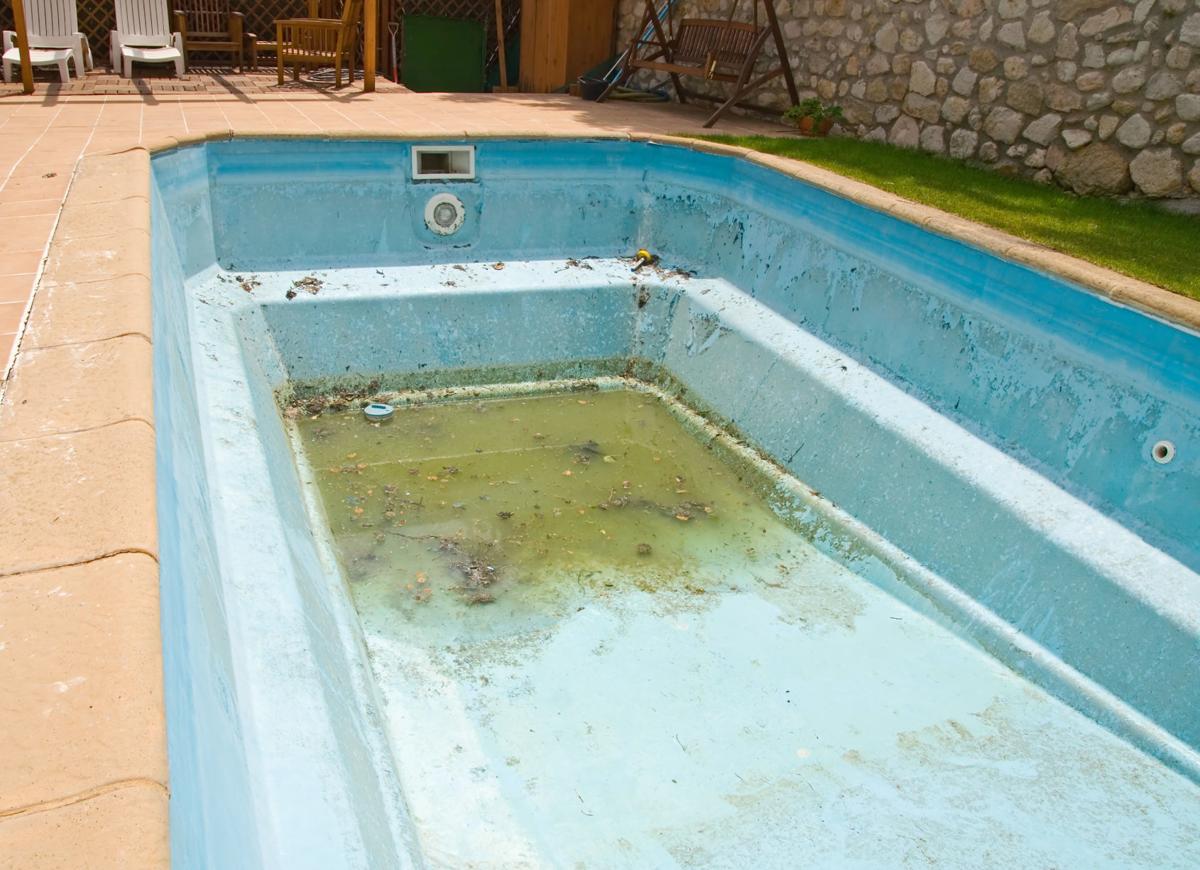
QUESTION: Is it OK to leave your pool empty for a year or two if you want a break from taking care of it?
ANSWER: No, if you do that, you could ruin the inside surface of the pool. The plaster will dry out and deteriorate, and you’ll have to replaster, which could easily cost $10,000. Water pumps and seals will also go bad if they’re not used regularly. You can retire your pool completely, of course, and build a deck over it. You can also put on a locked pool cover while you’re away for the summer or a long vacation. You can also remove a pool completely, but it’s a very expensive process.
Q: I want to know if an interior wall in my home is load-bearing. Some folks have told me that all homes built in our community have no load-bearing interior walls. What can I look for in the attic to prove this? If the ceiling joists go all the way across from outside wall to outside wall without any splicing, does that mean the interior walls are non-bearing?
A: Probably you want to know this because you’d like to remove a wall. To determine whether a wall is load-bearing, you need to visit the attic to look at the roof and ceiling framing configuration.
With a trussed roof system, typically, the load bearing is mostly done on exterior walls. Trusses are easy to identify because all the top chord (beam), bottom chord (beam) and diagonal members are joined at intersections by steel gang plates. You will need to determine where the wall in question is located and see if any roof or ceiling members terminate on that wall. If they do, then that wall is bearing the load of the roof, the ceiling or both.
Some older homes are framed so that roof rafters and ceiling joists are individual members with not nearly the span capacity of engineered trusses.
That means some interior walls have to bear some of the load of the roof and/or ceiling. Their bearing location is easy to determine because you will see braces coming down from the roof rafters to the wall below. Ceiling joist termination is a little harder to see as the joists will probably be covered by insulation. But by pulling a little insulation out of the way of the wall in question, joists are visible.
This may be too complicated for the average homeowner to determine what to do next. In that case, you might want an engineer or contractor to look at the area in question.
Q: Is it worthwhile to buy home warranties that will pay some of the costs when appliances break down?
A: We are not fans of home warranties. However, sometimes you don’t have a choice in the matter. A lender may make you get a warranty when you buy a house; or if you’re selling your home, a buyer might want a warranty. But if you have a choice, it’s better to take the money that a warranty might cost and save it for a time when you might need it to repair or replace an appliance. For example, if you have a 15-year-old air conditioner, you might want to start preparing for the expenses it may cost down the road.

