

The latest digital cameras boast ever-higher resolutions, better performance in low light, smart focusing and shake reduction – and they’re built right into your smartphone.
Even so, some Gen Z-ers are now opting for point-and-shoot digital cameras from the early 2000s, before many of them were born.
It’s something of a renaissance, and not just for older cameras. The digital camera industry as a whole is seeing a resurgence. Previously, industry revenue peaked in 2010 and was shrinking annually through 2021. Then it saw new growth in 2022, and it is projected to continue growing for the coming years.
But why?
One explanation is nostalgia, or a yearning for the past. And indeed, nostalgia can be an effective coping strategy in times of change and upheaval – the COVID-19 pandemic is just one of the disorienting shifts of the past few decades.
But my research on people’s experiences with technology, which includes photography, suggests a deeper explanation: seeking meaning.
It’s not that these Gen Z-ers are longing to return to childhood, but that they are finding and expressing their values through their technological choices. And there’s a lesson here for everyone.
 A student on a school bus holding a digital point-and-shoot camera. Jason Zhang/Wikimedia Commons
The human need for meaning
Humans have many needs – food, shelter, sex and so on. But humans also feel the urge to find meaning in life.
Meaning is different from happiness. Though happiness and meaning are often correlated, meaning doesn’t necessarily include the pleasure that characterizes happiness. Meaningful pursuits may involve struggle, suffering or even sacrifice. Meaning also lasts longer, whereas happiness is fleeting.
What does meaning do for people?
At its core, meaning is about identifying one’s values and making choices to develop oneself as a person. It allows a person to engage with the various aspects of their personality – “the multitudes” contained therein, as Walt Whitman wrote.
Put differently, meaning is about weaving a personal narrative from the facts of life. And it really is a need, not just something that’s nice to have. Meaning is what makes life feel valuable and worth living.
Seeking meaning with technology
Why do people adopt one technology over another? According to what scholars call the technology acceptance model, people consider two major aspects when choosing a technology: its perceived usefulness and its perceived ease of use.
But certainly there are other considerations, especially for personal technologies. People choose some technologies for the way they contribute to meaning. And the search for meaning extends beyond choosing a technology to the way a person uses and experiences it. For example, many people use social media in constructing their sense of self.
In my own research, I discerned four themes involved in people’s meaningful experiences with technology:
- Presence: People choose formats and technologies that will help them be more present and attentive during the experience.
- Centripetal force: A person’s relationship with the technology begins with a central practice but gradually expands to become a bigger part of their life. For example, as a person’s photography practice becomes more meaningful, they may find themselves printing photos, curating their collection and shopping for more equipment.
- Curiosity: A sense of wonder and interest guides the experience.
- Self-construction: Meaningful experiences with technology contribute to the person’s sense of self.
In my research on ultra-distance runners, who run races even longer than marathons, I saw all these elements at play. Runners chose particular shoes, GPS watches, sensors and software – or avoided them – in part to be more present with their bodies.
This can make the running itself more meaningful, along with other activities such as writing race recaps, keeping a training log and sharing photos.
 Marathoner Youssef Sbaai checks his watch after winning the Sofia Marathon in October 2020. Artur Widak/NurPhoto via Getty Images
Over time, running becomes a central part of a person’s identity – they become “a runner.” In the end, long-distance running is not always enjoyable, but it is definitely meaningful.
And so technology, whether it’s the kind associated with running or some other activity, becomes a key way people can discern their values and make choices that support and better embody those values.
The meaning within old digital cameras
In this context, using a standalone digital camera immediately enhances the meaningfulness of an experience. Meaning is about exercising choice, and nowadays most people don’t own a camera at all – they just use their smartphone.
Digital cameras also enable presence: You need to remember to carry the camera around, and in return it won’t give you notifications or show you other apps while you’re shooting.
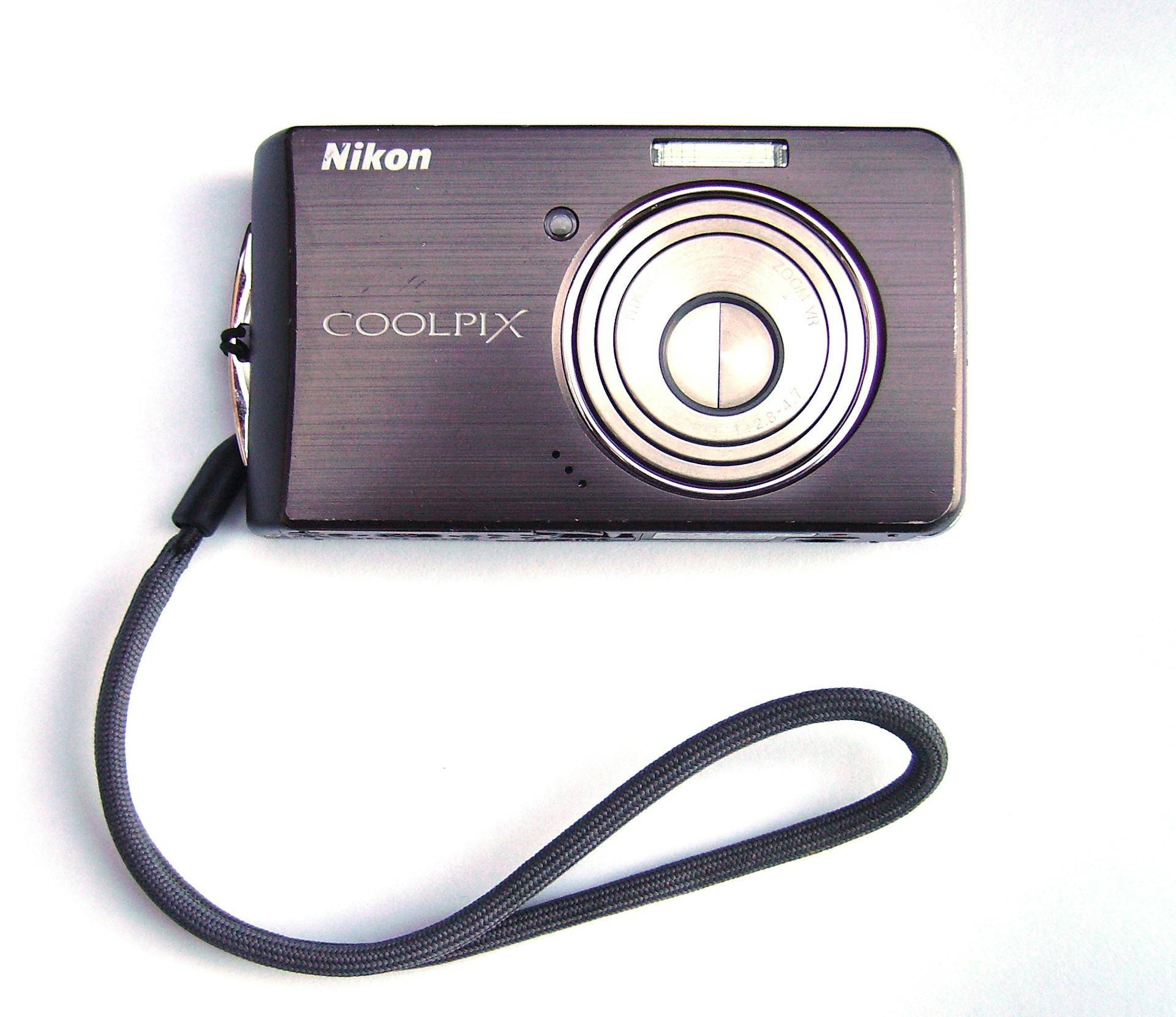 A 2008 Nikon Coolpix S520, one example of the kinds of digital cameras seeing a resurgence today. Simon Speed/Wikimedia Commons
That goes for any standalone camera. But old cameras, in particular, have a set of qualities that help users make meaning.
First, the image quality is poorer. But on social media, photos that get posted are less about polish and precision and more about sharing experiences and telling stories. As social media theorist Nathan Jurgenson writes in his book “The Social Photo,” “As a medium, social photography becomes an important means to experience something not representable as an image but instead as a social process: an appreciation of impermanence for its own sake.”
As a person chooses which photos to share and how to edit them, they are expressing their values and developing their sense of self. To some extent, smartphone photo filters allow for some of this expression, but old digital cameras produce different kinds of visual effects and lack the automated features designed to professionalize the look of each image.
Older cameras also introduce challenges in getting the images onto social media. They require cables, software and multiple steps to transfer the images. It’s a far cry from one-click image generation with artificial intelligence. What this means is that photography involves many more activities beyond simply taking photos. Photography becomes a bigger part of one’s life.
All this friction increases a person’s involvement in the process, inviting choices along the way. This is precisely the thinking behind the slow technology movement, which aims to design technology for goals like self-reflection, rather than efficiency or productivity. Research on meaningful design shows people form stronger attachments to products when they have to make more choices or get more involved.
When it comes to finding meaning in older forms of photography – whether you use a digital camera or a film camera – the slower process of creating and sharing images outweighs the speed, efficiency and crisp imagery of smartphone cameras.
Crafting a more meaningful life
The meaning hidden within old digital cameras contains broader lessons.
In recent years, critics have bemoaned the rupturing of social institutions and the transformation of digital platforms into places that merely serve as vehicles to sell ads and collect data from users. During the pandemic, life itself threatened to go digital with all the hype surrounding the metaverse.
I believe that a key to living well in the near future is to identify where you can create choices, so you don’t feel like you’re drifting along at the mercy of algorithms and the whims of Big Tech.
Perhaps you could start a chapter of the Luddite Club – as a group of teens in Brooklyn recently did – and play board games in the park on weekends. Perhaps you could opt for a paper book rather than a podcast, specifically because you can’t do something else while you’re reading it.
On the surface, deliberately rejecting the latest, flashiest forms of technology may seem like a problem – “You’ll be left behind and miss out!”
But on the other hand, slowing down life by engaging with slower technology creates space to make choices more thoughtfully in relation to your values – and cultivate more meaningful involvement in your own life.
___
Tim Gorichanaz does not work for, consult, own shares in or receive funding from any company or organization that would benefit from this article, and has disclosed no relevant affiliations beyond their academic appointment.
___
Top holiday toys from the year you were born
Top holiday toys from the year you were born
Updated
The holiday season is upon us, which means it’s the perfect time to dive into the history of iconic gifts—and for Americans to gear up accordingly. For savvy consumers, that means getting an early start on shopping and keeping an eye out for the best deals. For retailers, it means lining physical and virtual shelves with the hottest toys and newest gadgets.
Toy shopping has transformed over the past 100 years, whether because of advancements in the products themselves or the marketplace. Using national toy archives and data curated by The Strong, from 1920 to today, Stacker searched for products that caught hold of the public zeitgeist through novelty, innovation, kitsch, quirk, or simply great timing, and then rocketed to success. Some remain curious relics of the past while others are essentially as iconic now as they were upon their debut. Each one also functions as a window into American culture.
So how do you choose the perfect toy for your family and friends today? If you’re looking to avoid tech, you could always go with one of those historic classics that never go out of style, like yo-yos, Tonka Trucks, or teddy bears. If you want to impress with the latest innovations of the past decade, however, you can opt for robot puppies, gaming consoles, or tablets for children.
For extra inspiration, shoppers can look to Amazon—perhaps the foremost modern authority on consumer trends—for a clue on this year’s hottest toys with the site’s Top 100 Toys for this season. The curated collection includes the LEGO Star Wars Kessel Run Millennium Falcon and the Kano Harry Potter Coding Kit.
Here are the top holiday toys from the year you were born, counting up from 1920 to today. May they fill your heart—and stockings!—with joy.
You may also like: US Navy history from the year you were born

1920: Raggedy Ann doll
Updated
Original estimated retail price: $1
Originally a book character, Raggedy Ann was created by a prolific political cartoonist named Johnny Gruelle. By 1920, two signature handmade dolls—Raggedy Ann and her brother, Raggedy Andy—were sold alongside the book. The result was a meteoric success on all fronts. Many myths surround the conception of Raggedy Ann, which is quite fitting given the character’s storybook origins.
1921: Lincoln Logs
Updated
Original estimated retail price: 50 cents to $1
John Lloyd Wright, son of the famous architect Frank Lloyd Wright, invented Lincoln Logs after noticing a foundation of interlocking beams on a Tokyo hotel that his father had designed. The earliest Lincoln Logs used redwood and various colors for the roof. To this day, it’s not clear whether the name itself was actually inspired by Abraham Lincoln, or whether it was due to Frank’s original middle name: Lincoln.
1922: Tinkertoy
Updated
Original estimated retail price: 59 cents
Comprising various wheels, rods, and pulleys, the original Tinkertoys came in a fun mailing tube, garnering even more distinction. After an initially slow rollout, the creative construction set would appear under nearly every Christmas tree in America by the 1920s.
1923: A. C. Gilbert chemistry sets
Updated
Original estimated retail price: $1.50 to $10
In a rather stunning example of how times have changed, magician A. C. Gilbert’s wildly popular chemistry sets that were introduced this year included flammables and explosives, among their components. The 1923 version exclusively targeted young boys, and decades would pass before unisex sets were introduced to the market.
1924: Erector Set
Updated
Original estimated retail price: $1 to $10
Conceived in 1911 by A. C. Gilbert during a train ride from Connecticut to New York City, Erector Set was the first toy ever to use a national ad campaign. It was also the only construction toy of its time to utilize a motor on special units, which contributed to its allure. The earliest incarnations focused on skyscrapers, but Erector Set was redesigned in 1924 to incorporate everything from trains to Ferris wheels. Meanwhile, the name was so catchy that it’s now commonly used as a generic term for home construction sets.
You may also like: Most imported endangered animals to America
1925: Teddy bear
Updated
Original estimated retail price: 79 cents
The original idea for the teddy bear was inspired by former President Teddy Roosevelt himself. It began when a political cartoonist depicted Roosevelt refusing to shoot a black bear that had been tied to a tree by his expedition team. Upon seeing the cartoon in The Washington Post, a candy shop owner named Morris Michtom—who also made stuffed animals with his wife, Rose—got the idea to create a stuffed bear and name it after the famous incident. With Roosevelt’s permission, Michtom put two “Teddy’s Bears” (as they were originally called) in his shop window, and the rest is history.
1926: Crayola Crayons
Updated
Original estimated retail price: 5 cents
The word “Crayola” represents a combination of the French words for “chalk” and “oily,” which makes perfect sense given that crayons are small waxy sticks invented to supplement low-quality chalk. Upon its debut in 1903, a box of crayons comprised only eight colors, but by the time Binney & Smith purchased the brand in 1926, that number rose up to 22.
1927: Radio Flyer wagon
Updated
Original estimated retail price: $2.99
Italian inventor Antonio Pasin had no idea his wooden wagons would be so popular among American kids. To keep up with demand, he took cues from the auto industry and began using stamped steel to mass produce the wagons in 1927. In the process, he renamed the wagon as Radio Flyer, honoring his fixation with both flight and radio.
1928: Yo-yo
Updated
Original estimated retail price: 5 cents
With origins going all the way back to nearly 500 BC, yo-yos became ubiquitous in America after a Filipino immigrant named Pedro Flores partnered with the toy manufacturer D.F. Duncan Sr. to start mass-producing them to the tune of 300,000 units a day. Fueled by publicity from the likes of William Randolph Hearst himself, kids engaged in yo-yo contests across the country, making the “wonder toy” a veritable sensation.
1929: Pop-up book
Updated
Original estimated retail price: not available
Believe it or not, the first pop-up book dates back to a 14th-century Catalan mystic who employed a series of moving discs to visually demonstrate his philosophical treatises. Today’s pop-up books are more directly tied to 1929’s “Daily Express Children’s Annual No. 1,” published by Louis Giraud and Theodore Brown. Known at the time as a “movable,” Giraud and Brown’s book introduced a handy flap that, when pulled, prompted cardboard models to spring up.
You may also like: Do you know your state nicknames?
1930: Mickey Mouse doll
Updated
Original estimated retail price: not available
In 1928, Disney unveiled a short animated film called “Steamboat Willie,” and audiences everywhere fell in love with a mouse named Mickey. To capitalize on Mickey’s meteoric popularity, Disney commissioned a woman named Charlotte Clark to create the first stuffed Mickey doll in 1930. Disney couldn’t keep up with demand, and moms at home began sewing their own dolls as an alternative.
1931: Finger paint
Updated
Original estimated retail price: not available
American educator Ruth Faison Shaw was visiting Italy when she created finger paint. Her motivation was not just to teach kids about art or provide them with a fun activity, but to help them mentally as well. In fact, Shaw believed that embracing messiness through fingerpainting offered genuine therapeutic value for children.
1932: Sock monkey
Updated
Original estimated retail price: 10 cents
In 1932, the Nelson Knitting Company added a patented Rockford red heel to their popular line of socks to distinguish their product from imitators. Inspired by the new detail (and short on cash during the Depression), crafty mothers at home began converting worn-out Rockford socks into monkey puppets for their kids to play with. Once Nelson Knitting Company got word, they obliged by including a monkey pattern with every subsequent pair of socks.
1933: Marx wind-up toys
Updated
Original estimated retail price: 25 cents
Like so many other businesses, toy companies were hit hard during the Depression years. However, Louis Marx & Company thrived. Bolstered by the belief that behind every successful toy were six core qualities—familiarity, surprise, skill, play, value comprehensibility, and sturdiness—Marx stayed ahead of the curve by anticipating trends and keeping manufacturing costs down. The company’s wind-up toys were particularly popular in the 1930s and beyond.
1934: Buck Rogers Disintegrator Pistol
Updated
Original estimated retail price: 50 cents
Straight out of an Amazing Stories comic book, the Buck Rogers Disintegrator Pistol was the first toy ray gun ever made. Touted as the 25th-century weapon of choice for Rogers himself, the gun made an unmistakable zapping sound when you pulled the trigger.
You may also like: 30 famous student protests
1935: Shirley Temple doll
Updated
Original estimated retail price: not available
With a film career that began at four years old, Shirley Temple was a worldwide sensation by the mid-1930s. Along with her success came a slew of merchandising opportunities, including dolls, dishes, and apparel. While Temple retired from film in 1950 at 22, the dolls remained wildly popular for decades.
1936: Balsa wood models
Updated
Original estimated retail price: 10 cents to $1
Kids were going absolutely crazy over aeronautical toys in the wake of Charles Lindbergh’s solo flight across the Atlantic, and Balsa Model Fighter Planes duly heeded the call. Made by Paul K. Guillow, who operated out of his family barn until the early 1930s, these model planes were easy to assemble and made out of cheap bamboo wood, making them an affordable gift for kids during the Depression era.
1937: Monopoly
Updated
Original estimated retail price: $2
The world’s most famous board game almost didn’t come to be. According to legend, Parker Brothers first passed on Monopoly when it was pitched to them by creator Charles Darrow in 1933. And in 1936, Parker Brothers founder George S. Parker ordered a halt in production but changed his mind soon after.
1938: Microscope Set
Updated
Original estimated retail price: Not available
As a toy company that had already mastered the home kit experience, A. C. Gilbert started selling its Microscope Set for kids in the 1930s. Each surprisingly functional microscope offered three levels of magnification, while the set itself came with bees and flies for kids to inspect up close.
1939: View-Master
Updated
Original estimated retail price: $2
During a trip to the Oregon Caves in 1938, Harold Graves, president of Sawyer’s Photographic Services, saw a man named William Gruber strapping two cameras together in hopes of one day making 3D colored slides. The two men struck a deal and View-Master was the result, going to market in 1939. When America entered World War II a few years later, the U.S. government purchased millions of special View-Master reels and used them to train servicemen on how to spot planes and boats within shooting range.
You may also like: Can you answer these real ‘Jeopardy!’ questions about US military history?
1940: Red Ryder BB Gun
Updated
Original estimated retail price: $5
Perhaps the most famous BB gun of all time, the Red Ryder BB Gun was modeled after Winchester rifles and named for a beloved fictional comic book hero. Naturally, most folks know it today as the toy the young narrator of “A Christmas Story” pines after, only to be told repeatedly that he’ll shoot his eye out.
1941: Beach ball
Updated
Original estimated retail price: 5 cents
The perfect accessory for any water-based activity, the inflatable beach ball was supposedly invented by a California man named Jonathon DeLonge. While most current-day beach balls are fairly big, the original could supposedly fit in the palm of one’s hand.
1942: Little Golden Books
Updated
Original estimated retail price: 25 cents
Little Golden Books was launched in 1942 as a series of children’s books that were low in cost but big on story. The series offered the perfect escape from dreary WWII-era reality. For the initial run, Simon & Schuster released only 12 titles that sold more than 1 million copies within the first five months. Suffice to say, the series only expanded from there.
1943: Little green army men
Updated
Original estimated retail price: 5 cents
Starting in the late 1930s, Bergen Toy and Novelty Co. began selling plastic toy army men to a nation of energetic young boys. Molded in various wartime poses, the pint-sized soldiers had pods at their feet to keep them upright. The toys were supremely popular at the height of WWII, and to this day it’s the WWII-era models that remain most synonymous with the tiny plastic soldier concept.
1944: Soap bubbles and bubble blowers
Updated
Original estimated retail price: 10 cents
Nowadays, we might be wary of a company named Chemtoy. But parents in the early 1940s had no problem purchasing bottles of the company’s soapy solution to give children a new favorite pastime: blowing bubbles. Just like today, most of the kids back then used bubble wands for the activity.
You may also like: Most popular dog breeds that don’t shed
1945: Slinky
Updated
Original estimated retail price: $1
Mechanical engineer Richard James was busy devising a spring in 1943 to steady boat equipment at sea. That’s when he knocked some prototypes to the ground and noticed how they “walked” forward instead of toppling. That was enough to give James and his wife the idea for a new novelty toy: the Slinky. Two years later, they delivered their first order to Gimbels Department Store in Philadelphia, Pennsylvania. With Christmas right around the corner, 400 slinkies sold instantly—followed by 250 million more over the next seven decades.
1946: Lionel Trains
Updated
Original estimated retail price: $30
Lionel Trains ads promised to make “a boy feel like a man and a man feel like a boy.” Marketing, painstaking authenticity, and the ability to make trains go various speeds made Lionel Trains the brand of choice among children, collectors, and train enthusiasts nationwide. The company started in the early 1900s, slumped during the Depression, and then halted production during WWII. The year 1946 marked the company’s full production run after the war and kicked off a major resurgence in popularity.
1947: Tonka Trucks
Updated
Original estimated retail price: $1
Named after Lake Minnetonka, Tonka Trucks was founded by three Minnesotans who were going into business in garden equipment manufacturing. But when they bought out a competitor and inadvertently wound up with a toy steam shovel, they looked at making toys. Soon enough, the digger—along with a functional crane and clam—sold 37,000 units. The men ditched garden tools altogether and refocused their attention entirely on toy work vehicles for kids.
1948: Toy Piano
Updated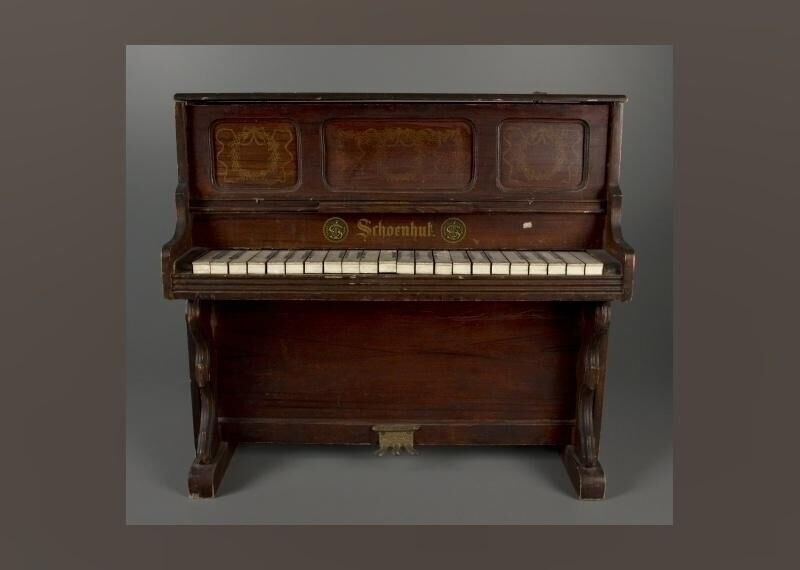
Original estimated retail price: $8
Contrary to most modern toy pianos, which are relatively small and plastic, 1940s toy pianos were much bulkier and finished with materials like walnut. In 1948, toy pianos received some extra special public attention after experimental composer John Cage used one to perform his “Suite for Toy Piano.”
1949: Clue
Updated
Original estimated retail price: $3
Was it Colonel Mustard in the library with a candlestick? Or maybe Professor Plum in the study with a dagger? The only way to find out was to play the game of Clue. Developed during WWII by a British solicitor, the board game was patented under the name Cluedo in 1947, and then sold in North America under the name Clue starting in 1949. The board game remains so popular that it even inspired a 1985 movie.
You may also like: Most popular dog breed the year you were born
1950: Magic 8 Ball
Updated
Original estimated retail price: not available
The Magic 8 Ball was inspired by the Syco-Seer, a cylindrical crystal ball with two dice inside of it. The item was created by Albert Carter, the son of a professional psychic. Along with his brother-in-law Abe Bookman, Carter unsuccessfully marketed several incarnations of the Syco-Seer before passing away in 1948. Bookman subsequently redesigned the product to the one we see today.
1951: Colorforms
Updated
Original estimated retail price: 25 cents
Art students Harry and Patricia Kislevitz liked to experiment with art but didn’t like the high cost of paint. As a result, they turned their attention in 1951 to a relatively new medium: colorful vinyl. Soon enough the art students had created Colorforms, which could cling to smooth surfaces and be reused countless times. Kids adored them—and being able to afford paint was never an issue again.
1952: Mr. Potato Head
Updated
Original estimated retail price: 98 cents
Hoping to get kids to eat the foods they didn’t like, inventor George Lerner developed a set of face parts that could be used to personify spuds and vegetables. The face parts were initially included as bonus toys in boxes of cereal. In 1952, the concept was purchased by the Hassenfield brothers, who formed Hasbro Toys. Mr. Potato Head was thus born, soon followed by Mrs. Potato Head and a range of other characters.
1953: Model Car
Updated
Original estimated retail price: $1-$2
Toy cars in the 1920s were neither toys nor collectibles. The micro-sized models were created by car companies for promotional purposes. By the 1950s, however, they’d become a hobby among young boys and older men alike. Most model cars were made of materials like tin, steel, and die-cast zinc—although by the 1950s many in the U.S. were being made with plastic, as well.
1954: Scrabble
Updated
Original estimated retail price: $2
An out-of-work architect named Alfred M. Butts created a game during the Depression where lettered tiles were assigned points on a crossword puzzle-style grid. Butts came up with names for the game like CrissCross Words and Lexiko before licensing the idea to James Brunot, who called it Scrabble. Sales were fairly abysmal at first, but by 1954 a company named Selchow & Righter owned the rights which were sold to Hasbro and marketed with great success.
You may also like: 50 endangered species that only live in the Amazon Rainforest
1955: Silly Putty
Updated
Original estimated retail price: $1
No one’s certain who invented Silly Putty, but nearly all agree the strange material was invented by accident. The story goes that during WWII, the U.S. government commissioned some chemists to create a synthetic rubber substitute. That resulted in a strange material prone to melting and couldn’t hold a solid shape, and therefore of no discernible use. The government’s loss was the toy industry’s gain, however; and by 1955, small plastic eggs filled with Silly Putty were aimed squarely at the youth market with wildly successful results. And while a whole dollar might seem high for Silly Putty circa 1955, what’s even more astounding is that the price has never really changed over the course of 60 years.
1956: Play-Doh
Updated
Original estimated retail price: 99 cents for four
After hearing from teachers that kids were turned off by the rigidity of modeling clay, a man named Joe McVicker began sending soft wallpaper cleaning products to schools as a substitute material. By 1956, that substitute had a name all its own: Play-Doh. The product has been a grade-school staple ever since.
1957: Water balloons
Updated
Original estimated retail price: 10 cents
Like so many iconic products, water balloons resulted from pure happenstance. They came about when a British man named Edgar Ellington tried inventing a waterproof sock made of latex and cotton. As the sock began to leak water, Ellington angrily tossed it onto a table and watched it burst. That’s when he got a much better idea. His subsequent water balloons (dubbed “water grenades”) were selling like crazy by the late 1950s.
1958: Hula Hoop
Updated
Original estimated retail price: $1.98
Hula Hoops arrived after an Australian named Alex Tolmer designed a polyethylene plastic version of the bamboo hoops Aussie kids were spinning around their waists. Tolmer sold the design to American toy company Wham-O, which named it the “Hula Hoop” in honor of Hawaiian dance moves. To create buzz, Wham-O gave the toy away for free to kids in Southern California and got it featured on “The Dinah Shore Show.” As a result of the inventive marketing campaign, the Hula Hoop became a huge sensation. Twenty-five million units sold in the first two months alone.
1959: Barbie
Updated
Original estimated retail price: $3
Ruth Handler created the first Barbie as a 3D alternative to the paper dolls her daughter used to play with. Barbie remains the most iconic doll of all time. Naturally, that meteoric success came with its share of criticism, namely from feminists who thought Barbie’s curvy physique and penchant for teen fashion set a bad example for young girls. Agreeing to a point, toy company Mattel went to great lengths over the years to establish Barbie as a symbol of inclusion and female empowerment, giving her varying ethnicities, careers, and styles.
You may also like: Most popular baby names for boys the year you were born
1960: Etch A Sketch
Updated
Original estimated retail price: $2.99
Originally known as L’Ecran Magique—which translates to “magic screen”—Etch A Sketch was the brainchild of French electrical technician Andre Cassagnes. Cassagnes shopped his product for a year without having much luck until the Ohio Art Company decided to spend $25,000 on the licensing rights. The toy was renamed in the process. After some choice television spots, the Etch A Sketch shot to the top of Santa wish lists all around the country by 1960.
1961: Slip ’N Slide
Updated
Original estimated retail price: $8.95 per box of six
As one might expect, the Slip ’N Slide has relatively dangerous origins. In 1960, an upholsterer by the name of Robert D. Carrier came home to find his son and his son’s friends sliding down the wet pavement of their driveway. Drawing on his work with synthetic fabrics, Carrier created a plastic slide for kids to put down over hard surfaces for a slicker (and presumably safer) experience.
1962: Chatter Telephone
Updated
Original estimated retail price: $1.42
The Chatter Telephone was created after Ernest Thornell spotted his daughter dragging their phone around the house like a pet. That gave him the idea to add wheels, followed by assorted noise-making buttons. The Chatter Telephone was originally made of wood, but today’s model is commonly made with plastic.
1963: Easy-Bake Oven
Updated
Original estimated retail price: $15
A small, working oven for kids might sound like a brilliant idea (and time has proven that it is), but the Easy-Bake Oven invoked some safety concerns among parents upon its 1963 debut. To address those worries, toy company Kenner installed two 100-watt bulbs as a heating source to reduce the chance of burns.
1964: G.I. Joe
Updated
Original estimated retail price: $1.95
While Barbie was being marketed to young girls, in 1964 Hasbro gave boys a savage war hero named G.I. Joe. The company attempted to keep the word “doll” out of the G.I. Joe lexicon, marketing the toy as an “action figure” instead. While G.I. Joe would eventually undergo changes in persona and appearance (and mirror actual American celebrities and heroes), his outsized masculinity remains intact to this day.
You may also like: The 52 women who have won the Nobel Prize
1965: Wham-O Frisbee
Updated
Original estimated retail price: 79 cents
According to legend, the Frisbee’s origins date back to the late 19th century when New England college students tossed pie plates to one another outside the Frisbie Baking Company. But it wasn’t until 1948 that Walter Morrison and Warren Franscioni began selling their plastic “Flying Saucers” or “Pluto Platters” at county fairs. Toy company Wham-O caught word of the discs and bought the rights in 1955, renaming them Frisbees. By the mid-’60s, Wham-O Frisbees were ubiquitous in backyards and college campuses.
1966: Twister
Updated
Original estimated retail price: not available
Board game manufacturer Milton Bradley was initially nervous about marketing Twister, worried the game’s frisky undertones might blemish the company’s upright reputation. Despite these reservations, the company put Twister on the shelves in 1965 to little fanfare. It wasn’t until Johnny Carson played the game on TV with Eva Gabor that teens saw the potential. Twister has been a cornerstone of youth culture ever since.
1967: Lite-Brite
Updated
Original estimated retail price: $10
Lite-Brite comprised a back-lit grid covered by black sheets of paper. By poking holes in the paper, young boys and girls could form patterns and images. Later editions would include pre-patterned images of pop culture figures like Darth Vader and Scooby-Doo.
1968: Hot Wheels
Updated
Original estimated retail price: 59 cents
Mattel co-founder Elliot Handler (whose wife Ruth invented Barbie) set out to create a new toy that would be as appealing to boys as Barbie was to girls. The result was a muscular, American take on die-cast English Matchbox cars. Dubbed Hot Wheels, the initial 1968 line-up offered 16 hot rods rife with color and metal.
1969: Lego building sets
Updated
Original estimated retail price: 10 to 30 cents per brick
Derived from two Danish words meaning “play well,” Lego is not just the top toy from the year you were born, but the top toy of the last century. What began in 1949 as a set of interlocking red and white blocks had become a veritable cultural phenom by the late 1960s, complete with its own Legoland theme park.
You may also like: Cities doing the most for a clean energy future
1970: Nerf ball
Updated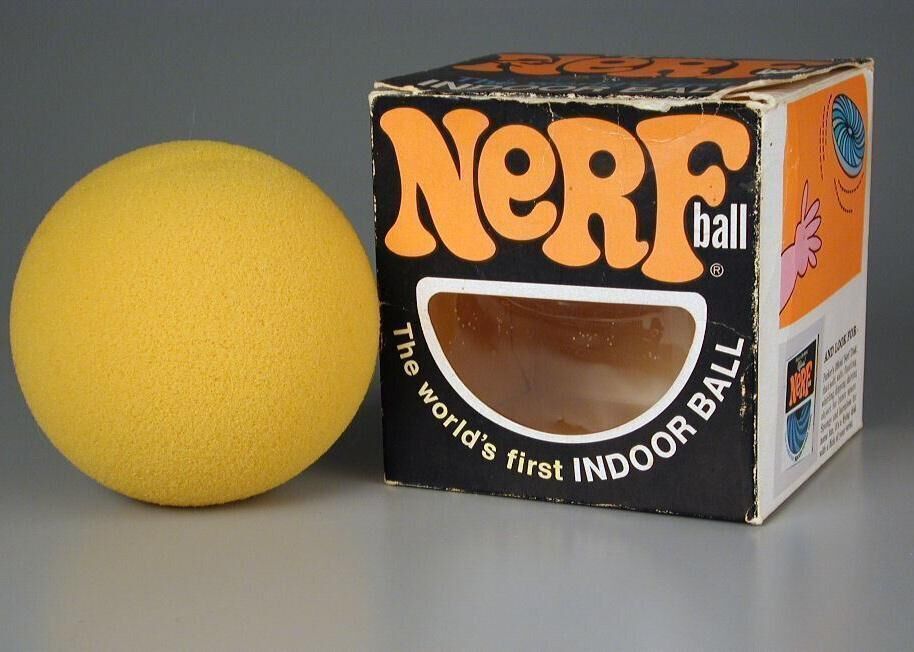
Original estimated retail price: $2
Made of “non-expanding recreational foam” and marketed as “the world’s first indoor ball,” the Nerf ball was an instant smash for Parker Brothers. Over 4 million units sold in the first year alone. Similar products soon followed; eventually, the Nerf football took the crown for the best-selling toy in Nerf’s lineup.
1971: Weebles
Updated
Original estimated retail price: $6.58
Weebles were a family of egg-shaped plastic figurines distinguished by bright colors and kinetic, somewhat hypnotic movements. Bolstered by the catchphrase “Weebles wobble, but they don’t fall down,” the toys were a must-have among young kids in the early to mid-1970s.
1972: Uno
Updated
Original estimated retail price: not available
Merle Robbins, a barbershop owner and card game enthusiast, was convinced he could improve upon the game of Crazy Eights. The result was Uno, which Robbins initially sold through local businesses and his own barbershop. Robbins licensed the rights in 1972 to a funeral parlor owner in Illinois, who took Uno onto the national stage with spectacular success.
1973: Shrinky Dinks
Updated
Original estimated retail price: not available
Shrinky Dinks—thin sheets of decorated plastic that shrunk down and hardened after baking inside an oven—were marketed as pure magic upon their debut in 1973. Of course, the real explanation was polystyrene plastic, which hosts polymer chains that straighten out when heated, rolled, and cooled.
1974: Skateboard
Updated
Original estimated retail price: $20 to $60
Skateboarding began in 1958 when people attached roller skate wheels to a board in order to “sidewalk surf.” It wasn’t until the early 1970s, and the creation of urethane wheels to smooth out an otherwise bumpy ride, that skateboards found their enduring stride.
You may also like: Popular fashion trends the year you were born
1975: The Pet Rock
Updated
Original estimated retail price: $3.95
Gary Ross Dahl supposedly thought up a pet rock over drinks with friends, imagining the ideal pet as one that made no mess and required no effort. Pair that idea with clever marketing and lucky timing, and you end up with arguably the most famous, most useless product in the history of America. Indeed, even decades later the pet rock stands as both a tribute to and mockery of the perennial wonders of capitalism.
1976: Stretch Armstrong
Updated
Original estimated retail price: $5
You could pull, twist, throw, beat, and bend Stretch Armstrong, but you couldn’t break him. Made from a proprietary blend of plastic, rubber, and gel, the iconic figurine could stretch his limbs up to four times their normal size.
1977: Atari 2600 Game System
Updated
Original estimated retail price: $199.99
The Atari 2600 was absolutely crucial to the development of gaming. The product offered streamlined playability and a slew of great titles like “Frogger,” “Pac-Man,” and “Space Invaders.” The console wasn’t the first to bring gaming into the home, but it was arguably the earliest, most important catalyst for what would eventually become the home gaming revolution.
1978: Star Wars action figures
Updated
Original estimated retail price: $3 and up
“Star Wars” today is the bar by which all other franchises currently aspire. But the movie’s initial success in 1977 caught virtually every industry by surprise, including the toy industry. To account for the sudden demand in merchandise, toy company Kenner hastily released a series of puzzles and games to uneven results. However, as soon as the 3.75-inch action figures of Luke Skywalker, R2-D2, Chewbacca, and Princess Leia hit the shelves in 1978, Star Wars merchandise became as popular as the film itself.
1979: Simon
Updated
Original estimated retail price: $24.95
Having invented the first video game system in the 1960s, it’s fitting that Ralph Baer took conceptual cues from an Atari arcade game called “Touch Me” when creating Simon in the mid-’70s. The electronic toy, which tested your memory by playing color patterns you then had to playback in sequence, was unveiled at Studio 54 of all places. It was thereafter a staple in just about every suburban toy chest in America.
You may also like: Most popular baby names for boys the year you were born
1980: Rubik’s Cube hits the shelves
Updated
Original estimated retail price: $1.99
Hungarian designer Erno Rubik designed a 3D geometric puzzle in 1974 called Magic Cube. By 1980, Rubik’s nifty contraption was in the hands of Ideal Toy & Novelty Company, which renamed it Rubik’s Cube. The puzzle was an instant success, selling 100 million units within the first two years alone. In the time since, a peripheral sphere of competitions, books, and imitators has emerged.
1981: He-Man action figures
Updated
Original estimated retail price: $4.99
He-Man and the Masters of the Universe were introduced in 1981 as a series of action figures that could throw punches with a pull-and-release mechanism. In an additional show of strength, each Masters of the Universe action figure was nearly two inches larger than Kenner’s Star Wars and Hasbro’s G.I. Joe action figures.
1982: My Little Pony
Updated
Original estimated retail price: $3 and up
Giving Barbie a literal run for her money this year was Hasbro’s My Little Pony, a range of small, vinyl horses with long, bright, and groomable hair. Each pony also came with an adorable name and a unique emblem branded on its backside.
1983: Cabbage Patch Kids
Updated
Defined by their doughy bodies and large, round heads, Cabbage Patch Kids took the world by storm after appearing on a TV show called “Real People” in 1980.
1984: Transformers
Updated
Original estimated retail price: $4 and up
The Transformers legacy began in 1984 when Hasbro introduced a range of action figures adapted from two Japanese toys that could shape-shift from robotic aliens into motor vehicles. Along with the toy launch, came an epic backstory and a supporting line of comic books. The Transformers world would only continue to grow with TV shows, games, blockbuster films, and even cereal boxes all entering the fold.
You may also like: 25 pictures of abandoned military installations and their stories
1985: Teddy Ruxpin
Updated
Original estimated retail price: $69.99
A former Disney Imagineer named Ken Forsse created the cuddly, animatronic teddy bear that could read bedtime stories. Using the same technology that Disney used for animatronic theme park attractions, Forsse equipped the top-selling bear with a cassette tape and moving facial features. Even with the somewhat hefty price tag, Teddy Ruxpin was the best-selling toy of 1985 and 1986.
1986: Nintendo Entertainment System
Updated
Original estimated retail price: $199.99
The Atari craze had slowed by the mid-’80s to a point where home gaming consoles seemed to be on the brink of extinction in the U.S. That didn’t stop Japan’s Nintendo from trying to penetrate the American market in 1985. To incentivize retailers, Nintendo’s North American division agreed to be paid only for the units that sold, while the units that didn’t sell could be returned. The gamble didn’t exactly pay off, but it got the ball rolling enough to keep the game system afloat until the release of “Super Mario Bros” in 1986. Video games have been a benchmark of American culture ever since.
1987: Jenga
Updated
Original estimated retail price: $12
Jenga involves removing blocks from a tower one at a time until said tower topples over. The addictive game debuted in 1983 but took a few years to catch on. According to legend, entrepreneur Robert Grebler—who’s largely responsible for bringing the game to North America—holds the record for the tallest known Jenga tower at just over 40 levels.
1988: Troll Dolls
Updated
Original estimated retail price: $2 and up
Derived from Scandinavian folklore, Troll Dolls were created out of wood in the late 1950s by a Danish fisherman named Thomas Dam. American toy companies wasted no time ripping off the concept with a plastic variant that rode a wave of popularity in the 1960s. Troll Dolls then re-emerged in the late 1980s and early ’90s as an indispensable toy for kids and work-cubicle decoration for adults.
1989: Game Boy
Updated
Original estimated retail price: $89.99
While not the birth of mobile gaming, Nintendo Game Boy arguably remains its biggest step forward. The 8-bit handheld console offered an approachable design, a bunch of great games, and a level of convenience that pretty much speaks for itself. As a follow-up to NES and a revolution unto itself, Game Boy was an instant home run.
You may also like: Iconic products released the year you were born
1990: Teenage Mutant Ninja Turtles action figures
Updated
Original estimated retail price: $3.99 and up
The Teenage Mutant Ninja Turtles rose to fame on the back of a massively popular animated series about witty crime fighters with a appetite for New York pizza. By the time their 1990 live-action movie dropped, the turtles had utterly conquered the youth market with best-selling toys and box office numbers to show for it.
1991: Super Nintendo Entertainment System
Updated
Original estimated retail price: $199.99
Marking a big step up from NES in essentially every department, Super Nintendo duly maintained a masterful grip on the video game console sphere. However, this time around the brand faced stiffer competition in the form of competing 32-bit console Sega Genesis. The first major “console war” had officially begun.
1992: Talkboy
Updated
Original estimated retail price: $29.99
The Talkboy made its grand debut in “Home Alone 2: Lost in New York” as a handheld recording device used by the movie’s young prankster, Kevin McCallister. A retail version was released on the same day as the movie, and thousands of far less effective pranks presumably ensued. The product was so popular that several spin-off versions were created, including Talkgirl and Talkboy FX Plus.
1993: Super Soaker
Updated
Original estimated retail price: $10 to $50
When not helping NASA with their Galileo Mission to Jupiter, the nuclear engineer Dr. Lonnie Johnson was home working on a heat pump that could use vaporized water pressure instead of hazardous Freon. When the pump sent a stream of water across the room, Johnson pivoted toward creating a high-powered water blaster instead. He built a prototype out of PVC pipe and an empty soda bottle he called the Power Drencher, which used an air pressure chamber to pump water from a reservoir. After a few necessary tweaks, the Super Soaker was born.
1994: Mighty Morphin Power Rangers
Updated
Original estimated retail price: $10
As part of the Fox Kids afternoon TV block, “Mighty Morphin Power Rangers” in 1993 blasted their way into the cultural stratosphere one live-action showdown at a time. Given such immediate success, merchandising a series of toys (and a 1995 movie) was an easy decision. Like so many great toys and franchises, the Power Rangers receded from the spotlight only to triumphantly return years later.
You may also like: Major cities most at risk of rising sea levels
1995: Beanie Babies
Updated
Original estimated retail price: $5 and up
Why exactly did small, inexpensive, bead-filled animals lead to a collectors frenzy in the mid- to late-’90s? Barring the basic principles of supply and demand, the phenomenon will likely remain a mystery—as will the fact that rare Beanie Babies still routinely fetch thousands of dollars on the resale market.
1996: Tickle Me Elmo
Updated
Original estimated retail price: $29.99
Tyco Toys cashed in on Elmo’s infectious laugh by giving the popular Sesame Street character a doll of its own in 1996. What they didn’t anticipate were the hysteric levels of demand after the toy sold out in the midst of the holiday shopping season. During the “Tickle Me Elmo Craze,” shoppers trampled store employees and engaged in physical battle all in the name of the Christmas spirit.
1997: Tamagotchi
Updated
Original estimated retail price: $17.99
Before cell phones, teens and pre-teens were hooked on a virtual pet named Tamagotchi. To be fair, if left alone Tamagotchi would starve and die; so a consistent level of attention was more or less mandatory.
1998: Furby
Updated
Original estimated retail price: $35
Like some adorable descendant of Gizmo from the “Gremlins” movies, Hasbro’s Furby charmed his way into millions of homes after a 1998 debut. While the animatronic pet’s native tongue was “Furbish,” he could pick up irresistible English phrases like “I love you” in no time at all.
1999: Pokémon trading cards
Updated
Original estimated retail price: $3 to $4
Hailing from Japan, Pokémon began as a 1996 Game Boy game and then quickly segued into a full-blown franchise complete with TV shows, toys, and movies. But nothing seemed to stoke the masses’ furor like Pokémon trading cards. Besides their collector appeal, the cards inspired an official competitive league known as Pokémon Organized Play.
You may also like: Most popular baby names in the 21st century
2000: PlayStation 2
Updated
Original estimated retail price: $299
While the original PlayStation positioned itself as a leader of the new gaming guard in the mid-1990s, it was the PlayStation 2 that cemented Sony’s status as the veritable king of home entertainment. The console took in $250 million on the first day alone, selling out quickly because of manufacturing delays and then fetching extremely high numbers on the secondhand market. Gaming has never been quite the same since.
2001: Bratz Dolls
Updated
Original estimated retail price: $9.99 to $22.99
Scantily dressed and brimming with sass, the appropriately named Bratz dolls were marketed as “anti-Barbies” for a modern audience. The initial 2001 roll-out included just four dolls, but that number rapidly grew as profits soared. A slew of movies, CDs, shows, and video games naturally followed.
2002: Beyblades
Updated
Original estimated retail price: $10 and up
With roots in a Japanese Manga series, Beyblades are spinning tops that battle against one another inside a toy stadium. Their explosive success resulted in nationwide tournaments, while the manga books were developed into an anime TV series that ran for three seasons.
2003: Cranium Hullabaloo
Updated
Original estimated retail price: not available
Cranium's Hullabaloo was ranked the #1 game of the year for 2003 by the Toy Association. One part Twister and one part musical chairs, the game challenges children to find their way to marked pads on the floor before the electronic caller instructs everyone to freeze. Hullabaloo was lauded for keeping kids active even during indoor play.
2004: Robosapien
Updated
Original estimated retail price: $99
Designed by Mark Tilden and manufactured by WowWee toys, Robosapien was a remote-controlled robot capable of vocals and 67 pre-programmed moves. In an extra-clever touch of ingenuity, Robosapien would imitate the iconic Rosebud scene from “Citizen Kane” every time you turned it off using the remote.
2005: Xbox 360
Updated
Original estimated retail price: $399
In the 21st-century console wars, Microsoft released a game-changer with the Xbox 360 in 2005. Touting improvements on every front along with internet connectivity, Xbox 360 would sell over 77 million units over the next eight years.
2006: Nintendo Wii
Updated
Original estimated retail price: $250
Nintendo burst back onto the video game scene with the release of the Nintendo Wii, delivering bubbly graphics, a personalized ecosystem, and handheld motion controllers for a friendlier and more interactive approach. Skyrocketing sales and popular awards let Nintendo know they had a qualified hit on their hands.
2007: Guitar Hero
Updated
Original estimated retail price: $90
“Guitar Hero” first launched in 2005 and immediately capitalized on the interactive possibilities of modern gaming. The third installment, “Guitar Hero III: Legends of Rock,” was not just the best-selling video game of 2007, but was reportedly the first retail video game to reach $1 billion dollars in sales.
2008: WALL-E Toys
Updated
Original estimated retail price: $7 and up
Renowned for its sophisticated themes and stunning visuals, Disney/Pixar’s 2008 film “WALL-E” played to all ages and enraptured an audience of millions. Despite the film’s wasteland vibes, Disney quickly released tons of subsequent WALL-E merchandise that sold in large enough quantities to help actualize the film’s own dire predictions.
2009: Angry Birds
Updated
Original estimated retail price: $5 and up
For cheap, addictive games, Angry Birds remains the franchise to beat. It debuted in 2009 and has lost little momentum since. Besides the video game itself, there’s a TV series, feature film, and a range of plush toys that have sold in the millions.
You may also like: History of dogs in space
2010: iPad
Updated
Original estimated retail price: $499
Apple’s iPad launched in 2010 and quickly found its niche in the realm between laptops and cell phones. A million units sold within the first month. Indeed, the iPad became so ubiquitous so rapidly that when the NFL struck a deal with Microsoft to use its Surface tablets exclusively in 2015, announcers couldn’t help but refer to those tablets as iPads on national TV.
2011: Skylanders
Updated
Original estimated retail price: $5 and up
Skylanders brings real-life toys into the video game world using near-field communication (NFC) technology. The toys-to-life genre, and Skylanders in particular, have earned massive followings among young gamers.
2012: LeapPad Explorer
Updated
Original estimated retail price: $99.99
Imagine a sturdy iPad for kids with its own proprietary range of apps, and you’ve pretty much nailed the LeapPad Explorer. The popular device has origins going back to 1999 when it debuted as an interactive talking book.
2013: Tekno the Robotic Puppy
Updated
Original estimated retail price: $94.99
Tekno the Robotic Puppy came into the world in the year 2000 and has been selling in huge numbers ever since. In addition to heeding commands, the razor-sharp robot dog uses light sensor technology to react to its environment. It can also go to sleep on its own and perform backflips. In 2013, new color options were introduced and owners were granted the ability to control the toy using smart devices.
2014: Frozen dolls
Updated
Original estimated retail price: $10 and up
The “Frozen” theme song might say to “Let it Go,” but audiences nevertheless clung feverishly to the 2013 Disney film. A subsequent range of dolls was likewise immensely popular, taking Barbie off her mantle as the best-selling toy for girls in 2014.
You may also like: Most popular dog breed the year you were born
2015: Shopkins Toys
Updated
Original estimated retail price: $5 and up
Shopkins is more than a range of cute, collectible plastic figurines; it’s an immersive world unto itself that includes books, cards, and videos. The line of toys was in fact so popular that an entire counterfeit industry cropped up around it, with police seizing 150,000 fake Shopkins toys from two Chinese manufacturers in 2015.
2016: Hatchimals
Updated
Original estimated retail price: $49.99 to $59.99
Hatchimals were created by James Martin after he noticed how unboxing videos on YouTube were drawing huge numbers. In turn, he conceived a robotic animal toy that would unbox, or hatch, itself. The result was Hatchimals, and the demand was so intense that the toy sold out almost right away—much to the chagrin of numerous disappointed parents. The following year was looking no less remarkable for the irrefutably popular toy.
2017: Fingerlings
Updated
Original estimated retail price: $14.99
Fingerlings—the adorable, animated companions that wrap around your finger—were released in August of 2017 nearly impossible to get your hands on as the holidays approached. The craze hardly slowed down, either—its 2018 models continued expanding the range of animals and features.
2018: Don’t Step In It
Updated
Original estimated retail price: $19.99
With Hasbro’s “Don’t Step In It” game, players mold rainbow-colored clay into piles of unicorn poop, place them on the floor mat, and take several blindfolded steps determined by the spinner across the mat while trying to avoid stepping in the piles. The Toy Insider’s Jackie Breyer says gross-out toys, in general, are “a hot topic.”
2019: Baby Shark Official Song Puppet
Updated
Original estimated retail price: $19.99
Baby Shark has been all the rage since the song exploded in 2016. Like most pop-culture crazes, the song’s colossal impact transitioned to physical products. WowWee, the makers of Fingerlings, has produced one of the hottest toys of the season in the Pinkfrog Baby Shark Official Song Puppet. Not only do you kick-start the song upon moving the shark’s mouth, but you can actually control the tempo based on how fast or slow you open and close the jaws. Amazon offers three options: yellow Baby Shark, blue Daddy Shark, and pink Mommy Shark.
2020: Animatronic ‘The Child’
Updated
Original estimated retail price: $62.99
He goes by many names, only some of which are correct. “The Child,” (aka “Grogu” or “Baby Yoda” (incorrect)), from Disney’s “The Mandalorian” had a major moment in pop culture history—a moment that lasted nearly two years since the “Star Wars” series release in 2019. Season two focused on the Mandalorian’s quest to return Grogu to the Jedi. This storyline gave fans exactly what they were craving—more adorable scenes with the toddling green character playing off his stoic, mysterious guardian, the Mandalorian. It also gave toy manufacturers the perfect inspiration. “The Mandalorian” toys were included on many curated holiday toy lists in 2020 and this animatronic toy gave children—and let’s be serious, countless adults, too—the chance to live our their fantasies of having a Grogu of their own.


