



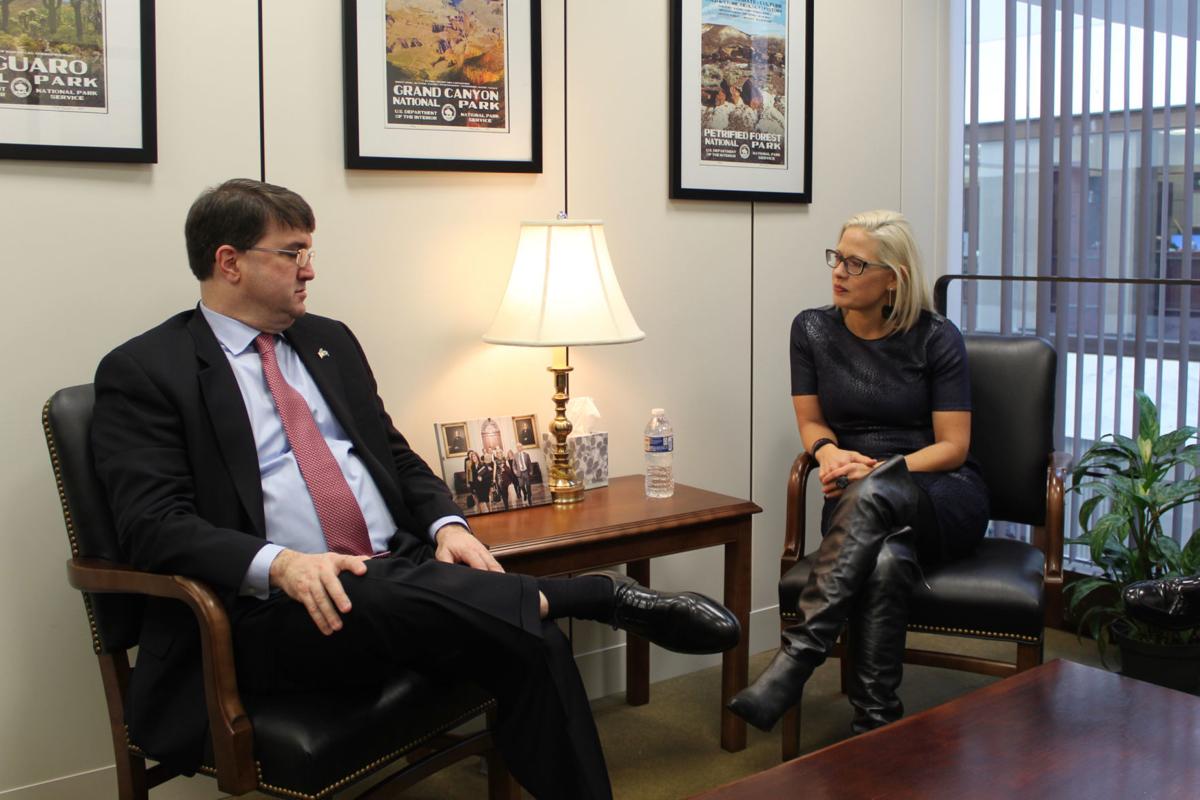
Sen. Kyrsten Sinema has filed a bill that could expand eligibility for American Legion membership to all veterans who served since World War II.
The Legion Act, co-sponsored by Republican Sen. Thom Tillis of North Carolina and filed last Friday, would expand Legion membership to include honorably discharged veterans who served during unrecognized times of war since World War II.
The change would affect vets like Paul Laird, who spent a chunk of his military service cleaning up waste from nuclear testing on a chain of islands in the Pacific Ocean. He and other veterans who served during the Enewetak Atoll cleanup of the late 1970s have had a host of health issues that many attribute to cleaning up nuclear waste wearing little more than shorts and sun hats.
The 60-year-old Army veteran has had cancer seven times. He’s undergone chemotherapy and numerous surgeries. About 4,000 troops assisted with the Enewetak Atoll clean up, some of whom never served during official war times.
Unless an Enewetak veteran’s time of service crosses over into an official era of war, they aren’t eligible for American Legion membership.
“That restriction leaves out thousands of former American service members who signed up to defend our country,” a statement from Sinema says about her first piece of legislation filed as a senator. “Our legislation rights this wrong and ensures all veterans have the opportunity to join the American Legion.
Laird says Enewetak veterans also have trouble accessing treatment.
“We’ve been battling (Veterans Affairs) for recognition and compensation for our health issues and cancers due to our service cleaning up after 43 nuclear bomb blasts — to no avail so far,” Laird said.
He and other Enewetak veterans have supported the Atomic Veterans Healthcare Parity Act, which would provide treatment for those who participated in the cleanup. The bill was introduced in the House in 2015 but so far, has gone nowhere.
Laird hopes Legion membership would help raise awareness to the issues these veterans suffer.
“It would definitely help these gentlemen get the exposure and be a part of the Legion, which does give a lot of the veterans a lot of help,” he said. “More exposure as far as what we’ve been through personally, what has happened, what has been done to us.”
John Raughter, deputy director of the national American Legion headquarters, said the veterans organization has identified 1,600 service members killed or wounded since World War II during times not officially recognized as periods of war.
The Legion introduced a resolution in October 2018 that called for Congress to direct the Department of Veterans Affairs to consider all veterans who served honorably since the start of World War II, in 1941, as “war-time veterans.”
While Sinema’s bill doesn’t go as far as the Legion’s resolution, allowing expanded access to Legion membership would be a step in that direction.
American Legion service officers work to assist veterans regardless of membership status, but allowing more service members to join is a necessary change, Raughter said.
“We do believe membership in the American Legion is important as far as camaraderie goes, as far as being able to participate in the activities of their post at a local level and just the pride in being a Legionnaire,” he said.
Sinema introduced the legislation during the 100th anniversary of the American Legion, which Raughter said is significant.
Although the Enewetak veterans haven’t had much success getting changes they’re pushing for in Congress, Sinema doesn’t expect any opposition to the bipartisan bill.
As a member of the Senate Veterans’ Affairs Committee, working on veterans’ issues is one of Sinema’s priorities, said Hannah Hurley, a spokeswoman. Sinema also worked on veterans’ issues during her time in the House, with bills such as the VA Mission Act, now law, which expanded access to healthcare for veterans who don’t live near a VA facility.
While this is the first bill Sinema has sponsored as a senator, she co-sponsored another bill in January aimed at helping veterans. The Retired Pay Restoration Act would expand veterans’ access to retirement pay and disability benefits. The bill hasn’t made a lot of progress yet because it comes with a price tag, says Nick Rawls, with Sinema’s office.
But Sinema’s team hopes the Legion Act will make it to a vote next month.
“Ensuring our veterans get the benefits they’ve earned is not a partisan issue, and I’m glad we have bipartisan support for this legislation,” Sinema said.
in a statement.

