

About a dozen immigrants in this country illegally have taken sanctuary inside churches across the United States since 2014 to avoid being deported, three of them in Tucson.
Just as in the 1980s, the first case was at Southside Presbyterian Church in Tucson — the birthplace of the movement that provided haven for Central American refugees fleeing civil conflict. Parishioners took in Daniel Neyoy Ruiz in May 2014, followed by Rosa Robles in August. Francisco Pérez was welcomed at St. Francis in the Foothills in September 2014.
Their time inside church walls varied. Neyoy Ruiz was inside for less than 30 days, Perez spent three months at St. Francis, and Robles left sanctuary last week, more than a year after entering Southside.
The Star talked to them last week.
• • •
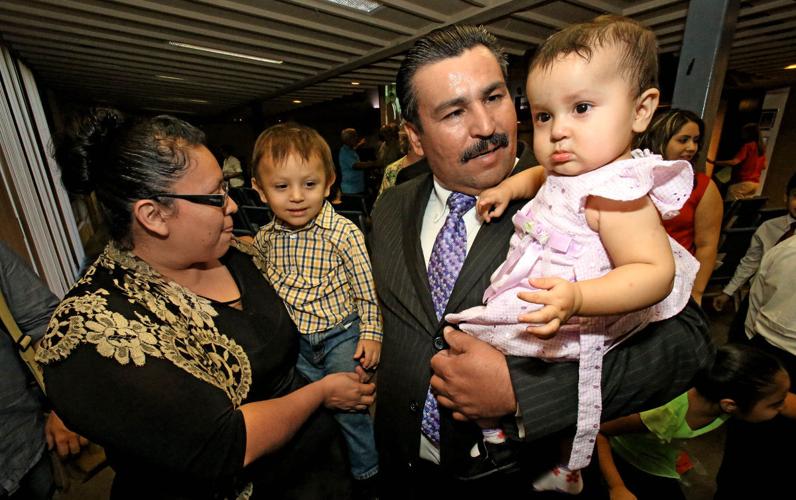
Since leaving Southside Presbyterian, Daniel Neyoy Ruiz has had some ups and downs.
At first he was elated to be home with his wife and son, and to be able to work, since he’s the breadwinner for the family. He had a document that said he would not be deported for at least a year.
But as the one-year deadline approached, Neyoy Ruiz had to decide whether to go inside the church again, since there was no guarantee Immigration and Customs Enforcement officials would grant him another stay of removal.
“The second time was much harder,” he said, “because I really didn’t know if they were going to grant it (the stay) for a second time.”
He decided to seek sanctuary again and went to the First Christian Church, where he stayed for a week until ICE gave him the renewal he was seeking.
Having a paper in hand that said he would not be deported has been invaluable, he said. He finally felt free.
“I felt I was given another chance,” he said.
In 2011, he was driving to work when he was stopped on Interstate 19 by a state Department of Public Safety officer because his car’s exhaust pipe was emitting smoke. Unable to prove he was in the country legally, he was handed over to the Border Patrol.
In March of 2014, he was given 60 days to leave the country. As the deadline approached, he went inside the church with his wife and son.
Being inside both churches made him appreciate Tucson much more than before, he said. “They take the shirt off their backs to give it to you.”
He said the experience has made him and his family stronger.
“It made me realize that everything is not lost and that there is still hope,” he said. “It completely changed my life.”
• • •
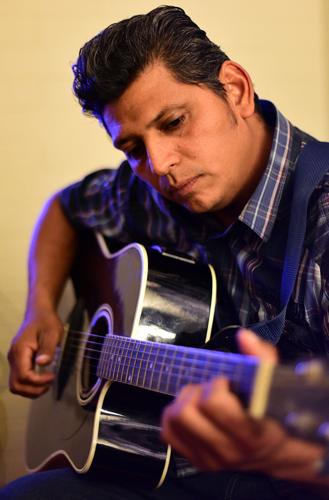
Dec. 24 will mark one year since Francisco Pérez left a Foothills church where he took refuge from deportation.
A few months later, right on time for his birthday, he received another gift — a letter from immigration officials saying his case was officially closed.
Since he left the church, he’s been doing landscaping and construction jobs, and events have exceeded his expectations in every way. His family recently bought a house that he’s fixing up and hoping to pay off as soon as possible.
He also wants to save money for his children to go to college.
“I tell them they have to study,” he says.
Originally from Hermosillo, Sonora, Pérez came to the United States in 1996 as an 18-year-old to help his widowed mother after the family restaurant faltered. He stayed and married his wife, Sarai Milla, and had five children: Emmanuel, Daniel, Noemi, Atlai and Rahel.
He was placed in deportation proceedings after his brother-in-law called the Pima County Sheriff’s Department in 2009 to report a burglary. A sheriff’s deputy referred Pérez to immigration; he was there to help after hearing of the burglary.
The experience, he said, has made him appreciate his freedom and seemingly mundane things such as filling up the car at the gas station or taking his children to school.
“You value your family so much more,” he said.
• • •
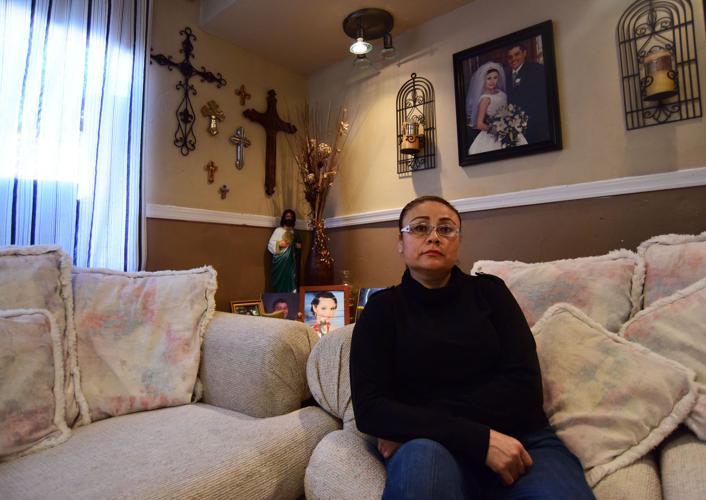
Rosa Robles is adapting to being outside the church.
After 461 days, Robles left Southside Presbyterian, where she sought sanctuary from deportation on Aug. 8, 2014, and returned to her small mobile home.
“I’m just starting to figure out things again,” she said.
At first she was even hesitant to get behind the wheel of a car, not fully remembering streets, she said, but is slowly feeling more confident.
Inside her home, she couldn’t find even the most basic staples, since her husband and two sons had moved everything to a different place.
“I was trying to find a lid for a pot, a trash bag,” she said, “and I couldn’t find it.”
She’s been spending her days rearranging everything just the way she likes it and caring for her children.
When she was at the church, she would go to bed at 4 a.m. and not wake up until 11 a.m. or noon, she said. Now she’s in bed by 8 or 9 p.m. and up early to take her children to school and have food ready when they get home.
Robles’ deportation order started with a traffic stop for an incorrect lane change, got worse with a petition to stay that the federal government never answered, and ended with a lawyer who didn’t ask that her case be closed. That put her on a path to being kicked out of the country.
ICE has denied her new attorney’s requests to close her case or to grant her a stay of removal, insisting that she is not a priority for deportation.
Last week, her attorney said they had reached a confidential agreement with ICE that allowed Robles to leave the church.
For her, it doesn’t matter if the house is a mess or she can’t find anything, as long as she’s with her sons, who are 9 and 12, she said.
“As long as I’m with them I’m happy,” she said, “but the fight continues until we have immigration reform.”

