


After years of standing-room-only talks in Green Valley, Final Exit Network was recently denied its usual meeting space through Green Valley Recreation because the nonprofit says hosting a suicide discussion could leave them open to lawsuits.
Its decision, and the objections from residents who disagree, encapsulates the national debate about whether people have the right to determine when, and how, they will die.
John Abraham, a retired Tucson Episcopal priest and the Arizona affiliate coordinator of Final Exit Network, said the group has been meeting in Green Valley Recreation’s facilities since the mid-1990s. This is the first time it has been denied meeting space in Arizona.
Abraham said he realizes Final Exit is viewed as controversial by some, but he believes that’s because it’s misunderstood.
“We never encourage anyone to hasten their death,” said Abraham, who also teaches adult classes on dying and the “right to die” through the University of Arizona. Instead, he said, Final Exit provides information on how people who are terminally ill or suffering from chronic, debilitating pain can end their lives and have support to do so.
“I’ve seen so many people die horribly over the years,” Abraham said. “It’s pro-choice. That’s what it’s about.”
Green Valley Recreation spokeswoman Sherri Cadeaux said other Final Exit talks, held in the past, were not brought to the organization’s attention. Final Exit Network was not listed as the user when space was reserved, she said.
Green Valley Recreation is a private organization with over 27,000 members from over 100 homeowner associations. It offers members classes, fitness and recreation in 13 Green Valley centers, and has a total property value of over $18 million.
Residents become members either by opting in, or buying property that has a membership as part of its deed. It costs $2,296 to join, and $450 annually after that.
Cadeaux said Green Valley Recreation is “tightening up our reservation policies and looking at who is coming in and for what purposes.”
The organization’s chief executive officer, Kent Blumenthal, did not respond to an interview request.
While Green Valley Recreation maintains its position, Maynard said there have been discussions about organizing a forum in November with “balanced views from a variety of experts on the topic.”
“We are not trying to censor or curtail freedom of speech,” she said. “We wish to meet our members’ needs and still protect the corporation.”
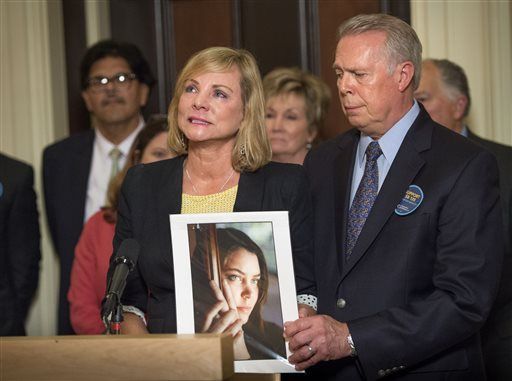
Five states support some form of assisted suicide. The issue was highlighted nationally last fall when Brittany Maynard, 29, moved from California to Oregon to “die with dignity” after being diagnosed with terminal brain cancer. She has been one of over 750 people to take advantage of Oregon’s Death with Dignity Act, which went into effect in 1997.
Abraham said the Green Valley forums often attract hundreds of people. The Final Exit Network is planning to hold its November event, featuring Faye Girsh, president of the Hemlock Society of San Diego and a founder and senior adviser to Final Exit, at the Green Valley Community Church, a United Methodist congregation at 300 W. Esperanza Blvd.
Resident Floanne Morgan supported Green Valley Recreation’s decision and wrote in a letter to the Green Valley News that banning Final Exit Network made her “bust with pride.”
Morgan said in an interview last week that she “grieved” over the popularity of the group’s talks in the past. Her 19-year-old nephew recently committed suicide, which compounds her feelings.
“We’re Christians and we believe that life is precious and a gift from God,” she said. “God gives life, and he’s the only one who should take it away.”
Opponents fear the normalization of assisted suicide can present a tragic, irreversible option to people going through a difficult time. One man’s online account (at www.euthanasia.com) details the first months after an accident left him paralyzed years earlier and how, had physician-assisted suicide been available, he might have succumbed to his despair.
Resident Renee Neumann said she expects Green Valley Recreation to present a wide variety of topics and allow paying members to decide what they want attend. Neumann said she has watched several family members who died of cancer suffer terribly and needlessly, and wants to spare herself the same fate if her life should take such turn.
“I am in a state that is one of the remaining 45 that has no provisions for physician aid-in-dying,” she said. “So if I have a fatal disease, I can either tough it out to the end, or move to one of the states with PAID, or end my suffering myself in my own home with information from FEN.”
Green Valley resident Tony Bishop strongly supports Final Exit’s mission and said a friend in Oregon ended his life there after incurable cancer of the esophagus left him in “unbearable pain.”
“Supervised by a state medical official, and in the presence of a few friends and family members, he was able to die in peace by his own hand,” Bishop said of his friend.
“Final Exit Network breaks no laws and does not encourage or support such behavior. It seeks only to persuade the public of the humane and ethical reasons for allowing the terminally ill this option.”
Abraham said one of Final Exit’s most popular talks is about advanced directives and how to “get the death you want.” That forum lasts about three hours, at a cost of $30, and sells out every time, he said.
With just a dozen or so affiliates nationwide, FEN is a relatively small group. Abraham said the Arizona group is probably the most active nationwide.

