


Lawyers at a hearing in a deadly cross-border shooting case here set the stage on Tuesday for legal arguments that one day could make their way to the Supreme Court.
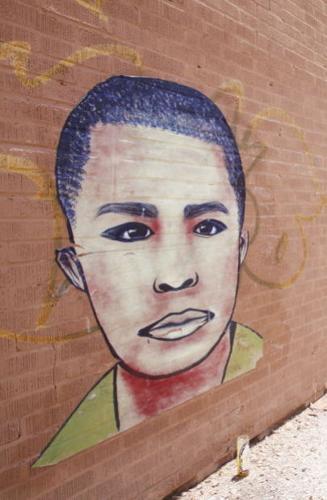
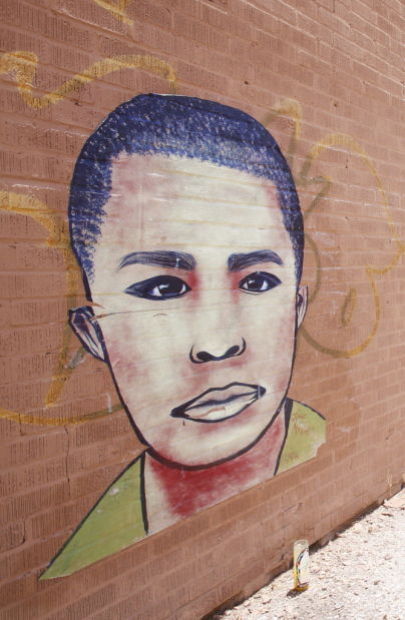
Border Patrol agent Lonnie Swartz shot through the border fence and hit José Antonio Elena Rodríguez, who was walking across the street — about 30 feet from the fence — in Nogales, Sonora, the night of Oct. 10, 2012.
An autopsy report showed he was shot about 10 times, mostly in the back.
The Border Patrol has said Elena Rodríguez, 16, was among a group of rock-throwers, but the family’s attorneys say he was walking to his nearby home after playing basketball.
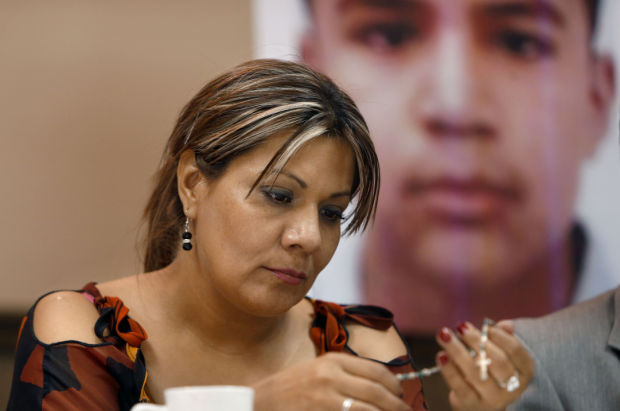
The teen’s mother, Araceli Rodríguez, last year sued the agent, saying Swartz violated the Fourth and Fifth amendments by using “excessive and unjustified” force.
Sean Chapman, representing Swartz, argued before U.S. District Judge Raner C. Collins the case should be dismissed because Elena Rodríguez was a Mexican national shot on Mexican soil, therefore not protected by the U.S. Constitution.
Both sides cited multiple legal cases, included Supreme Court decisions, to explain why the case should or shouldn’t be dismissed.
Chapman cited the recent decision out of Texas, in which the Fifth Circuit Court of Appeals found that the family of another Mexican teen killed by a Border Patrol agent who also shot across the border could not sue the federal government.
“In a factually very similar situation, the court said the Fourth and Fifth amendments cannot apply extraterritorially. This is the state of the law right now,” Chapman said. “A lot of people might not think its fair, but it’s the law. It’s up to the Supreme Court to decide whether it’s wrong at this point.”
In June 2010, Border Patrol agent Jesús Mesa shot and killed Sergio Hernández Guereca, 15, near a bridge between El Paso and Ciudad Juárez, Chihuahua.
Officials said Hernández Guereca was a among a group throwing rocks at Mesa as he tried to arrest border crossers.
A three-judge panel of the appeals court said the family could sue Mesa, but that decision was overturned by the full court last month.
Collins is not bound by that circuit’s decision, Lee Gelernt, an ACLU attorney representing Rodríguez, said Tuesday, especially since the opinion didn’t include the court’s reasoning as to the constitutional claims.
The plaintiffs also argued that because the agent was on U.S. soil and fired from Arizona, the case could alternatively be decided without addressing the issue of whether constitutional protections extend to Mexico.
“It’s clear and it has been clear for a long time that it’s a criminal act to shoot someone across the border,” Gelernt said. “This is a case where everything except the bullet and a young man happened on U.S. soil.”
“We don’t have any choice but to wait for the judge’s decision,” Taide Elena, the teen’s grandmother, said after the hearing.
“Everything is up in the air at this point,” she said. “We have the dead in Mexico. Where else are we going to have him if that’s where they are being killed? But where are the bullets come from?”
She said the civil suit is important for the family, but even more so is the criminal case. “For (the agent) to get jail time,” she said, “but that seems so unlikely.”
The FBI’s criminal investigation into Swartz is ongoing.
During and after Tuesday’s hearing, each side indicated that an unfavorable decision by the judge would be appealed.

