




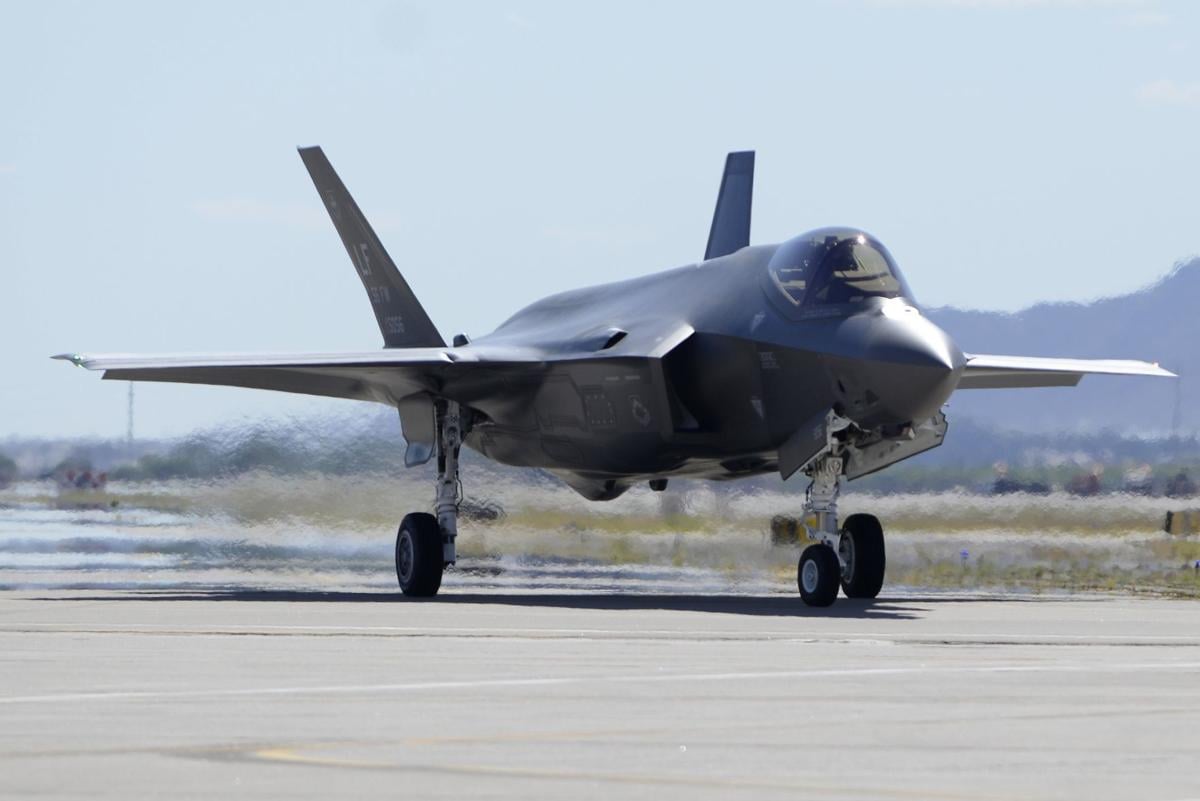
The Air Force has issued a draft study on the potential impact of basing a squadron of F-35A Lightning II fighter jets at Davis-Monthan Air Force Base and three other bases, finding “significant noise impacts” at D-M and two other sites.
Release of the study doesn’t mean F-35s — which are substantially louder than the A-10 Thunderbolt II jets and other planes that regularly fly at D-M — will call Tucson home any time soon.
In 2017, the Air Force passed over D-M and two other bases and chose Naval Air Station Joint Reserve Base Fort Worth as its preferred site for the first Reserve squadron of F-35As.
But under its routine policy, the Air Force Reserve Command has prepared a draft environmental impact statement studying D-M and the other finalist sites as “reasonable alternatives.”
The environmental impact statement studied the effects of basing the first Reserve squadron of 24 F-35As at each of the four candidate bases, and found “significant noise impacts” at D-M and two other finalist bases. The Air Force is looking to have the Reserve squadron of F-35s in place by 2024.
The F-35s would replace 24 A-10 Thunderbolt II ground-attack jets at Davis-Monthan, or a similarly sized A-10 squadron at Whiteman Air Force Base in Missouri.
At Naval Air Station Joint Reserve Base Fort Worth and Homestead Air Reserve Base in Florida, the F-35s would replace F-16 Fighting Falcon squadrons.
The study shows significant noise impacts for D-M and for Whiteman, where F-35s would replace the much quieter A-10s.
The EIS shows that under one scenario, an estimated 1,506 more people living near D-M would experience increased average noise levels of 65 decibels or more — a threshold the Air Force has said can make an area potentially incompatible for residential use.
That includes residents of the Roberts and Julia Keen neighborhoods immediately north of the air base.
The report also cites significant noise impacts at Naval Air Station Joint Reserve Base Fort Worth — affecting about 8,600 people — and “adverse but not significant impacts” at Homestead.
The Air Force studied noise-mitigation measures at each of the four proposed sites, but none were determined to be “operationally feasible.”
The study also found “no significant impacts” to air quality, safety or to soil resources, or to water, biological, and land-use and recreational resources, and no “adverse impacts” to cultural resources, at any of the four bases.
The draft EIS is scheduled to be published in the Federal Register Feb. 14, kicking off a public comment period ending March 31. A final environmental impact statement is expected to be issued this summer or fall.

