

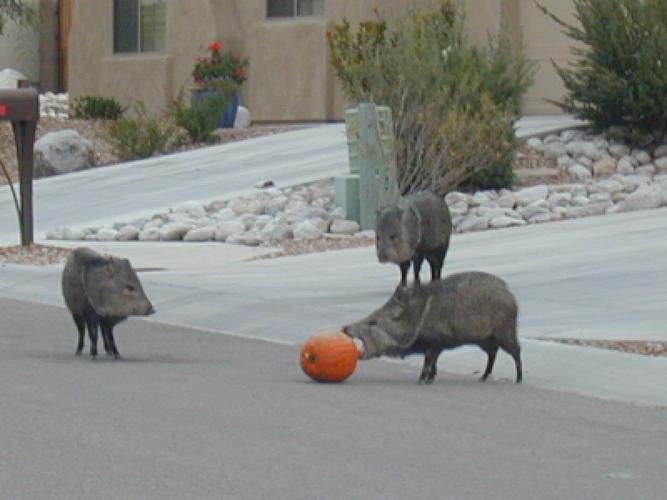
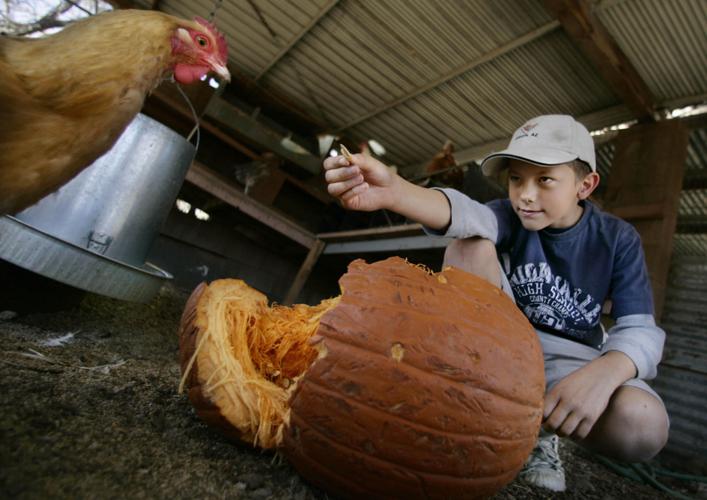
Seasonal outdoor decorations with fresh pumpkins, squash or Indian corn can be a buffet for javelina.
A few 40- to 60-pound beasts munching your decorations can be more than a nuisance — it’s dangerous.
Once javelinas become habituated to human-food sources, the critters will often roam the neighborhood on a regular basis and lose their fear of people, says Mark Hart, a spokesman for the Arizona Game and Fish Department.
Peccaries, especially when startled, can be aggressive toward people. They are a threat to dogs because a javelina can't tell the difference between a family pet and a coyote, one of their predators.
The more habituated a javelina is to human food, the more persistent it becomes, Hart says. Javelina usually wander at night and will poke into garbage cans, possibly knocking over large garbage cans placed in front of homes before collections. That's why it's a good idea not to take trash cans out to the street until the morning of pickup.
In the desert food chain, javelina is a prey for mountain lions. By attracting peccaries to the neighborhood, you could be unknowingly inviting mountain lions, too.
Human food can cause malnutrition and obesity and spread of disease in javelinas, says Hart.
This is not a rural or outskirts-of-town problem. Javelina are quite comfy in an urban setting and travel through area washes.
Remember: It’s illegal to feed the wildlife in Pima County, which is among the Southern Arizona counties that have laws restricting wildlife feeding. It's OK to feed tree squirrels (not too common in the valley) and birds from a feeder. The law carries a possible $300 fine.
Please, don’t feed the peccaries your decorations. It’s dangerous for both man and beast and could be illegal..

