





The three candidates vying for the Tucson police chief’s job all are veteran law enforcement officers with lengthy careers in supervisory positions.
One has risen to a deputy chief’s job in a large urban department (Dallas), while another had a long career in the highway patrol in Florida. The third is now chief in Richmond, California, a much smaller department than Tucson’s.
All three will give their reasons why they want to be Tucson’s top cop and their priorities for the department when they submit to public interviews Thursday, Oct. 29, at City Hall. Once the interviews are over, the panel conducting the chief’s search will make its recommendation on who it wants for the job.
The city’s Police Chief Appointment Advisory Committee will meet beginning at 8 a.m. in the City Council’s chambers in City Hall at 255 W. Alameda St. Each candidate will be interviewed for about 90 minutes.
A fourth candidate, the retiring police chief in San Jose, California, notified city officials Tuesday that he is withdrawing his name for consideration.
Tucson Police Chief Roberto Villaseñor is set to retire in December. He has served with the police department for 35 years.
In addition to the public meeting, separate interviews will be held with the Tucson Police Officers’ Association, Tucson Police Department command staff and the city’s executive leadership team.
City Manager Michael Ortega will receive input from the groups, and he is expected to appoint the new police chief in November. Pending approval by the mayor and City Council, the new chief would start working Jan. 1.
Here are the finalists:
Malik Aziz
Aziz, 47, is a deputy chief in the Dallas Police Department and a 24-year veteran of the department, where he’s held a variety of ranks. He’s served as deputy chief since 2008.
He has a bachelor’s degree in criminology and criminal justice from the University of Texas at Arlington, and a MBA from the University of Dallas.
Charlie Cato, first assistant chief of police in Dallas, has known Aziz his whole career, saying they started out as young officers together.
“He’s been conscientious in every position he’s had,” Cato said. “I’ve always been impressed with his ability to build bridges with folks who are different.”
Both men grew up in Dallas and had hard upbringings in what at the time was a financially depressed city, Cato said.
“He’s always reaching back and helping provide opportunities for those in the next generation,” Cato said, mentioning that Aziz helped to establish a scholarship fund for high school students to help continue their education.
In May, Aziz was selected by Police Chief David Brown to reform and restart the department’s early intervention program, which aims to help officers who have received frequent complaints by the public, according to The Dallas Morning News.
The focus of the program is to intervene in the early stages of a problem, rather than wait until the officer is on a downward spiral.
When he took it over, Aziz found the program was lacking an educational component, and now when officers come under review, the board can recommend a variety of resolutions, including training and counseling, Cato said.
“The program used to be disciplinary, but now it’s about helping these officers to develop themselves,” he said. “It’s hard to see someone of his caliber leave the department.”
Former Dallas Police Chief David Kunkle was no stranger to the department when he signed on as chief in 2004, but after more than 20 years away, he came in as an outsider. Aziz was a sergeant at the time.
“Malik always had a gift of getting officers to work hard, be accountable, be well thought of within the community and get results,” Kunkle said. “That’s very hard to do and not favor one side.”
Described by Kunkle as a big personality, Aziz’s job as a patrol commander involved working closely with the community and elected officials, which Kunkle said he handled adeptly.
Rick S. Gregory
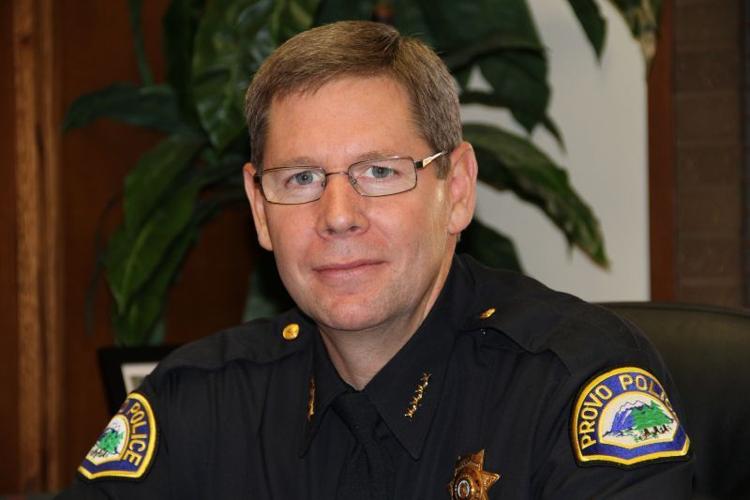
Gregory, 53, is vice president and senior research associate at the Institute for Intergovernmental Research in Tallahassee, Florida. He served more than 22 years in the Florida Highway Patrol, rising to deputy director.
He served as chief of police in New Castle, Delaware, overseeing more than 360 sworn officers and a $52 million budget, and in Provo, Utah, which had about 100 sworn officers and a $15 million budget. He’s served in several civilian jobs, including state director for a U.S. senator from Delaware, a director’s job with the Ohio Bureau of Workers’ Compensation; and in his current position.
He has a bachelor’s of science degree from Barry University in Orlando.
Gregory took the helm of the Provo Police Department at a time when the public had “low confidence” in the force because of a series of police misconduct incidents, said Mayor John Curtis, who requested an independent audit of the department in November 2010.
The audit found the department needed an Office of Professional Standards and Training, and instruction in ethics. The police chief at the time announced his retirement in January 2011, and Gregory was hired five months later.
Curtis praised Gregory saying he is held in “extreme high regard” and that he turned the department around in his two years in Provo, which is the most recent police department he led.
“He worked with the police officers and the community and rebuilt the trust,” said Curtis, explaining that Gregory added additional training for officers, and met with community groups and neighborhood leaders to refocus goals and objectives to improve public confidence. Gregory lifted morale within the department and retained and recruited “good talent,” which in turn increased pride and respect within the force, said Curtis.
Former Councilwoman Sherrie Hall Everett said Gregory built up community policing. “He had a lot of compassion for individuals and he really worked to connect the department with the rest of the community,” she said.
Officer Nick Dupaix was impressed by the former chief’s open door policy, and his invitation to officers to email their ideas to him about what could strengthen the force. “There wasn’t communication within the departments and he changed that,” Dupaix said.
“He boosted our morale and he hyped up patrol by giving his time and resources,” said Dupaix, explaining that Gregory occasionally went on shifts with officers and made them understand that they had to build trust with neighborhoods in order to solve crime. He also regularly attended community meetings and worked with residents on solutions to improve quality of life in neighborhoods, recalled Dupaix.
Bill Hulterstrom, president and chief executive officer of United Way of Utah County, summed up Gregory’s performance: “He was an amazing team builder. He knew how to bring the best out of his officers and those who partnered with the city. He made a long-lasting impact.” Gregory left Provo because his wife got a job in Ohio, according to a news article.
Christopher Magnus
Magnus, 55, has been chief of police in Richmond, California, since 2006, overseeing 320 personnel and a $75 million budget.
From 1999 to 2005, he was police chief in Fargo, North Dakota, and prior to that, held a variety of ranks within the Lansing Police Department in Michigan, including captain of administrative services.
He spent the early years of his career working as a deputy sheriff in the Livingston County, Michigan, Sheriff’s Department and was also a paramedic in lower Michigan for 10 years.
Magnus received a master’s degree in labor relations from Michigan State University and a bachelor’s degree in criminal justice from, also from Michigan State.
Richmond, which is across the bay from San Francisco and north of Oakland, made national news in September 2014 after Richard Perez, an unarmed man, was shot and killed by a police officer in the city’s first fatal officer-involved shooting in seven years. The officer said that Perez grabbed for his gun, but Perez’s family is contesting that claim and has sued the department.
In the wake of Perez’s death, Magnus allowed the public to attend the coroner’s inquest, posted updates on social media and attended Perez’s funeral, at the family’s invitation, according to the Los Angeles Times.
Magnus made headlines in December when he was photographed holding a #BlackLivesMatter sign at a peaceful protest while wearing his uniform.
After the photos were published, Magnus received hundreds of emails, phone calls and messages on Facebook and Twitter, 70 percent of which were supportive, he said in an interview with the San Jose Mercury News.
Despite the public support, the Richmond Police Officer’s Association accused him of breaking the law by participating in the protest while in uniform, the paper report reported.
Local officials supported Magnus’ actions. “We don’t consider it to be a political activity but community policing; (Magnus is) a cop building relationships” City Manager Bill Lindsay said.
Under Magnus’ watch, Richmond’s crime rate has gone way down and community relations have radically improved, Richmond City Councilman Eduardo Martinez said.
“I have to take my hat off to him, he’s been a fantastic chief of police and has turned the department around,” Martinez said.
Magnus makes himself available to the public, attending events and working to make sure the police are viewed as public servants, rather than the enemy — a view that was once widely held in Richmond.
“He took cops out of cars and put them on the streets and broke down a lot of person-to-person barriers that existed in the community,” Martinez said.

