


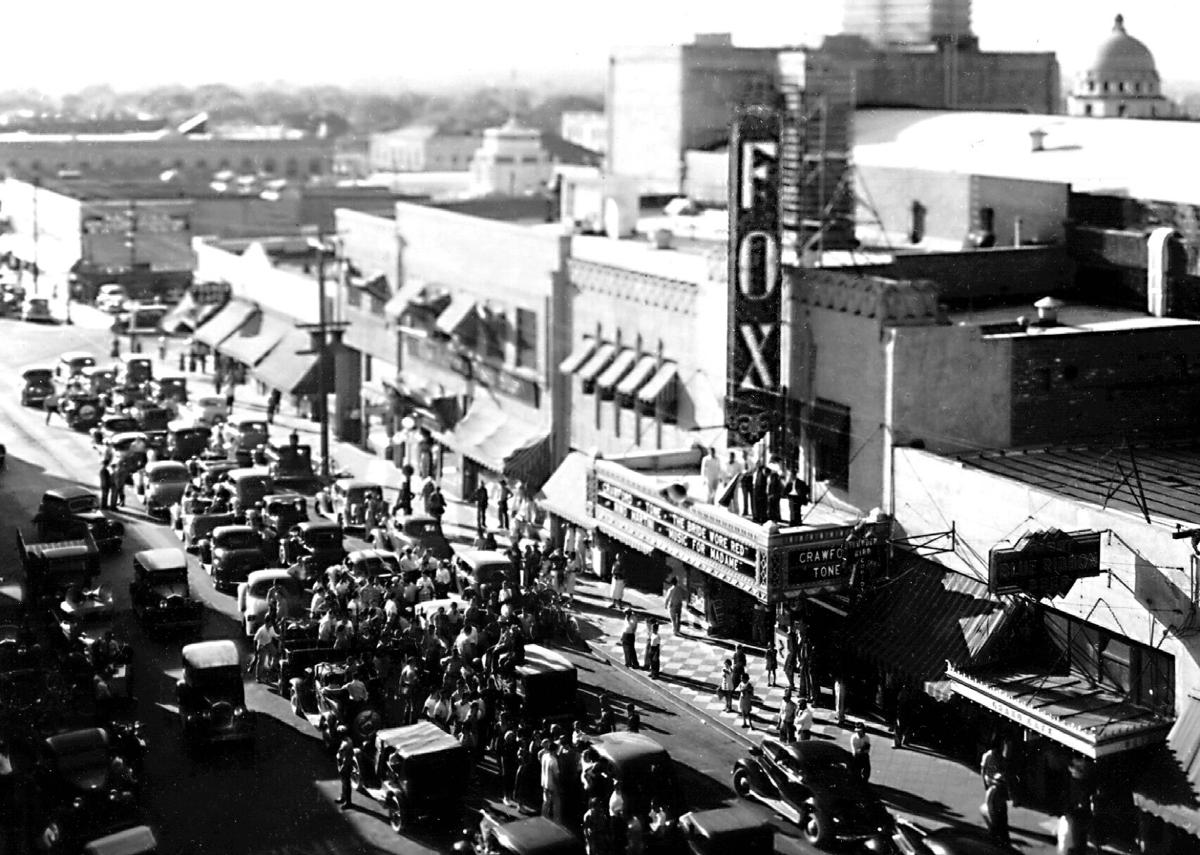
No one has invented a time machine, but the Fox Tucson Theatre is debuting the next best thing — the Fox Time Trot.
The unique fundraiser which will be held April 11 — the 95th anniversary of the Fox’s opening day — will take guests back to the “Southwestern Art Deco” grandeur of the historic Tucson venue in the 1930s.
“The arts in general are core to who we are as human beings. Opportunities for people to participate actively in things that bring us joy and bring us together in shared experiences are so incredibly vital, and the Fox is the perfect Venn Diagram of an amazing experience with other people in a special place with so much history that is truly unique to Tucson,” said Bonnie Schock, CEO of the Fox Tucson Theatre.
The theatre operated as a vaudeville theatre and “Classic Movie Palace” for more than four decades until competition from other theaters led to its closure in 1974. After undergoing a $14 million, six-year renovation that was completed in 2005, it began operating as the nonprofit Fox Tucson Theatre Foundation. Now it stages about 120 live performances and events annually, including film screenings, comedy revues, concerts, special events and more. Schock said that every year, it raises between $1 million and $1.2 million in philanthropic support to direct toward programming, operating expenses and maintenance.
Funds from the upcoming fundraiser — which seeks to raise between $60,000 and $75,000 — will be funneled directly into maintenance of the theatre, which is on the National Register of Historic Places.
“This building is almost 100 years old and it has been almost 20 years since it was renovated. There is ongoing maintenance to ensure that the roof protects the beautiful ceiling and we have an HVAC system that works and all the things that a building of this age requires,” Schock said.
The theatre and its programming are a labor of love for many supporters, according to Andy McWhirter, secretary of the board of directors for the foundation.
McWhirter, 62, became involved when the rehabilitation project started in 1999, but he enjoys much earlier memories of the Fox.
“I went to a movie at the Fox when I was a kid in 1970 and I remember so much about that day and the movie. It was a dinky little movie that otherwise wouldn’t have been memorable, but my dad took me and my brothers down to the theatre and it stunned me. It was just so beautiful with the chandelier and the ceiling; compared to other theaters I had been to, it was just amazing,” McWhirter said.
He said that many other long-time Tucsonans share childhood stories about the Fox.
“During the 1930s, 40s and 50s it was central to social life in Tucson. If you had a really big date or a special occasion, you went to the Fox instead of another theatre. There are so many stories of people who had their first dates there and then ended up getting married,” McWhirter said.
Some people considered Tucson a dusty cow town in the 1930s and to have a theatre like that in this small, remote Southern Arizona town was really special.”
The Fox was also the home to one of the largest Mickey Mouse Clubs in the nation from the 1930s until the television show debuted in 1955. Held weekly on Saturday mornings, the program featured cartoons, entertainment and activities just for kids.
“Many people who grew up in Tucson remember that personally and it was a key part of their childhoods ... it was electric at the Fox,” Schock said.
Educational programs continue today with eight school matinees and associated experiences such as artists workshops and curated follow-up content for classrooms to enable teachers to implement themes and ideas from show into curriculums. The matinees serve primarily Title One schools throughout the city. The Fox also offers preschool story hours and Monsoon Literacy, a summer literacy event. This summer, it will also introduce a camp for students ages 10 to 16 in which students will make their own silent films.
“Our educational programming is dedicated to carrying tradition forward and providing opportunities for kids of all backgrounds to come together in a special place to experience live performing arts and film. It is really important to pass the torch,” Schock said.
McWhirter credits the small Vaudeville stage and wonderful acoustics (complemented by a Wurlitzer pipe organ) for contributing to the evolution of the Fox. He said that fundraising and generous donors help to secure the future of the theatre, which has plans for a $26 million dollar expansion, as a bedrock of downtown Tucson.
“It has found this niche, especially with the wonderful acoustics, as a performing arts venue ... we have an ever-growing group of people who discover the theatre and love it,” he said.

