


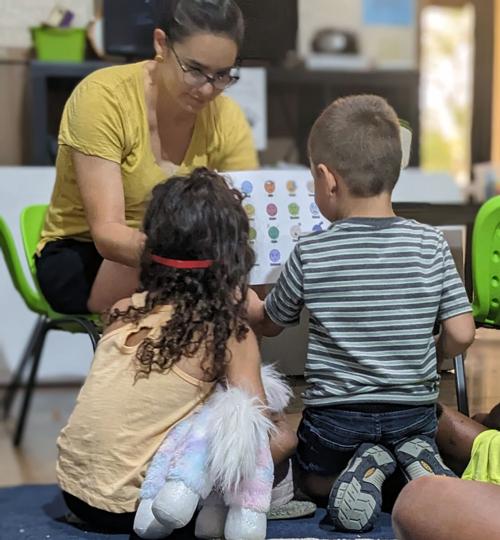
A small Tucson nonprofit is planting seeds of support to help local children and families on the fringe of the foster care system thrive.
Seeds Community Center assists “kinship families” in both formal and informal foster care arrangements by providing monthly enrichment dinners; care packages; scholarships for childcare and extracurricular activities; and assistance with navigating needed resources. All services and programs are free of charge to children and families.
The center is also working to promote awareness about “kinship care,” which is comprised of care by extended family members or friends, teachers and parents of children’s friends.
“We find so many people who say, ‘I have a friend who lived with her grandma,’ or ‘My parents let my best friend live with us,’ but they don’t necessarily realize that is the definition of a kinship family. When people know what the term is, they can say, ‘That is me and I should reach out for services,’” said Christe LePeau, executive director of Seeds Community Center.
LePeau said that connecting kinship families in order to share resources and support is invaluable, particularly since as of June 2023, 58% of children in Arizona foster care utilized kinship placements (according to the Arizona Department of Child Safety (AZDCS).
“Arizonans are more likely to say ‘yes’ to kinship care with grandparents, aunts and uncles, or other known relatives or friends stepping in to care for a child versus a community foster parent. Kinship care is a subset of foster families, but many organizations that serve foster families in Tucson are limited only to those that are formal, or working with the Arizona Department of Child Safety. Many informal families are left out of their purview and may be missing out on services,” LePeau said.
LePeau, a former foster parent herself, emphasized that these informal families are impacted on multiple levels. Formal (unlicensed) kinship care families receive $300 per child per month in financial support from the state, as opposed to community foster care families, who receive $650 to $700 per month per child. Families in informal (unlicensed) kinship care arrangements receive no financial support.
“Kinship families get a call asking if they can take their grandchild or niece or nephew immediately. They are dropped into a unique situation that doesn’t have the same structure and support from county and state agencies that licensed foster caregivers receive with months of training, financial support and other resources,” said Tracy Mueller, president of the Board of Directors for Seeds Community Center.
Mueller said she is inspired by the kinship families, many of whom are seniors on fixed incomes.
Services such as the Enrichment Matters Scholarship, which pays for children in kinship care to participate in extracurricular activities, help to ease the financial burden.
“For lots of families, the registration fee for after-school activities is not in the budget, which is stretched really thin from just caring for the child. They want to provide a dance class or extracurricular sports or other basic classes, but they can’t afford it,” Mueller said.
Monthly kinship family dinners — which often include training concepts for parenting the children on a day-to-day basis and accessing resources — also provide needed emotional support for caregivers.
“We have heard from our caregivers time and again that the training incorporated in the monthly support groups and the community that is built among members attending is really pivotal, especially when it is a grandparent caring for a grandchild. They are often empty-nesters who don’t have peers or friends doing the same thing and they are now caring for a child who likely experienced some trauma, so the training is really helpful from a practical standpoint,” LePeau said.
Ultimately, the efforts are intended to provide the children with the opportunity to flourish under circumstances in which they feel displaced and their caregivers often feel overwhelmed.
“All of our providers are stepping in and saying, ‘Yes!’ to kids who need help in pivotal moments in their lives. For kids in foster care, joining a household where they know someone gives them a leg up. They feel loved already as opposed to going into the home of strangers. We need to support these kinship families and make sure they have everything they need for the children to thrive,” LePeau said.

