



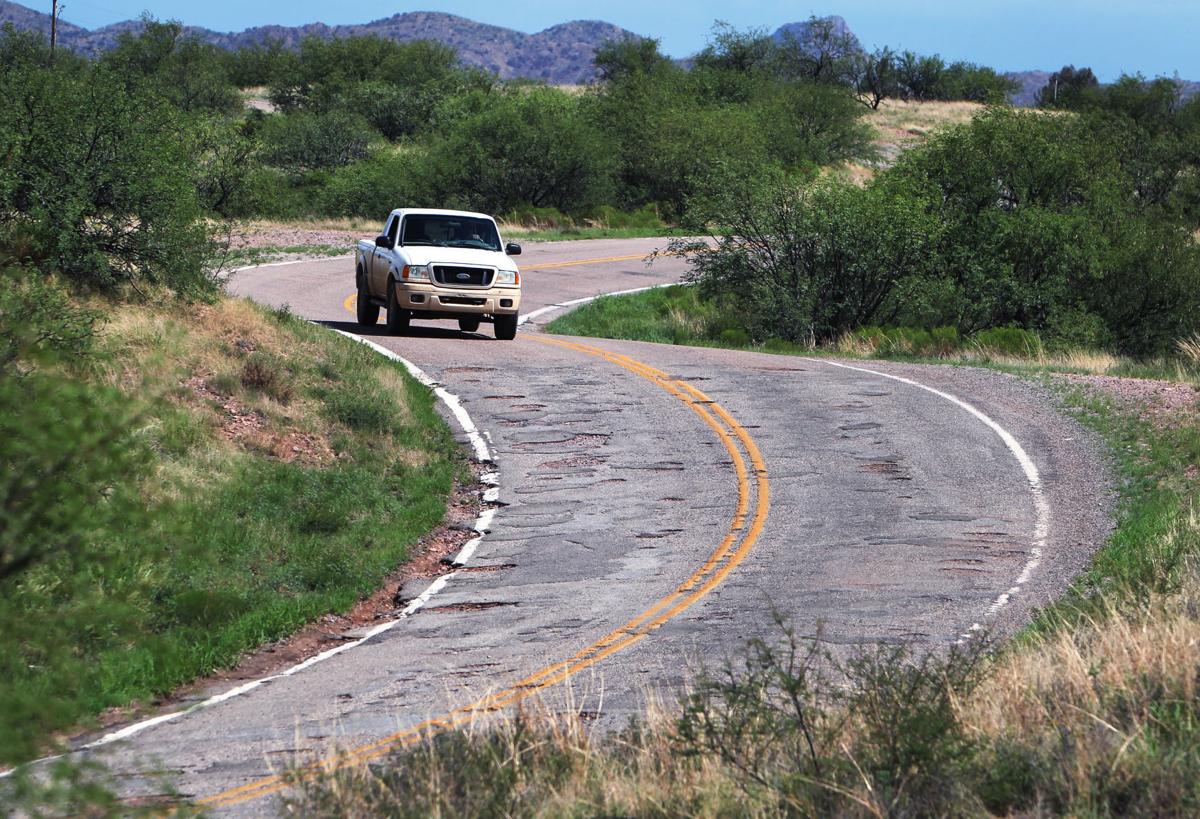
Buzz of a possible unanimous vote was in the air in the months leading up to the Pima County Board of Supervisor’s consideration of a 25-cent property tax dedicated to road repair this summer.
But in the end, the votes fell as they often do, with the Democratic majority’s three votes carrying the day over the Republican minority’s two. The new tax, which was included in the bills county taxpayers recently received, will generate around $19.5 million in revenues that will be divvied up between Tucson, unincorporated Pima County, Marana and other jurisdictions.
Next year could be a very different vote.
In a mid-September memo, County Administrator Chuck Huckelberry floated a proposal to require a unanimous vote for a renewal of the tax during the next budget cycle. His big idea is that — as it stands — the money will flow to projects in all five supervisory districts, even though only three took the political risk of backing a tax hike. Huckelberry describes that as a “free rider” effect. Supervisor Sharon Bronson agreed, saying that “everybody who benefits needs to be a part of the solution.”
In fact, over 40 percent of total road miles that would be repaired under the methodology recently approved for apportioning the tax dollars are in District 1, whose supervisor, Ally Miller, voted against the measure. Supervisor Steve Christy, who joined Miller in opposing the tax, would see his District 4 get a little over 20 percent of the total, the third-largest share.
But Christy thinks the “free rider” rhetoric is overblown, given that the annual proceeds pale in comparison to the task of repairing area roads. In a recent memo, Huckelberry acknowledges that the road property tax alone would take “an extremely long time” to resolve road conditions.
“How can we reap any benefits from a lousy $19 million when we have an $800 million road problem?” Christy asked. “It doesn’t do anything for us.”
Though they were on opposite sides of the road property tax vote, Bronson agreed that it’s not enough, characterizing it as a “Band-Aid solution to a wound that is bleeding and bleeding.”
Current estimates are that it would take around $1 billion to bring all regional roads up to fair condition and over $300 million for unincorporated areas alone. Miller did not immediately respond to a request for comment.
Christy’s sentiment was in ample supply at the most recent meeting of the Pima County Transportation Advisory Committee, which — among other things — is tasked with recommending how to spend the proceeds of the new property tax.
“If you follow this program, 30 years from now, you’re going to have decent roads,” said member Rick Price, who was appointed by Supervisor Ramón Valadez. “This is silliness, this commission is silliness, and I don’t know why we’re even doing it.”
The board eventually decided to send a letter to supervisors, urging them to develop a plan that will tackle the roads problem on a faster timeline than the road property tax.
Interestingly, requiring a unanimous vote for the road property tax would put it on the same footing as a county-imposed half-cent sales tax, which also requires a unanimous vote. Unlike the road property tax, however, the half-cent sales tax would generate nearly $900 million over 10 years, according to county estimates.
The Sales Tax Advisory Committee, which met for the first time Friday, is tasked with recommending whether the supervisors should approve such a tax next year and, if they do, how much should be used for road repair and how much should be used to reduce property taxes.
The road property tax and a county sales tax are the only road-repair funding mechanisms the board has direct control over. Other options, including an increase in the state gas tax, implementing a county gas tax or a reauthorization of the Regional Transportation Authority, all requiring some action by the Legislature. The county has historically had little luck in gaining traction for its transportation legislative agenda.
“Next to nothing,” is how Christy described the chances of action from the Legislature.
As to a possible sales tax, Christy said there are some things about it that make it “more equitable” than a property tax, including that it is also paid by nonresidents using the area’s roads. He also said the idea of any county tax hike requiring a unanimous vote “has some merit.”
In Bronson’s view, a sales tax “is the only real tool we have to address the issue with local roads.”
DOWN THE ROAD
Preliminary pavement preservation work on East Tanque Verde Road between North Tanque Verde Loop Road and North Wentworth Road will begin Monday, not last Monday as previously planned. From 5 a.m. to 6 p.m. through Friday, crews will be working and lane restrictions and reduced speeds will be in place. The microsealing work is scheduled to begin next week.

