



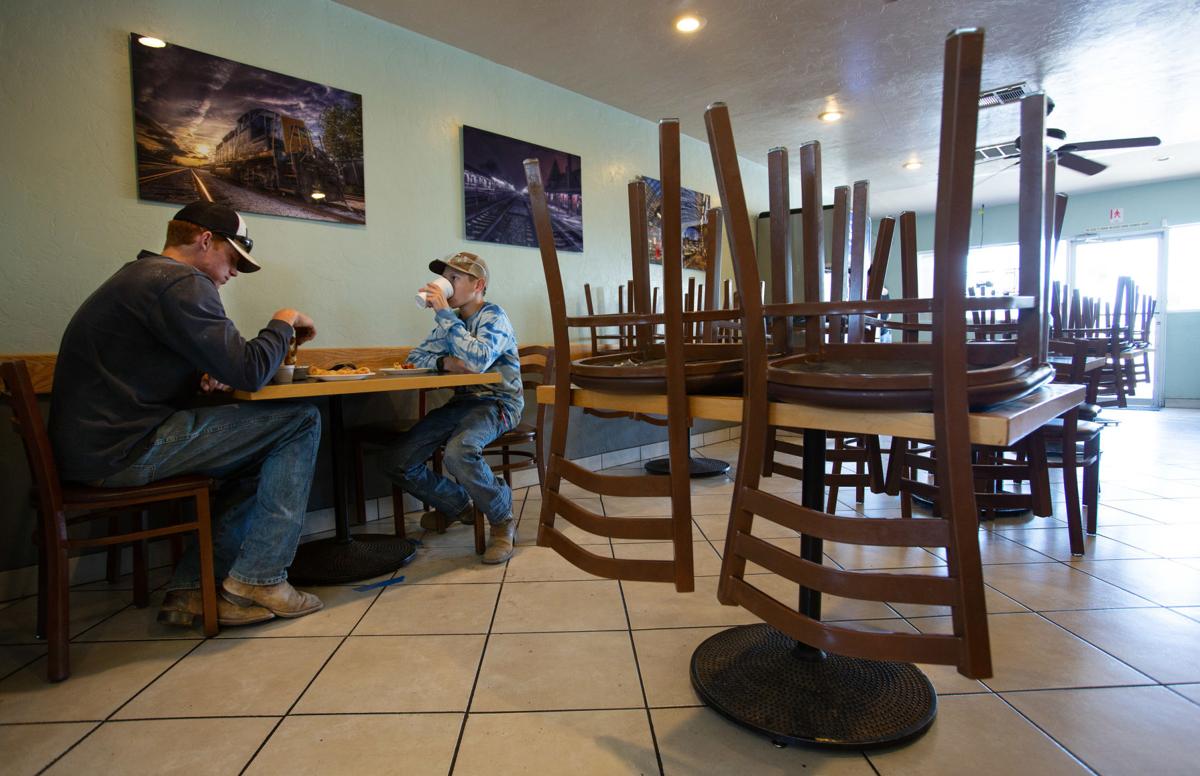
As many restaurants reopened to dine-in services, the Pima County Health Department issued a list of 17 protective measures Monday that they say facilities should adopt during the pandemic.
The measures are intended to protect food service employees and customers as much as possible. This includes taking precautions such as daily wellness and symptoms checks, frequent hand-washing and being equipped with cloth masks and gloves at all times.
Among other guidelines, the county is also recommending that facilities limit their indoor occupancy to 50% or lower, keep a minimum of 6 feet between tables and that dine-in services only be allowed if a party calls ahead first. These guidelines would also apply to bars when Arizona Gov. Doug Ducey decides to lift operating restrictions on those establishments.
“We understand the desire to get people back to work and lift some of these restrictions, but the pandemic is ongoing and the public needs to know the county and the restaurant industry are working cooperatively to keep people as safe as possible if they choose to dine on-premises,” said the county’s Chief Medical Officer Francisco Garcia.
“We are continuing to recommend that vulnerable individuals, including people over 65 and those who are medically compromised, continue to stay away from these venues, and that physical distancing continues everywhere in order to help prevent new infections.”
While the measures are being strongly recommended by the Health Department to reduce the chances of exposure to COVID-19, they are not requirements as of yet. The Pima County Board of Supervisors, however, will vote later this week on whether to make some of these measures required under the county’s health code. If adopted, 15 of the new measures would be enforceable by law for the duration of the pandemic.
“Whether we like it or not, there is a provision that basically says that we as a county, the cities and the towns have to follow along with the executive order of the governor,” said Supervisor Ramon Valadez. So, what we’re trying to do and what we’re discussing through this task force is how, within the boundaries of that structure, we’re able to move forward in the safest manner possible.”
The county’s directive came as a surprise for Pam Cathey and her staff at Coyote Pause Café.
But by midmorning Monday, several hours after they opened their dining room, Coyote Pause manager Deb Davis had added a line to the chalkboard out front that advised diners they needed a reservation.
“We’re not a reservations type of restaurant,” said Cathey, the general manager of the southwest side restaurant owned by Kerstin Block, who also owns Buffalo Exchange and two small bed and breakfasts lodges attached to the café.
Michael Elefante of Mama Louisa’s Italian restaurant said he’s been following the Pima County guidelines for the past few weeks, but hadn’t checked his email Monday morning and wasn’t aware of the recommendation on reservations.
“The one issue that I have and a lot of restaurateurs have is, there’s no common thread of unity in this whole thing, a voice of authority,” Elefante said. “The Health Department says one thing, and then the mayor says another thing, and then you’ve got the city council saying one thing and the governor saying one thing, then you’ve got the CDC saying one thing. So nothing meshes and gels together. So you have to take these 16 different bullet points from everybody and combine them together.”
His mother Suzanne stressed that the most important thing is to use common sense, and to do your best to keep customers and employees safe.
When it comes to health codes, the Pima County Health Department has authority over the municipalities in the area. However, other jurisdictions can choose to provide and enforce their own guidance, in addition to the county’s requirements.
In a Facebook post on Monday, Tucson Mayor Regina Romero announced her support of the county’s new measures and urged business owners and community members to adhere to the guidelines outlined by the Health Department.
“Today, Governor Ducey’s Executive Order allows restaurants and coffee shops to resume dine-in services with suggested physical distancing measures, “ she wrote. “I have expressed my disappointment with this decision as local data and guidance from the Pima County Health Department does not support us resuming our regular activities. I applaud all of the Arizona businesses that are staying strong and finding creative innovative measures to adhere to social distancing guidelines.”
In Oro Valley, officials said they are also working with business to ensure that both employees and customers are protected, even as state restrictions are lifted.
“Our focus at the town has been to encourage people to stay home and stay healthy, particularly our vulnerable populations,” said Oro Valley Mayor Joe Winfield. “With the reopening of retail, barber shops, salons and dine-in restaurants, we continue to strongly urge the public and businesses to heed physical distancing and personal hygiene guidelines. These actions are important so we don’t lose the ground we have gained.”
During a Pima County Back to Business Steering Committee meeting Monday, Trish Muir, chair of the Pima Area Labor Federation, said she was most concerned about the safety of employees and the ability of the county to really enforce the guidelines.
“We have some real concerns about worker safety. We do want people to get back to work. It’s important that we have a strong economy. I think we all agree on that,” she said. “My hope is that we see good implementation, that we see employers being responsible and that workers have the protections they need.”
If the amendment to the county’s health code is passed, health inspectors will inspect all food service establishments in the county for compliance with the measures. Businesses that adhere to all 15 of the minimum standards will be given a badge and poster they can post at the entrances to their establishments and use online that notifies the public the restaurant is following the county’s protective measures. Two of the measures — having touchless payment systems and requiring all food handlers to have a national safety certification — will only be recommended, not required.
For those who do not comply, civil penalties will be issued like any other health code violation, according to Garcia. The county will decide exactly what these penalties will entail once the proclamation is adopted. In addition to restaurants and bars, the county has also created a set of similar guidelines for fitness centers, pools, resorts and other area attractions. According to County Administrator Chuck Huckelberry, the task force will reconvene in 30 days to discuss whether the measures are working and whether they need to be modified as the situation evolves.
Photos for April 23: Tucson gets by during Coronavirus Pandemic
Tucson, coronavirus
Updated
Erika Munoz, owner of Seis Kitchen, hands over a bag of meals to Michael Gallagher Carondelet, a registered nurse at St. Joseph's Hospital, to distribute to other nurses and hospital workers, on April 23, 2020. The donation was made in conjunction with A+C (Athletes/Artists+Causes) Foundation's “Project Frontline.” In two deliveries, 400 meals (200 poc chuck chicken and 200 puerco verde burritos) will be given to medical personnel at Carondelet St. Joseph’s Hospital. The particular donation was made possible by the Houston Astros' Pitching Coach Brent Strom, who lives in Tucson.
Tucson, coronavirus
Updated
Hospital workers wheel in carts full of catered meals donated by Seis Kitchen to Carondelet St. Joseph's Hospital, on April 23, 2020. The donation was made in conjunction with A+C (Athletes/Artists+Causes) Foundation's “Project Frontline.” In two deliveries, 400 meals (200 poc chuck chicken and 200 puerco verde burritos) will be given to medical personnel at Carondelet St. Joseph’s Hospital. The particular donation was made possible by the Houston Astros' Pitching Coach Brent Strom, who lives in Tucson.
Tucson, coronavirus
Updated
Kristi Hall, a sixth grade teacher at Desert Sky Middle School, participates in planning a lesson with a fellow teacher on Zoom, at her home on April 17, 2020. Schools in the Vail School District are supposed to open in July due to their year-round school calendar. Plans are being made for the possibility of students returning to the physical classroom.
Tucson, coronavirus
Updated
Bry Kelley, a warehouse assistant, places a pallet filled with food down next to other items donated to the Community Food Bank of Southern Arizona on on April 21, 2020. Forty-one thousand pounds of flour, pasta and canned goods were donated by The Church of Jesus Christ of Latter-day Saints. The donation is part of an ongoing global effort by the church to address immediate needs of people and orgainzations due to the coronavirus disease (COVID-19) pandemic.
Tucson, coronavirus
Updated
A pallet of food is placed down next to other items donated to the Community Food Bank of Southern Arizona on on April 21, 2020. Forty-one thousand pounds of flour, pasta and canned goods were donated by The Church of Jesus Christ of Latter-day Saints. The donation is part of an ongoing global effort by the church to address immediate needs of people and orgainzations due to the coronavirus disease (COVID-19) pandemic.
Tucson, coronavirus
Updated
Christian Bergman, 4th year University of Arizona medical student, takes the temperature of a patient outside the Z Mansion, 288 N. Church Ave., in Tucson, Ariz., on April 19, 2020. Medical students from the University of Arizona and other universities volunteer to help the homeless population with the growing concerns of Coronavirus Disease (COVID-19) within the homeless population. “This is a vulnerable population in our community; they can’t defend themselves in a society already running short on supplies and resources,” said Bergman. Medical students and medical personal help by giving out food, drinks with electrolytes and masks to the homeless. Those who are sick, medically impaired or have been exposed to those with COVID-19 are isolated outdoors in tents on the property. As of Sunday April 19, there were 13 individuals whom are isolated in tents.
Tucson, coronavirus
Updated
Lekha Chesnick, 1st year medical student at Burrell College of Osteopathic Medicine, talks with a homeless man (whom choose to not give his name) outside of the Z Mansion, 288 N. Church Ave., in Tucson, Ariz., on April 19, 2020. Medical students from the University of Arizona and other universities volunteer to help the homeless population with the growing concerns of Coronavirus Disease (COVID-19) within the homeless population. Medical students and medical personal help by giving out food, drinks with electrolytes and masks to the homeless. Those who are sick, medically impaired or have been exposed to those with COVID-19 are isolated outdoors in tents on the property. As of Sunday April 19, there were 13 individuals whom are isolated in tents.
Tucson, coronavirus
Updated
Christian Bergman, 4th year University of Arizona medical student, checks on a patient outside the Z Mansion, 288 N. Church Ave., in Tucson, Ariz., on April 19, 2020. Medical students from the University of Arizona and other universities volunteer to help the homeless population with the growing concerns of Coronavirus Disease (COVID-19) within the homeless population. “This is a vulnerable population in our community; they can’t defend themselves in a society already running short on supplies and resources,” said Bergman. Medical students and medical personal help by giving out food, drinks with electrolytes and masks to the homeless. Those who are sick, medically impaired or have been exposed to those with COVID-19 are isolated outdoors in tents on the property. As of Sunday April 19, there were 13 individuals whom are isolated in tents.
Tucson, coronavirus
Updated
Elliott Dumont, owner of Roadrunner Bicycles, 6177 E. Broadway Blvd., works on a customer's bike on April 22, 2020. The coronavirus disease (COVID-19) has not slowed down bike shops. With many people at home, they are bringing bicycles for repairs and buying new ones for exercise. Dumont says he's booked out till the first week of May for tuneups on bikes.
Tucson, coronavirus
Updated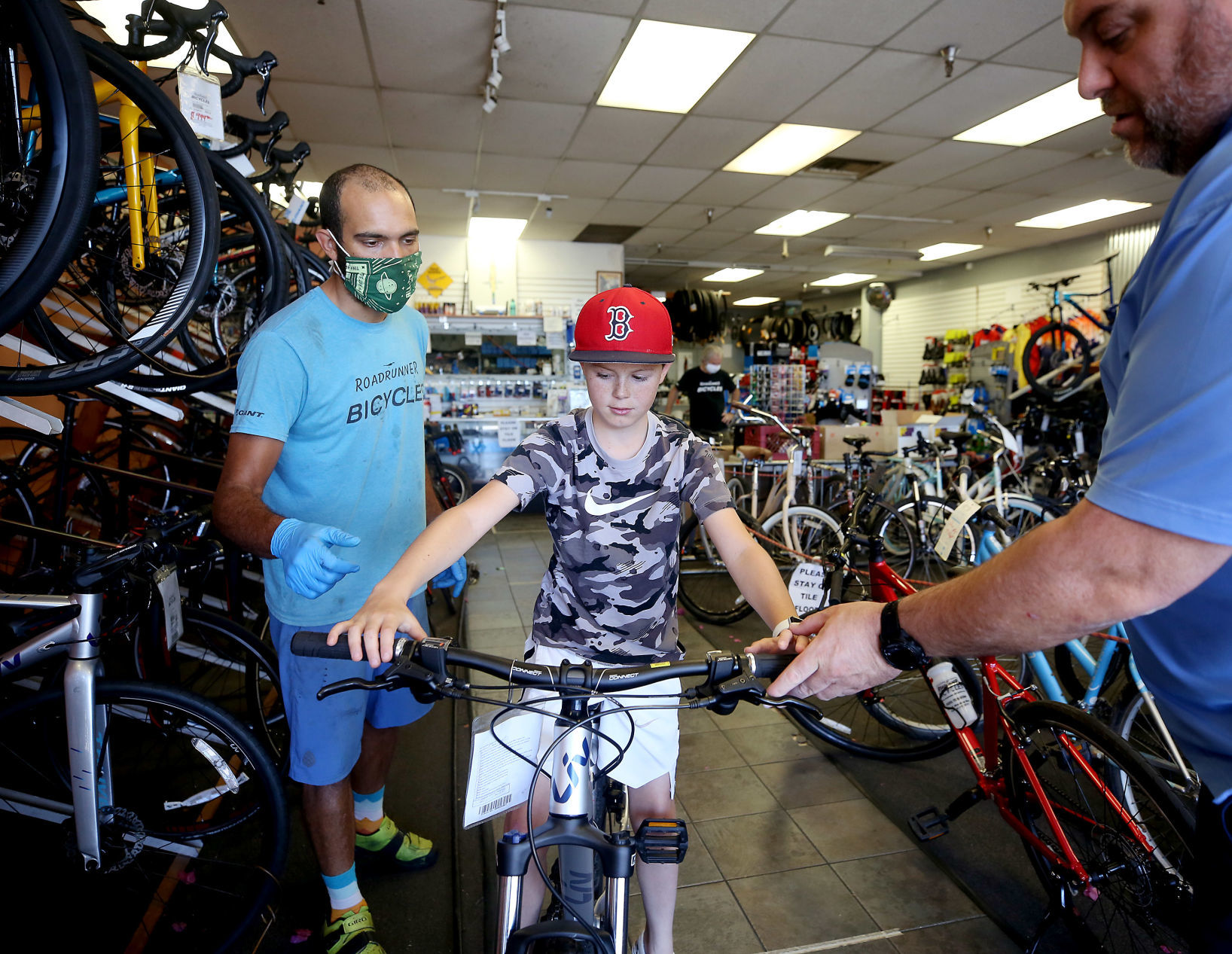
Elliot DuMont, owner of Roadrunner Bicycles, 6177 E. Broadway Blvd., far left, helps Ethan Sasz, far right, and his son, Evan, 10, with a mountain bike purchase on April 22, 2020. The coronavirus disease (COVID-19) has not slowed down bike shops. With many people at home, they are bringing bicycles for repairs and buying new ones for exercise. Dumont says he's booked out till the first week of May for tuneups on bikes.
Tucson, coronavirus
Updated
Marcella Montoya waits in her vehicle as general manger David Kessler brings out her order, as Bear Canyon Pizza serving their customers despite COVID-19 restrictions, April 22, 2020, Tucson, Ariz.
Tucson, coronavirus
Updated
Kitchen manger Koa Hoffmann tosses dough while working up a crust for a call-in order as he and few others keep cooking at Bear Canyon Pizza despite COVID-19 restrictions, April 22, 2020, Tucson, Ariz.
Tucson, coronavirus
Updated
Alvaro Enciso, a local artist, works in one of his studios at his home on April 9, 2020. Every Tuesday Enciso travels into the Sonoran desert to post crosses where migrants have died after crossing illegally over the U.S./Mexico border as part of a project he's titled Donde Mueren Los Suenos / Where Dreams Die. With the outbreak of the coronavirus disease his six year project is on hold and instead he works on other artwork at home.
Tucson, coronavirus
Updated
Dolly Spalding works on a pen and ink drawing in her apartment at the Redondo Tower Apartments on April 7, 2020. During her quarantine, Spalding has been creating drawings of all the Greek goddesses. She is collaborating with Emlyn Boyle, an artist from Ireland, and plans to publish a book with Boyle's writings.

