

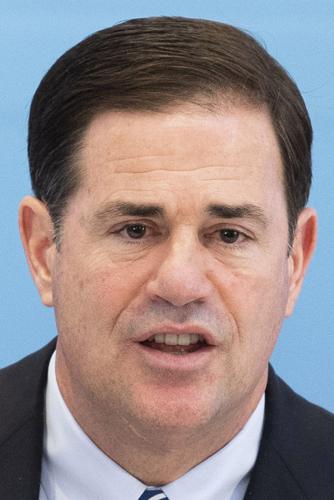

PHOENIX — Gov. Doug Ducey wants to boost the taxes paid by Arizonans by $180 million —or more — when they file their tax returns this spring.
But he insists it’s not a tax hike.
Instead, it’s part of the governor’s plan to conform Arizona’s tax code to changes enacted in federal law.
Those changes took effect last year. They are reflected in the new federal income tax forms that people across the country will be filling out between now and April 15.
Conforming to those changes, including what’s deductible, makes it easier for Arizonans to prepare their own taxes so they don’t have to make additional calculations.
And that extra cash? Ducey proposes to add it to the state’s “rainy day fund,” a special savings account for emergencies and for lawmakers to tap when there is a sudden unexpected drop in revenues.
That account now stands at about $460 million, less than 5 percent of the state general fund budget.
“It’s an elegant solution,” gubernatorial press aide Patrick Ptak said of funneling the new tax revenues into the state’s bank account.
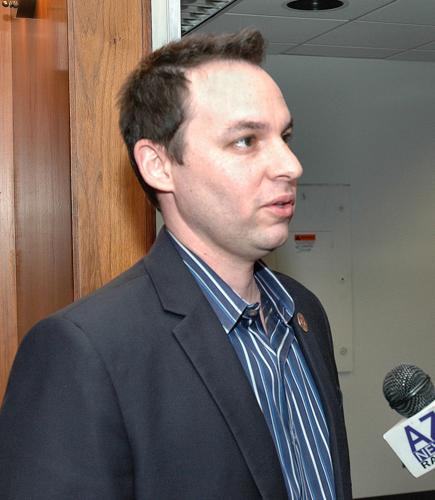
“That’s a poor choice of words,” responded House Speaker J.D. Mesnard, a Chandler Republican.
“It’s anything but that,” Mesnard said. “It’s a tax increase and the largest one in modern history.”
Mesnard points out that Ducey’s plan would increase the taxes Arizonans owe, as they no longer could take some tax deductions they have been using for years. And fewer deductions, quite simply, means a more expensive bottom line for many.
That, said Mesnard, is an unfair “windfall” for the state at the expense of its residents.
While Mesnard won’t be speaker this coming legislative session, he will still have an important voice in whether the governor gets his way. He will be chairing the Senate Finance Committee, through which all tax bills, including Ducey’s proposal, are supposed to pass.
What’s changing
Under current Arizona law, taxpayers use the federal definition of “income” as the starting point for state tax forms. That’s the figure on line 37 of the federal Form 1040.
And in most cases, the deductions allowed under state law mirror those permitted under federal law.
But the measure approved by Congress earlier this year allows fewer deductions and subtractions.
For example, the new federal law caps deductions for state and local taxes paid at $10,000. If Arizona conforms, the state Department of Revenue figures that change alone will boost taxes paid by residents here by $77 million.
The federal law also modifies mortgage interest and home equity deductions, a maneuver that if Arizona follows suit means $50 million more paid by state taxpayers.
And there are issues with smaller effects overall — but potentially big dollars for the taxpayers involved.
One of those is that federal law no longer allows taxpayers to subtract from their income their out-of-pocket expenses for moving to take a new job. The Arizona Department of Revenue estimates affected taxpayers will pay a total of $2.8 million more.
But to prevent a hit to taxpayers, Congress and the president did something that is not in Ducey’s plan: Offset the reduced deductions.
First, the federal law reduced tax rates overall.
Second, it increased the standard deduction for individuals from $6,350 to $12,000, and double that for couples filing jointly. That makes the loss of federal deductions less painful as more taxpayers will find it unnecessary to itemize.
“Undermining windfall for taxpayers”
But Ducey would leave Arizona income tax rates where they are now, ranging from 2.59 to 4.54 percent depending on income.
And the governor has no plans to increase the state standard deduction for individuals, leaving it at about $5,200. So taxpayers would end up with fewer deductions they can itemize, and no chance to make up the difference with an increased state standard deduction.
The bottom line is that Ducey’s conformity plan would cost taxpayers anywhere from $180 million to $200 million.
“The feds did not pass this as a windfall to state governments,” Mesnard said. “They passed this to be a windfall for taxpayers and we’re undermining that.”
Mesnard said Arizona lawmakers should consider doing what the feds did to keep taxes from going up here, including decreasing tax rates, adjusting the tax brackets and increasing the state standard deduction.
He also charged that Ducey purposely waited until the last minute — right before state tax forms are set to be printed and mailed out — to corral lawmakers into approving his plan.

