

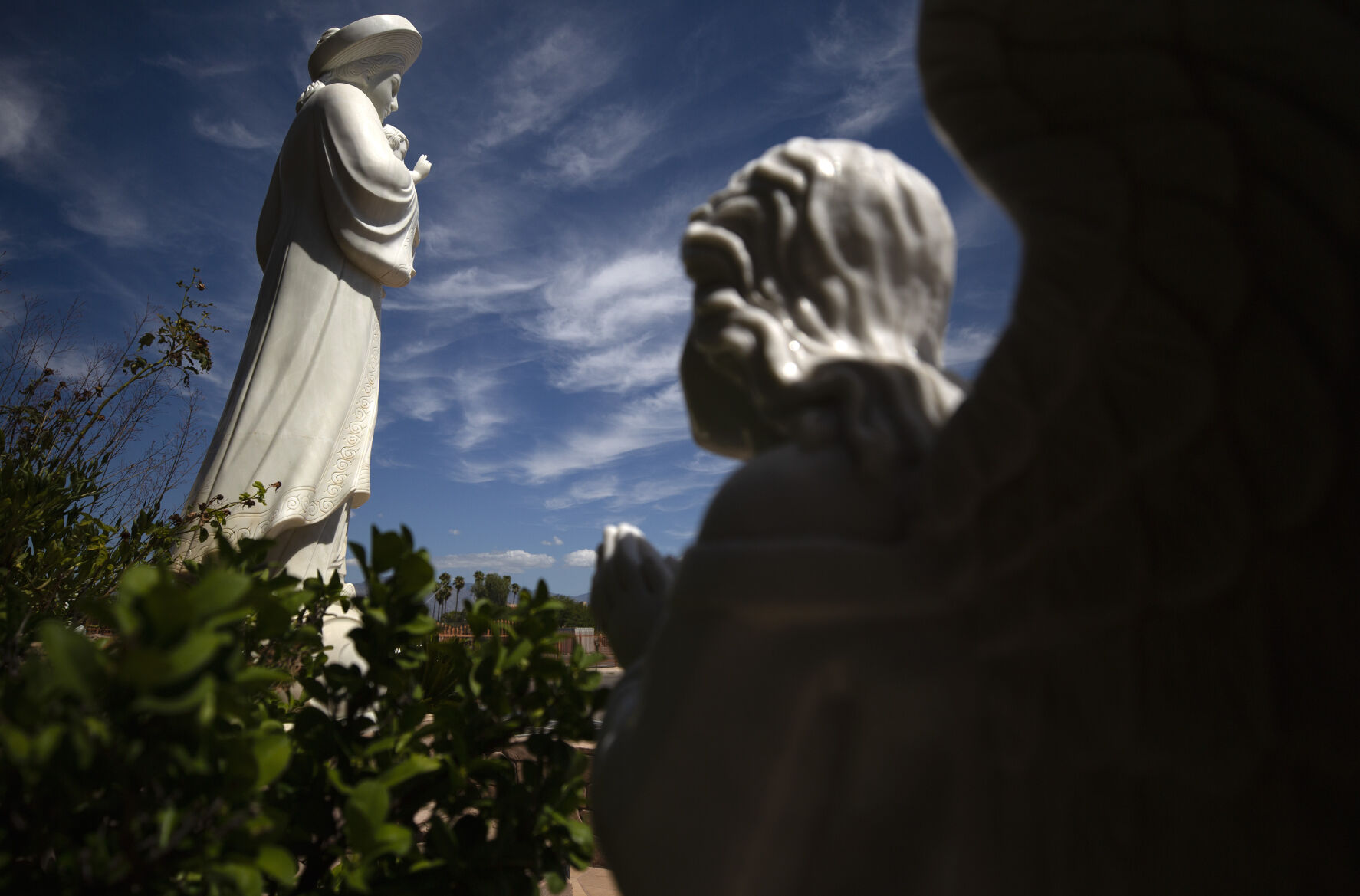
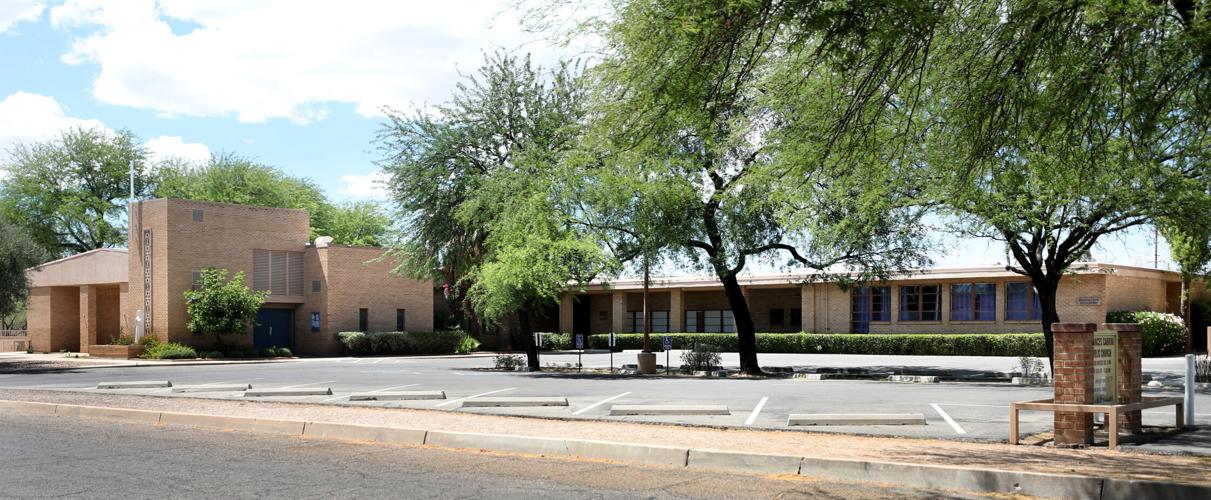

Our Lady of La Vang parish in the city’s midtown will merge with St. Frances Cabrini on the north side — making Cabrini financially solvent and providing La Vang with a bigger church to fit its growth, Bishop Edward J. Weisenburger of the Roman Catholic Diocese of Tucson announced to parishioners over the weekend.
In letters to parishioners, Weisenburger wrote that he anticipates the merger will become official around Dec. 1.
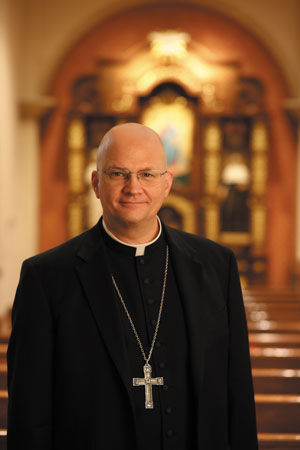
Catholic Diocese of Tucson
Presently under the merger, the church would remain St. Frances Cabrini, 3201 E. Presidio Road, and its pastor would be the Rev. Francis Dien Tran, the present pastor at Our Lady of La Vang, 800 S. Tucson Blvd.
In an interview, Weisenburger explained that Our Lady of La Vang will “reside, practice the faith and lead St. Frances Cabrini with the pastor and leadership council fully in charge.”
St. Frances Cabrini has been losing parishioners over the years and was not bringing in enough income to pay its bills and had to dig into its savings, Weisenburger said.
The bishop appointed Rev. Balaswamy “Bala” Kommathoti as parish administrator at St. Frances Cabrini on July 1 after the retirement of pastor, the Rev. Jens-Peter “Jay” Jensen Jr.
Weisenburger explained that in the future, if the parish wants to change the name of St. Frances Cabrini Church, a request must be made to the Vatican, which has the power to do so.
“When a Catholic church receives its name, it is like a human being baptized,” he said.
The bishop also said the statue of Our Lady of La Vang will be moved to St. Frances Cabrini under the merger. Our Lady of La Vang serves predominantly Vietnamese Americans. In the 1970s and into the 1980s, the diocese aided Vietnamese refugees through its resettlement programs. The church’s namesake was an apparition of the Blessed Mother in 1798 when Catholicism was restricted and Catholics were persecuted in Vietnam.
“In recent years we have seen parishes closed across our nation. To see parish property closed and sold, as we saw with the Benedictine Convent (Monastery) in recent years in Tucson, is painful for many,” states the bishop in a letter to St. Frances Cabrini parishioners. “Not wanting to go in that direction, I reached out to the Parish of Our Lady of La Vang, which has been working toward the purchase or building of a new church.
“After extensive communication with the leadership of both parishes I now believe that a merger, with St. Frances Cabrini under the full leadership of Our Lady of La Vang’s pastor, Corporate Board, and Parish Councils, will result in a ‘win-win’ situation for both parishes,” wrote Weisenburger.
He said he met with St. Frances Cabrini’s joint parish and finance councils and both unanimously recommended the merger. “St. Frances Cabrini will remain an active Catholic parish with at least one weekly Mass in English for parishioners who wish to remain, while Our Lady of La Vang will now have a facility that meets their growing needs,” wrote Weisenburger.
The bishop explained that “parishes ordinarily are territorial in nature — with defined boundaries,” but that “Our Lady of La Vang is an exception in canon law as it is a personal parish responsible for all Vietnamese Catholics living in Tucson.” He said under the merger the pastor at Our Lady of La Vang “will continue the parish ministry to the Vietnamese immigrant population, largely refugees of America’s involvement in Vietnam, while continuing the parish outreach to Catholics living within the territorial boundaries of St. Frances Cabrini parish.”
In a letter to Our Lady of La Vang parishioners, Weisenburger wrote that he has “witnessed the growth in your parish and the need for a larger church as well as space for religious education and parish activities. Increasingly, I have concluded that it would be a grave mistake to close St. Frances Cabrini parish and sell it when it is a parish complex that may prove perfect for your needs.”
The bishop also mentioned the resulting leadership from the merger can result in some English ministries at St. Frances Cabrini and its continuing “excellent” work of the Society of St. Vincent de Paul, a Catholic lay organization that provides social services to those in need. In the letter, Weisenburger also states that Our Lady of La Vang leadership councils unanimously recommended that the merger move forward.
In the future, it is anticipated that the property where Our Lady of La Vang is located will be sold and the money will go to St. Frances Cabrini parish.
Weisenburger said he does not anticipate any other mergers or closures of churches in the diocese this year or in the near future. The diocese, which is the fifth-largest diocese in the continental United States, has an area of 42,707 square miles, according to the diocesan web site. It is comprised of nine counties with an estimated 300,000-plus Roman Catholics who are served by 78 parishes, dozens of missions and 25 Catholic schools. In addition to Pima County, the other counties are Pinal, Santa Cruz, Cochise, Graham, Gila, Greenlee, La Paz and Yuma.
Pinal County is growing rapidly, and a study done several years ago shows that it needs four to six new parishes within 10 years, said Weisenburger. It has about 10 Catholic parishes now. “We are working on a development plan, which would include a huge undertaking. We need to look at buying land and construction. We would start out one church at a time,” he said.
Vail, Marana and Sahuarita each have one Catholic church, and those communities are growing, Weisenburger said.
“We are looking at all options, including possibly building new churches or adding space to current churches.” He said there is no time frame for development plans yet.
Take a trip up to the top of Mount Lemmon with drone footage showcasing breathtaking spots along the way.
Mount Lemmon, with a summit elevation of 9,159 feet, is the highest point in the Santa Catalina Mountains. It is located in the Coronado National Forest north of Tucson.

