


PHOENIX — In the wake of a complaint by a female lawmaker, a legislative leader released a detailed policy Monday designed to curb sexual harassment in the Arizona House of Representatives.
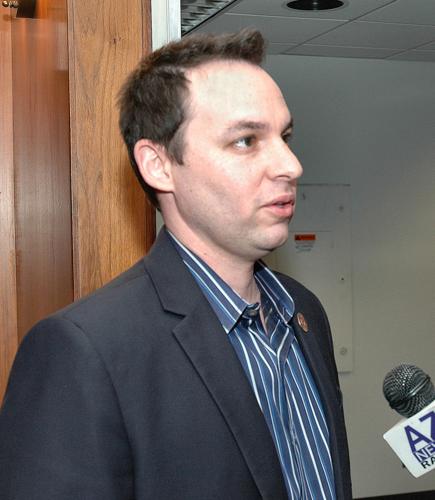
House Speaker J.D. Mesnard, R-Chandler, has now spelled out on paper behaviors that are off-limits, as well as the procedures that should be followed when a complaint is made.
Mesnard said he believes it has always been a violation of House policy, if not state law, for lawmakers and their staffers to make unwelcome sexual advances or offensive remarks. That fact is conveyed to new legislators and employees when they first take office or are hired, he said. But he said people tend to be at the Capitol for a decade or more. “A periodic reminder might become the norm for the future,” he said.
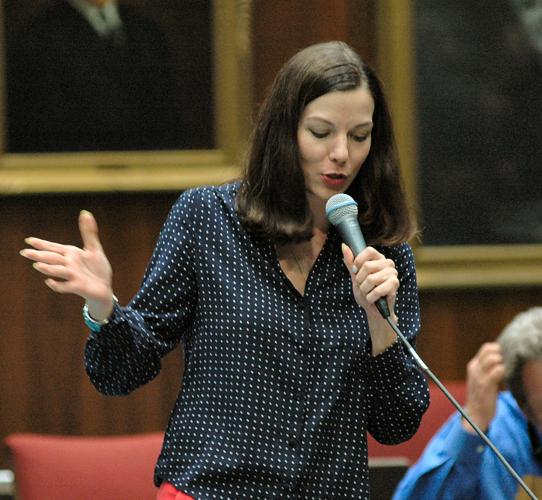
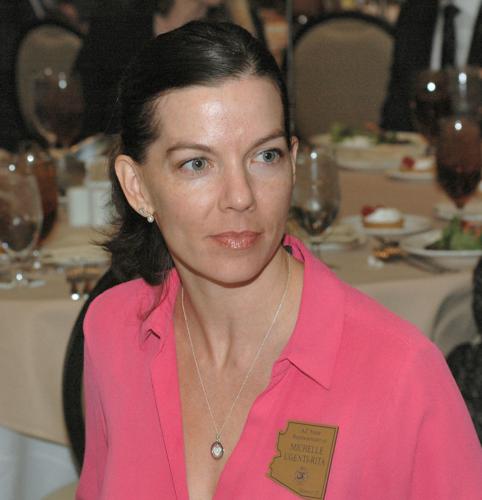
His more formal policy follows a Facebook post more than a week ago by Rep. Michelle Ugenti-Rita, R-Scottsdale, saying that from the moment she took office in 2011 she experienced “unwanted sexual advances and lewd and suggestive comments regarding my body and appearance from male colleagues.”
As the behavior became “more aggressive and brazen,” Ugenti-Rita said she complained to House leadership.
“While they were understanding and responsive to me, the lack of a traditional employer/employee relationship made it very difficult for them to deal with it in a meaningful way,” she wrote.
Ugenti-Rita did not identify any assailants.
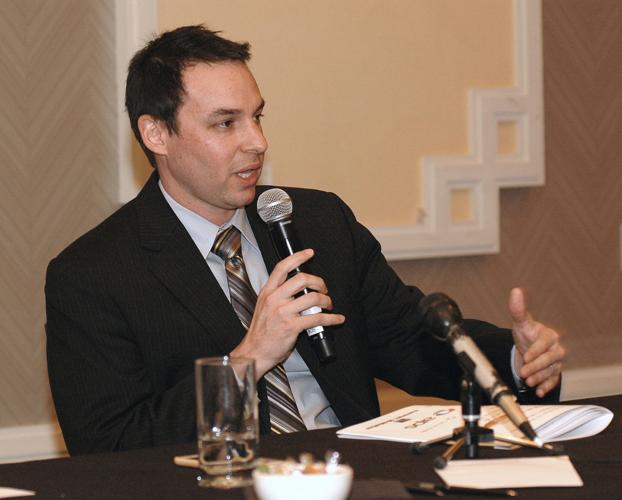
Kirk Adams, who was House speaker at the time, said he does not question that she complained, but he did not recall it.
Mesnard’s policy specifies that “unequal and unlawful treatment of an individual” is forbidden, including unwelcome verbal, written, physical or electronic communication “that either degrades or shows hostility or aversion towards a person arising because of that person’s inclusion in one of the categories protected by state or federal civil rights laws.” Those categories include race, religion, ethnicity and gender.
Sexual harassment in particular already is defined in federal and state laws, Mesnard said, to include unwelcome sexual advances, harassment “that is inherently sexual in nature,” offensive remarks about a person’s gender, and any sort of promise of advancement or benefit in exchange for sexual favors.
Also forbidden, he said, is the other side of the equation, meaning creating a “hostile work environment” and retaliation.
“Most of it isn’t new,” Mesnard said of the policy. “But it hasn’t always been written or public” — and not always clear. “We wanted to put it all out there,” the speaker said.
Ugenti-Rita called the written policy “a good first step,” after giving it a preliminary review Monday.
She said it should provide some guidance and protections to future lawmakers who won’t have to go through the same hassles, and lack of formal action, she says she faced.
“We have (had) this ‘it depends’ policy on who’s in leadership,” Ugenti-Rita said. The past atmosphere has been “it depends on who wants to take it seriously,” she added.
Mesnard’s policy gets into details of how an inquiry should be conducted, and includes forms with notes and checklists of what should be asked of both the person making the accusations and the person accused of harassment.
Ugenti-Rita said “none of that stuff existed” when she went to House leadership.
“When I reached out about what our internal policies were, I was sent a link to a federal website,” she recalled.
“So I am happy to see that it looks like there’s going to be more structure to the process.”
In posting her comments on Facebook, Ugenti-Rita said she hoped they encourage others to come forward to address sexual and workplace harassment.
Mesnard said he has had a handful of people come to him with such issues since he became speaker earlier this year. “It doesn’t come up a lot,” he said.
“I’m almost always asked to not intervene but just to be aware,” Mesnard said. “If I’m told, I’m told for my knowledge and I’m not supposed to do anything about it.”
And in such circumstances, when victims do not want to pursue the matter, that leaves him with few options, he said.
“I don’t know what other recourse in those situations we’ve got other than to make sure we revisit members, make sure we have training to remind all members what ethical requirements we are operating under here, and continue to remind people of those things,” Mesnard said.
There’s also the question of whether the complaints should be public.
On one hand, Mesnard said that, as a public body — and with elected members — there is a presumption that most everything is open in the House.
“We could be in this pickle where the very fact that what we do is public could discourage folks from coming forward because they want to handle it privately,” he said.
But it all comes out in the open, he said, if it deals with a lawmaker and gets to the point of going to the Ethics Committee.
One issue Mesnard is sidestepping for the time being deals with harassment based on someone’s sexual orientation, as that is not a “protected” class under current state or federal law.

