


As the fight to save her daughter was being lost, Jenine Dalrymple found herself repeating a phrase to cope with the unbearable pain: “Something good has to come of this. Something good has to come of this. Something good has to come of this.”
She has dedicated herself to making that true.
Nearly six years have passed since Andra Jane Dalrymple started feeling dizzy and tired during soccer tryouts at Flowing Wells Junior High School. Her coach helped her to her mother’s car, shortly before Andra’s heart stopped beating. Paramedics revived the athletic seventh-grader, but she died two days later at Diamond Children’s Medical Center.
Since then, Jenine’s overwhelming love for Andra and her younger daughter, Grace, has grown to also encompass the Flowing Wells community and just about any young person she can help, whether it’s about heart health, the importance of staying well-hydrated or sharing money to make a dream a reality.
Not long after Andra’s death, Jenine and her family started the Andra Heart Foundation. With many volunteers, Jenine carries out free screenings to help prevent sudden cardiac deaths among young athletes. So far, 3,089 students have been given an electrocardiogram, with 145 students who tested abnormal getting a free initial follow-up.
Through the foundation, Jenine has also donated 13 defibrillators to local schools, as well as the Children’s Museum Oro Valley and South Tucson’s LEAD Athletics, and has supported more than 400 Flowing Wells students with funding for school trips, personal needs and other activities.
Jenine said her work is partly to continue Andra’s mission to “save the world,” as well as to spare others the heartache she endures daily.
“Out of our brokenness came the need to function, the need to take care of Grace, the need to work and the need to prevent the same fate for others,” said Jenine’s husband, Phillip Dalrymple. “While clearly the brokenness is profound, I really don’t believe it shaped who Jenine is as much as it focused who she is into turning the unimaginable into something good.”
She felt a duty to help those less fortunate
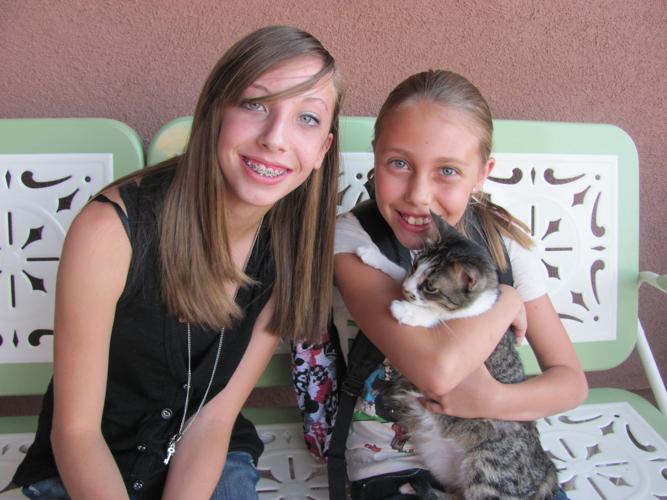
Andra’s heart supported her well for 12 years, through a childhood of playing sports, hunting with her father and eating Cheez-its, right up to that tipping point of early adolescence. She was an emerging blue-eyed beauty with lanky limbs, golden-brown hair and a vibrant smile, braces and all.
She had, a couple of years earlier, become inspired by a book about a homeless family called “How to Steal a Dog.” After reading that, and then attending a close friend’s bat mitzvah, Andra decided she needed her own plan to help others. She focused on learning more about protecting endangered pandas and ways to help those less fortunate. She solicited help from neighborhood kids.
“She always had a plan,” Jenine said. “They always had something they were doing, and they were always trying to raise money for the plan.”
What was undetected during all this was a problem with Andra’s heart called long QT syndrome, an electrical issue that causes the heart to beat erratically. Long QT affects 1 in every 2,500 to 3,000 people and typically can be treated by restricting activity and taking medication.
The condition often remains unknown, Jenine said, even after the person dies. They only knew about Andra’s diagnosis because she was revived and doctors monitored her heart. There’s no existing database to record the number of people who die of sudden cardiac arrest each year.
After Andra died, her family underwent genetic testing for long QT and found both Grace and Phillip are carriers. Neither have shown any signs of heart trouble, although they did have a scare with Grace a few years back — one that inspired Jenine on her current mission of getting hydration stations set up at Flowing Wells Junior High.
Grace, now a sophomore at Flowing Wells High, was in junior high when Jenine got a call from the school. Grace was feeling dizzy and weak after running in her physical education class. She was wearing her heart-rate monitor, as she’d learned to do, and noticed her heart was above her target range.
“We have focused on teaching her how to take care of herself, to put limits on her activities,” Jenine said. “She called this timeout on herself.”
In a nightmarish rehashing of what happened before — Northwest Fire paramedics rushing to the school, a return to the hospital — it turned out Grace was just dehydrated.
During exercise, low hydration and low blood volume make the heart work harder to keep up, said Dr. Scott Klewer, a pediatric cardiologist who treated Andra. He now helps Jenine with the free heart screenings.
Grace, who restricts her activities to protect her heart, has since become careful about getting enough water.
“I find if I always carry a water bottle on me, I will drink it because it’s there,” Grace said. “I will rarely go out of my way to get water if I don’t have any. It’s really simple and easy to drink water. And it’s super-important.”
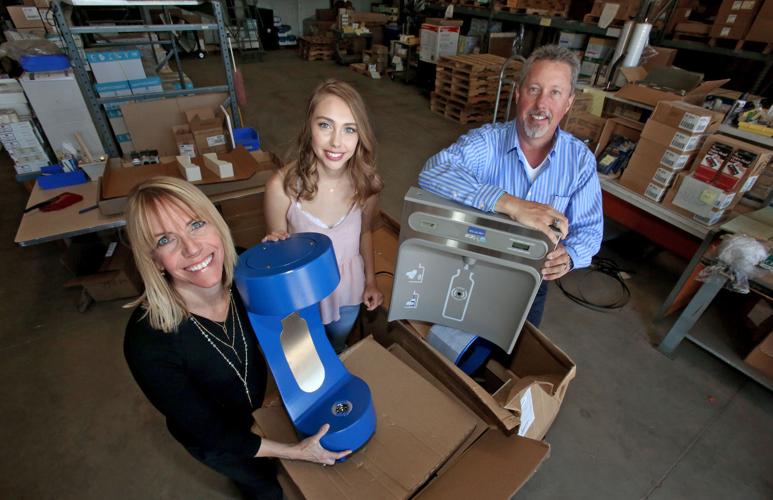
Jenine wants students to keep their water bottles full, and to drink far more than just a few gulps at a drinking fountain. She plans to get the junior high stations set up this year, then put stations throughout the rest of the district in the near future.
The shiny new stations will be exciting for seventh- and eighth-graders, said Crystle Gallegos, the school’s athletic director and an assistant principal. Water bottles are popular, she said, and she’s thrilled the students will be able to refill them so quickly as they move through their days.
“It’s all about marketing hydration, and this is a great way to do that,” she said. “They’re going to be more hydrated, as students and as athletes.”
Thankful to find out, but tests have limits
At the start of each school year Jenine, Klewer and other volunteers, including paramedics from Northwest Fire, set up free screening clinics for parents who want to have their children tested. They’ve also held a couple at Pima Community College and one at the Sporting Chance Center on West Curtis Road.
It was during a free school screening a couple of years back that Eva Reyes first learned her son’s heartbeat showed irregularities. She held out hope it was a false positive, but it wasn’t. He has long QT syndrome.
“I can’t even explain what I went through that day,” she said. Her son loves to play sports, and she didn’t know how to tell him he couldn’t be nearly as active anymore. His days of strenuous activity were over, although he has been approved to play baseball and volleyball.
“He’s taking medication on a daily basis now, but it’s still there and it’s really hard,” she said. She paused, then apologized for crying.
“That’s the thing,” she said. “It’s hard, but I also feel really thankful that we know, that we found out.”
Jenine knows the screenings are controversial for some. It’s relatively rare to die of sudden cardiac death, and the screening process can result in false positives. Follow-ups can be costly, and very stressful.
“From a cardiology perspective, there is an awareness of the limitations and stress associated with ‘free’ heart screenings,” said Klewer, a professor of pediatrics and chief of the pediatric cardiology division at the University of Arizona’s College of Medicine.
Klewer said a big part of their research now is to develop screening methods that find at-risk youth while cutting back on the false positives. Their initial findings have been presented at national American Heart Association meetings and were recently submitted for publication.
“Andra’s sudden cardiac death and the strength and spirit of her family have inspired my research,” he said.
For Jenine, offering the free screening is a must, even if it’s challenging sometimes.
“It’s not only that you can find it, it’s also that it’s treatable. We can find it and we can fix it,” she said. “Everyone, every person and especially every child has such a huge impact on so many. It’s worth finding that kid.”

