

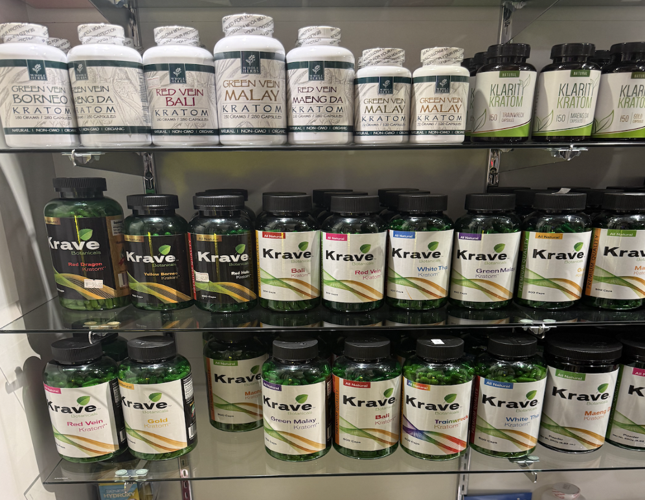
The Pima County Health Department has reported eight overdose deaths involving kratom, a legal, over-the-counter dietary supplement, since the beginning of 2025.
There were two such deaths here in 2024.
In 2023, kratom played a role in 19 drug overdose deaths in the state, according to the Arizona Department of Health Services.
Anyone 18 or older can buy kratom at smoke shops, gas stations, convenience stores and specialized kratom shops. It comes in powders, pills, liquid extracts and leaves and is advertised as an over-the-counter mood lifter that can reduce anxiety, ease chronic pain and, most notably, manage symptoms stemming from opioid withdrawal.
“It operates on the opioid receptors the same way that oxycodone or fentanyl or heroin does,” said Mark Person, a public health program manager at the Pima County Health Department.
No one can pinpoint exactly what is leading to the overdoses, but part of it can be that it’s nearly impossible to know how much of these ingredients are being used by kratom consumers because the products don’t have clear labels. There’s no standard recommendation for dosage nor does the labeling detail the ingredients.
According to Mayo Clinic, studies have found that certain kratom retailers add more of mitragynine and 7-hydroxymitragynine, its active ingredients that interact with opioid receptors.
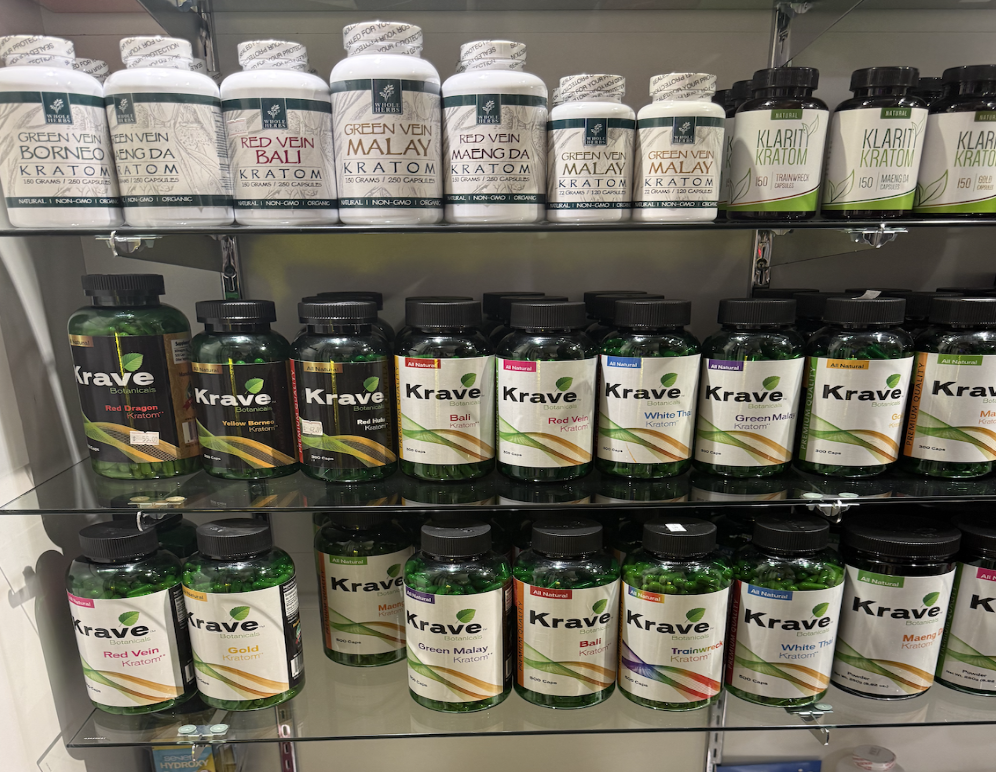
Powder capsules are some of the most popular forms of kratom. Maui Smoke Shop carries a number of brands.
Kratom on its own might not be lethal, but when mixed with other drugs, like fentanyl or heroin, there is an increased risk of overdose.
“I will say that I have seen contributing factors with kratom being involved, but not as a primary cause,” said Zach Mechtel, overdose investigation supervisor for the Tucson Police Department Counter Narcotics Alliance task force. “I’ve only seen one where the primary cause was toxic effects of kratom.”
The dietary supplement, derived from a Southeast Asian evergreen tree called Mitragyna speciosa, has long been available in Arizona. Since the pandemic, though, kratom has become more widely available from convenience stores to specialty shops.
A normal dose of kratom depends on the individual, although doctors in Texas reported that users typically take 3-9 grams of the powdered form and capsules that contain no more than 500 milligrams, according to research from the Greenhouse Treatment Center in Dallas.
Becoming dependent on kratom is more common for those who take higher amounts at higher frequencies.

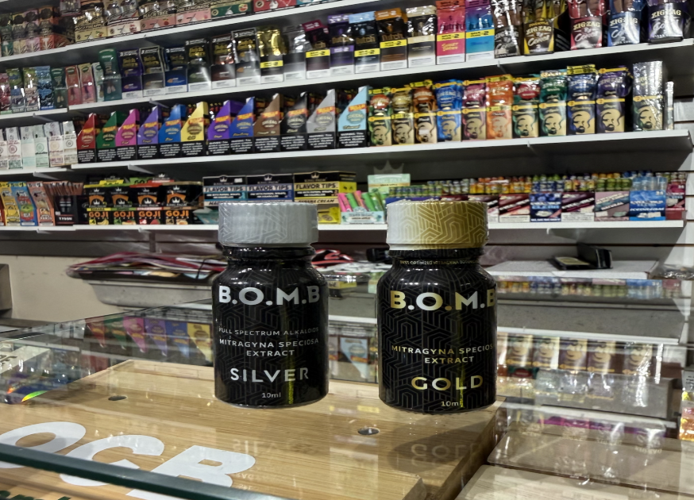
Maui Smoke Shop at 1148 E. Broadway sells kratom in a liquid extract.
“The main difference, though, is that kratom is both a stimulant and a sedative. So in low doses, it has a stimulant effect, like caffeine, cocaine, stuff like that. But in higher doses it has the more euphoric effect, like an opioid does,” Person said. “So it depends on how much of it you take. But it does hit the same opioid receptors that fentanyl and heroin would also operate on in the brain.”
The Pima County Health Department has issued alerts to some healthcare providers to make them aware of issues involving kratom since the start of the year.
Although it’s on the radar, the health department’s main concerns still lie with widely considered dangerous drugs.
“In the end, our primary focus remains on methamphetamine and fentanyl, which accounts for 80% of our local drug tests,” Person said, “Kratom isn’t what we consider an emerging public health threat. With eight deaths on the year, it’s still a really low number, but unusual for us because historically we just haven’t seen it.”
A 2021 report from the National Survey on Drug Use and Health noted that in 2021, 1.7 million people used kratom, with 45,000 of them being between the ages of 12-17.
In 2016, the Drug Enforcement Agency stated it intended to classify kratom as a Schedule 1 drug, putting it in the same category as illegal drugs like cocaine and LSD, and temporarily banning it.
The announcement caused public outcry, and Congress intervened to convince the DEA to maintain the drug status. Ultimately, the DEA backed down.
Still, the FDA warns against the use of kratom for any reason, stating that there is not enough information available to ensure it does not present a significant risk.
Although the regulations are loose at the federal level, some states have banned kratom completely: Alabama, Arkansas, Indiana, Vermont, Wisconsin and Rhode Island. Washington, D.C., has as well.
States that still permit the sale of kratom follow the regulations laid out in the 2023 congressionally-approved Kratom Consumer Protection Act.

