


Truckloads of fresh fruits and vegetables pass through Nogales, Arizona, every day, forming one of the busiest produce corridors in the United States.
Billions of pounds of tomatoes, cucumbers, squash, peppers and grapes move through warehouses along the border each year, shaping an economy built on the flow of food north.
Yet despite this abundance, much of the produce never reaches grocery stores. Strict cosmetic standards, transportation delays and oversupply result in millions of pounds of edible food being discarded. At the same time, food insecurity continues to affect families across Southern Arizona.
Borderlands Produce Rescue, a nonprofit based in Nogales, works to close that gap by intercepting produce that would otherwise be thrown away and redirecting it to communities across the region.

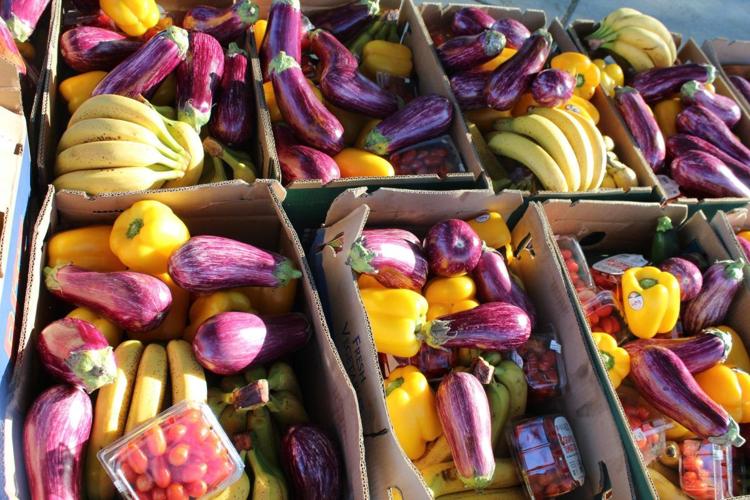
Boxes of rescued produce sit ready for distribution during a Borderlands Produce Rescue event in Tucson on Dec. 7.
According to the organization’s annual report, Borderlands rescued more than 39 million pounds of produce this season and distributed more than 32 million pounds through community events and partnerships with groups in Arizona, California, Nevada and New Mexico. The report also notes that diverting this food from landfills significantly reduces methane emissions, a major contributor to climate change.
CEO Yolanda Soto, who has led the organization for decades, said the need has only grown.
“Every day we’re rescuing produce,” Soto said. “We’re either waiting for the calls to go pick it up, or we’re searching, looking for it.”
She said the combination of economic pressures and federal policies has increased demand across the communities Borderlands serves.
“The need grows daily by leaps and bounds with the administration that we’re in right now,” Soto said. “So you can imagine how much in need people are.”
Borderlands operates several programs, including its weekly Produce On Wheels Without Waste (POWWOW) events. Families can receive a 70-pound box of assorted fruits and vegetables for a $15 contribution, a fee the organization says is used primarily to cover fuel costs for truck drivers. Soto said the goal has always been to make fresh produce accessible without creating financial barriers.

Volunteers sort rescued fruits and vegetables during a Borderlands Produce Rescue event in Tucson on Dec. 7.
“Anyone who shows up can get produce. We do ask for a contribution,” she said. “People need to put a value on something in order to value it.”
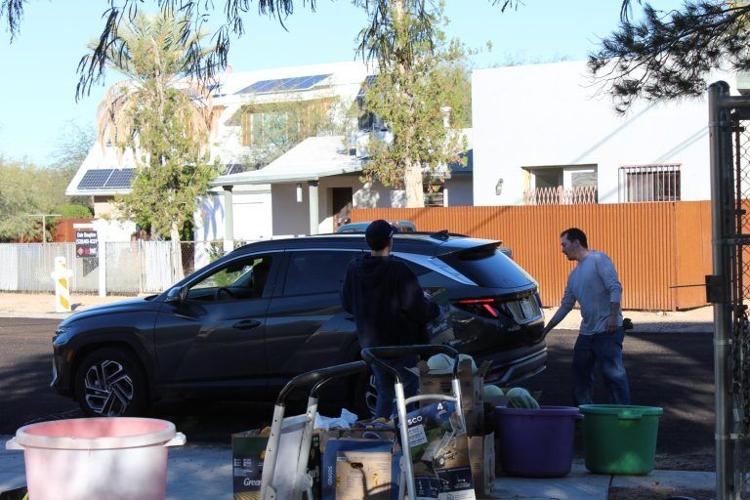
On a recent Saturday at Highland Free School in Tucson, volunteers assembled hundreds of boxes stacked with cucumbers, bell peppers and squash while a line of cars stretched down the street. Some volunteers directed vehicles through the pickup line, while others moved quickly between pallets, loading boxes into trunks and greeting residents. The scene reflected the scale of each weekend’s work: efficiency, urgency and an unmistakable sense of community.
Overseeing the operation that morning was Oasis, Borderlands’ national ambassador, who travels to sites across the state each week. Her job includes ensuring safety procedures, coordinating volunteers and helping each site run smoothly. She said the work depends entirely on the people who show up to lift, sort and distribute produce.
“We could not do this without our volunteers,” she said.
Oasis explained that although Borderlands distributes millions of pounds of food each year, its internal staff remains small. Much of the organization’s budget goes toward transportation and logistics.

Volunteers guide and load boxes of produce during a Borderlands Produce Rescue distribution in Tucson earlier this month.
“We picked up 44 tons of pickling cucumbers this week,” Oasis said, pointing to a set of pallets that had arrived earlier in the week.
“It’s amazing when you look at the stuff and you’re like, ‘They were going to send this to the landfill?’ It’s kind of sickening when you think about it,” she said.
The reasons for rejection vary. Oasis said grocery store inspectors may turn away produce if a portion of the shipment appears imperfect, even if the rest is completely edible. Other times, farms simply grow more than stores are willing to purchase.
“We get tens of thousands of pounds of grapes because the grocery stores don’t want to give people a discount,” she explained. “They tell the distributors, ‘We’re not taking them, get rid of them,’ and it’s cheaper to pay to throw it away.”
Among the volunteers working that morning was Jana Martin, who has been volunteering since May. She stood near a line of bright red and green produce boxes and shook her head as she talked about the quantity and quality of the food.
“It’s crazy to think that those are going to be thrown away,” she said.
Martin said the contrast between waste and need is difficult to ignore.
“They’d be filling a landfill, and then there’s people who need to eat,” Martin said.
The produce rescued by Borderlands, she said, often looks identical to what shoppers find in grocery stores. Much of it is high-quality and sometimes organic.
“We had organic tomatoes last time,” she said.
Volunteer Dana Rothstein grew up in Nogales, where her father worked in the produce industry. She said most people don’t realize how much food moves through the border community.
“Most people don’t know where their food comes from,” she said. “We’ve become so detached from that.”
She said Nogales plays a larger role in the nation’s produce supply than many residents outside the area recognize.
“And 90% of the produce comes from Nogales in this country,” Rothstein said. “If you’ve had Taco Bell tomatoes anywhere in the country, you’ve eaten tomatoes that come from Nogales.”
Rothstein said volunteering helps reconnect people with the source of their food and shows them how the supply chain works.
“That’s what I love about this,” she said. “It really shows people where their food comes from and where it could end up if we didn’t do something about it.”
As volunteers continued loading produce into cars, the significance of the operation was evident. Borderlands occupies a unique space in the borderlands food system, bridging the disconnect between surplus and scarcity. The produce that passes through Nogales feeds households across the nation — or ends up discarded. The organization’s work redirects what would be waste into meals, reducing environmental harm and increasing food access in the region.
Borderlands’ model illustrates the complexity and potential of the food distribution network at the U.S.-Mexico border. It also demonstrates how community-driven efforts can shift outcomes for families while reducing the environmental burden of wasted food. With each truckload diverted from the landfill, the organization continues to reshape how food moves through the region — and who ultimately benefits from it.

