




The grower-owned cooperative celebrated its 16th anniversary Nov. 11 in Auga Prieta. By allowing families to make a living, the co-op has reduced the pressure on them to migrate.
For coffee farmers in southern Mexico, the cooperative they began 16 years ago has allowed their sons to come home and make a living working the land, and it has also led to a growing number of university graduates in their community.
That is a major turn-around, notes Alonso López, one of 36 cooperative members from Salvador Urbina, in the southern state of Chiapas.
“My parents weren’t able to give me an education, only up to middle school, then we all had to help work the land or migrate to the border or the United States,” López said.
Today, his oldest daughter is studying to be a teacher. “I feel very happy to be able to give my daughter schooling,” he said. “I tell her she has to work hard; it’s her inheritance.”
In 2002, a group of coffee farmers who had migrated north to the border town of Agua Prieta, Sonora, or to the United States founded Café Justo with the help of a $20,000 loan from Frontera de Cristo, a binational ministry from the Presbyterian Church.
The ministry was grappling with how to respond to the realities of migration when a group of 25 farmers approached its board with the proposal, said Mark Adams, U.S. coordinator for the program.
They saw it as a way to try to address root causes of migration.
Sixteen years later, the coffee cooperative has grown from 25 families in the Salvador Urbina community to more than 100 across four communities, including a second group in Chiapas and one each in Nayarit and Veracruz.
The goal was to sell 1,000 pounds of coffee the first year — the cooperative sold 13,000 pounds. The following year sales jumped to 27,000 pounds and last year it sold 56,000 pounds of organic arabica and robusta coffee.

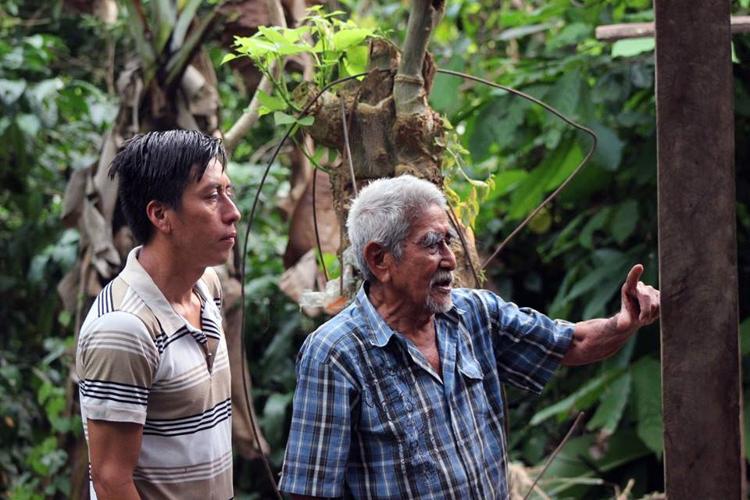
Alonso López, one of 36 cooperative members from Salvador Urbina, left, stands with his father Arnulfo López, one of the founders of Café Justo.
The cooperative has seven paid employees in Agua Prieta and Chiapas and clients in every U.S. state, plus a few in Canada. It has long since repaid the loan, and with interest.
The way the cooperative works is that farmers have full control of the product throughout the process: cultivating, roasting, packaging and exporting. They also set the price and determine production levels.
In addition to being paid more for the coffee (about $4 per kilo versus a little more than $1 through an intermediary), they offer cooperative members health care, social security, provide access to potable water to the entire town, and have emergency funds set aside.
Even those who sold their lands when prices were down and aren’t members benefit, López said. He currently has six people from the community working with him. His father is among six of the original founders who have been able to retire, with their children taking their place.
The concept of Café Justo came about after ministry members heard testimony at a local church from a former coffee grower.
The grower had migrated to Agua Prieta in 1998, after Hurricane Mitch destroyed his home and part of his field. After rejecting offers from friends to cross illegally into the United States, he eventually gave in and tried his luck through the remote Arizona desert. But along the way he got injured, fell behind and was caught by Border Patrol agents who humiliated him, Adams said.
“To leave our land is to suffer,” the man told Adams. “If only we could control our coffee, we could stay in our land.”
The idea was to generate enough income so families could stay together.
And it worked. Many of those who left have managed to return — including López.
Before the cooperative, “families couldn’t make a living any more,” he said, “so they had to migrate.” At one point farmers had taken a 400 percent cut in coffee prices. During that time about 100 people from his town left, López said.
The now 40-year-old López left for Atlanta in 2000.
But he was close to his parents and also missed his wife and 2-month-old daughter, who all remained home in Chiapas.
Around that time his father started to talk to him about a new coffee cooperative — Café Justo — that involved some Americans. By 2002, López had saved enough money to build a concrete two-bedroom home and was able to go back to Salvador Urbina to build it and to work alongside his father.
Initially it wasn’t easy, he said. With sales just starting to pick up, they would turn over their coffee but not see payment until a month or so later. There were times he regretted leaving the United States, he said, but now they receive weekly payments and business is growing.
He is also teaching his son how to work the land, hoping that one day he will take over just as he did. López wants him to see how hard it is to earn a living.

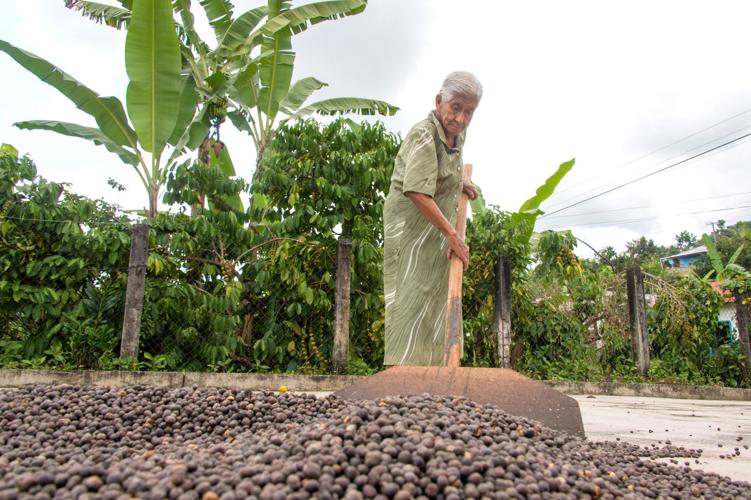
Soraida Santiago drying coffee in her home in Salvador Urbina, Chiapas, in 2013.
Soraida Santiago, 86, also got her son, Edmundo, back, thanks to Café Justo.
Edmundo had also left for Atlanta, leaving two daughters behind in the late 1990s. Within a couple of years, he was able to return to work the farm and put his daughters through school. One is already a nurse and the second one is about to graduate from college, also with a nursing degree, Santiago said.
The next step is to grow sales. While they initially rose very rapidly, they have stagnated the last several years. Most of the cooperative’s clients are churches, schools and nonprofits, along with a few bed-and-breakfasts, said Adrian Gonzalez, who is in charge of customer relations in Agua Prieta.
The farmers would like for Café Justo to eventually be sold in stores such as Whole Foods or Trader Joe’s, he said, but in order to make that jump they need people with business and marketing experience to help them develop a plan.
One of the main lessons they’ve learned is the need to hire people with marketing and sales experience early on, Gonzalez said. “None of the original employees had experience in managing an international coffee roasting business.”
If not for most of their their clients being churches willing to give them second chances, he said, “we would have probably been out of business in the first year.”
In the beginning they filled some orders incorrectly or sent an incomplete order, Gonzalez said, which in the business world would not be easily forgiven.
They also tried to expand in Tijuana-San Diego in the mid-2000s without success.
They hadn’t realized the important role the relationships they had spent years building between Agua Prieta and Southern Arizona had played in the initial success of their product, Adams said.
Relationships have been one of the keys to the success of Café Justo.

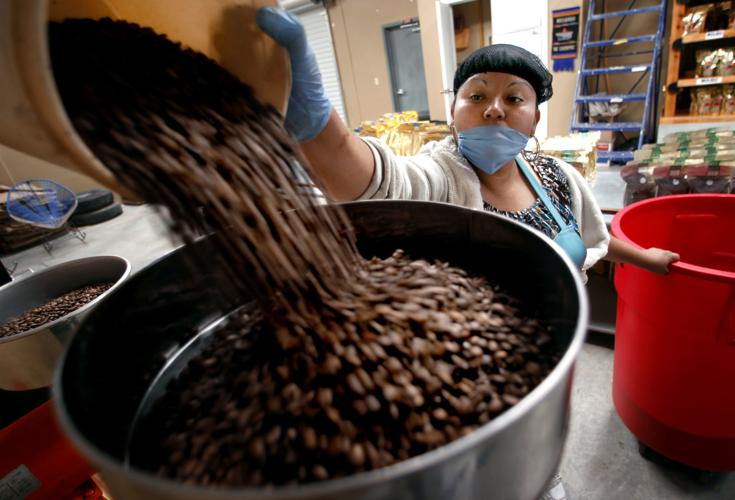
Elvia Carrillo dumps arabica beans into a grinder at Cáfe Justo in Agua Prieta, Sonora. The cooperative’s farmers control the packaging and exporting, and set the price.
By having the roaster in Agua Prieta, customers, churches and other groups can visit the installations, learn about the process and the families behind it. They also organize an annual coffee travel delegation to Chiapas for those who want to see where the coffee is grown and the communities that are thriving because of it.
And they hold public celebrations of their anniversaries, where farmers come to Agua Prieta to share their story and a cup of coffee with those who support them. Santiago and López were among a small group of farmers who came to the border and personally thanked supporters for making a difference in their lives during the cooperative’s 16th anniversary.
The gathering took place at Café Justo y Más, a coffee shop they opened in 2016, in partnership with Frontera de Cristo and a drug rehabilitation center to create jobs for the local community, especially for those in recovery so they can better reintegrate into society. It is also a gathering space for youths, artists and those interested in the cooperative. The roaster is in the same building.
The coffee shop is the largest single buyer for Café Justo, Adams said, with annual sales of 6,000 pounds of coffee worth more than $21,000 that goes back to the cooperative.
It’s a model that can be replicated and it doesn’t have to apply to coffee only, Gonzalez said.
Organizations in Juárez and Nogales have reached out to learn more about the project and how they can implement something similar. In Chiapas, other non-coffee farmers have also expressed interest in learning more about how to self-organize.
“Not only can it be replicated,” Gonzalez said, “but it can be improved upon and we are happy to support them and share what we’ve learned.”
The model, he said, “has helped build bridges at a time when building walls is what’s being talked about.”