


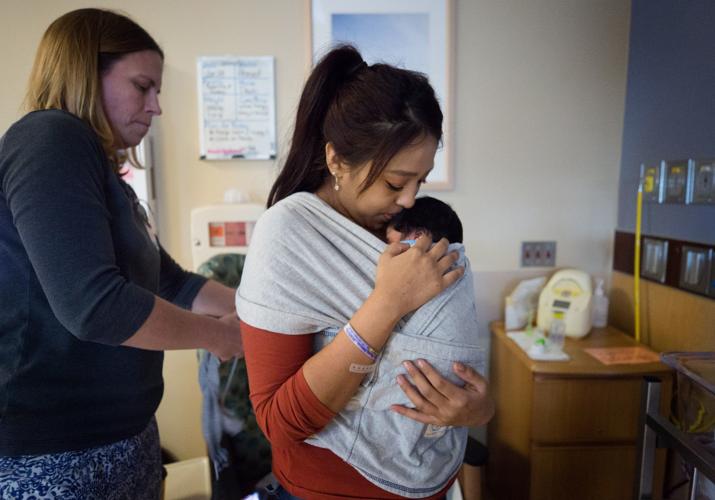



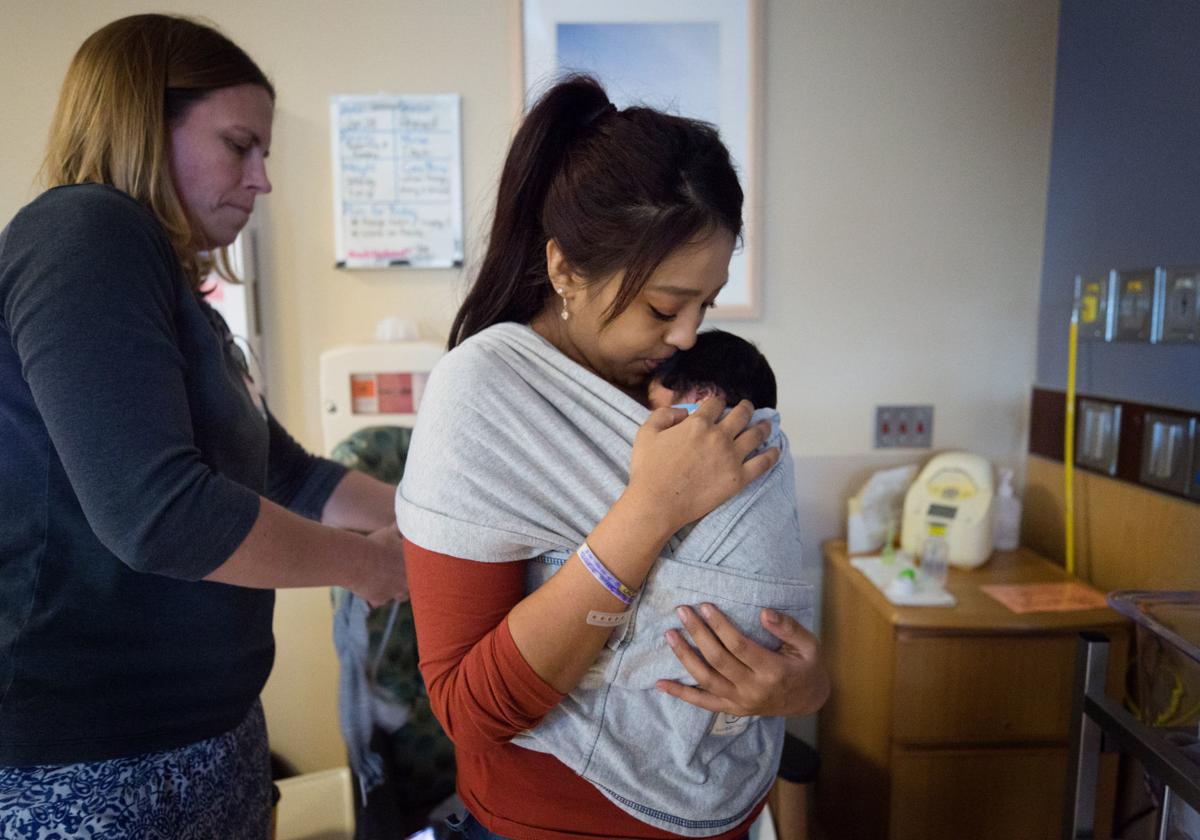
Kellie Dow bravely shares her experiences for these reasons: she wants people to see addiction as a health issue, not a moral failure, and she wants expecting mothers to know there’s help.
For Dow, that came by way of a new Banner-University Medical Center clinic that helps moms-to-be who have, or are, struggling with substance use, particularly opioids. The MOMs clinic, which started in October and stands for Moms Over Medicine, has already reached over 100 patients.
Expecting mothers are offered classes on many topics including how to love and comfort their baby through withdrawal symptoms, which occur in about 80% of newborns who were drug-exposed in utero.
The MOMs clinic is an offshoot of Banner’s Family Centered NAS Care Program, which started in 2017 and has already brought about big changes for drug-exposed newborns, said Lisa Grisham, a neonatal nurse practitioner and program director for the NAS program. NAS stands for Neonatal Abstinence Syndrome.
Babies get withdrawal symptoms from exposure to heroin and prescription painkillers like OxyContin and Vicodin as well as exposure to methadone and Suboxone, which are used to treat addiction.

The number of pregnant women addicted to opioids in Arizona has quintupled over the last two decades, Dr. Mohammed Bader, attending neonatologist and NAS program medical director, said.
‘More effective than morphine’
One of the NAS program’s victories has been reducing morphine doses for babies coping with symptoms that can include uncontrollable crying, tremors, vomiting, diarrhea and sleep difficulties.
Here’s how: After the baby is born, medical staff assess how well the baby is doing based on three factors including whether the baby is eating well, can sleep for at least an hour and how well the baby can be consoled.
If the baby cannot be comforted, one dose of morphine is administered. That’s a dramatic drop from the old method, when NAS babies would sometimes receive up to eight doses of morphine per day.
What’s also changed through the medical center staff’s increased involvement is that up to 90% of the babies are now being discharged home with their parents, adoptive parents or a family member. Previously, more than half of the babies would go to foster care.
Lastly, hospital stays for drug-exposed infants have decreased dramatically, down to six or seven days from a month.
So far, nearly 60 infants have gone through the NAS program, and Banner reports more than $3 million has been saved.
“What we’ve noticed,” said Dr. Mohammad Bader, attending neonatologist and medical director of the NAS program, “is that the love and the bonding provided by the parents is more effective than morphine.”
The number of pregnant women addicted to opioids in Arizona has quintupled over the last two decades, Bader said. Too often, women would not seek help because they were afraid and ashamed.
“A core value of our program is to keep the families together, and to keep the mother with the baby,” Bader said.
The Banner program is built on a model that originated at Yale University, the idea of pediatrician Dr. Matthew Grossman. His research concluded interventions that focused on non-drug therapies reduced hospital stays from 22 to six days.
On average, NAS newborns were being hospitalized 22 days at a cost of $45,000 to $90,000 per baby, while costs for a typical newborn are about $3,500.

MOMs’ focus is making women feel safe in accessing prenatal care and helping them stay sober, said Joy Subrin, left, a master’s level social worker specializing in women’s health.
‘I got to be with him the entire time’
For Dow, addiction to painkillers started after knee surgery in 2010 and lasted until she got into treatment in 2016. She was receiving methadone treatment and relapse prevention counseling from COPE Community Services when she realized she was pregnant.
Dow, who was nervous her newborn might go through withdrawal, was relieved to learn about the MOMS Clinic at Banner-UMC North, 3838 N. Campbell Ave.
When Maverick was born, Dow and her husband, Michael, were ready to see him through those first days. “He would have been in the hospital for who knows how long without this, and he probably would have been given morphine,” she said, giving credit to the MOMs clinic and the NAS program. “Instead, we were there for a very short amount of time and I got to be with him the entire time.”
The focus of MOMs is making women feel safe in accessing prenatal care and helping them stay sober, said Joy Subrin, a master’s level social worker specializing in women’s health at the clinic.
“It’s a team-based approach where we collaborate and are proactive during their prenatal care, not only caring for their pregnancy but also for their sobriety,” Subrin said.
The women in MOMs gather every Tuesday and get their prenatal doctor’s visits in at the same time by briefly stepping away from the group discussion. The medical visits typically take about 15 minutes.
There is a topic each week including stress reduction, coping skills, meal preparation, keeping a budget and healthy relationships.
This group approach was the idea of Dr. Heather Miller, who is working on a fellowship focused on high-risk obstetrics.

Speaking about the MOMs clinic and NAS program, Kellie Dow says her newborn Maverick “would have been in the hospital for who knows how long without this.”
“I wanted to develop a curriculum to help us not only deliver excellent prenatal care, but to develop overall life skills,” said Miller, who has been providing care to pregnant women at Banner since 2015.
“It doesn’t matter where they are at, we work with them to accomplish those goals. We don’t want women to avoid prenatal care because they are afraid. We want to engage with them because we know it will improve the outcome for the mom and the baby.”
What’s next?
Doing more to help the mothers and families after the baby is born, especially during the period of time health care providers call the ‘fourth trimester.’ The highest risk for relapse occurs seven to 12 months after the baby is born.
“We know if they stay engaged and have support, there’s less risk for relapse,” Miller said. “Initiatives that focus on the baby are great but we need more focus on the mom.”
Dow said that at one point, her son did cry inconsolably and she thought they were going to have to do what’s called a “rescue dose,” but they were able to bypass it. Staff helped with the walking and comforting, she said, and her son finally calmed down.
The compassion of the people who helped her and her family is something Dow says she won’t soon forget.

The MOMs clinic has brought about big changes for drug-exposed newborns, said Lisa Grisham, right, a neonatal nurse practitioner and program director for Banner’s NAS program.

