

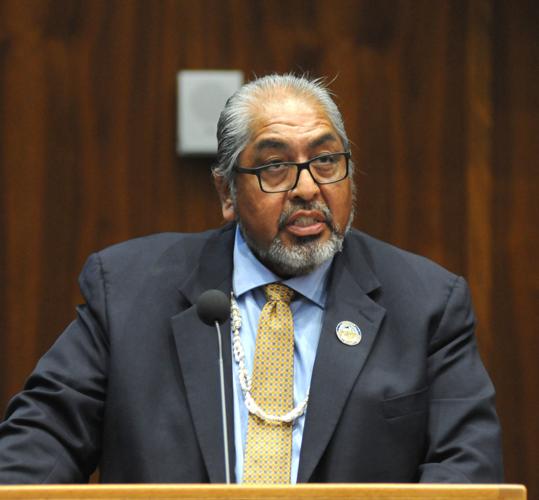

WASHINGTON — Tohono O’odham Nation Chairman Ned Norris said the “controlled blasting” for a border wall that will ultimately cut through his reservation is just the latest example of the federal government ignoring its duty to consult with tribes.
Federal agencies involved in border wall construction “are in violation of their own policies since meaningful consultations have not been held with the Tohono O’odham Nation,” Norris said in a statement Monday.
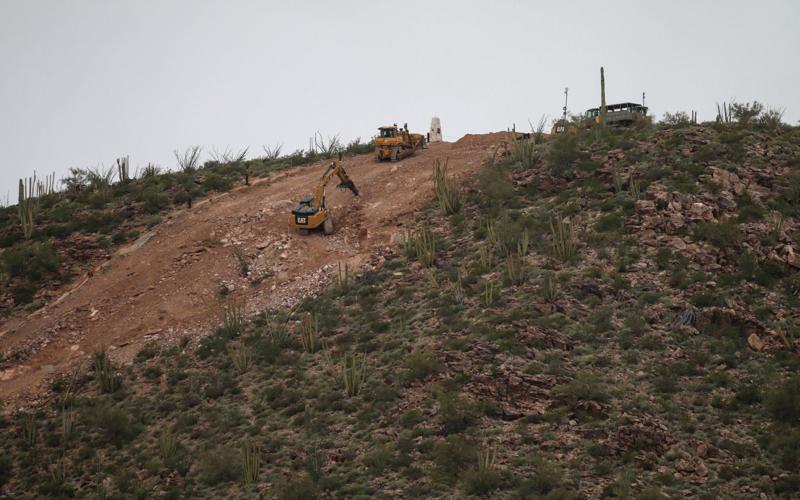
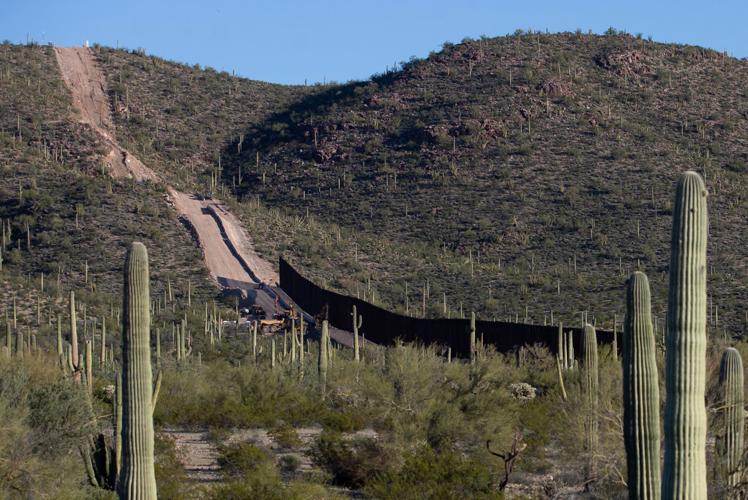
The statement was in response to reports that crews have begun blasting Monument Hill in the Organ Pipe Cactus National Monument — an area that includes a burial ground sacred to the Tohono O’odham.
Customs and Border Protection, in a statement, confirmed that contractors have started blasting in the area and said it “will continue to have an environmental monitor present during these activities as well as ongoing clearing activities.”
That was little comfort to critics, who noted that the federal government has exercised its “Section 102” authority to waive regulations, including consultation with tribes and environmental rules, if they could get in the way of border wall construction.
U.S. Rep. Raúl Grijalva, D-Tucson, said the environmental monitor “is basically collecting a check because there’s nothing he or she can do” with the environmental protections waived. He complained in a January letter to the Department of Homeland Security that the Trump administration is using that authority at “an unprecedented and irresponsible rate.”
But U.S. Rep. Paul Gosar, R-Prescott, defended the use of waivers in areas like Organ Pipe, which “current environmental laws make ... much more difficult for law enforcement to patrol and secure.”
The project in question is not on the Tohono O’odham Nation, which straddles the U.S.-Mexico border for 62 miles, but is on land in the adjacent national monument that is culturally significant to the tribe.
Grijalva visited Organ Pipe Cactus National Monument with Norris and other tribal members on Jan. 23, accompanied by an archaeologist who identified Monument Hill as a burial ground for Apache warriors and sacred to the O’odham. The sacred sites the group visited in the region also included burial grounds, villages and ceremonial grounds dating back as long as 10,000 years, according to a spokesperson for Grijalva’s office.
Construction in the area already uncovered human remains, and since the January visit at least one area where artifacts were discovered has been bulldozed to build a road for wall construction crews. The Grijalva spokesperson called it the equivalent of digging up Arlington National Cemetery.
Norris raised many of those concerns in a Nov. 13 letter to Customs and Border Protection seeking answers to questions. He requested formal consultation with the tribe.
“While CBP has solicited input from the general public on the Arizona border infrastructure project, and has engaged in limited email and telephonic discussions with the Nation (primarily with staff). These actions do not constitute government-to-government consultation with the Nation’s leadership,” Norris wrote in November.
Consultation after border wall decisions are made does not satisfy the requirement, he wrote.
Federal agencies have policies in place requiring “meaningful consultations” with tribes “whenever an action significantly affects Indian lands, tribal rights or protected tribal resources,” Norris’ Monday statement said.
Norris said he has not received a response to his letter.
A CBP official responding to questions about the Section 102 waivers in December said the agency is careful to protect sites, even where it has a waiver. The official also said there are currently no plans for construction on the Tohono O’odham Nation — even though Section 102 waivers are in place there.

