


A virtual tour and listening parties are among the opening stanzas of the University of Arizona Poetry Center’s 60th anniversary celebration.
The Poetry Center, founded in 1960 in a bungalow near the UA campus by Ruth Stephan, was aimed at creating a distinguished library and a welcoming place for poets.
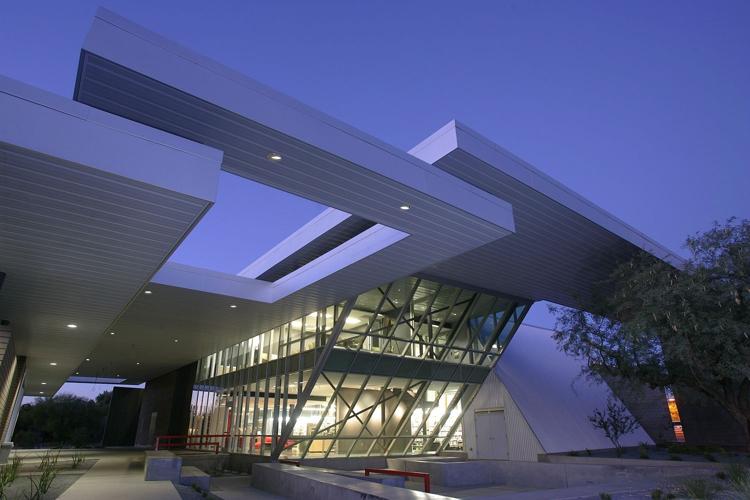
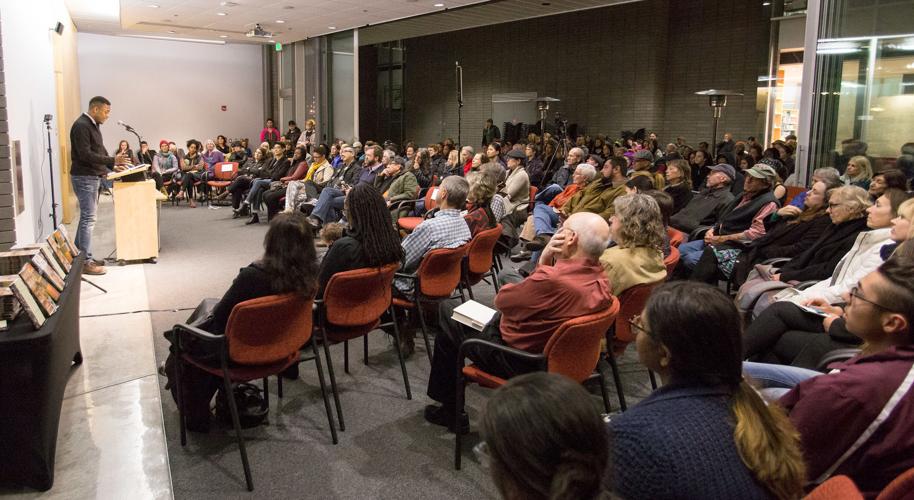
Housed in the 17,500-square-foot Helen S. Schaefer Building since 2007, the center has 50,000 books and it is a hub of community and classroom outreach programs, readings by established and emerging poets, classes, workshops and exhibitions.
Due to the COVID-19 pandemic, the center’s plans for its 60th anniversary switched from in-person to virtual in mid-July, said Tyler Meier, executive director. “We’re striving to be as interactive, informative and novel as possible, using digital and virtual modes for safety,” he says.
The virtual tour, listening parties, an exhibit of 60 additions to the Rare Book Room, an exhibit of 20 Arizona poets, and look at the past through photographs, are among events surrounding the virtual celebration on Nov. 17.
PARTY WITH THE POETS
The Poetry Center will offer free listening parties featuring one reading from each decade of the center’s history for the six weeks leading up the 60th anniversary virtual celebration on Nov. 17.
Meier says that he and past directors mined Voca, the center’s extensive audiovisual archive. The center has hosted an estimated 1,200 poets since its founding.
The poets presented at the parties offer a mix of styles and themes. Hearing poets read their work “adds a layer of context” to the piece and “expands what is on the page,” says Meier.
The listening parties are set for 5 p.m. six consecutive Tuesdays beginning Oct. 6. No RSVPs required.
To join the parties, go to tucne.ws/pc60 and click on “Directors’ Choice.” The link and passcode are at the end of each author’s profile.

Robert Creeley’s Dec. 4, 1963, reading is the oldest recorded reading available in the Poetry Center’s archives.
Go back to the 1960s with Robert Creeley’s listening party on Oct. 6. Creeley’s Dec. 4, 1963, reading is the oldest recorded reading in the Poetry Center’s archives. Creeley reads from his collection “For Love: 1950-1960” and speaks about the writing process. He was at the height of his power at this reading, says Meier.

Adrienne Rich’s Jan. 31, 1974, reading at the UA Poetry Center was dedicated to three authors of the feminist text “New Portuguese Letter.”
The Oct. 13 listening party will transport you to the 1970s with Adrienne Rich. Rich dedicated this Jan. 31, 1974, reading to the three authors of the feminist text “New Portuguese Letter” (“Novas Cartas Portuguesas”), who were arrested on charges of pornography and offenses against public morality in Portugal. The trial for the authors began the evening Rich gave this reading, says Meier.

Hear Lucille Clifton’s Oct. 12, 1983, reading at 5 p.m. Tuesday, Oct. 20.
Time travel to the 1980s with the Oct. 20 listening party featuring Lucille Clifton. In the Oct. 12, 1983, reading, Clifton reads across her collections, which are filled with themes of family, race, illness and faith.

W.S. Merwin had a reading at the UA Poetry Center on Jan. 17, 1990. It’s one of seven different recordings over five decades in the center’s archive.
The Oct. 27 listening party taps W.S. Merwin for the 1990s. Merwin has seven different recordings over five decades in the center’s archive. This Jan. 17, 1990, reading covers decades of his work and explores topics such as the human costs of the Vietnam War and the pleasure of caring for the natural world.

Watch a reading given by Sherwin Bitsui, left, Ofelia Zepeda, and Alberto Ríos, on Sept. 10, 2010, at 5 p.m. Tuesday, Nov. 3.
Nov. 3 is dedicated to the 2000s with Sherwin Bitsui, Ofelia Zepeda and Alberto Ríos. The Sept. 10, 2010, reading was part of a Multilingual Poetry of the Southwest project. Each poet shared a poem that was 15 lines or fewer and translated into two other languages. Each poem written for the project existed in three languages.

Watch a reading by Terrance Hayes, originally given on Feb. 4, 2016, at 5 p.m. Tuesday, Nov. 10.
The final listening party is Nov. 10 with Terrance Hayes representing the 2010s. Asked to reflect on the relationship between poetry and the culture of spectacle at this Feb. 4, 2016, event, Hayes’ reading includes his sequence of poems written in response to the murders of nine church parishioners in Charleston, South Carolina, in 2015.
COME VISIT, VIRTUALLY

The Poetry Center’s living room has gone dark due to COVID-19.
While the building is closed due to the pandemic, the interactive 360 experience opens the doors to the Poetry Center.
Start the tour, available at tucne.ws/pc60, by picking a “guided” or “unguided” tour. Haven’t visited the center in person? Pick the “guided” tour for a deeper understanding.
You (aided by your mouse) move from place to place by selecting the “next” button at the bottom of the screen. At several points, if you hold your mouse and move it through the window you’ll see a 360-degree view of the spot.
Click on one of several “hotspots” to see staff and poets discuss and explain the center’s history and programs in pop-up videos. You also get behind-the-scenes info, such as the center’s preservation efforts and the story behind the Lois Shelton Poets Cottage.
The tour was created in partnership with the UA Center for Digital Humanities, which did the technical work, says Meier. The center was founded in 2017 and Bryan Carter is the director.
The center’s virtual tour is significant because it offers an alternative for those not physically able to access the center, says Brena Andrews, research assistant for the center who was part of the team that developed the virtual tour.

