



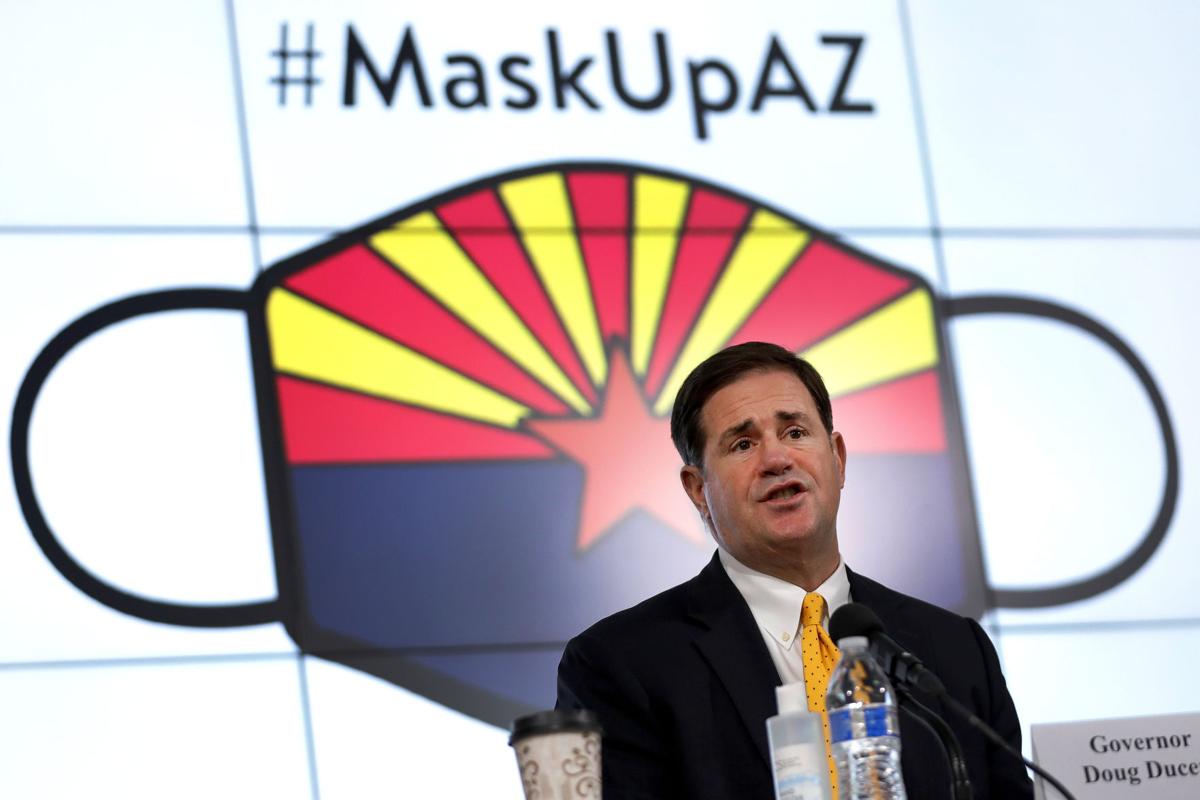
With just weeks before learning is slated to resume, some Tucson-area educators and school leaders feel the state has left them to fend for themselves during a global health crisis.
Hoping to gain clarity from Arizona Gov. Doug Ducey on school reopening plans, an update issued Thursday, July 23, had the opposite effect.
“I think this executive order has actually caused a little bit more confusion,” says Pima County Schools Superintendent Dustin Williams. Other local leaders and educators agree with him.
Ducey and Arizona Schools Chief Kathy Hoffman announced Thursday that schools would get full funding for remote learners, who are typically funded at a lower rate, and an additional 5% for each student physically in classrooms as long as schools provide on-site learning opportunities for any student who wants it.
Although the executive order says that schools should prioritize vulnerable students such as those who receive free and reduced lunch, English-language learners, students with special needs and those in foster care, it also says that schools should inform all parents of available options and shall not refuse anyone.
That on-site learning, which must be offered starting Aug. 17, is described by executive order as in-person support services and supervision that may or may not be provided by a teacher or aide while students take part in distance learning.
Those sites are required to open just 10 days after the Arizona Department of Health Services must release public health benchmarks for the “safe return of in-person, teacher-led classroom instruction.”
Regardless of those benchmarks, to receive a portion of $370 million in grants being made available by the state, schools are required to offer a physical space for children to be during the day.
Williams says getting the health metrics 10 days before schools open their doors and after many schools begin their online learning is “absolutely unacceptable.” Local leaders have been asking for metrics like this since at least the beginning of July.
Pima County has about 25,000 people working in local K-12 education and about 150,000 students, according to Williams. Although districts don’t know for sure how many students will be using in-person learning opportunities, Tucson’s largest school district, TUSD, is estimating half of its nearly 45,000 students will be returning to schools Aug. 17.
Before the governor’s press conference, Tucson Unified Superintendent Gabriel Trujillo called on Ducey to prohibit the physical reopening of schools.
“I call on the governor to seek to extend the prohibition on the physical opening of schools out of an extreme concern for the safety, health and well being of our student body, and of our employees,” said Trujillo, who will kick off the school year remote learning Aug. 10.
He is concerned about the district’s ability to safely open Aug. 17 for a number of reasons, including challenges in getting enough personal protective equipment and sanitation products, and not having effective infrastructure in place for contact tracing and COVID-19 testing, he said.
The superintendent of Tucson’s second-largest school district, Sunnyside, said there are still too many unknowns to decide if it will physically open schools on Aug. 17, although he is concerned how it will affect funding.
“I was hoping that we would have a definitive date or at least know what metrics were actually going to be used versus keeping things so arbitrary and up in the air,” Superintendent Steve Holmes said. “We don’t even know what those metrics are going to be. And for those metrics to come up on the seventh, that positions us in a tight timeline to prepare for something on the 17.”
In the meantime, Sunnyside will focus on perfecting its remote learning, which begins Aug. 5.
“Clarity for me is still something that we have not received on many levels,” Holmes said. “And I think yesterday actually created more apprehension than it did answers.”
The metrics being developed by the state are not intended to drive when schools reopen for learning opportunities but rather when regular classes can resume with the entire student body, says the governor’s Chief of Staff Daniel Scarpinato.
He says the requirement for in-person learning opportunities is important for a number of reasons including that students of working parents need somewhere to go during the day and so do students who don’t have access to online learning at home.
“Regardless of whether class has started, meaning a classroom with students and a teacher at the front of the room, we want to make sure there’s some place for those kids to go,” he said.
Schools are required to accommodate all students but to do extra outreach with the more vulnerable populations, he said.
Williams says health metrics and guidelines should be in place before schools physically open to anyone.
Williams and local school districts are working with the Pima County Health Department on developing metrics schools can refer to, as well as protocols for if someone tests positive or if there’s a breakout at a school, as well as streamlined testing for educators and mechanisms for contact tracing.
“At this point I am really focused on Pima County setting these guidelines and these opportunities because we can no longer wait for the governor’s extremely delayed orders,” Williams said.
Thursday’s announcement left many parents, teachers and school board members feeling “really beat down,” says Save Our Schools cofounder Dawn Penich-Thacker, noting the additional funding was the one positive, but other than that, it was disappointing.
“It puts districts, parents and teachers in a really tough spot,” she said. “To basically punt all of the decision-making back onto them when they are neither equipped, nor the experts to be making those decisions about what the data means, what processes to put in place.
“It was another lack of leadership from the level where these decisions should be happening, which is at the governor’s office and at the Department of Education.”
Photos: July Motormarch 2.0 for Safe Schools in Tucson
Motormarch 2.0 for Safe Schools
Updated
Ryer Dixon helps get her family car decorated as a few hundred get their vehicles in the proper protest spirit for the Tucson Motormarch 2.0, staging at Hi Corbett Field, Tucson, Ariz., July 22, 2020. The protestors were advocating for a delay in the opening of in-school classes in light of Arizona's rocketing COVID19 numbers. The motorcade took a circuitous route through southwest Tucson ending at Sentinel Peak.
Motormarch 2.0 for Safe Schools
Updated
Tucson High School biology teacher Marea Jenness writes her protest message in her car's windows as a few hundred get their vehicles decorated for the Tucson Motormarch 2.0 while staging at Hi Corbett Field, Tucson, Ariz., July 22, 2020. The march was organized to protest the opening of in-school classes in light of Arizona's rocketing COVID19 numbers.
Motormarch 2.0 for Safe Schools
Updated
Cholla High School teacher Jose Federico waves as he counts the vehicles heading down from Sentinel Peak as a few hundred protestors wrap up the Tucson Motormarch 2.0 while staging at Hi Corbett Field, Tucson, Ariz., July 22, 2020. Heading out organizers counted 170 vehicles, Federico totaled up 148 heading off the mountain.
Motormarch 2.0 for Safe Schools
Updated
Jaye Harden climbs up on the trunk to get the best possible angle for writing on the rear window as a few hundred protestors get their vehicles decorated for the Tucson Motormarch 2.0 staging at Hi Corbett Field, Tucson, Ariz., July 22, 2020.
Motor March for Safe Schools
Updated
Andrea Ayala, a teacher at Pueblo High School, advocated for keeping campuses closed during a July 15 Motor March for Safe Schools in Tucson, Ariz.
Motor March for Safe Schools
Updated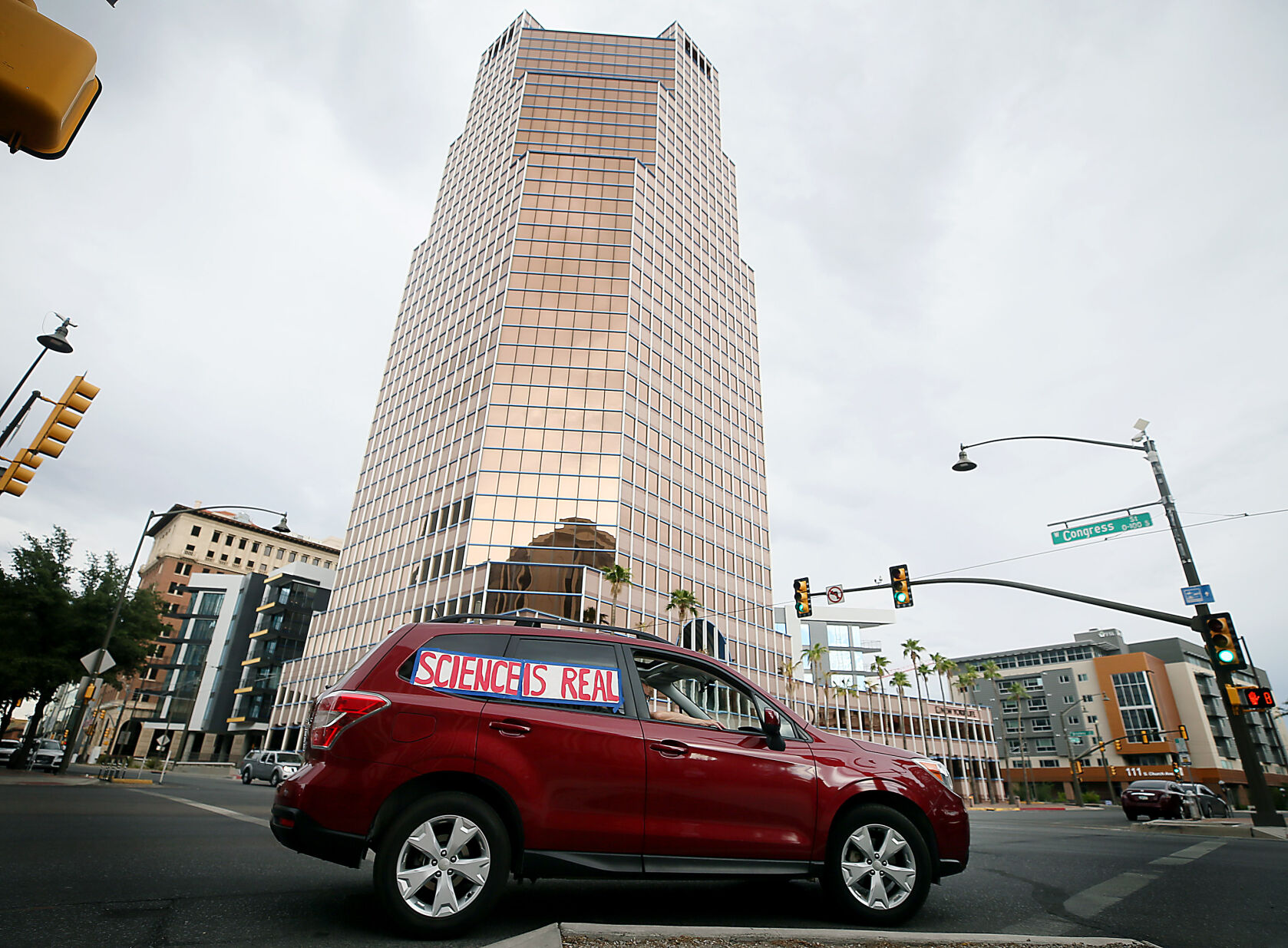
One of about 100 cars filled with Tucson Unified School District educators and supporters participate in a Motor March for Safe Schools in downtown Tucson on July 15, 2020.
Motor March for Safe Schools
Updated
About 100 cars filled with Tucson Unified School District educators and supporters participate in a Motor March for Safe Schools on July 15, 2020 in Tucson, Ariz.
Motor March for Safe Schools
Updated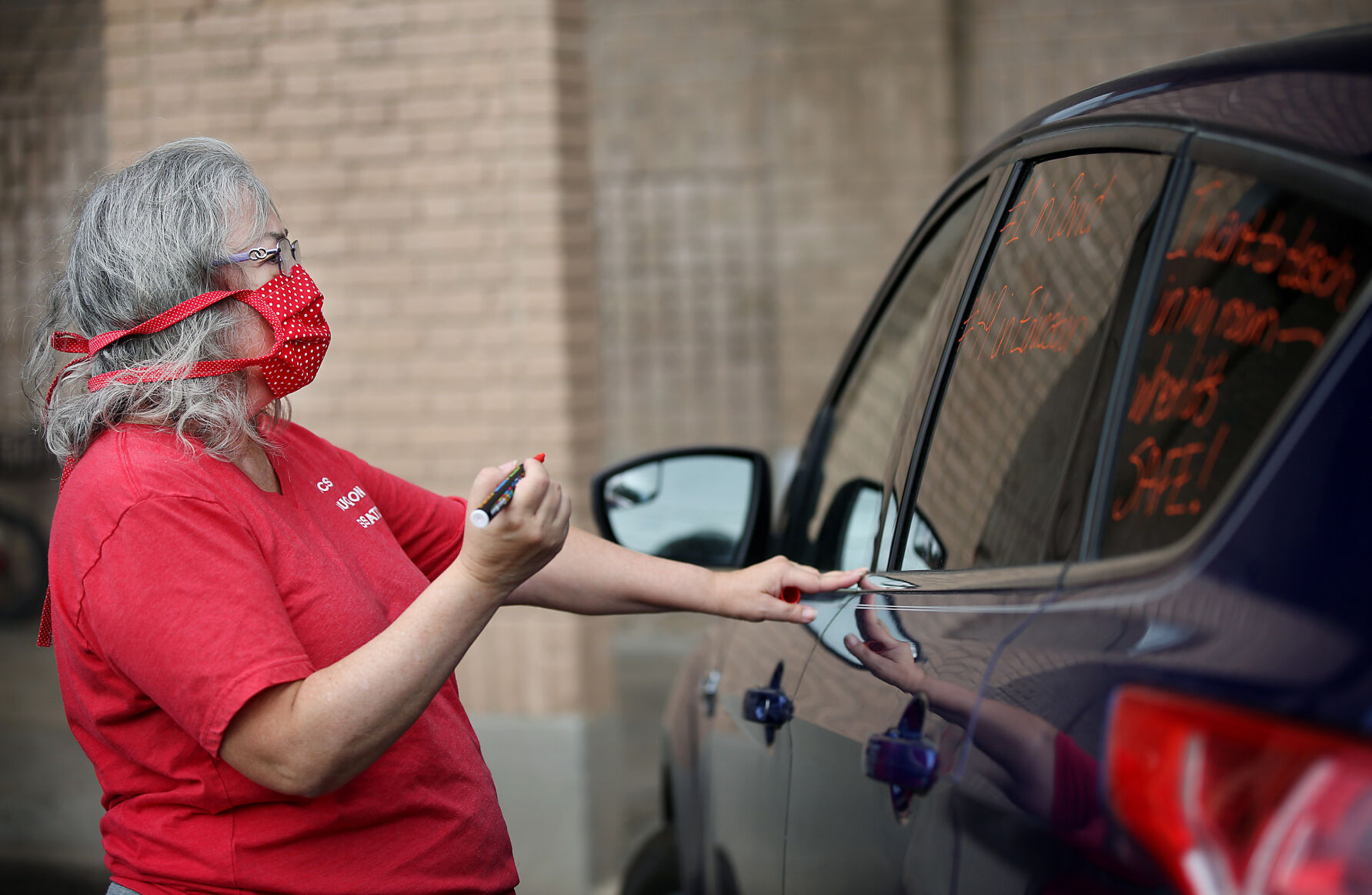
Lysa Nabours, a teacher and secretary at Tucson Education Association, checks out her decoration on a car before the start of the March for Safe Schools on July 15, 2020 in Tucson, Ariz.
Motor March for Safe Schools
Updated
About 100 cars filled with Tucson Unified School District educators and supporters participate in a Motor March for Safe Schools on July 15, 2020 in Tucson, Ariz.
Motor March for Safe Schools
Updated
About 100 cars filled with Tucson Unified School District educators and supporters participate in a Motor March for Safe Schools on July 15, 2020 in Tucson, Ariz.
Motor March for Safe Schools
Updated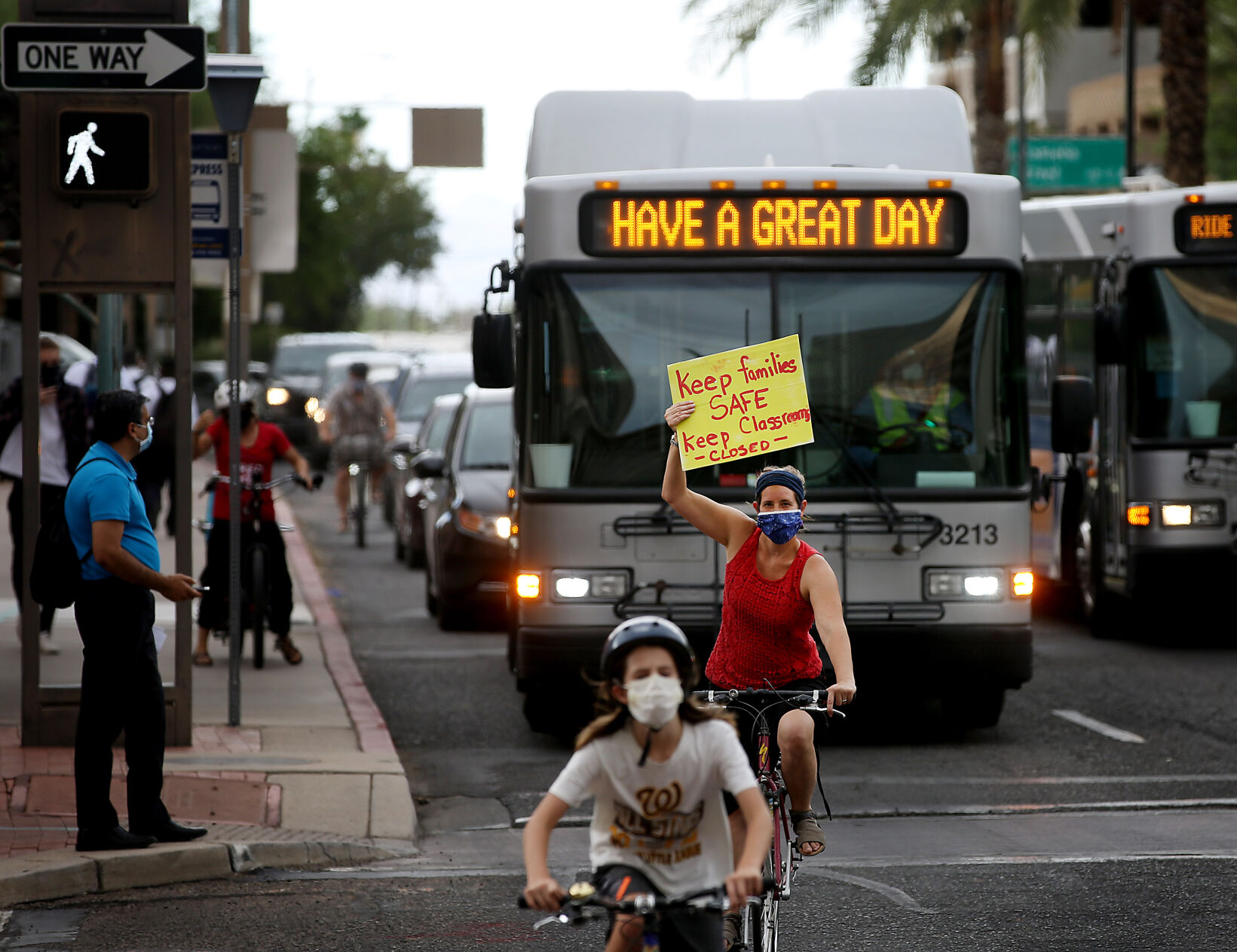
Tucson Unified School District educators and supporters participate in a Motor March for Safe Schools on July 15, 2020 in Tucson, Ariz. About 100 cars and a few cyclists showed up for the event that was part of a statewide initiative to make political leaders aware of their concerns about opening schools for in-person instruction during a rise in COVID-19 cases.
Motor March for Safe Schools
Updated
Ryan Kuchta, 13, middle, is joined by his parents, Mark and Sonya, as they show their support for educators during the Motor March for Safe Schools event on July 15, 2020 in downtown Tucson.
Motor March for Safe Schools
Updated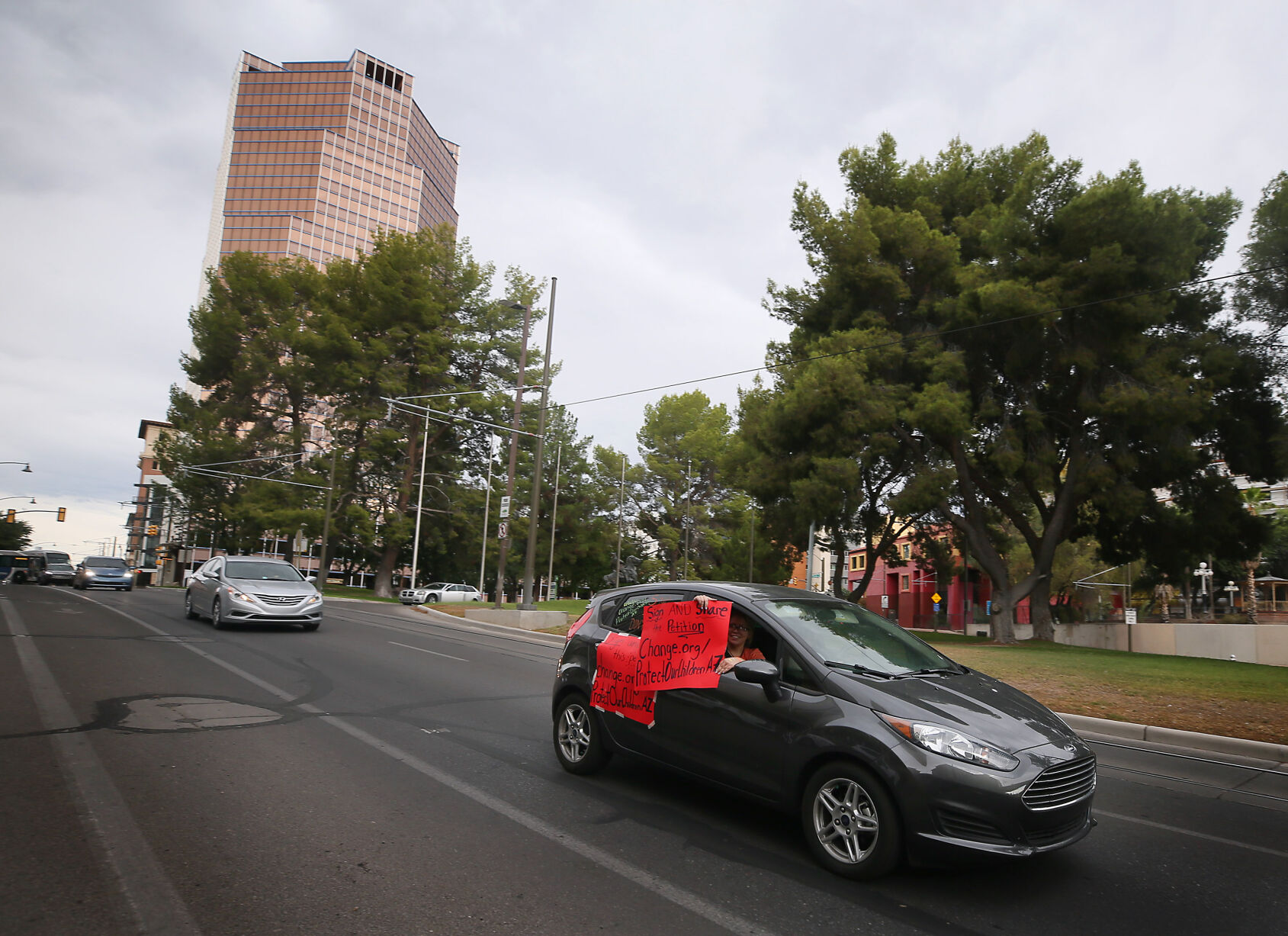
About 100 cars filled with Tucson Unified School District educators and supporters participate in a Motor March for Safe Schools on July 15, 2020 in Tucson, Ariz.

