


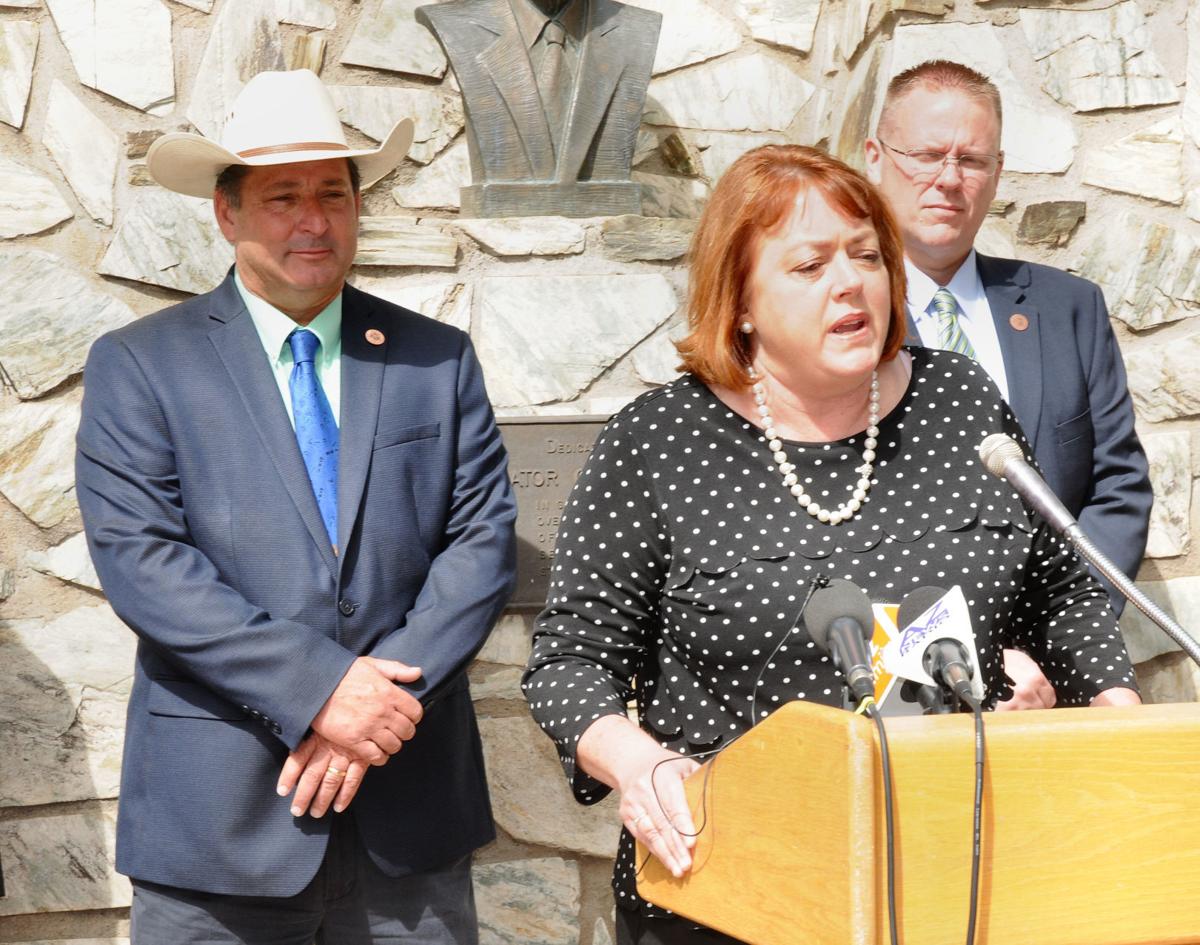
PHOENIX — Insisting the state made a commitment, a central Arizona lawmaker and farmers he represents are making a last-ditch pitch for $20 million from taxpayers to drill new wells and water delivery canals.
Rep. David Cook, R-Globe, said Thursday the farmers in Pinal County agreed to give up their right to Colorado River water to help the state come up with a plan to deal with the drought. In exchange they were given the right to take additional water out of the ground.
That deal included $9 million from the state to cover the costs. And the farmers through their irrigation districts have come up with another $30 million.
But Cook said the project will exceed $50 million. And while the farmers hope to get the balance from a federal grant, that remains an open question at Congress.
More to the point, he said unless the work begins by the end of the year, the farmers will not meet their goal of getting off Colorado River water by 2023. So the farmers want the state to at least front the $20 million needed —and absorb it if the feds don’t come through.
All that goes to the question of what the Pinal farmers were promised.
In fact, the wording in the drought contingency plan was never a mandate on lawmakers to provide the up-front cash. The law says only that “the Legislature may consider appropriations to be made available to the irrigation districts.”
Cook was undeterred. “I believe it’s a commitment,” he said.
He brushed aside the lack of specificity in the funding language, saying it’s obvious that the drought contingency plan was built on Pinal farmers giving up their river water in exchange for getting access to groundwater — and having taxpayers pick up part of the tab.
Eloy cotton farmer Tiffany Shedd said the farmers can’t wait until Congress acts on the legislation that would make grant funds available.
“If we don’t have the money now, money from the feds later will be a day late and a dollar short,” she said.
Shedd said the issue should not be seen simply as a Pinal County problem.
“The majority of your beef comes from Pinal County, a huge percentage of your dairy comes from Pinal County,” along with wheat and cotton, she said.
Shedd said farming and affiliated industries is the largest segment of the county’s economy. If they go out of business, that will cut into the county’s tax base, curbing the ability to provide basic services. And she said making that up with a tax increase is not a good option.
“We have huge amounts of senior citizens on a fixed income who cannot afford tax raises because we decided to kill our biggest industry,” Shedd said.
In February, the House Appropriations Committee refused to approve legislation to guarantee that $20 million.
A month later, Cook was able to get approval for funding from the Senate Appropriations Committee. But there has been no final approval by either the House or the Senate, and no guarantee that the dollars will be added to the approximately $11.5 billion state budget for the coming fiscal year.

