



With all the talk of tax reform, local nonprofits want to remind Southern Arizonans to take advantage of Arizona state income tax credits for 2017.
More than 140 local charities can benefit from contributions to Qualifying Charitable Organizations — the limit is $400 for single taxpayers or $800 for married couples. In addition, seven local charities are Qualifying Foster Care Charitable Organizations that allow taxpayers to take a state income tax credit of $500 for single taxpayers or $1,000 for married couples.
Formerly known as the Working Poor Tax Credit, the Qualifying Charitable Organizations “provide assistance to resident of Arizona who receive Temporary Assistance of Needy Families benefits, are low- income residents of Arizona or are children who have a chronic illness or physical disability,” the State of Arizona Department of Revenue says.
Many of the organizations are small nonprofits that struggle to promote awareness about the unique niches they fill, according to Carrie Nelson, the development director for Community Home Repair Projects of Arizona.
For the past 35 years, the group has provided home repairs and adaptations to create safer places to live and support long-term housing solutions for low-income homeowners and their families in Pima County.
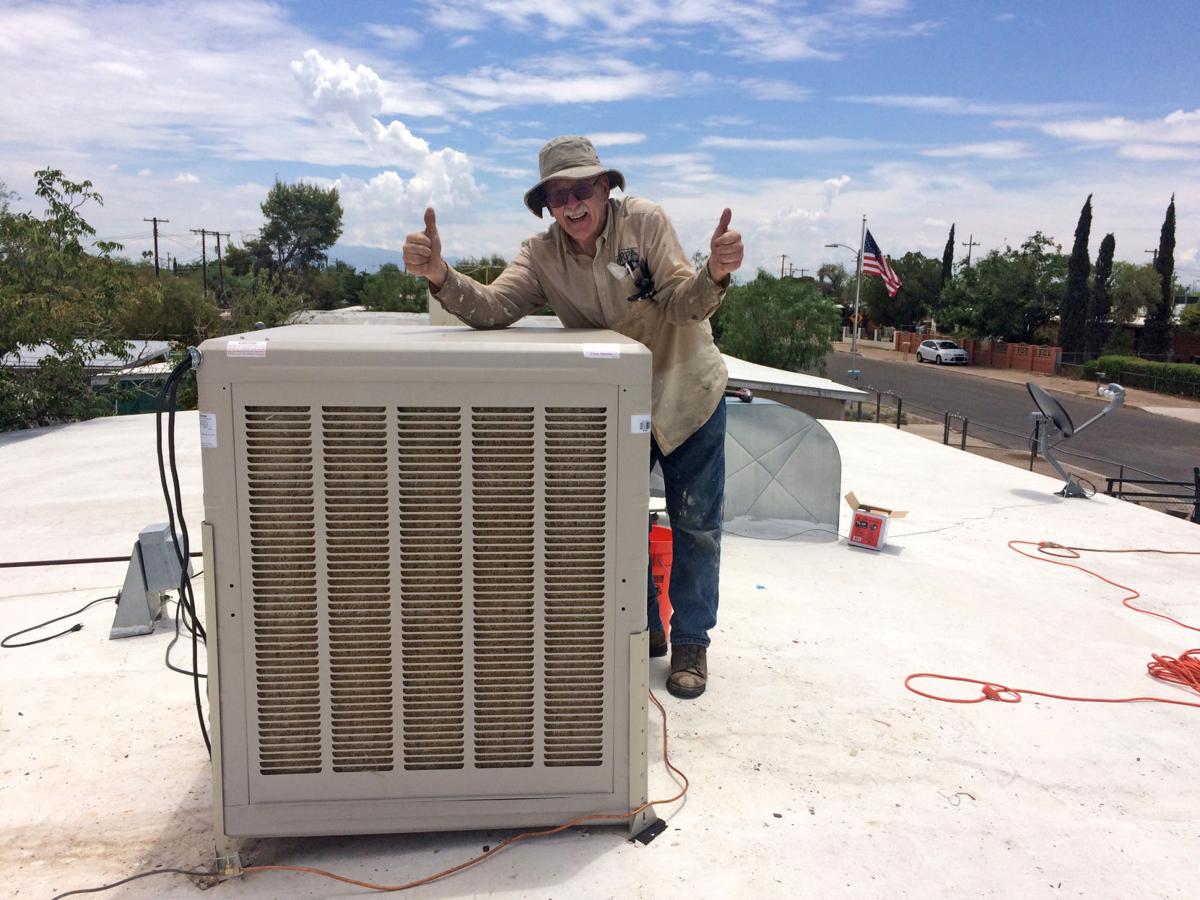
“We do emergency home repairs and safety adaptations free of charge for people who can’t afford to fix them. Lots of what we do is help people who have no heating, cooling or gas. These are really critical needs to make homes safe and functional for the people who live there, and we are the only organization in Tucson that provides this service,” said Nelson.
Aided by volunteers, the nonprofit’s small staff provides service to about 1,800 homes a year. Between four and eight crews work Monday through Thursday, and repairs run the gamut from replacing a part on a furnace or installing a shower grab-bar to rebuilding an entire floor.
Joe Allen, who has been volunteering with the nonprofit for four years, said
he has seen housing situations in which residents have lived without hot water or evaporative cooling for years; he has also worked on homes that have no water at all.
“It is unbelievable that people live like this in our society. ... I really can’t describe how bad it is; it is an eye-opener. I think lots of people have no idea how many people live and all that CHRPA does to help them,” Allen said.
Another nonprofit that sometimes struggles to differentiate itself — in spite of the fact that it is one of only a handful of local Qualifying Foster Care Organizations care — is CASA Support Council for Pima County, according to president of the Board of Directors Linda Koral.
“We have quite a lot of generous donors, but a lot of people confuse us with Casa de los Niños, and we are a different nonprofit that provides support to volunteer court appointed special advocates,” she said.
The advocates are specially trained volunteers appointed by a Juvenile Court judge to represent the interests of abused and neglected children involved in court proceedings.
Koral said the volunteers act as the “eyes and ears of judges” with children who have been removed from their homes and placed in foster care or kinship placement by the Department of Child Safety due to family crises such as domestic violence, substance abuse, mental illness, abuse and neglect.
Contact freelance writer Loni Nannini at ninch2@comcast.net

