

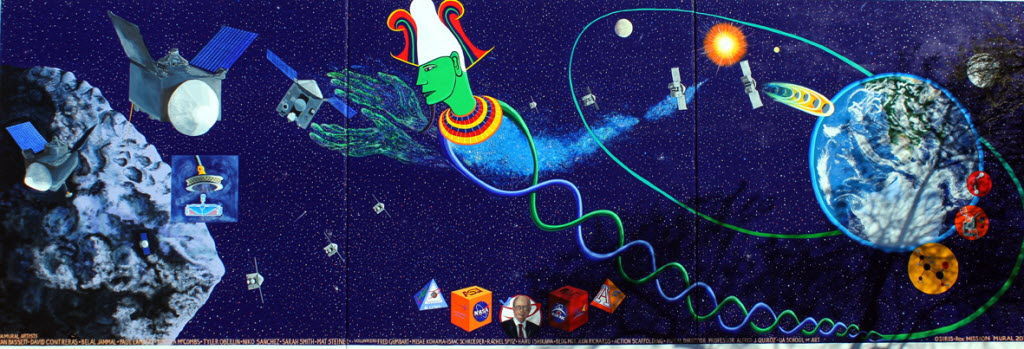
On Sept. 8, OSIRIS-REx, the University of Arizona-led mission to retrieve an asteroid sample, will hitch a ride atop an Atlas V rocket at speeds up to 12,000 mph.
Here is the itinerary for the next seven years.
- September 2017: Earth flyby. The spacecraft will orbit the sun for a year. This path will take OSIRIS-REx close enough to the Earth to be influenced by the planet’s gravity and subsequently shot off into space toward Bennu.
- August 2018: Arrive at asteroid Bennu. To enter the asteroid’s orbit, the spacecraft will have to arrive at a specific spot in space at the same time Bennu does, going at the same speed and in the same direction.
- July 2020: OSIRIS-REx will use its robotic arm to collect a sample. The device will press down on the asteroid for five seconds and release gas to propel rocks and dirt up into the collection chamber.
- March 2021: Once the sample is stored in the return capsule, OSIRIS-REx will fire its engines and bid farewell to Bennu, shooting off at speeds of about 716 mph.
- Sept. 24, 2023: Return to Earth: OSIRIS-REx won’t get to come home. Four hours before the craft reaches Earth’s atmosphere, it will release the sample return capsule and enter solar orbit. The sample will come screaming down at 27,000 mph before deploying a parachute and landing in the Utah desert.

