



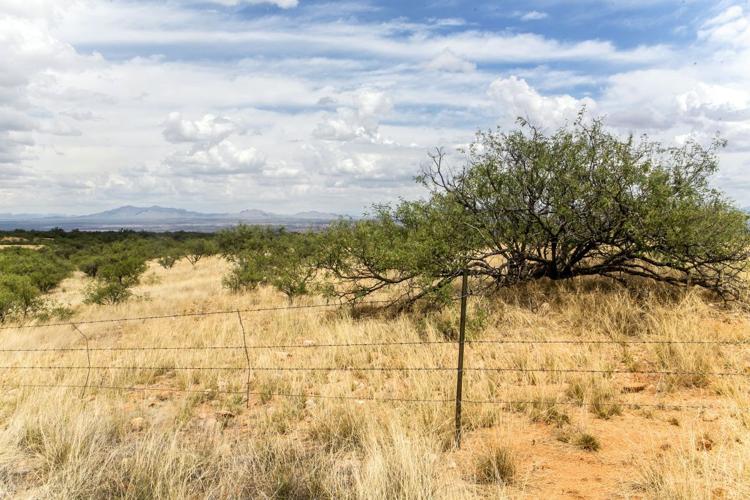

The Army Corps of Engineers says it can’t stop a big development’s proposed groundwater pumping in Benson, despite other federal agencies’ concerns it might dry up the San Pedro River.
When the corps approved a federal Clean Water Act permit for the Whetstone Ranch project in 2006, it was sympathetic to the developer’s view that the pumping wouldn’t dry up the neighboring river.
But the agency also concluded that it lacked the legal authority to control the pumping in any case, newly obtained documents reveal.
The Clean Water Act says only the state can allocate water resources, the corps said — but state officials have said they, too, don’t have the power to limit pumping that could dry the San Pedro.
The federal position is now being challenged by the Tucson Audubon Society, which is asking for reconsideration of the 2006 permit.
The corps says the permit remains valid for the planned project, which has changed hands and is renamed the Villages at Vign-
eto. Corps officials say they plan to make a decision on Audubon’s request by Tuesday.
The San Pedro — one of the only remaining year-round rivers in the Southwest and home to a national riparian conservation area — lies about 2 to 3½ miles from parts of the 28,000-home development site.
Benson Mayor Toney King says that after reading all the studies available, he’s comfortable the river won’t be dried up by the development’s pumping. He’s hoping the corps won’t reconsider the project’s permit.
“If they build 2,000 homes and there’s something going on with the water, that doesn’t mean we can’t have another look at it,” King said.
The current developers, El Dorado Holdings Inc., decline to comment now and will wait until a planned sit-down interview to explain the project’s history and technical issues in detail, says spokeswoman Linda Welter.
On Friday, the Sierra Club and the Tucson-based Center for Biological Diversity echoed Audubon’s concerns in letters to the corps, the Environmental Protection Agency and the U.S. Fish and Wildlife Service. They said the permit should be revoked outright, which would require the developers to file a new application.
A University of Arizona hydrologist who specializes in groundwater issues, Thomas Meixner, doesn’t foresee state agencies or the corps changing their positions, and figures courts might ultimately decide.
Corps, others at odds
When the corps approved the Whetstone permit, its comments were in sharp disagreement with letters from the EPA and the Fish and Wildlife Service. At the time, the latter two were seeking a broader, more detailed look at the project’s impacts. The Star recently obtained the corps’ 2006 comments under the Freedom of Information Act.
The permit authorizes the developer to discharge dredged and fill material from construction work into 51 acres of washes on what was then an 8,000- acre area that was to include 20,000 homes.
The current, larger project covers 12,300 acres; it was taken over by Phoenix-based El Dorado Holdings Inc. after the original project went belly-up during the 2007-08 financial crisis and real estate crash. El Dorado plans to start construction in January 2016.
If built as planned, Villages at Vigneto would be one of the largest developments in Southern Arizona history, housing up to 70,000 people in 20 years.
The project’s larger size alone is grounds for reopening the permit, Tucson Audubon says — as the 2006 permit itself suggests. A condition of the permit was that a new owner could only impact the wash acreage for which the previous owner was authorized.
Audubon also counters that the possibility groundwater pumping may impact a nationally important river is a threat that does fall within the corps’ regulatory power.
The San Pedro River watershed attracts well over 300 bird species.
“The fundamental thing is about the birds from South America to Alaska who use this highway twice a year,” said Tucson Audubon’s conservation chairwoman, Christina McVie.
Tribute project similar
The corps’ position on Whetstone Ranch is similar to one the Arizona Department of Water Resources has taken more recently toward a much smaller but sizable housing development in Sierra Vista known as Tribute.
The state agency ruled in 2013 it lacks authority under state law to limit that project’s water pumping to protect the San Pedro. At the same time, the state ruled that the 7,000-home Tribute project has an adequate water supply for 100 years.
That position provoked a lawsuit from another federal agency, the Bureau of Land Management, which has at least temporarily derailed Tribute in state courts.
In 2014, a Superior Court judge overturned the state’s approval; the state is now appealing to a higher court.
Specific comments
Here are the corps’, other agencies’ and Audubon’s comments on specific issues about the 2006 permit now held by Villages at Vigneto:
Pumping and the river. EPA wrote the corps in June 2004 that the Whetstone project could worsen an existing regional problem of groundwater pumping exceeding natural recharge. It’s “reasonably foreseeable” that the globally important river would be converted from a perennial stream to run intermittently or after storms, the EPA said.
But the corps’ 2006 environmental assessment cited a report from Whetstone Ranch’s consultant, Golder Associates Inc., saying that pumping won’t affect the river. A dense clay layer separates the “deep artesian aquifer” from which the development would get its water from the shallow aquifer feeding the river, the corps said.
More recently, U.S. Geological Survey officials have said a clay layer doesn’t protect a river from pumping, but delays the effect.
Scope of analysis. The corps wanted to analyze the impacts of developing only 960 acres of the Whetstone site. The EPA said all 8,000 acres’ impacts should be analyzed.
Endangered species. In its 2004 letter to the corps, the EPA said the river contains critical habitat for the endangered Southwestern willow flycatcher and the Huachuca water umbel, a plant. Federal guidelines don’t allow discharges of dredged or fill material into federally regulated water bodies if that would jeopardize existence of federally protected species, the EPA said.
In another 2004 letter, the Fish and Wildlife Service said it is particularly concerned about potential impacts to the San Pedro’s ecosystems, “which support a diverse array of fish and wildlife resources, including several threatened and endangered species.”
In response, the corps wrote in its original environmental assessment that no endangered or threatened species are known to live on the development site.
Whetstone Ranch’s consultant, Westland Resources, determined three protected species have a low potential to occur there but that none will be adversely affected. The corps agreed with Westland’s analysis.
Tucson Audubon now says five imperiled species could be affected by the project, including the jaguar, whose federal critical habitat includes 650 acres on the development site.

