

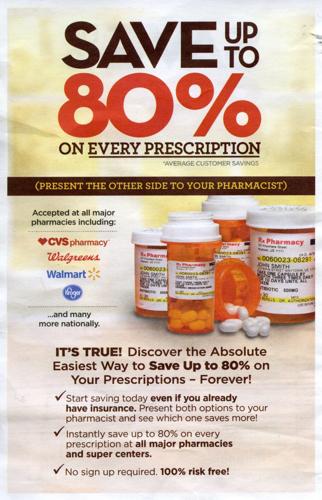
The junk-mail pitch offered Tucsonans a simple solution to high drug costs: a free discount card with savings of “up to 80 percent on EVERY PRESCRIPTION.”
The reality is more complicated and has raised red flags among some local consumer-protection advocates.
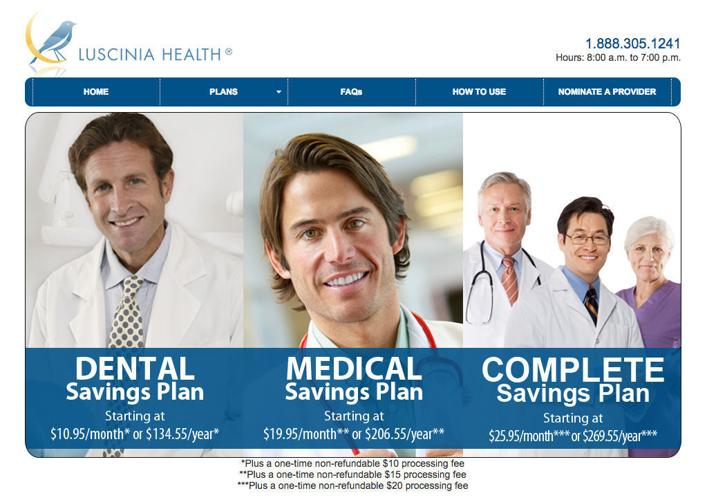
The recent offers came from Luscinia Health of Plano, Texas. Luscinia is described on the website of another Texas health firm as a provider of medical and dental plans that cost up to $270 a year but provide minimal benefits compared to traditional insurance.
Luscinia’s president, Keith Jacobs, disputes that his firm charges for its services and said he’s asked the company that made the sales claim — Careington International Corp. of Frisco, Texas — to delete it from its website.
Jacobs said he made the request Tuesday but the information he said was erroneous was still online as of Friday.
Careington couldn’t be reached for comment. Two voicemails left Tuesday and Wednesday received no response.
Jacobs says his company has collectively saved “hundreds of millions of dollars” for consumers who are “getting screwed by the U.S. health-care system.”
Most major drugstores accept such prescription cards as an alternative to insurance, and the card issuer collects fees from drug companies when the cards are used.
“We’re a tiny business standing up for working poor folks who can’t afford the medicine they need to stay healthy,” Jacobs said. “Our products are entirely free and we only survive if we save people money.”
Luscinia’s parent firm, Scripventures Group Ltd., operates one website — Refillwise.com — that is listed by the National Association of Boards of Pharmacy as an approved site for “resources and referrals.”
But the recent Tucson offers are linked to a different Luscinia website, Simplesavingscard.com, which does not appear on the national association’s approved list.
Another pharmacy-related entity, the American Journal of Pharmacy Benefits, said in an article last year that discount prescription cards generally “are not all they’re cracked up to be, in most cases.”
The article, entitled “The Truth About Pharmacy Discount Cards,” said there’s “evidence that some customers end up paying more than paying less when buying medication.”
A Tucsonan who specializes in helping older residents afford their prescriptions advises caution when assessing discount drug offers.
While some are bona fide, many originate from identity thieves looking to pilfer personal information, and it’s often tough to tell the difference, said Vikki Spritz, a Medicare specialist at the Pima Council on Aging.
“At their best they may give some savings; at their worst they can be fraudulent and somewhere in the middle they might be gathering up your information and maybe giving you a little bit of help,” Spritz said, speaking in general terms.
She cited two discount drug offers that have been useful locally for the uninsured or underinsured: one from Goodrx.com and the other from Coast2coastrx.com, a prescription-savings card Pima County has been handing out free of charge since 2012.
Jacobs, head of the Texas firm behind the recent Tucson offer, said he hopes locals will give his card a try to see for themselves if they can save money at the drugstore.
“People who don’t know about us or don’t believe we are for real often get taken advantage of by billion-dollar corporations,” he said.

