

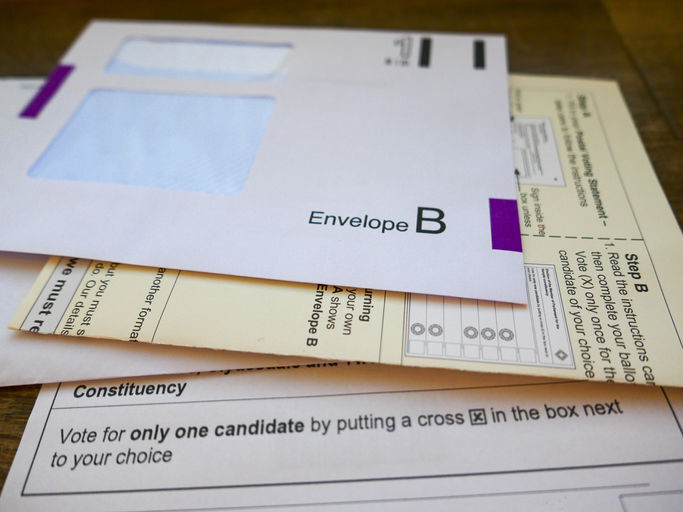
PHOENIX — Arizonans who forget to sign their early ballots before dropping them in the mail are entitled to up to five days to “cure” the problem and get their votes counted, a federal judge ruled.
Judge Douglas Rayes pointed out that Arizona law already gives people whose signatures on ballot envelopes do not match county records that same five-day grace period to resolve the problem. The judge said he sees no difference or additional burden created by the small number of additional people walking into county election offices to fix their mistake.
And Rayes pointed out that election officials already provide an opportunity, right up until 7 p.m. on Election Day, for those who forgot to sign their ballot envelopes to come to county offices.
“The state has not shown that continuing to implement these existing cure procedures for an additional five business days after an election is likely to impose meaningful administrative burdens on election officials given the relatively small number of ballots at issue,” the judge wrote.
He pointed out that in 2018, just 2,435 ballots statewide were rejected because they arrived in unsigned envelopes.
The ruling, issued late Thursday, is most immediately a victory for the Arizona Democratic Party, the Democratic National Committee and the Democratic Senatorial Campaign Committee, which asked Rayes to block election officials from rejecting unsigned early ballots.
In filing suit, attorney Alexis Danneman conceded the issue is political.
“It is inevitable that Democrats, or those who would vote for Democrats, will not have their vote counted as a result of defendants’ failure to allow voters to cure missing signatures after Election Day,” she wrote in June.
The Republican National Committee, the Arizona Republican Party and the Donald J. Trump for President committee intervened to fight the effort.
But it was Attorney General Mark Brnovich, also a Republican, who became the prime defender of keeping that Election Day deadline. Brnovich already has filed an appeal in hopes of keeping Rayes’ ruling from taking effect at this year’s general election.
Parents, students, teachers and other concerned citizens protest in support of in-person teaching outside the Pima County Administrator’s Office at 130 W Congress Street on Tuesday evening, Sept. 9, 2020. (Josh Galemore / Arizona Daily Star)
Rayes said states are allowed to regulate elections.
“The Constitution protects the right to vote, but not the right to vote in any manner one chooses,” he said. The key, the judge said, is balancing “the individual’s right to vote with the need for rules ordering the process.”
“Here, there is nothing generally or inherently difficult about signing an envelope by Election Day,” Rayes said. And the fact that more than 99% of voters manage to do that shows the law imposes only “minimal burdens.”
The judge rejected arguments that the deadline is necessary to prevent fraud. He noted that attorneys for the state concede that most elections are not plagued by fraud and that fraud generally is not suspected based on the number of ballots returned without signatures.
“The state is not preventing fraud by discarding these ballots without giving voters a meaningful opportunity to supply their missing signatures,” Rayes said.

