


There was a time in Sonia Manzano’s life that she was invisible.
Growing up in the Bronx, she didn’t see herself in books. Or on television. Or in movies.
She didn’t exist in American mainstream culture. She knew she should, however. She saw herself in her Latino friends and neighbors in El Barrio: shopping in the neighborhood bodegas, slurping piragus, shaved ice, on hot summer days, sitting and chatting on the stoops, walking to the nearby PS, and praying in church.
Still the Nuyorican Manzano didn’t exist.
“Society didn’t see me,” said Manzano.
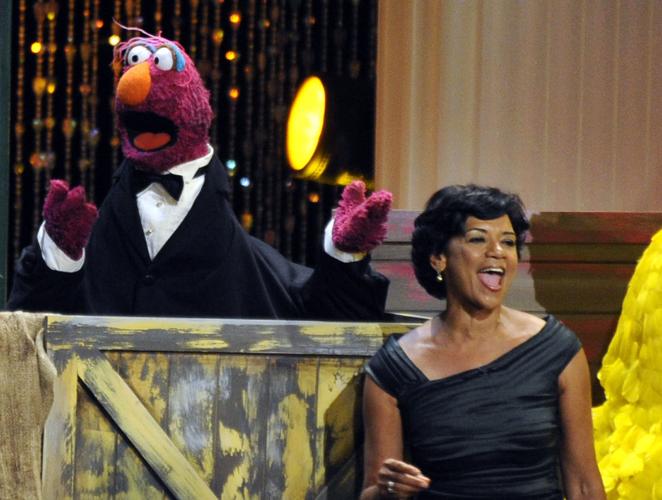
Manzano finally broke that barrier in 1971 when she joined the cast of “Sesame Street,” playing the character of Maria, a role she kept until her retirement in 2015.
She was invisible no longer.
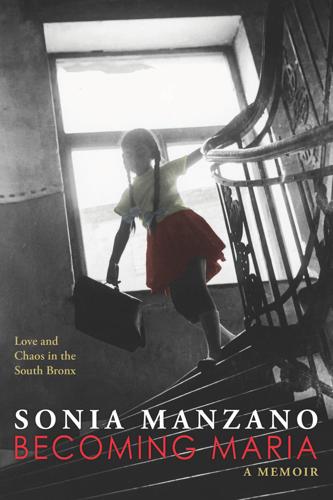
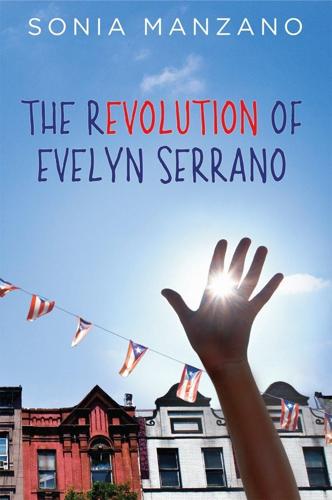
Manzano’s visibility as a Latina actress, author and speaker has remained strong since those early years of the pioneering children’s show. She has earned 15 Emmys for her script writing, and accolades for her books, including “The Revolution of Evelyn Serrano,” a young adult reader, and her memoir, “Becoming Maria: Love and Chaos in the South Bronx,” published last year on Scholastic Press.
The former Maria will make her maiden visit to Tucson next weekend when she appears at the Tucson Festival of Books. She will participate on two panels Saturday sponsored by Nuestras Raíces, a collaboration with the Pima Public Library and local Latino librarians. On the first panel she will be joined by a festival favorite, author Luis Alberto Urrea, and satirist/cartoonist Lalo Alcaraz.
They’ll talk about their experiences growing up and straddling two worlds.
For Manzano that, at many times, was difficult.
“A lot of us don’t speak Spanish or (haven’t) been to Puerto Rico,” said Manzano in a phone interview from her Manhattan home.
This resulted in tug-of-war struggles with parents and grandparents who clung to memories of the island and its traditions. Meanwhile, young Latinos were pulled into the sphere of American culture.
Damn, it was hard.
“You want to fit in the society you live and contribute to it,” she said.
Manzano said a pivotal moment came at a young age when she saw herself in a movie.
She was about 11 and she saw “West Side Story,” the 1961 Romeo and Juliet musical set in New York City, where two gangs, the Jets and Sharks, clashed and danced, and Puerto Rican actress Rita Moreno shined.
To the future Maria, her Latina life and world looked different on the big screen.
It was the first time she saw her neighborhood as a place of beauty, she said. Everything was exciting. Even the graffiti looked like Matisse, she added.
The movie also set the stage for Manzano’s artistic, creative future.
She entered the High School of Performing Arts, also known as the “Fame” high school, and later earned a scholarship to Carnegie Mellon University in Pittsburgh. It wasn’t an easy transition, both culturally and academically.
“I went from a genius in the Bronx to a dope in college,” she said.
Of course she wasn’t. It was in college that she landed her first theater gig in an off-Broadway production of the musical “Godspell.” Within a year she found herself on “Sesame Street,” hanging out with Big Bird, Oscar the Grouch, Cookie Monster and the rest of the gang on the multicultural preschool television program.
Her first role was that of a librarian.
But her bigger-than-life role was that of a role model, a “shero” to countless numbers of children. Especially Latino kids who finally could see someone that looked more like them and sounded like them.
“I became that to all Latino kids,” she said.
Yet, despite her trailblazing role along with a handful of other Latino actors and actresses in television and movies, little progress has been made, even as the U.S. Latino population has surged upward.
Latinos remain invisible.

