


On Saturday, March 3, researchers and the public on both sides of the border are welcome to participate in the Border BioBlitz, a one-day citizen-science effort to record as many plant and animal species as possible at 10 sites along the border from San Diego and Tijuana to the Gulf of Mexico.
The goal is to generate an inventory of biodiversity in the area over a 24-hour period, said Benjamin Wilder, director and co-founder of the Next Generation of Sonoran Desert Researchers, which is organizing the event.
The group also aims to draw attention to cross-border systems — both ecological and man-made — because for those studying the ecology of the Southwest, the U.S.-Mexico border is not the outer limits of each country, but rather the heart of the region.
“This community defines our region by a sense of a shared culture and an environment that does not adhere to political boundaries,” Wilder said. “A lot of the current discourse in the United States glosses over what is a remarkable landscape.”
In Arizona alone, “there’s probably six different biotic communities that intersect the border,” said Myles Traphagen, the borderlands program coordinator for the Wildlands Network and a Next Generation member. “Where we’re going to be surveying at Coronado National Memorial, there will be about five different biotic communities,” including evergreen woodlands, semi-desert grasslands, Chihuahuan Desert scrub, plains grassland and — at a higher elevation — conifer forests.
“This area has always been about the movement of animals and people across the North American continent,” Traphagen said, citing the trans-border flow of the Santa Cruz and San Pedro rivers, the conquistador Francisco Vázquez de Coronado’s expedition in the Americas and the archaeologically important Naco Mammoth Kill Site.
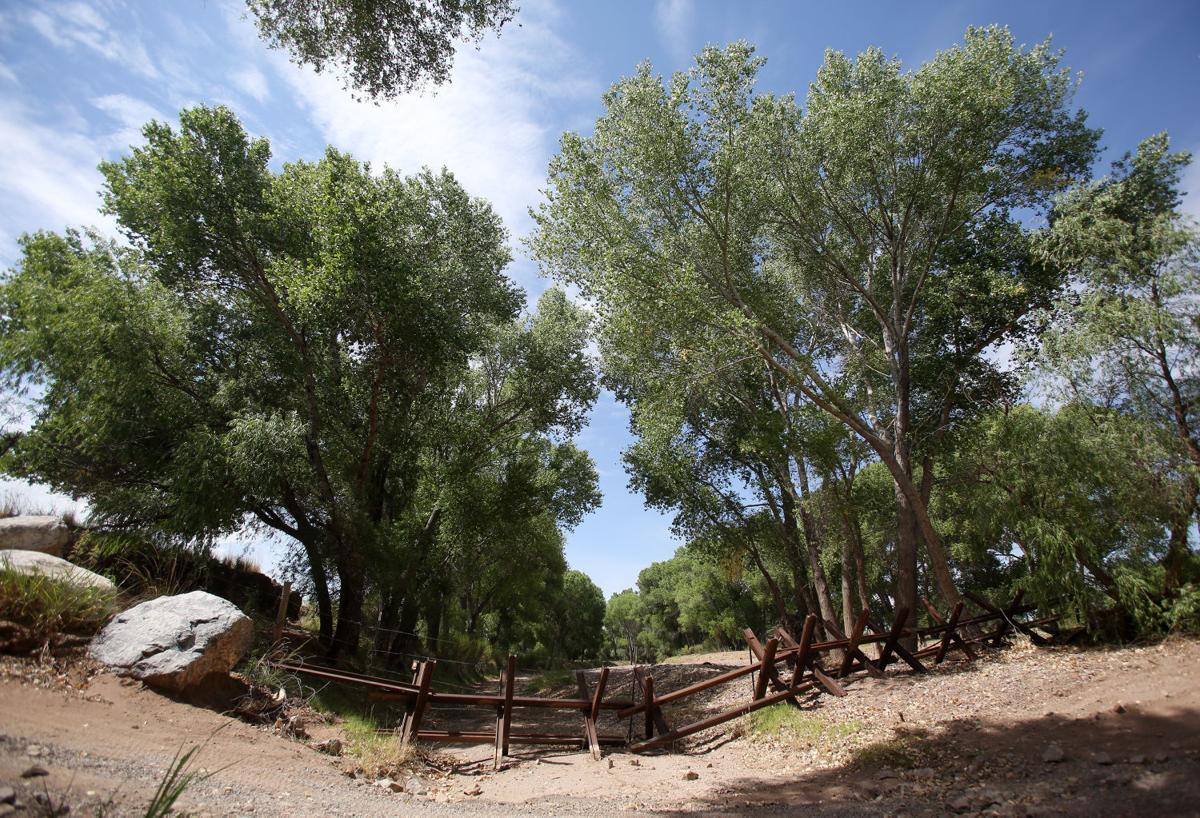
Next Generation seeks to highlight “what’s out there, on the ground, when we’re talking about a wall,” Wilder said. “We’re trying to provide information and data to make informed land use decisions.”
The effort will also include Arizona State University art students who will interpret the Border BioBlitz from their own perspectives, and Wilder hopes that researchers from varying fields will join for the day. However, you do not have to be a scientists to participate.
If you cannot make it out, you can follow along at www.inaturalist.org/projects/border-bioblitz to see the data stream in real time.

