

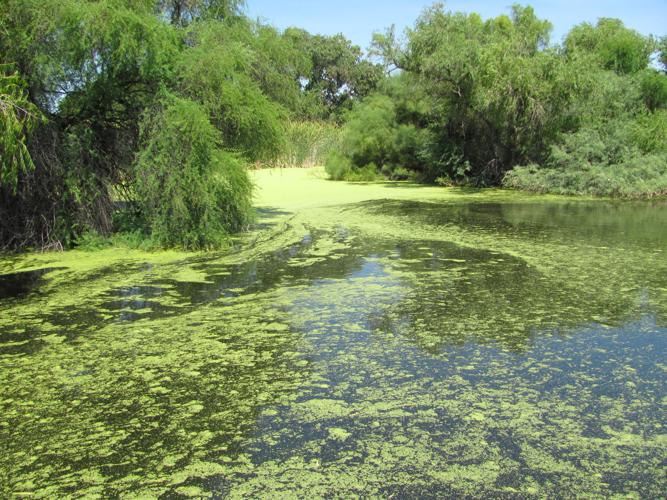



Acres of treated wastewater, supplemented by torrential monsoon rains, have left parts of Tucson’s Sweetwater Wetlands looking almost like a Louisiana bayou this summer.
Some of the site’s pond surfaces are covered with an emerald-green hydroponic plant known as duckweed, creating a sort of swampy look.
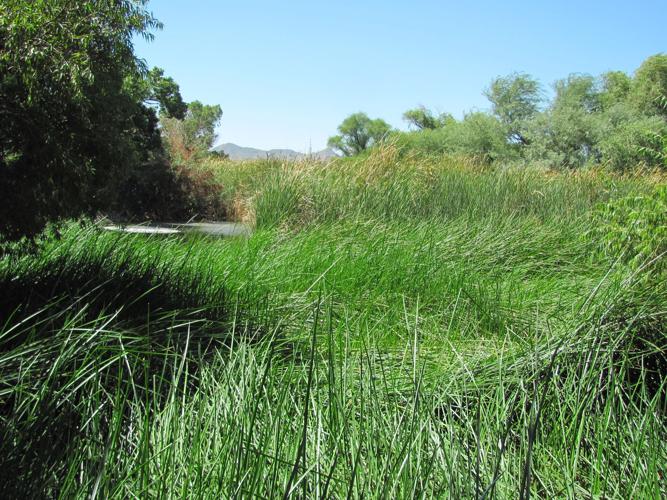
Elsewhere, heavy growths of cattails and other vegetation have obscured usually visible expanses of the ponds.
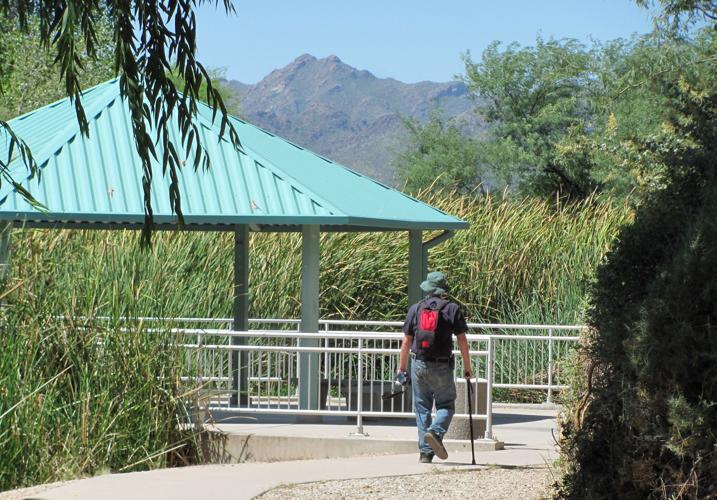
The 18-acre wetlands site, near Interstate 10 and West Prince Road, serves a dual purpose as a wastewater treatment facility and lush habitat for birds and other wildlife. It’s managed by Tucson Water.
Short, flat loop trails allow easy access to the ponds, which are popular destinations for bird-watchers, photographers, artists and people seeking a peaceful retreat from city life.
The green expanses of duckweed growing on the surface of some ponds draw concern from some visitors, who wonder if it might be taking over the wetlands.
Not so.
“It’s a natural thing that comes and goes with changes in the temperature of the water and seasons,” said Dick Thompson, a hydrologist with Tucson Water.
In past years, the duckweed even played a beneficial role by naturally removing nitrates from the reclaimed water. But since a new Agua Nueva Water Reclamation Facility was completed in recent years, the quality of water reaching the wetlands has improved dramatically, Thompson said.
“The duckweed plays a role in ‘polishing’ the water” or making it clearer, he said. “It’s helping the wetlands, but we don’t depend on it.”
Thompson noted other attractions at the wetlands this month.
“Cattail season is in full bloom, with lots of beautiful cattails to see,” he said.
“I’ve also seen a bobcat out there recently,” Thompson said.

